
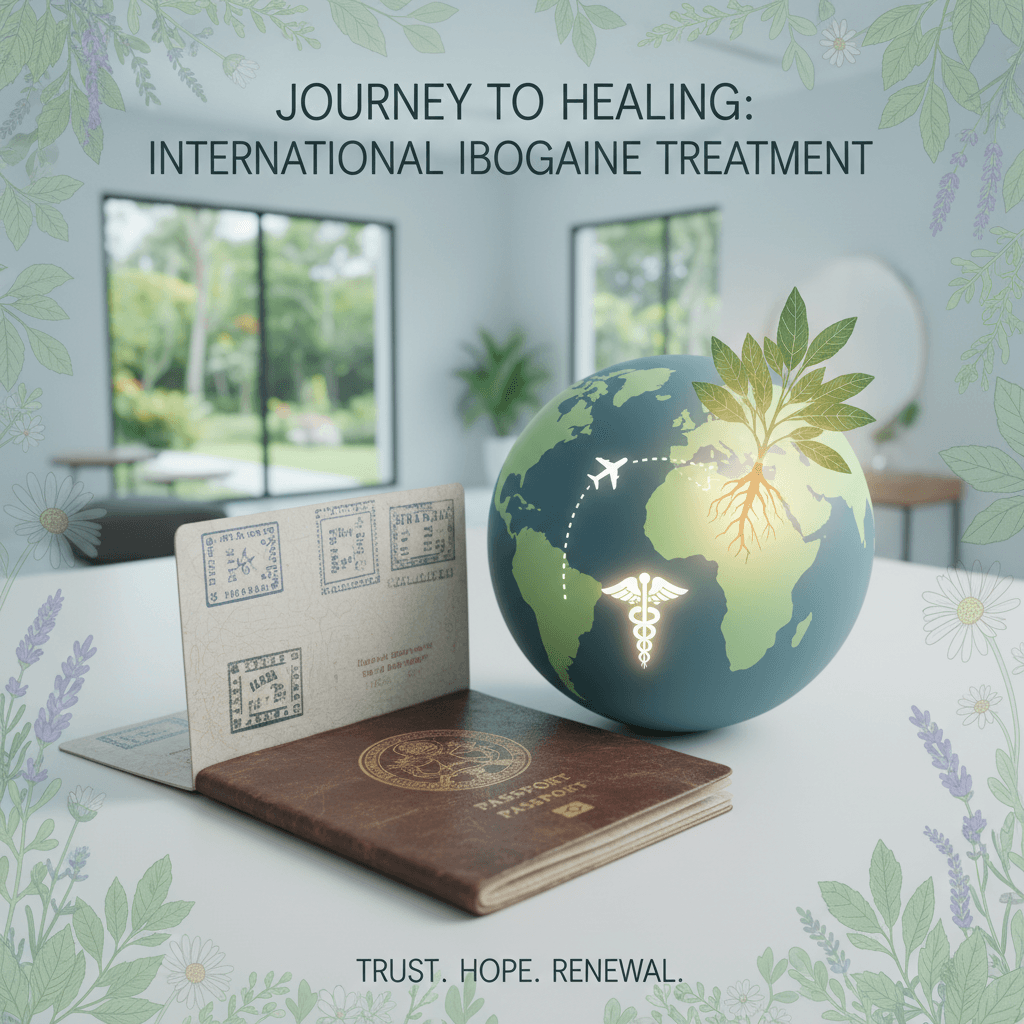
Understanding ibogaine treatment abroad
If you live in a country where ibogaine is illegal or unavailable, an ibogaine treatment abroad guide can help you understand your options, the risks, and what it takes to travel safely. Ibogaine is a powerful psychoactive substance being explored as a treatment for addiction and trauma, but it is not a casual wellness trip. It is a high‑risk medical intervention that must be approached with caution and solid information.
You are likely weighing two competing realities. On one side, you may have tried conventional treatments that did not work or did not last. On the other, you are reading serious warnings about heart risks and deaths when ibogaine is used outside proper medical settings. Your goal is to balance hope with safety, and to use any ibogaine treatment abroad guide as a planning and risk‑reduction tool, not as encouragement to rush into something you do not fully understand.
How ibogaine works in addiction treatment
Ibogaine is an alkaloid derived from the root bark of the African plant Tabernanthe iboga. It has complex effects on brain receptors involved in reward, mood, and withdrawal. Many people pursue ibogaine because they have heard that it can reduce or interrupt withdrawal and cravings, particularly for opioids.
In a 2022 observational study of 14 people with opioid use disorder who received a single oral dose of ibogaine HCl (10 mg/kg), participants experienced clinically relevant changes in heart rhythm along with detox effects. Half of them developed a QTc interval over 500 ms, a level associated with a significant risk of dangerous arrhythmias, although the QTc changes were reversible over time [1]. This same study also documented bradycardia, decreased blood pressure, and severe but temporary coordination problems that resolved within 24 to 48 hours after dosing [1].
Psychological effects in that study included wakeful dreaming and vivid memories, but not delirium, which suggests that the psychotropic experience can be managed in a clinical setting [1]. However, the authors stressed that ibogaine should only be administered with strict cardiac monitoring and, ideally, CYP2D6 genotyping, because metabolism of ibogaine varies significantly between individuals and that variability affects heart risk [1].
For you, the key takeaway is that ibogaine is not a gentle plant medicine. It is a potent, physically stressful drug that requires medical oversight and careful screening. Any ibogaine treatment abroad guide that does not emphasize this is incomplete.
Global legal landscape for ibogaine
Before you look at flights or clinics, you need a clear picture of how ibogaine is treated legally in different regions. Laws affect where you can safely receive treatment and what level of medical structure is likely to exist.
Countries where ibogaine is available
Several countries have created space for regulated or semi‑regulated ibogaine treatment that attracts international patients:
-
Mexico
Ibogaine is unregulated at the federal level, which means clinics can offer treatment without direct government control of the substance itself [2]. This has made Mexico a major destination for international ibogaine therapy, including programs serving US and Canadian clients. The lack of federal scheduling does not automatically guarantee safety, so you still need to research each clinic’s medical standards. -
Brazil (São Paulo state)
In the state of São Paulo, ibogaine can be prescribed for addiction treatment in hospital settings. This policy started in 2016 and has gradually expanded under medical regulatory oversight [2]. Access is more clinically controlled than in Mexico, but it is geographically limited and restricted to approved settings. -
South Africa
Ibogaine is classified as a Schedule 6 substance, which allows prescription under strict medical supervision [2]. This makes South Africa one of the few African countries with a formal medical framework for ibogaine. -
New Zealand
Ibogaine is not listed as a controlled substance nationally. It can be prescribed at a clinician’s discretion, and this legal structure has allowed the development of ibogaine‑assisted therapy programs in a medical context [2].
In Europe, treatment availability is more fragmented. Some retreat‑style programs operate in countries that allow limited ibogaine use or do not tightly regulate it. A 2024 overview of European programs notes that cash‑pay rates can range from around $5,000 to $7,000+ per week for home‑like retreat settings to roughly €250,000 per week for ultra‑luxury programs with extensive amenities [3].
Countries where ibogaine is prohibited
In other countries, ibogaine is tightly restricted:
- United States
Ibogaine is a Schedule I substance at the federal level. Possession and use are illegal and carry significant penalties. Some states, including New York and Texas, have proposed legislation to make ibogaine research easier, but this has not changed Schedule I status [2].
If you live in a country where ibogaine is prohibited, you may be considering international ibogaine therapy programs. It is important to understand that traveling abroad does not remove all legal risk. You still must comply with your home country’s laws on importation and possession, and you should never attempt to bring ibogaine back with you.
Types of international ibogaine programs
As you explore international ibogaine detox clinics, you will see a wide spectrum of program models. Understanding the differences helps you decide what might be appropriate for your medical needs, budget, and comfort level.
Medically supervised clinical programs
Clinical programs are the closest to a hospital‑style setting. They usually include:
- Pre‑treatment medical evaluations and lab testing
- On‑site physicians and 24/7 nursing or monitoring
- Continuous cardiac monitoring with ECG during dosing
- Emergency protocols and equipment
In the Netherlands study noted earlier, strict cardiac monitoring allowed clinicians to detect and manage QTc prolongation and blood pressure changes as they occurred [1]. Programs that mirror this level of safety infrastructure abroad are better positioned to respond if you develop serious complications.
A 2024 study of 30 mostly special operations veterans who received ibogaine plus magnesium at a clinic in Mexico found large reductions in PTSD, depression, and anxiety one month after treatment and, importantly, reported no serious cardiac events when treatment was medically supervised and combined with heart‑protective measures [4]. The average WHO disability rating in this group improved from mild to moderate disability before treatment to no disability one month later [4].
This does not remove risk, but it does illustrate how a careful medical protocol can improve safety.
Retreat and hybrid models
Some programs operate in retreat‑like environments rather than hospitals, but still employ medical staff and monitoring. These may:
- Combine traditional practices, such as Missoko Bwiti‑inspired ceremonies, with clinical screening
- Offer meditation, yoga, hiking, or other wellness activities as adjuncts to treatment [3]
- Provide varying levels of medical oversight, from a consulting physician to on‑site nurses and ECG access
If you consider a retreat or hybrid model, you need to look closely at the medical layer. At minimum, a credible program should have clear screening procedures, cardiac assessment, and real capacity to intervene medically if there is a problem.
Underground or non‑medical providers
Some ibogaine providers operate outside any formal medical framework. You may find them through word of mouth or online forums rather than through reputable listings. The 2022 OUD study explicitly warned against underground ibogaine detox services, because QTc prolongation and associated arrhythmia risks require medical monitoring and quick intervention that informal providers cannot reliably offer [1].
If you are using an ibogaine treatment abroad guide to plan your path, treating underground options as a last resort, or better, something to avoid altogether, is an important safety decision.
Key safety considerations you must understand
Any decision to pursue medical tourism for ibogaine therapy should begin and end with safety. The potential for rapid change in cravings or trauma symptoms does not erase the underlying medical risks.
Cardiac risks and monitoring
The most serious known risks relate to your heart rhythm. Ibogaine and its metabolite noribogaine can prolong the QTc interval, which is a measure on the ECG that reflects how your heart repolarizes between beats. A significantly prolonged QTc increases the risk of torsades de pointes, a dangerous arrhythmia that can lead to sudden death.
In the Dutch OUD study:
- Every participant experienced QTc prolongation after ibogaine
- 50% reached a QTc longer than 500 ms, a critical threshold for torsades risk
- QTc lengths eventually returned to baseline, but the study strongly recommended continuous cardiac monitoring and strict protocols to minimize risk [1]
The study also noted that genetic differences in the CYP2D6 enzyme affect how quickly people metabolize ibogaine, which in turn influences how long and how strongly it affects the heart [1]. In practice, this means two people can receive the same dose but have very different cardiac responses.
If a clinic cannot describe its ECG monitoring procedures, emergency protocols, and approach to cardiac risk, it is not a suitable setting for ibogaine detox.
Neurological and blood pressure effects
All patients in the same OUD study experienced severe but temporary coordination problems (cerebellar ataxia), along with bradycardia and lowered blood pressure [1]. Ataxia resolved within 24 to 48 hours, but during that window, you would be at high risk for falls or injury without close supervision.
This is why safe programs keep you under constant observation during and after dosing, and do not allow unsupervised walking or bathroom use until your coordination returns.
Unsupervised use can be dangerous or fatal
Independent reviews of ibogaine programs in Europe stress that unsupervised ibogaine use can be deadly and that safety hinges on medical supervision, proper ECG monitoring, and structured support before and after treatment [3]. When you evaluate any ibogaine treatment abroad guide or specific clinic, always ask how the program aligns with these standards.
Evaluating international ibogaine detox clinics
Because regulations differ by country, you cannot assume that every licensed facility meets the same bar. You must do your own due diligence when exploring international ibogaine therapy programs.
Questions to ask potential providers
As you contact clinics or review their websites, pay attention to how clearly and directly they answer questions like:
-
What medical screening is required before I am accepted?
You should expect at least a full medical history, medication review, recent ECG, and basic blood work. -
Who is on‑site during dosing and for how long?
Clarify whether there is a physician present or immediately available, and whether nurses or other clinicians are there 24/7. -
How do you monitor my heart and vital signs?
Ask about continuous ECG, frequency of checks, and what thresholds trigger medical interventions. -
What is your emergency response plan?
Credible programs can explain how they respond to arrhythmias, blood pressure problems, or acute psychological crises, and where the nearest hospital is located. -
How many ibogaine treatments has your team conducted?
Experience matters, particularly when complications arise.
Quality directories that vet ibogaine treatment centers emphasize similar criteria and encourage you to consider level of care, program length, location, cost, and specialization so you can match a program to your needs and risk profile [3].
Level of care and program style
When comparing options, think in terms of level of care:
- Hospital or hospital‑linked setting if you have complex medical needs or are on multiple medications
- Medically supervised retreat if you are relatively healthy but still want robust safety monitoring
- Traditional or ceremony‑focused retreat with medical backup only if cardiac screening and ECG monitoring are built into the protocol
If you are considering more than one clinic, resources such as international ibogaine therapy programs and international ibogaine detox clinics can help you compare models, services, and oversight styles side by side.
Planning travel for ibogaine therapy
Once you have identified potential programs, you need to understand the logistics of traveling abroad for ibogaine treatment. Detailed planning will reduce stress and help you stay focused on your health.
Travel timing and length of stay
Many programs recommend that you:
- Arrive at least one or two days before dosing to rest and complete in‑person evaluations
- Stay several days after treatment for observation and initial integration before traveling home
- Avoid long‑haul flights or intense travel routes immediately after dosing, because coordination, sleep, and blood pressure may still be stabilizing
Resources on planning travel for ibogaine therapy and ibogaine treatment travel planning can walk you through how to structure your itinerary so that you are not rushing through airports or long transfers at your most vulnerable moments.
Documents and entry requirements
Depending on your destination, you may need:
- A valid passport with sufficient remaining validity
- A visa or electronic travel authorization
- Proof of travel insurance that includes medical coverage abroad
- Clinic documentation, especially if you have to explain your travel plans to immigration or to your home doctor after you return
Guides on ibogaine treatment travel requirements and how to travel for ibogaine treatment can help you confirm what paperwork and arrangements you need for your specific country pair.
Protecting your health during travel
Given the known cardiovascular and neurological effects of ibogaine, protect yourself by:
- Minimizing travel complexity immediately after treatment
- Avoiding sedatives, alcohol, and other substances that your provider has not cleared
- Keeping an updated list of medications and emergency contacts with you
- Knowing where the nearest hospital is at each stage of your trip
Comprehensive ibogaine medical travel program resources often include checklists for flights, transfers, and accommodations that are compatible with post‑treatment recovery.
Ibogaine may feel like a single‑event intervention, but safe outcomes depend heavily on everything that happens before you arrive and after you leave the clinic, not just the dosing day itself.
Preparing yourself medically and psychologically
You can significantly influence your safety and the usefulness of your experience by how you prepare in the weeks leading up to travel.
Medical preparation and coordination
Before you commit to traveling abroad for ibogaine treatment, speak with your primary care physician or another trusted medical provider if at all possible. Even if they are skeptical of ibogaine, they can:
- Review your cardiac history, medications, and lab results
- Help identify contraindications, such as certain heart conditions or drug interactions
- Provide copies of key medical records to share with your chosen clinic
If you are taking methadone, buprenorphine, antidepressants, antipsychotics, or other QT‑prolonging medications, dose adjustments or tapers may be necessary, and these must be planned carefully to avoid destabilizing your mental health or withdrawal status.
Psychological and practical preparation
On the psychological side, ibogaine is intense and can bring up traumatic material. You will benefit from:
- Clarifying your intentions and what you hope to change
- Setting up follow‑up care at home, such as therapy, peer support, or outpatient addiction treatment
- Arranging time off work and responsibilities so you are not under pressure immediately after you return
If you treat ibogaine as a stand‑alone cure without any aftercare, you increase your risk of relapse or emotional overwhelm once you are home. That is why most responsible ibogaine treatment abroad guide resources stress integration and long‑term support.
Costs, value, and realistic expectations
Cost is a practical but important part of your planning. As the European review noted, ibogaine treatment can range from several thousand dollars or euros per week for modest, supportive settings to extremely high costs for luxury programs with private villas and extensive amenities [3].
When you evaluate prices, look beyond spa‑like features and focus on:
- Medical screening and emergency capacity
- Staff experience with your specific substance use or mental health condition
- Length of stay and aftercare planning
- Group size and level of personalized attention
Cheaper does not always mean unsafe, and expensive does not always mean medically robust. Align the program with your risk level, not only with your budget. Resources on medical tourism for ibogaine therapy can help you weigh cost against safety and quality in a structured way.
Using this guide to move forward safely
If you are considering traveling abroad for ibogaine treatment, you are likely at an important crossroads. You may be dealing with entrenched addiction, trauma, or both, and you are searching for options that feel more powerful or transformative than what you have already tried.
An ibogaine treatment abroad guide is not a guarantee of success, and ibogaine is not a risk‑free shortcut. What you can do is:
- Take the medical risks, especially cardiac risks, seriously and prioritize medically supervised settings with ECG monitoring [1].
- Choose programs and destinations where ibogaine use is at least tolerated or regulated, such as Mexico, parts of Brazil, South Africa, or New Zealand, and avoid underground settings whenever possible [2].
- Plan your travel carefully, from ibogaine treatment travel planning and documentation to aftercare and integration at home.
- Coordinate with your existing medical and mental health providers to minimize preventable risks and to create a bridge between your treatment abroad and your life afterward.
With careful preparation, rigorous safety standards, and honest expectations, you can use the information in this ibogaine treatment abroad guide to decide whether international treatment is appropriate for you, and if so, how to pursue it as safely and thoughtfully as possible.