
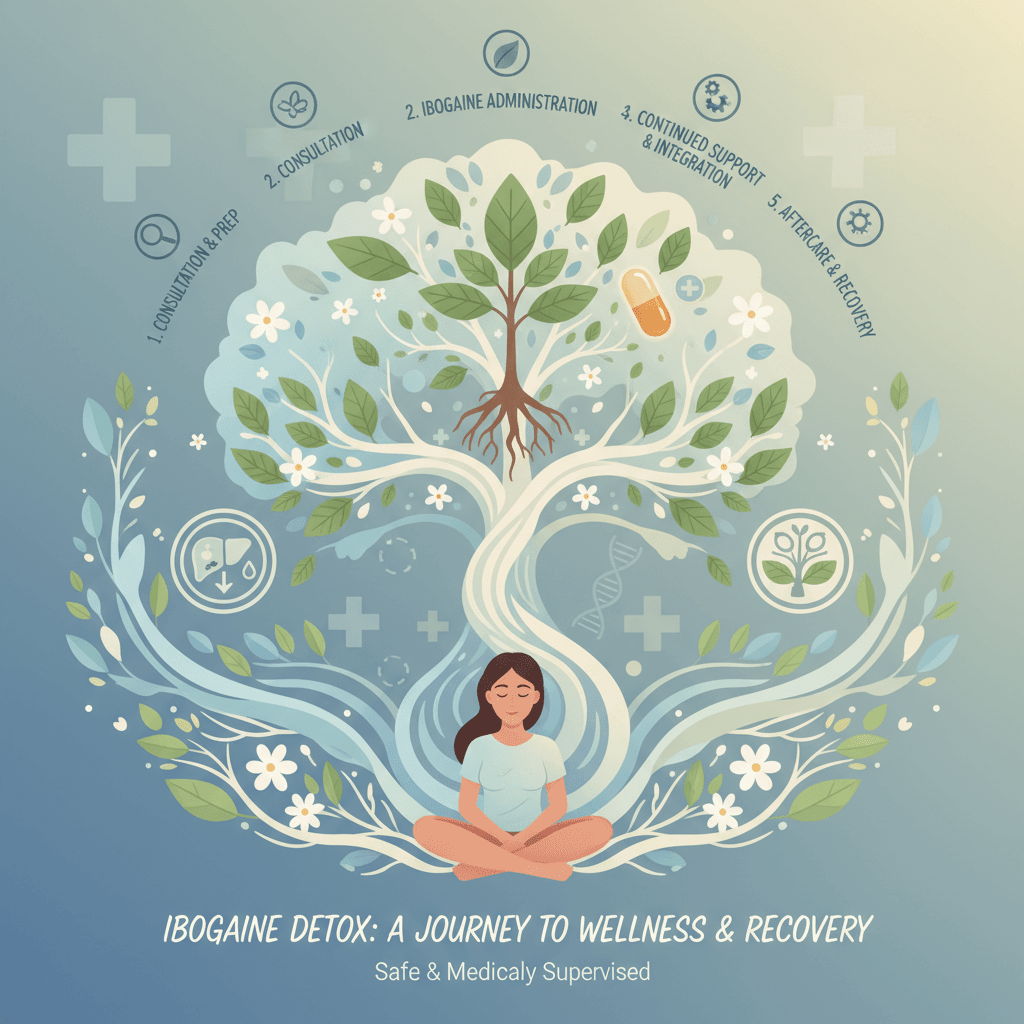
Understanding what to expect during ibogaine treatment
If you are actively researching what to expect during ibogaine treatment, you are likely weighing a serious decision. Ibogaine is not a quick fix and it is not risk free. When it is provided in a structured, medically supervised setting, it can be a powerful intervention for addiction and trauma. Knowing exactly what the ibogaine detox process looks like helps you decide if it is right for you and prepares you to move through the experience as safely as possible.
In this guide, you walk through the full ibogaine treatment journey from first screening to post‑treatment integration. You see how reputable programs structure the ibogaine detox procedure, what happens during dosing, what you may feel physically and psychologically, and what the days after treatment are like.
Throughout, you will see references to clinical and case reports so you can understand not only how ibogaine is described by clinics but also how it has been studied in real patients.
How professional ibogaine programs work
Before looking at the timeline, it helps to understand how a legitimate ibogaine detox program is organized. You should expect a structured medical framework, not a casual or improvised experience.
In reputable settings, ibogaine is treated as a powerful cardiotoxic psychedelic that requires careful screening, on‑site monitoring, and clear protocols for dose, emergency response, and follow‑up care. Clinical reports of ibogaine for opioid use disorder and PTSD consistently emphasize continuous observation and cardiac monitoring from the time of dosing through the acute experience and into early recovery [1].
You can think of the ibogaine treatment process explained as four broad stages:
- Pre‑treatment screening and preparation
- Arrival, detox support, and final medical checks
- Ibogaine dosing and the acute psychedelic experience
- Observation, recovery, and integration support
Each stage serves a specific safety and therapeutic goal and each is important to understand before you commit.
Pre‑treatment medical screening and preparation
You should expect a thorough pre‑treatment evaluation before any reputable provider agrees to work with you. This is not a formality. For some people, the safest choice is to avoid ibogaine altogether.
Medical and psychiatric assessment
A careful screening usually includes:
- Detailed medical history, including past heart disease, liver disease, seizures, and fainting spells
- Psychiatric history, including psychosis, bipolar disorder, or severe instability
- Current and past substance use, including alcohol, opioids, stimulants, benzodiazepines, and any maintenance medications
- Medication review, especially drugs that prolong the QT interval or affect heart rhythm
Clinical reports of ibogaine for opioid use disorder highlight that programs exclude people with cardiovascular disease, abnormal baseline EKGs, or other significant risk factors because of ibogaine’s known tendency to prolong the QT interval and stress the heart [2].
If a provider is willing to dose you without this level of review, you are not in a medically responsible program.
Lab work and cardiac testing
You can also expect objective medical testing. While protocols vary by clinic, common evaluations include:
- Blood work to assess liver function, electrolytes, and general health
- Resting electrocardiogram (ECG or EKG) to measure your QT interval and identify any conduction issues
- Sometimes, cardiac imaging or consultation with a cardiologist if any risk factors are present
In both a Netherlands trial of ibogaine for opioid use disorder and a detailed case report from a four‑day detox program, participants had pre‑treatment ECGs with normal QTc intervals and regular cardiac monitoring throughout treatment [3].
These steps help the medical team decide whether ibogaine is an option for you and, if so, how to individualize your dosing and monitoring plan.
Detox planning and substance tapering
As you explore how ibogaine detox works, you will see that timing relative to your last use is critical. The goal is to begin treatment when there is enough substance out of your system to lower risk, but not so long that you are overwhelmed by unmanaged withdrawal.
In the Vancouver case study, a patient with severe opioid use disorder arrived already in acute withdrawal. She was given hydromorphone to manage symptoms while ibogaine dosing was gradually introduced over several days, with continuous nursing oversight [2]. Other protocols use a single‑dose approach, but in all cases the team plans around your use pattern so you can tolerate both detox and the ibogaine experience.
A responsible provider will review with you:
- Which substances you must stop before arrival and how far in advance
- How to safely taper if you are on opioids, benzodiazepines, or other sedatives
- What to expect in terms of withdrawal symptoms before dosing
- How they medically support withdrawal during the program
Preparation is also emotional and practical. You are encouraged to set intentions, arrange time away from work and family duties, and line up post‑treatment support. Resources like the ibogaine detox preparation process can help you think through these details.
Arrival at the clinic and pre‑dose routine
Once you arrive at the clinic, your experience shifts from planning to direct medical and therapeutic support. For many people, this is when anxiety and hope both intensify.
Intake and repeat safety checks
On arrival, you usually:
- Review your history again with the medical team
- Confirm your recent substance use and timing of your last dose
- Undergo repeat vital signs and sometimes a new ECG
- Discuss the planned ibogaine dose, timing, and type of monitoring
Reputable clinics adjust or even cancel dosing if new information appears. For example, if your ECG now shows a prolonged QTc interval, or your electrolytes are off, the team may postpone treatment and correct these issues first. This is part of what makes an ibogaine detox protocol explained in advance so important. You should know what would cause a delay and why.
Comfort, environment, and expectations
You are then settled into the space where you will spend most of your treatment. This is typically:
- A quiet, low‑stimulus room
- A bed or reclining chair, with blankets and pillows
- Access to a bathroom and help walking when needed
- Limited lighting and noise to support the inner experience
In the Vancouver program, the patient was kept in a quiet resting environment, with food offered and nursing staff checking heart rate and blood pressure hourly [2]. You can expect something similar in well‑run clinics.
This is also when staff walk you once more through what happens during dosing, how to signal if you need help, what side effects are expected, and which ones are emergencies. Clarity at this stage lowers fear once the medication starts to take effect.
Ibogaine dosing and the acute experience
The heart of what to expect during ibogaine treatment is the dosing period itself. Your specific experience will be unique, but clinical data and firsthand reports point to common physical and psychological phases that you can prepare for.
How ibogaine is given
In medically supervised settings, ibogaine is typically administered orally in capsule form. Some programs follow a single‑dose strategy, such as a 10 mg/kg oral dose used for opioid use disorder in a Netherlands study [4]. Others use an initial test dose followed by one or more larger doses, and sometimes smaller booster doses over several days, as in the Vancouver case where the total dose reached 32 mg/kg across four days [2].
In a clinical study of U.S. veterans with traumatic brain injury and PTSD treated, ibogaine was also administered orally. Magnesium supplementation was given at the same time to help protect against heart complications and veterans were monitored medically throughout [5].
Which approach your program uses should be clearly explained during your intake. This is a good time to review the ibogaine detox program steps so the structure of your dosing makes sense to you.
Early physical effects
Soon after ingesting ibogaine, you can expect:
- Dizziness and a sense of being unsteady
- Nausea and possibly vomiting
- A buzzing or humming sound, sometimes described as like bees or distant motorcycles
- Difficulty walking and coordinating movements
In a detailed report describing what happens during ibogaine treatment for addiction, most of the early experience is spent lying down with eyes closed. People often feel too uncoordinated to walk safely, which is why clinical trials report severe but transient cerebellar ataxia for several hours after ingestion [6].
In the Netherlands trial, every participant developed serious ataxia between 2 and 6 hours after the dose, to the point that they could not walk without support. This resolved within 24 to 48 hours and no seizures or life‑threatening events occurred in that supervised setting [4].
You are continuously monitored during this time. Staff typically:
- Check your heart rate and blood pressure frequently, sometimes hourly
- Watch your ECG or telemetry if available
- Stay nearby to help with bathroom trips and manage vomiting or nausea
In both the Netherlands study and the Vancouver program, mild bradycardia, meaning heart rates in the 50s, and occasional drops in blood pressure were common, but severe cardiac events were not observed when patients were carefully monitored [3].
Psychedelic and psychological effects
As the physical effects intensify, the inner experience usually unfolds in a few overlapping phases:
- Onset and “wakeful dreaming”
Many people find themselves in a dreamlike state while still aware they are in the treatment room. You may see vivid visual scenes with your eyes closed, hear voices or sounds that feel meaningful, or revisit past memories. A clinical review describes this as wakeful dreaming, where you are lying down, eyes closed, experiencing a rich inner landscape while remaining at least partly oriented to your surroundings [7]. - Cyclical visions and trauma material
Common reports include cyclical imagery and repeated themes. You may be confronted with fears, past trauma, or painful memories. These can be frightening at first but often shift over time into a sense of strength, understanding, or peace. Some people struggle to find words for these experiences afterward, but they often describe them as deeply meaningful and reorganizing [7]. - Emotional processing and insight
In the Vancouver case, the patient later attributed her 18‑month opioid abstinence not to painless withdrawal but to a transformative spiritual experience that allowed her to emotionally process key events related to her addiction [2]. Many others share similar themes of self‑acceptance, forgiveness, and a new perspective on their life story.
Psychomimetic effects during ibogaine treatment have generally been characterized in clinical work as mild to moderate and transient. In the Netherlands trial, patients reported wakeful dreaming, reliving memories, and mild disorientation for 3 to 7 hours, while standardized delirium scores stayed below clinical thresholds [4].
The intense psychedelic phase often peaks around 12 hours after your main dose. The entire acute experience is usually considered to last about 24 hours, even though some visual or emotional effects may linger beyond that [7].
Managing withdrawal and physical safety
For many people exploring what happens during ibogaine therapy, a key question is how it affects withdrawal symptoms and cravings.
Withdrawal during and after dosing
In the Netherlands study, people with opioid use disorder received a single ibogaine dose while undergoing detox. Withdrawal symptoms during the first 24 hours after ingestion were described as mostly mild. Only three of 14 subjects requested to return to morphine substitution in that time window [4]. This suggests ibogaine can ease withdrawal for some patients, though it does not guarantee comfort for everyone.
In the Vancouver program, the patient arrived already in significant opioid withdrawal. She continued on hydromorphone for several days as ibogaine was introduced, with careful monitoring of vital signs. She tolerated the combination with only mild bradycardia, dizziness, weakness, and sweating, all of which resolved within days, and she reported no persistent adverse effects weeks later [2].
After the experience, many people describe rapid and lasting relief from cravings and physical withdrawal, especially from opioids. Reports note that this relief can last for weeks or months, creating a crucial window to build new habits and supports [7].
Cardiac risks and monitoring
At the same time, ibogaine’s impact on your heart is one of the central safety concerns. In the Netherlands opioid detox trial:
- A 10 mg/kg single dose caused clinically relevant QTc prolongation in all subjects
- Half of participants developed QTc intervals over 500 ms, which is in a range associated with risk of dangerous arrhythmias
- No torsades de pointes, seizures, or severe cardiac events were observed, but only because participants were in a controlled medical environment with continuous ECG monitoring and ready emergency response [4]
This is why clinical teams stress:
- Thorough pre‑treatment cardiac screening and ECG
- Avoidance of other QT‑prolonging medications or substances before, during, and shortly after treatment
- Continuous ECG or frequent ECG checks during the acute phase
- On‑site staff prepared to respond to arrhythmias or sudden changes in vital signs
In the veteran PTSD and TBI study, ibogaine was administered with magnesium to help reduce cardiac risk. Over 30 veterans, only typical side effects like headaches and nausea were reported, with no serious side effects or heart problems recorded during treatment [5]. Even with these promising results, the research team still emphasized that ibogaine requires strict medical oversight.
Knowing these details allows you to better assess whether a potential program’s safety measures are consistent with the risks involved.
The next 24 to 72 hours: recovery and observation
Once the peak psychedelic effects subside, your focus shifts from visions to recovery. This period is quieter but still medically important.
Physical recovery and residual symptoms
Over the next day or two you can expect:
- Gradual return of coordination as cerebellar ataxia resolves
- Ongoing fatigue and physical exhaustion
- Some lingering nausea, dizziness, or sweating
- Possibly mild difficulty concentrating or feeling mentally “foggy”
In the Vancouver case, mild bradycardia, weakness, dizziness, and sweating appeared during the higher doses and booster days but improved quickly. The only lingering effect in the weeks after was minor concentration difficulty, which did not interfere significantly with functioning [2].
Many people feel physically drained for two days after the peak. Sleep may be irregular and you might find it hard to fully recall or verbalize your experience, even if you know it was important. This is a normal part of what to expect during ibogaine treatment and you should be encouraged to rest, hydrate, and accept help.
Emotional state and early mental changes
At the same time, many individuals describe:
- A renewed sense of self‑acceptance and compassion
- Increased confidence and hope
- A more spiritual or connected outlook on life
- Less intense cravings and less emotional reactivity
In the account from Practical Recovery, people often report greater kindness toward themselves and a shift in how they relate to their own story. In the veteran PTSD and TBI study, participants showed immediate and significant improvements in PTSD, depression, anxiety, and functioning that were still present at least one month later [5].
Veterans’ average disability scores on the World Health Organization Disability Assessment Scale dropped from 30.2, which reflects mild to moderate disability, to 5.1, which is considered no disability, one month after ibogaine treatment. Improvements were also recorded in concentration, information processing, memory, and impulsivity, suggesting real neurocognitive gains [5].
Your own shifts may be more subtle or more dramatic, but you should expect some change in how you see your addiction, your trauma, and your options moving forward.
Ongoing check‑ins and discharge planning
During this recovery window, staff continue to:
- Check your vital signs until they are stably within normal limits
- Monitor you for delayed cardiac changes or other complications
- Help you eat, shower, and move around safely as mobility returns
- Begin structured debriefing of your experience
A good program will not simply send you home as soon as you can walk. Instead, they will work with you to clarify next steps, from outpatient therapy and support groups to medical follow‑up and lifestyle changes. Reviewing the ibogaine therapy experience timeline can help you understand what this re‑entry phase may look like over the first days and weeks.
Integration and life after ibogaine
The most meaningful part of your ibogaine treatment journey often unfolds after you leave the clinic. Ibogaine may open a window of reduced cravings, improved mood, and greater clarity, but it does not replace the ongoing work of recovery.
Making sense of the experience
Because ibogaine visions and insights can be hard to describe, integration support is central to the ibogaine treatment journey. Integration usually includes:
- Follow‑up sessions, in person or remotely, to talk through your experience
- Help identifying concrete lessons and commitments that came out of your visions
- Coaching on how to adjust relationships, routines, and environments to support sobriety
- Referrals to trauma‑informed psychotherapy, support groups, or peer communities
In the Vancouver case, no formal psychotherapy occurred during the four‑day ibogaine program itself. Yet the patient still framed her lasting change as psychological and spiritual, not just physical. This underscores how important it is to pair the biochemical effects of ibogaine with continued therapeutic work afterward [2].
Building on reduced cravings and improved mood
If you experience reduced cravings or relief from withdrawal, the weeks after treatment are an opportunity to:
- Change your physical environment, especially if it is full of triggers
- Set up regular counseling or support groups before cravings return
- Address practical barriers like employment, housing, or legal issues
- Rebuild routines that support sleep, nutrition, exercise, and connection
Clinical studies show that ibogaine can rapidly improve PTSD symptoms, mood, anxiety, and functioning, but they also show that these effects are tracked only over limited follow‑up periods, for example one month in the veteran study [5]. You cannot assume benefits will last without effort.
Integration planning before you even take ibogaine makes it far more likely that you will use this window for real change.
Choosing a safe and reputable ibogaine provider
The ibogaine treatment market remains highly unregulated in many countries. This means the burden is on you to discern whether a given provider is safe.
According to Practical Recovery, you should avoid informal or unknown providers you found in casual online ads or unverified social media groups. Instead, seek out clinics that are transparent about their protocols, medical staffing, and emergency preparedness [7].
As you compare options, ask:
- What is your full ibogaine detox procedure, from screening through discharge
- Who is on your medical team and who is present in the building during dosing
- What pre‑treatment labs and cardiac tests do you require
- How do you monitor QTc and respond to cardiac changes
- How do you manage withdrawal before, during, and after ibogaine
- What does your follow‑up and integration support look like
You can use resources like the ibogaine detox protocol explained and what happens during ibogaine therapy as checklists to compare against what a clinic tells you.
Key takeaway: Ibogaine can provide profound relief from addiction and trauma, but only when it is embedded in a medically sound protocol with thoughtful integration support. Understanding what to expect during ibogaine treatment helps you ask better questions, protect your safety, and make the most of a powerful but demanding experience.
By walking through each stage, from preparation and dosing to recovery and integration, you can decide if this path aligns with your needs and values, and if so, move toward it with clear eyes and informed consent.