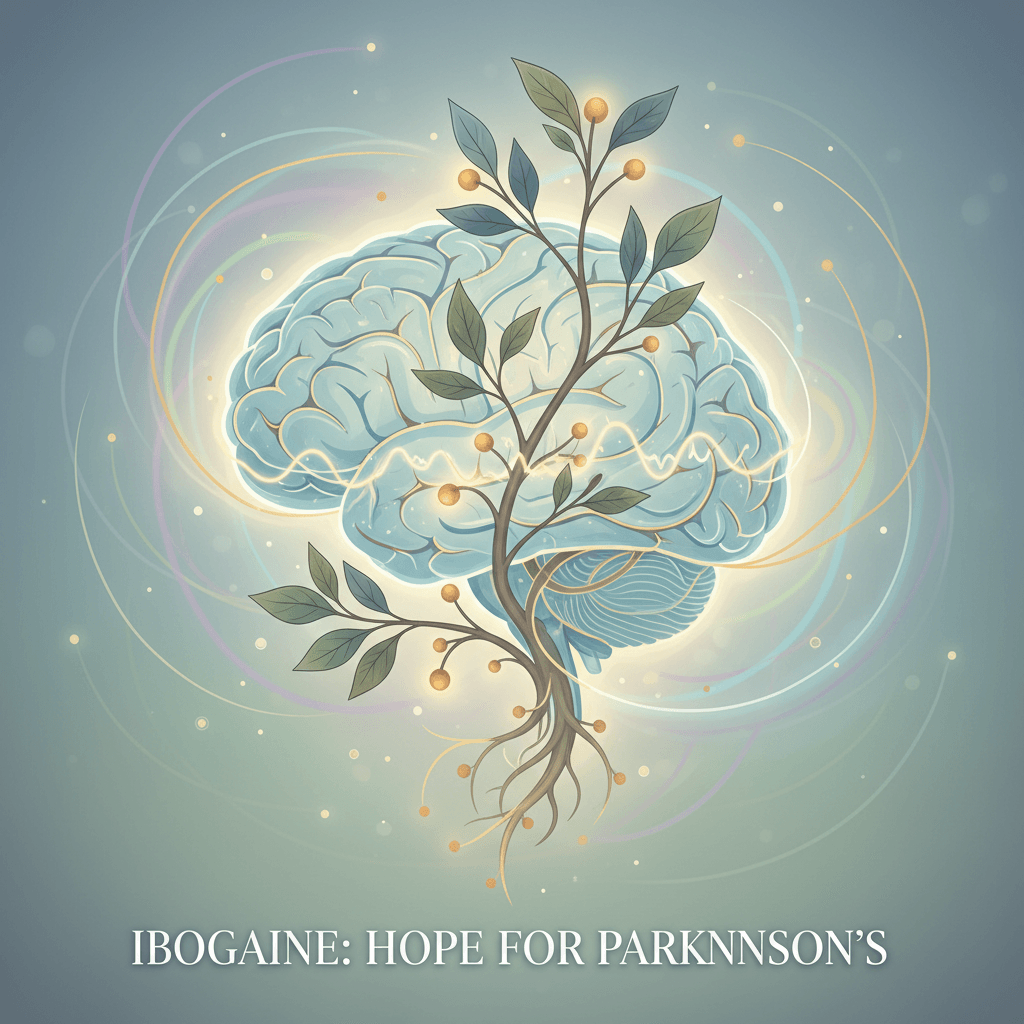
Understanding ibogaine for Parkinson’s symptoms
If you are living with Parkinson’s disease, you may eventually reach a point where traditional medications do not work as well as they used to. At that stage, it is natural to start looking for emerging or alternative options. Ibogaine for Parkinson’s symptoms is one of those experimental approaches that is drawing interest because of its potential effects on the brain’s dopamine system and on neuroplasticity.
Ibogaine is a psychoactive compound derived from the root bark of the African shrub Tabernanthe iboga. Historically it has been explored primarily for addiction treatment, but newer research and early clinical programs suggest it may also influence brain circuits that are directly involved in Parkinson’s disease symptoms, such as movement, mood, and motivation [1].
You should know from the beginning that ibogaine is not an approved treatment for Parkinson’s disease, and serious safety concerns remain. However, understanding what researchers are finding can help you hold more informed conversations with your neurologist, your family, and any clinic you might consider.
Why some people explore ibogaine for Parkinson’s
You might be exploring ibogaine because standard Parkinson’s therapies are no longer providing enough relief, or side effects are becoming difficult to manage. There are several reasons people begin to look at ibogaine for Parkinson’s symptoms in particular.
First, Parkinson’s is driven by the loss of dopamine producing neurons, especially in a region called the substantia nigra. Current medications, such as levodopa, mainly replace or mimic dopamine. They do not rebuild damaged circuits. Ibogaine appears to interact more deeply with the brain’s dopamine system and with growth factors that support neuron health, which is why it is being investigated as a possible disease modifying or neuroprotective strategy [1].
Second, some early clinical experiences suggest that ibogaine treatment might ease both motor and non motor symptoms. In Ambio Life Sciences’ clinical program, launched in 2025, some participants with Parkinson’s reported better mobility and improvements in non motor symptoms such as neuropathic pain and even eyesight [2]. Former professional quarterback Brett Favre, diagnosed with Parkinson’s in 2024, has publicly described better sleep and increased energy after ibogaine treatment in this program [2].
Finally, ibogaine is part of a wider shift toward therapies that may help the brain rewire itself. You may have also read about D serine, an experimental amino acid that appears to stimulate new branching in dopamine neurons and restore motor function in mouse models of Parkinson’s, with early human data suggesting both psychiatric and motor improvements [3]. Ibogaine is being studied within this same neurorestorative framework.
If you are interested in the broader landscape of these therapies, you may also want to read more about ibogaine neurological treatment for Parkinson’s and how it fits into new approaches to disease management.
How ibogaine may affect the Parkinson’s brain
To evaluate ibogaine for Parkinson’s symptoms, it helps to understand what scientists think it is doing in the brain. Most of the detailed mechanistic work has been done in animal models, so you should view this as a map of possibilities rather than proven facts in humans.
Dopamine system modulation
Parkinson’s disease is closely tied to dopamine pathways. Ibogaine appears to act on several neurotransmitter systems at once, but research has focused on its impact on a protein called glial cell line derived neurotrophic factor, or GDNF. GDNF supports the survival and function of dopamine neurons, which makes it especially relevant for Parkinson’s.
In one study, a single dose of ibogaine at 40 mg per kilogram in rats led to a 12 fold increase in GDNF mRNA in the ventral tegmental area and a 6 fold increase in the substantia nigra within 24 hours [1]. These are key dopamine rich regions. The same study showed that this genetic upregulation was mirrored at the protein level in the ventral tegmental area, confirming that ibogaine was not only triggering a signal, but also increasing the amount of actual GDNF protein in that region.
Because GDNF has long been studied as a potential neuroprotective and neurorestorative factor for Parkinson’s disease, ibogaine’s ability to drive GDNF production in dopamine circuits is one of the main reasons it is considered promising. Researchers have suggested that this selective upregulation of GDNF might contribute to neuroprotection in dopaminergic pathways relevant to neurodegenerative disorders like Parkinson’s [1].
Neuroplasticity and BDNF
Ibogaine seems to do more than alter dopamine support factors. The same animal study found that ibogaine caused a dose and time dependent increase in brain derived neurotrophic factor, or BDNF, mRNA in several regions that are important for motivation, reward, and movement control, including the nucleus accumbens, prefrontal cortex, ventral tegmental area, and substantia nigra [1].
In the nucleus accumbens, ibogaine caused extremely large increases in BDNF mRNA, up to 340 fold at certain doses. Although mature BDNF protein did not rise significantly at the 24 hour mark in these regions, the increase in precursor forms such as proBDNF in the nucleus accumbens suggests that ibogaine is priming circuits involved in plasticity and learning [1].
For you, this is important because BDNF is one of the brain’s key growth factors for synapses. While the research is still early, the combination of increased GDNF and altered BDNF signaling hints that ibogaine might help reshape damaged networks, not simply provide temporary chemical relief.
Neurorestorative versus neuroprotective strategies
Traditional Parkinson’s treatments are mostly neuroprotective when they target disease progression at all. They generally have to be used early and are primarily designed to slow damage. Newer approaches, including D serine and ibogaine, are being studied for their potential neurorestorative effects.
In the D serine mouse study, for example, dopamine producing neurons in the ventral tegmental area, which are usually spared in Parkinson’s, were stimulated to grow new branches into the brain’s movement center. This branching helped restore neuromuscular function in less than a month [3]. Early human trials with D serine have also shown unexpected motor improvements along with better mood and motivation [3].
Ibogaine appears to be moving in the same direction. By increasing GDNF and altering BDNF related pathways, it may offer a way to support the survival, regrowth, or rewiring of dopamine circuits. Researchers emphasize that this is still a hypothesis and that ibogaine’s effects on dopaminergic neuron survival in the substantia nigra need much more investigation [1]. Still, if you are looking for therapies that try to repair rather than only compensate, this is the scientific rationale behind ibogaine.
What early ibogaine programs for Parkinson’s look like
Because ibogaine carries significant medical risks, especially for the heart, it is not something you can or should experiment with on your own. The emerging model for ibogaine in neurodegenerative disease is a tightly supervised program.
Ambio Life Sciences has launched one of the first structured ibogaine clinical programs for conditions such as Parkinson’s disease, multiple sclerosis, and traumatic brain injury. Their approach currently involves a four day supervised treatment with ibogaine, followed by six months of at home microdosing, with the full course costing around 6,050 dollars [2].
Participants undergo medical screening and cardiac monitoring during the high dose, clinic based phase. This is because therapeutic doses of ibogaine can trigger serious side effects, including nausea, vomiting, tremors, loss of coordination, and in rare cases, potentially fatal heart rhythm disturbances [2]. The at home microdosing phase is associated with milder effects, but patients are typically followed closely.
As of mid 2025, about 30 patients had taken part in Ambio’s ibogaine program, with some reporting improvements in mobility, neuropathic pain, and vision, as well as overall symptom relief [2]. These insights are encouraging, but they come from a small group and are not the same as a large, randomized clinical trial.
If you are comparing different programs, resources like an ibogaine Parkinson’s treatment program overview can help you understand what a comprehensive, medically supervised model should include.
Potential benefits of ibogaine for Parkinson’s symptoms
When you review the research and the early clinical reports, there are several areas where ibogaine treatment may have potential benefits for Parkinson’s disease.
You will often see claims that ibogaine can:
- Reduce tremors and improve motor symptoms
- Regulate dopamine levels more naturally
- Enhance mobility and coordination
- Improve mood, reduce depression, and relieve anxiety
- Possibly slow or even reverse aspects of disease progression
These claims are based on a combination of preclinical data and early clinical observations. For example, ibogaine driven increases in GDNF may support the survival of dopamine neurons and help stabilize or improve motor function [4]. There is also evidence that ibogaine’s modulation of the dopamine system could help normalize fluctuations that contribute to tremors, rigidity, and bradykinesia, the slowed movement that is common in Parkinson’s [4].
On the non motor side, ibogaine seems to affect mood circuits in a way that may reduce depression, stress, and anxiety, all of which can make living with Parkinson’s harder. Some early programs report that patients feel more motivated, less apathetic, and more emotionally resilient after treatment [4].
You can explore how these potential benefits are being approached in more detail by looking at specialized content such as ibogaine therapy for Parkinson’s disease management and ibogaine therapy for Parkinson’s motor symptoms.
Ibogaine is best thought of as a possible way to influence the underlying health and plasticity of your dopamine circuits, not as a simple substitute for standard medication.
Risks and safety considerations you need to weigh
Any serious discussion of ibogaine for Parkinson’s symptoms has to address safety. Ibogaine is not a mild supplement. It has a real risk profile and should never be taken casually or without strict medical supervision.
The main risks you should be aware of include:
- Cardiac complications. Ibogaine can prolong the QT interval on an electrocardiogram, which can trigger dangerous arrhythmias. In worst case scenarios, this can be fatal. This is why reputable programs insist on cardiac monitoring and pre treatment screening for heart disease [2].
- Neurological and motor side effects. Acutely, ibogaine can cause tremors, loss of coordination, and other neurological symptoms. For someone who already has Parkinson’s related movement challenges, this phase can be particularly intense [2].
- Nausea and vomiting. These are common during high dose treatment and can be physically exhausting, especially if you already have weight loss or frailty.
- Overdose risk. Although clinical programs carefully control dosing, ibogaine taken outside of medical settings has been associated with overdoses and serious toxicity, which underscores the importance of professional supervision [4].
Because of these risks, medical evaluation prior to treatment is critical. That evaluation should include cardiac testing, review of all current medications, assessment of liver function, and a full neurological workup to clarify your current stage of disease. Not everyone with Parkinson’s will be a candidate.
You may also want to understand how ibogaine interacts with other medications you take for Parkinson’s symptoms. This is where your neurologist’s input is essential, particularly if you are on complex regimens for tremor control or mood. Materials such as ibogaine therapy for Parkinson’s tremors and ibogaine treatment for Parkinson’s tremor relief can help you frame your questions.
How ibogaine compares to other experimental approaches
If you are evaluating ibogaine, it may help to place it next to other emerging approaches like D serine so you can see similarities and differences.
| Feature | Ibogaine | D serine |
|---|---|---|
| Primary origin | Plant derived psychoactive compound | Amino acid naturally occurring in the body |
| Main research focus | Addiction treatment, now extended to neurodegeneration | Neurorestorative therapy in Parkinson’s models |
| Mechanistic highlights | Increases GDNF and alters BDNF in dopamine pathways [1] | Stimulates new branching of dopamine neurons in the ventral tegmental area, restores neuromuscular function in mice [3] |
| Early human data | Symptom improvement in small neurodegenerative cohorts, including Parkinson’s, with significant safety concerns | Small trial of 10 Parkinson’s patients showed improved mood and motor symptoms, long term safety unproven [3] |
| Regulatory status | Not approved for Parkinson’s, available mainly in specialized programs or research settings | Undergoing modest clinical trials with nonprofit support, not yet approved [3] |
Both ibogaine and D serine illustrate a trend toward interventions that try to rewire or restore brain circuitry instead of only replacing dopamine. If that is the type of therapy you are interested in, you may also want to read more broadly about ibogaine therapy for Parkinson’s and ibogaine treatment for Parkinson’s disease.
Deciding whether to pursue ibogaine treatment
Choosing whether to pursue ibogaine for Parkinson’s symptoms is a deeply personal and complex decision. You are balancing hope for better function and quality of life against real medical risks and the uncertainty that comes with experimental treatments.
As you make your decision, you might find it helpful to:
-
Clarify your goals. Are you primarily hoping for tremor relief, better mobility, improved mood, or a potential impact on disease progression. Your priorities can shape whether ibogaine is worth exploring, or whether a different ibogaine Parkinson’s alternative treatment or conventional option may be better aligned with your needs.
-
Speak openly with your neurologist. Even if your doctor is cautious or skeptical, sharing what you have learned about GDNF, BDNF, and dopamine modulation can lead to a more nuanced conversation. Bringing specific questions about cardiac risk, drug interactions, and your overall health status is important.
-
Evaluate the program carefully. Not all ibogaine programs are the same. You should look for clear medical oversight, cardiac monitoring, transparent dosing protocols, and realistic claims. Any center that guarantees a cure or downplays the risk of heart problems is not being responsible.
-
Include your support system. Because ibogaine treatment often involves intense experiences and a recovery period, it is essential that your family or caregivers are part of the planning process. They will also be key observers of any improvements or setbacks after treatment.
-
Plan for follow up care. Whether you proceed or not, Parkinson’s is a long term condition. A solid plan for ongoing neurologic care, physical therapy, and mental health support will remain essential.
If you find yourself drawn to ibogaine’s potential to promote neuroplasticity and dopamine system repair, learning more through resources on ibogaine neurological treatment for Parkinson’s can help you explore next steps in a structured way.
Moving forward with information and support
Parkinson’s disease reshapes nearly every part of your life. It is understandable to want options that go beyond symptom masking and that hold out the possibility of repair. Ibogaine for Parkinson’s symptoms sits at the frontier of that search, combining intriguing scientific mechanisms with real world reports of improvement, while also carrying a serious risk profile and the uncertainty that comes with early stage therapies.
As research continues, including modest but important clinical trials for related neurorestorative compounds like D serine [3], you will have more data to guide your choices. For now, the most constructive step you can take is to stay informed, ask detailed questions, and work with medical professionals you trust.
Exploring ibogaine therapy does not mean abandoning standard care. Instead, you can think of it as one possible component in a broader, carefully considered plan for managing Parkinson’s disease, protecting your brain, and preserving your quality of life for as long as possible.