
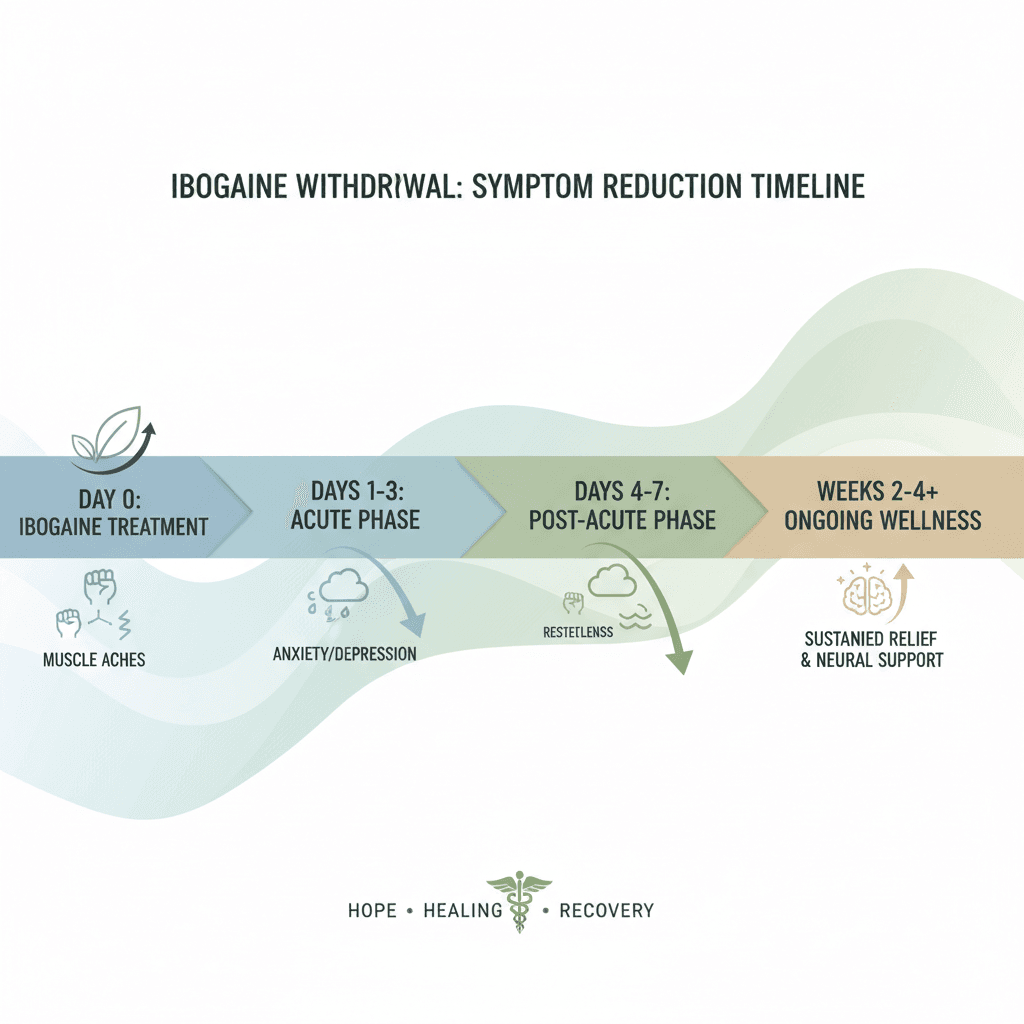
Understanding the ibogaine withdrawal timeline
If you are researching ibogaine withdrawal timeline explained guides, you are likely trying to understand how this medicine affects detox and whether it can reduce or interrupt the worst of your symptoms. Ibogaine is not a standard detox medication, and its effects on withdrawal are different from traditional approaches such as tapering or replacement therapies.
Ibogaine can significantly modify the course of withdrawal for many people by rapidly reducing symptoms and cravings. In a study of 88 people with problematic opioid use, 80% reported that ibogaine eliminated or drastically reduced withdrawal symptoms, often within 1 to 3 hours and usually within 34 hours of dosing [1]. Understanding how this timeline works can help you prepare realistically and ask better questions when you speak with a medical provider or treatment center.
In this article, you explore what typically happens before, during, and after ibogaine treatment, how it interacts with withdrawal across different substances, and how it compares with conventional detox methods.
How ibogaine affects withdrawal in your body
Ibogaine is often described as helping to “reset” your brain and body from chronic substance use. While the experience is complex, several key mechanisms are relevant for you if you are focused on withdrawal relief.
Ibogaine interacts with multiple receptor systems, including opioid, serotonin, and dopamine receptors. By affecting these systems together, ibogaine appears to rebalance brain chemistry that has been altered by ongoing drug use. This neurochemical reset is believed to reduce the intensity and duration of physical withdrawal symptoms and cravings [2].
Ibogaine itself is metabolized relatively quickly into a longer acting substance called noribogaine. Ibogaine tends to produce acute, dream like or visionary effects that last about 4 to 8 hours, while noribogaine remains active much longer and likely contributes to ongoing mood improvement and craving reduction after the main experience ends [3]. This extended effect is one reason many people report days or weeks of lighter withdrawal and reduced urge to use after treatment.
If you want to dive further into how these mechanisms relate specifically to symptom relief, you can read more about ibogaine for withdrawal symptoms and ibogaine detox symptom relief.
Pre treatment phase: before ibogaine dosing
Before you ever receive ibogaine, you usually go through a pre treatment period. This phase can be physically and emotionally demanding, especially if you are already in withdrawal or tapering down from opioids, alcohol, or other substances.
During this time, you may experience many of the same symptoms that occur in standard detox. Common physical withdrawal symptoms include anxiety, restlessness, muscle aches, chills, sweating, irritability, intense cravings, and trouble concentrating as your body starts to adjust to less or no substance use [2].
Clinics that specialize in ibogaine for drug withdrawal often structure this pre treatment phase carefully. You may go through:
- Medical screening and cardiac evaluation
- Stabilization on short acting substances for opioids
- Careful timing of your last dose so that you are in early withdrawal but medically stable at the time of ibogaine administration
This setup matters because ibogaine appears to work best when your body is already beginning to withdraw, but you are monitored and supported so that symptoms do not become overwhelming before you receive the medicine.
Acute ibogaine phase: first 24 hours
The acute ibogaine phase typically starts within an hour or two after taking the dose and can last many hours. This is the core of the ibogaine experience and the time when you see the most dramatic effects on withdrawal.
In the opioid use study, most people experienced relief of withdrawal symptoms within 1 to 3 hours of ibogaine administration, and almost all reported that withdrawal had been eliminated or drastically reduced within 34 hours [1]. For you, this can mean that symptoms which normally build for days during traditional detox may be significantly muted or interrupted once ibogaine takes effect.
During this acute phase, you may notice:
- Rapid softening of physical withdrawal, such as less body pain, sweating, and restlessness
- Marked reduction in immediate cravings
- Strong psychoactive or visionary effects, including vivid imagery and intense psychological processing
It is also common to experience physical side effects such as nausea, vomiting, dizziness, sweating, and temporary difficulty walking or coordinating movements. In a 2018 open label study of 191 people undergoing ibogaine detoxification, doses of 8 to 12 mg/kg were generally well tolerated, with side effects mostly limited to nausea, vomiting, and ataxia shortly after administration and no serious adverse events reported in that particular sample [3].
Many people describe a period of deep, dream filled sleep or trance like rest after the initial visionary portion. This rest phase is considered part of the healing process and can coincide with further settling of withdrawal symptoms [2].
If you are specifically looking for the possibility of ibogaine detox without severe withdrawal, understanding how these first 24 hours may unfold is central to your planning and expectations.
Sub acute phase: days 1 to 7 after treatment
Once the most intense effects of ibogaine fade, you enter a sub acute phase that lasts several days. This period is often when you begin to test what life feels like without your usual substance while still experiencing some protection from cravings and acute withdrawal.
In the opioid study, about half of the participants reported reduced cravings lasting at least one week, and a quarter experienced craving reductions for three months or longer [1]. Another study found that self reported cravings for heroin and cocaine dropped significantly by program discharge and remained lower at one month follow up [3].
During the first days after ibogaine, you may notice:
- Fatigue and low physical energy as your body adjusts
- Gradual normalization of appetite and sleep patterns
- Continued reduction or absence of the sharp, acute withdrawal you might expect with standard detox [2]
Some lingering symptoms, sometimes called “after withdrawal,” can still appear. These may include mood swings, mild body discomfort, or mental fog. However, for many people, these symptoms are significantly milder than what they have experienced during previous detox attempts without ibogaine.
If you are considering ibogaine withdrawal support therapy, this sub acute window is an important time to add counseling, peer support, or structured aftercare, because you may have more physical and mental room to engage than you would in a standard detox week.
Post acute phase: weeks to months after ibogaine
The post acute phase refers to the period after the initial week, when the immediate effects of ibogaine are fading but longer term changes may still influence your withdrawal, cravings, and mood.
In the 88 person study, 30% reported complete abstinence from opioids after ibogaine. Of that group, over half remained abstinent for at least one year, and about a third maintained abstinence for two years or more [1]. Even among those who did not stay fully abstinent, 48% reduced their opioid use compared with pre treatment levels, and at the time of follow up, 41% of all participants reported at least six months of sustained abstinence [1].
Several patterns are noteworthy for you in this later phase:
- Many individuals report sustained reduction in cravings for weeks after treatment
- Depression and anxiety symptoms often improve and stay better at one month follow up, which can make ongoing withdrawal or post acute withdrawal syndrome easier to tolerate [3]
- Those who benefit most tend to describe the ibogaine experience as spiritually meaningful and insightful, helping them understand their addiction and stay engaged in change [1]
It is important to remember that ibogaine does not freeze time. Your brain and body will continue to adjust over weeks and months, and you can still experience some form of post acute withdrawal, especially with long acting opioids, benzodiazepines, or heavy alcohol histories. The key difference is that ibogaine may shorten and soften this process, and it often gives you a period of relief in which to build new routines and support.
For more on real world adjustment after treatment, you can explore descriptions of the ibogaine withdrawal experience to see how others have navigated this stage.
How ibogaine interacts with different substances
Although the phrase ibogaine withdrawal timeline explained often focuses on opioids, you may be wondering how ibogaine interacts with withdrawal from other drugs. Research is more extensive for opioids, but there is also data for cocaine and clinical experience with other substances.
Opioids
For short acting opioids such as heroin, oxycodone, and some prescription pain medications, ibogaine appears particularly effective in interrupting withdrawal. Physician rated withdrawal scores dropped significantly within about 36 hours of ibogaine dosing in one study, with only mild signs of withdrawal remaining [3].
Many opioid users describe ibogaine as compressing what would normally be days of intensely uncomfortable withdrawal into a shorter window of more manageable symptoms. Craving reduction can last beyond the acute phase, which may be especially valuable if you have repeatedly relapsed during the first week after detox.
Stimulants such as cocaine
In the 2018 open label study, individuals dependent on cocaine also showed significant reductions in craving by discharge and at one month follow up [3]. While stimulant withdrawal is less physically dangerous than opioid or alcohol withdrawal, it often involves severe fatigue, depression, and psychological craving. Ibogaine’s effects on mood and its action on multiple neurotransmitter systems may make this period more tolerable.
Alcohol and other substances
For alcohol and certain sedatives, standard medical detox is still critical, because abrupt withdrawal can be medically dangerous. In these cases, ibogaine is sometimes considered after stabilization or as part of a well monitored plan. The goal is often to reduce lingering cravings and mood disturbances rather than to manage the most acute and risky withdrawal period.
Each substance has its own profile of risk and withdrawal, so you should always discuss your specific history with a medical provider familiar with ibogaine treatment for detox symptoms rather than assuming a one size fits all approach.
Comparing ibogaine to conventional detox
Understanding how ibogaine fits into the wider landscape of withdrawal treatment can help you weigh your options more clearly.
In traditional detox, withdrawal typically follows a predictable curve based on the substance. For opioids, you might experience:
- Onset within 8 to 24 hours after last short acting dose
- Peak intensity around days 2 to 4
- Gradual decline in physical symptoms over 5 to 10 days
- Persistent cravings and mood symptoms for weeks or months
Medications like buprenorphine or methadone can smooth this curve by partially replacing the opioid, while non opioid comfort medications treat individual symptoms. However, many people still experience significant discomfort and prolonged cravings.
With ibogaine based withdrawal reduction treatment, the pattern can be different:
- You enter early withdrawal or taper under supervision.
- Ibogaine is administered and begins acting within hours.
- Physical withdrawal intensity is often sharply reduced within 1 to 2 days, sometimes sooner.
- Cravings and mood symptoms may stay lower for days or weeks, providing a window of relative stability.
This does not remove all risk or effort, but it may compress the most difficult portion of withdrawal and give you more mental and physical space to engage in therapy, planning, and new behaviors.
A simplified comparison can help you visualize these differences:
| Aspect | Conventional detox | Ibogaine supported detox |
|---|---|---|
| Onset of relief | Gradual over several days | Often within hours of dosing |
| Peak withdrawal intensity | Usually days 2 to 4 | Frequently reduced or interrupted within 24 to 36 hours |
| Craving pattern | Can stay high for weeks or months | Often reduced for at least days and sometimes months |
| Mood during early abstinence | Frequently depressed or anxious | Many report rapid mood improvement |
| Primary tools | Replacement meds and symptom specific drugs | Single high dose with multi receptor action |
If you are primarily focused on avoiding severe physical withdrawal, looking into ibogaine withdrawal interruption and related approaches can help you understand whether this method might align with your needs and medical profile.
What you might feel at each stage
While every person’s ibogaine withdrawal experience is unique, it can be helpful to have a general sense of what you might feel across the timeline. This is not a guarantee but a way to orient yourself.
In the pre treatment days, you may feel standard withdrawal symptoms building, along with anxiety about the upcoming session. You might also undergo medical tests and consultations that can feel emotionally exposing, but they are designed to keep you safe.
During the acute ibogaine phase, you might feel:
- Rapid shifts in physical sensations as withdrawal eases
- Nausea or vomiting as your body responds to the medication
- Vivid inner experiences that bring up memories, insights, or emotional material
Many people find this psychologically intense. Some describe it as reviewing their life or confronting the deeper roots of their substance use. Others have less structured experiences but still come away with a changed perspective. This psycho spiritual component is one reason many responders later report greater understanding of their addiction and stronger motivation for change [1].
In the early days after treatment, you may notice fatigue but relatively lighter withdrawal compared with past detox attempts. Sleep and appetite often begin to normalize within a few days, and some people report feeling emotionally clearer, even if they are still processing what they experienced [2].
Over the following weeks, your focus typically shifts from acute symptom management to building a new daily structure. Even though cravings and depressive symptoms may be improved, post acute withdrawal and life stressors can still arise. This is why many people choose to continue with therapy, peer support, or a structured program that aligns with ibogaine detox symptom relief principles, so that the gains from treatment translate into longer term change.
Setting realistic expectations for your journey
Understanding the ibogaine withdrawal timeline explained in a structured way can help you avoid two common extremes, expecting a miracle cure or assuming nothing will help. The evidence suggests that ibogaine can significantly reduce or interrupt acute withdrawal for many people, and it often decreases cravings and lifts mood for at least several weeks [4].
At the same time, success rates are not 100 percent. Some individuals relapse, although many still use less than before or take longer to return to heavy use. Your outcome will depend on multiple factors, including your health, substance history, psychological readiness, and the support you put in place after treatment.
If you decide to move forward, you can prepare by:
- Learning what to expect at each phase of the ibogaine timeline
- Understanding that symptom reduction creates a window of opportunity, not a guarantee
- Lining up medical follow up, counseling, or peer support in advance
By approaching ibogaine as one powerful tool in a broader recovery plan, rather than a stand alone solution, you give yourself the best chance to turn a period of reduced withdrawal and cravings into lasting change.