
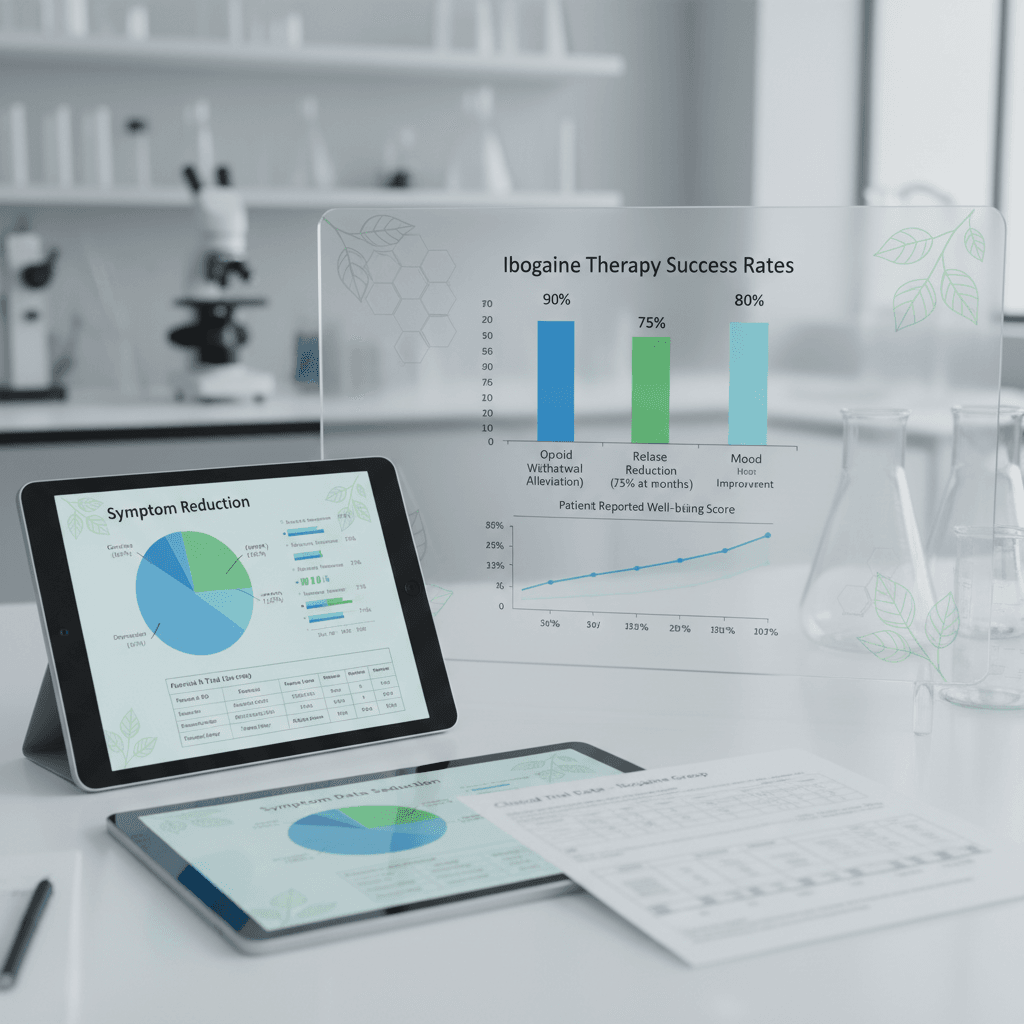
Ibogaine therapy results statistics can be confusing when you first start looking into them. Different studies use different methods, definitions of “success,” and follow up periods. This guide brings those numbers together in one place so you can better understand what ibogaine might offer, what it cannot guarantee, and what your responsibility is in making the most of treatment.
You will see that ibogaine often shows strong short term results for withdrawal and craving, and promising medium term outcomes for many people, but long term success depends heavily on what you do after treatment, including therapy, lifestyle changes, and support.
Understanding what “results” really mean
Before you look at ibogaine therapy results statistics, it helps to understand what researchers are actually measuring. Different studies track different outcomes, which is one reason numbers do not always match.
Common outcome measures include:
- Short term withdrawal relief
- Changes in cravings
- Days or months of abstinence
- Reduced frequency or amount of use
- Mental health symptoms such as depression, anxiety, or PTSD
- Overall functioning and quality of life
Some studies define success only as total abstinence. Others count a major reduction in use and improvement in functioning as a positive result. When you compare ibogaine to other treatments, you need to keep those definitions in mind.
If you want a broader overview first, resources like how effective is ibogaine therapy and ibogaine treatment effectiveness research can give you more context before you dive into specific statistics.
Short term results: Withdrawal and early relief
One of the clearest findings in ibogaine research is its impact on acute withdrawal symptoms, especially for opioid dependence. Multiple studies report noticeable improvements within hours to days.
In a 12 month observational study from New Zealand, acute opioid withdrawal measured by the Subjective Opioid Withdrawal Scale dropped significantly immediately after ibogaine treatment for all 14 participants, with a p value of 0.015, which indicates a statistically meaningful change [1]. Many participants described withdrawal as eliminated or drastically reduced.
A larger study of 88 opioid dependent patients who received ibogaine in Mexico found that 80 percent reported that ibogaine eliminated or drastically reduced withdrawal symptoms [2]. That kind of immediate physical relief is part of what makes ibogaine stand out when you compare it to going “cold turkey.”
At the same time, it is important for you to understand that withdrawal relief is not the same as long term recovery. Ibogaine can interrupt the physical dependence and give you a window of clarity and stability, but what you do with that window is what determines the long term outcome.
Medium term outcomes: Cravings and reduced use
After the first few days, research shifts from withdrawal to cravings and ongoing use. This is where ibogaine therapy results statistics show both promise and variability.
In the same 88 patient Mexican study:
- 50 percent experienced a reduction in opioid craving that lasted at least one week
- 25 percent reported craving reduction that lasted three months or longer
These are meaningful numbers, because early cravings are one of the biggest relapse drivers. A few weeks or months of lighter cravings can make it easier for you to start therapy, change your environment, and put support systems in place. However, the data also show that not everyone gets long lasting craving relief from a single treatment.
The New Zealand ibogaine study provides another perspective. Participants showed significant reductions in drug use severity on the Addiction Severity Index Lite over 12 months, with p = 0.002 for those who completed all follow up interviews [1]. Even participants with partial follow up data showed reductions in drug use scores and improvements in family and social functioning, which suggests that for many people ibogaine can be a strong reset point rather than a brief interruption.
To see how these medium term findings fit into the bigger picture, you can also look at ibogaine treatment results data and ibogaine effectiveness for substance use.
Long term abstinence: What the numbers show
When you ask about ibogaine therapy results statistics, you are often really asking a simple question: what are the chances I stay clean in the long run?
There is no single number that answers that for everyone, but several key studies give you a realistic range of outcomes, especially for opioid dependence.
Mexican observational study of 88 patients
In the 2012–2015 observational study of 88 opioid dependent patients treated with ibogaine in Mexico, researchers found [2]:
- 30 percent reported never using opioids again after treatment
- Among these abstainers, 54 percent stayed abstinent for at least one year
- 31 percent stayed abstinent for at least two years
- At the time of the survey, 41 percent of the entire sample reported more than six months of abstinence
- Among those who relapsed, 48 percent reported reduced opioid use compared to before treatment
These numbers show that while not everyone achieves permanent abstinence, a substantial share either stay off opioids completely or move to much lower and more controlled use. For many people, reduced use combined with better functioning is still a meaningful success.
The same study also found that treatment responders, meaning those who stayed abstinent or significantly reduced use, reported lower depression and anxiety and higher well being at long term follow up compared to non responders [2]. That suggests that when ibogaine is part of a positive change, the benefits often go beyond substance use alone.
Dr Mash’s Transcend Clinic report
A 2003 report from Dr Deborah Mash at Transcend Clinic followed 18 patients treated with ibogaine for drug addiction. All six patients who engaged in therapy, aftercare, or both remained clean two years later [3]. This is a small sample, but it gives you a clear message about the role of integration and ongoing support.
Among the other 12 patients:
- Two stayed clean for most of a year, then relapsed due to health issues
- Two relapsed within three to six months
- Five relapsed within one month
- Two had unknown outcomes
- One died from a heroin overdose after six months of sobriety [3]
These results highlight both the potential and the risk. Ibogaine can support lasting recovery, but without aftercare, the relapse risk remains very real. The report also mentions at least one clinical trial involving 30 patients in which none relapsed after two years, although details such as follow up methods and dropout rates are important to consider [3].
If you want to focus specifically on opioids, you can explore ibogaine success for opioid recovery and ibogaine long term recovery outcomes.
Comparing ibogaine to traditional rehab outcomes
When you evaluate ibogaine therapy results statistics, it is natural to compare them to standard rehabilitation or 12 step programs.
Transcend Ibogaine cites a 2006 Cochrane Collaboration review showing that traditional rehabilitation programs based on the 12 step model, such as Alcoholics Anonymous, often have low long term success rates, estimated around 5 to 10 percent [3]. These numbers vary by study and population, but they do put the ibogaine outcomes in perspective.
Some analyses cited by Brown and others suggest that ibogaine’s success rates in alleviating withdrawal and supporting recovery can be better than many standard pharmacotherapies in certain contexts [4]. However, it is important for you to keep in mind that ibogaine studies often involve highly motivated individuals who actively seek out an experimental treatment, and there may not be direct one to one comparisons with standard care.
The key takeaway is not that ibogaine magically solves addiction better than everything else. It is that ibogaine appears to offer a different pathway, with especially strong short term benefits and promising long term results for a subset of people, particularly when combined with robust aftercare.
For a deeper comparison of approaches, you can review ibogaine addiction recovery success and ibogaine treatment success rate.
Evidence for different substances and conditions
Most of the strongest ibogaine therapy results statistics come from opioid related studies, but there is growing data for other substances and conditions.
Stimulants, alcohol, cannabis, and crack
An observational Brazilian study looked at stimulant users, including people using alcohol, cannabis, cocaine, and crack. Ibogaine treatment was combined with psychotherapy in a hospital setting. The study reported that this combination showed promise in treating stimulant addiction, expanding ibogaine’s potential beyond opioids [4].
While detailed percentages and long term abstinence rates are not as clearly laid out as in the opioid studies, the Brazilian data suggest that ibogaine may help reduce use and support behavioral change for a wider range of substances when used in a structured, therapeutic environment.
PTSD, TBI, and mental health symptoms
Ibogaine research is also beginning to explore broader mental health outcomes. A 2024 Stanford Medicine study followed 30 special operations veterans with traumatic brain injury who received ibogaine and magnesium at a clinic in Mexico. One month after treatment, participants showed:
- Average PTSD symptom reductions of 88 percent
- Average depression reductions of 87 percent
- Average anxiety reductions of 81 percent
- World Health Organization Disability Assessment Scale scores improving from 30.2, mild to moderate disability, to 5.1, no disability [5]
Formal cognitive testing also showed improvements in concentration, information processing, memory, and impulsivity. The treatment was reported as safe in this cohort, with no serious side effects or heart complications and only typical issues like headache and nausea during treatment [5].
This is not an addiction study, but it matters for you if you are dealing with co occurring PTSD, depression, or TBI related issues. It suggests that ibogaine may help on multiple fronts, though more research is needed and the combination of ibogaine with magnesium and intensive support makes it hard to separate the exact contribution of each factor.
If you are still asking yourself, “does ibogaine work for addiction,” these mental health findings may influence your decision, and you can read more at does ibogaine work for addiction.
How study design shapes the statistics you see
When you interpret ibogaine therapy results statistics, you need to look beyond the headline percentages and consider how each study was conducted. Several factors can significantly change the numbers:
- Sample size, small studies are more likely to have extreme results
- Follow up length, six month outcomes often look better than three year outcomes
- Loss to follow up, people who cannot be reached are sometimes counted as failures
- Definition of success, abstinence only versus reduced use or improved functioning
- Post treatment environment, whether patients entered rehab, therapy, or aftercare
For example, the MAPS funded New Zealand study with 14 participants reported positive outcomes but also noted that some patients who entered residential treatment afterward were lost to follow up and counted as having no treatment effect [4]. This can understate success if some of those people actually did well, or it can simply reflect that real life follow up is difficult.
Similarly, some private studies count people who go on buprenorphine or methadone as relapsed, even though for some patients those medications represent a major step forward toward stability and safety [4]. If you personally see medication assisted treatment as a positive outcome, the numbers may actually be better than they appear.
Understanding these nuances helps you read ibogaine research more critically rather than taking any single statistic at face value.
When you look at ibogaine therapy results, always ask: Who was studied, how long were they followed, how was success defined, and what kind of support did they have afterward?
Safety, risk, and why medical oversight matters
Positive ibogaine therapy results statistics exist side by side with real risks. Ibogaine is a powerful psychoactive substance that can affect heart rhythm and other systems. It is not a casual or risk free option.
In the New Zealand observational study, one participant died during treatment [1]. While this is a single case, it underscores that serious complications can occur, especially without rigorous medical screening and monitoring.
On the other hand, the Stanford TBI and PTSD study reported that, with careful protocols, there were no serious side effects or heart complications among the 30 veterans, only common short term symptoms like headache and nausea [5]. The Transcend Clinic in Cancún, which reports over 3,800 patients treated and more than 100 combined years of experience in ibogaine therapy, also frames ibogaine as manageable when handled by experienced professionals [3].
For you, this means that where and how you receive ibogaine is as important as the drug itself. Proper cardiac screening, lab work, in person monitoring, and emergency readiness are not optional details, they are central to safety.
Your role in shaping your outcome
One of the most consistent messages across ibogaine therapy results statistics is that medicine plus integration and aftercare works better than medicine alone. Several findings point in the same direction:
- In Dr Mash’s report, all six patients who engaged in therapy or aftercare remained clean two years later, while most of those without aftercare relapsed [3]
- In the 88 patient Mexican study, treatment responders at long term follow up had lower depression and anxiety and higher well being, which often reflects ongoing personal work and support systems [2]
- Participants who described their ibogaine experience as spiritually meaningful and reported gaining insight into the causes of their addiction were more likely to be responders at follow up [2]
These patterns suggest that ibogaine can open a window of insight and relief, but it is up to you to step through and keep walking.
In practice, that means:
- Planning your aftercare before you take ibogaine
- Lining up therapy, support groups, or coaching
- Making concrete changes in your environment, friends, and routines
- Having a relapse prevention plan in writing
- Continuing to work on mental health, trauma, or family issues
Your mindset also matters. If you approach ibogaine as a “cure” that will automatically fix everything, you may be disappointed. If you treat it as a powerful catalyst that you combine with sustained effort, support, and honesty, your odds of joining the “treatment responder” group in these studies are likely to be higher.
If you want to see how other people have navigated this process, ibogaine addiction recovery success and ibogaine long term recovery outcomes can offer more examples.
Putting the statistics into your personal decision
When you pull all of the ibogaine therapy results statistics together, a realistic summary looks something like this:
- Many patients get strong short term relief from withdrawal and early cravings
- A significant portion reduce or stop their substance use for months or longer
- Around one third of opioid patients in some studies report long term abstinence, while many others still benefit from reduced use
- Mental health and quality of life often improve, especially for those who stay engaged in recovery work
- Results vary widely depending on your history, support, and level of follow through
- Safety depends on proper screening, medical oversight, and responsible dosing
Ibogaine is neither a miracle cure nor an empty promise. It is a high impact intervention with real risks and real potential, especially if you are ready to take an active role in integrating what it shows you into daily life.
If you are still weighing your options, you might find it helpful to read across the cluster of resources such as does ibogaine work for addiction, ibogaine treatment effectiveness research, and ibogaine treatment results data. These can help you move from raw statistics toward a decision that fits your situation, your values, and your readiness for change.