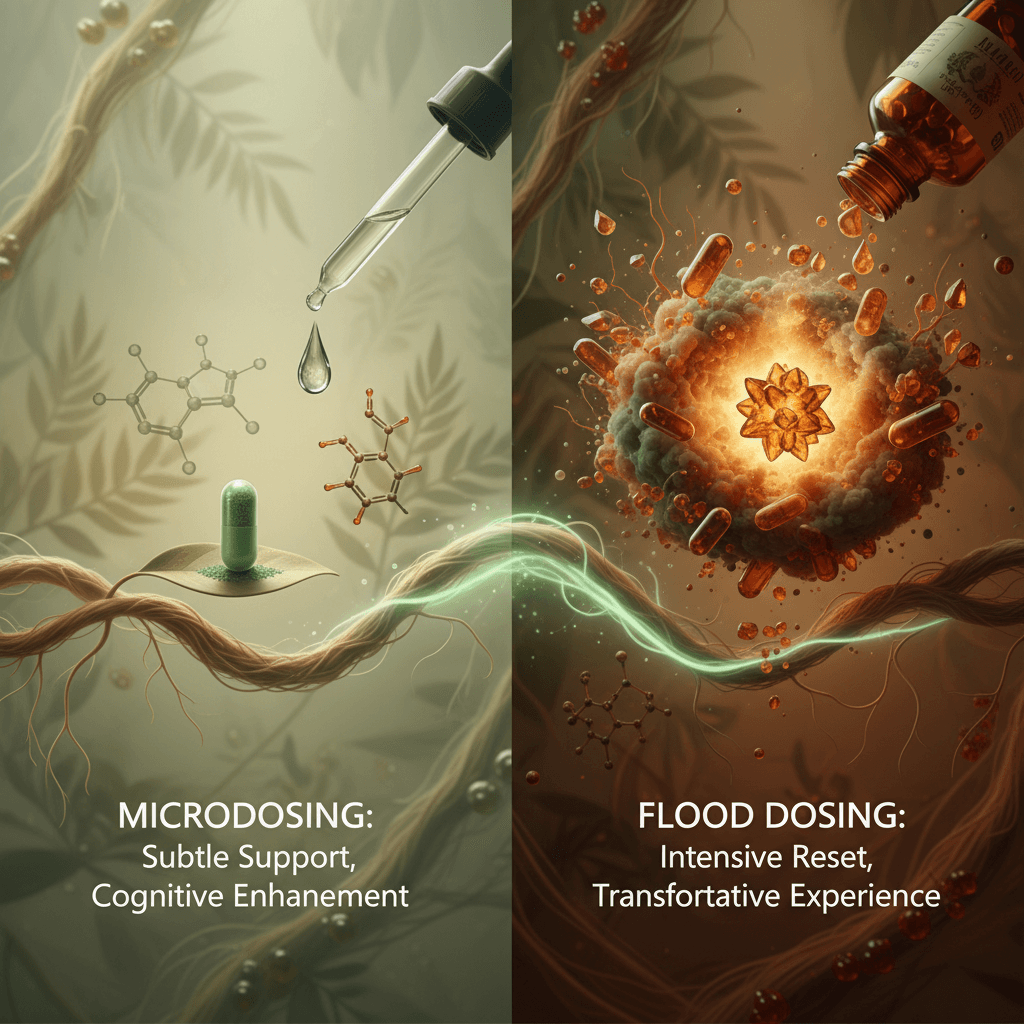
Ibogaine treatment is not one size fits all. When you look at ibogaine microdosing vs flood dose, you are really looking at two very different approaches, used for different goals, with very different risk profiles. Understanding how they work, how they are used in clinical settings, and where the science actually stands can help you make more informed decisions and avoid unsafe experimentation.
In this guide, you explore what separates ibogaine microdosing from flood dosing, how each is typically used, and why reputable programs rely on structured ibogaine treatment dosing protocol rather than guesswork or self-directed trial and error.
Understanding ibogaine and its dosing spectrum
Ibogaine is a psychoactive alkaloid derived from the root bark of the African plant Tabernanthe iboga. At different doses, it can act like almost completely different medicines. That is why the distinction between microdosing and flood dosing matters so much.
On one end of the spectrum, you have ibogaine microdosing. This involves very small, usually sub perceptual doses taken repeatedly. On the other end, there is the ibogaine flood dose, a single large dose that produces an intense, often physically demanding psychedelic experience that can last many hours and sometimes days in its after effects [1].
Understanding the difference between these methods is a key part of understanding the difference between ibogaine doses in general.
What is an ibogaine flood dose
Flood dosing is the most widely known clinical approach to ibogaine. It is usually the method used in medical programs that treat opioid and other substance use disorders.
Typical dose range and structure
Flood doses are generally in the range of 10 to 20 mg of ibogaine per kilogram of body weight [2]. Guidelines from the Global Ibogaine Therapy Alliance suggest that doses above 12 mg/kg are associated with a higher rate of cardiac abnormalities and that total dosing should not exceed 24 mg/kg in any 24 hour period [3].
Many programs use a carefully staged structure that can include:
- An initial test dose, often 2 to 3 mg/kg, given at least two hours before the main dose to monitor for allergic reactions or unusual metabolism. This is particularly important for people who are poor metabolizers of CYP2D6, a liver enzyme that helps clear ibogaine from the body [3].
- One or more main doses making up the flood dose amount.
- Optional booster doses of 1 to 5 mg/kg, usually given either within 2 to 3 hours of the initial flood dose or only after a 24 to 36 hour gap, to avoid piling on cardiac risk [3].
Flood dosing is not simply based on weight. Guidelines point out that mg/kg dosing may be less accurate for people who are extremely underweight or overweight, because the size of the digestive system also influences how ibogaine is processed [3].
If you want a deeper dive into how these higher dose approaches are defined, you may find it helpful to read more about what is a flood dose ibogaine and ibogaine full dose treatment.
Purpose and therapeutic intent
Flood dose ibogaine is usually used when the goal is a major interruption of addiction and withdrawal. At this level, ibogaine affects a wide range of neurotransmitter systems that are linked to drug craving and reinforcement [4]. Clinically, a flood dose is often described as producing:
- A partial or complete interruption of acute opioid withdrawal
- A strong reduction in cravings in the days or weeks after treatment
- A prolonged, often dream like or visionary state that allows for deep psychological processing
Some facilities describe this as a “neurochemical reset,” especially with respect to opioid receptor sensitivity, and link it to mechanisms like increased GDNF, a growth factor involved in neuroplasticity [2].
Flood dosing is also the dose range that historically aligns with Bwiti rites of passage, where large iboga root doses are used to induce profound visionary experiences and spiritual encounters with ancestors [1].
Experience and acute effects
If you undergo an ibogaine flood dose, you can expect a very different experience from what you may know about classic psychedelics like psilocybin or LSD.
Reports and descriptions note:
- An extended oneiric, or dream like, state that can last 8 to 20 hours, often with introspective and autobiographical content
- Closed eye visuals that can be “ethereal” and vivid, plus open eye changes such as tracers and sensitivity to light
- Physical effects including ataxia, nausea, vomiting, and the need to remain lying down for safety
- Residual after effects and sleep disturbance that can last 72 to 96 hours or more [1]
Because this state is so intense and often physically challenging, medical supervision and continuous monitoring are considered essential during any flood dose ibogaine flood dose experience.
Risks, safety and why protocols matter
Flood dosing carries serious risks, particularly cardiac and neurological ones. Research and case reports have linked high doses to:
- Ventricular arrhythmias and QTc prolongation
- Sudden unexplained deaths
- Ataxia and severe gastrointestinal distress
- Neuronal injury in animal models, including damage to Purkinje cells in the cerebellum at doses that were pharmacologically effective [4]
Based on rodent studies, a lethal oral dose in animals is around 263 mg/kg. When safety factors for species differences and human variability are applied, one research group calculated that a “safe” initial human dose would be closer to 0.87 mg/kg, which is much lower than typical clinical flood doses used for addiction treatment [4].
The authors of that review warned that serious outcomes will likely continue if high doses are routinely used in vulnerable populations without careful reconsideration and dose reduction, and they suggested that lower dose strategies may deserve more attention [4].
Clinical protocols try to reduce risk through structured screening and dosing, for example:
- Baseline cardiac workup, including a 12 lead EKG
- Careful review of other medications that may also prolong the QT interval
- Waiting to start dosing until opioid withdrawal is at a moderate level, often an Objective Opioid Withdrawal Scale (OOWS) score of 3 to 7, and delaying if withdrawal is too severe (OOWS 10 or higher) to reduce distress during the ibogaine experience [3]
If you are comparing ibogaine dosing methods explained, you will see that flood doses are where the evidence for addiction interruption is strongest, but also where the safety demands are highest.
What is ibogaine microdosing
Ibogaine microdosing sits at the opposite end of the dosing spectrum. Instead of aiming for a single, massive reset, microdosing is based on smaller, repeated inputs that are intended to gently influence neurochemistry over time.
Typical dose range and formats
Microdosing is usually defined as a sub perceptual dose, often in the range of 1 to 5 mg/kg body weight, taken on a repeated schedule [2]. In practical terms, this can translate into:
- Capsules of 50 to 100 mg iboga or ibogaine preparations
- Smaller concentrates around 25 mg
- What some sources call a “hunter’s dose,” which is enough to be mentally noticeable for some people, but not enough to impair daily functioning [1]
At these levels, you typically do not experience visions or the extended dream like journey that flood doses cause. Instead, many people report:
- Increased clarity and cognitive awareness
- A sense of emotional sensitivity and empathy
- Subtle shifts in attention and appreciation [1]
If you want to unpack the range of lower dose approaches and schedules, you can explore ibogaine microdose therapy and ibogaine microdosing benefits for more details.
Evidence and clinical case reports
As of March 2026, no randomized controlled trials have been published on ibogaine microdosing protocols [2]. Most of what you see discussed comes from:
- Established pharmacology and animal research
- Observational data from higher dose addiction treatments
- Pharmacokinetic modeling
- Anecdotal accounts and small case studies
One of the more detailed case reports involves a 47 year old woman with bipolar II disorder and severe depression. She self administered ibogaine microdoses of 8 mg per day (two 4 mg capsules, taken twice daily) for 60 days, which the authors estimate is about 1 percent of a conventional 15 to 20 mg/kg flood dose [5].
Over the course of treatment and follow up, she showed:
- A 35 percent reduction in Beck Depression Inventory (BDI) scores by day 15
- An 85 percent reduction by day 43
- A 90 percent reduction by day 90, which was 30 days after she stopped the microdosing schedule
Her anxiety and hopelessness scores also dropped sharply, with up to 100 percent reduction in hopelessness scores by day 90 [5]. She reported better mental clarity and more organized thinking, and she gradually tapered off several other medications except alprazolam, with apparently sustained benefit in follow up [1].
This kind of result is promising, but it is important to remember that it comes from a single patient. The authors themselves emphasize that cardiovascular and vestibular safety concerns with ibogaine still apply and that more controlled research is needed before you can treat microdosing as a proven therapy [5].
Theoretical mechanisms and goals
Microdosing is thought to work less through a dramatic reset and more through ongoing neuroplastic and regulatory effects. The idea is that even low doses of ibogaine can:
- Modulate glutamate and other neurotransmitter systems in smaller ways
- Support gradual changes in neural circuits linked to mood and reward
- Provide a mild support for recovery efforts over weeks or months [2]
Typical goals for microdosing might include:
- Mood support, especially in treatment resistant depression
- Cognitive clarity and emotional processing
- Longer term integration after a previous flood dose
- Maintenance support for craving reduction, always paired with other therapeutic work
Some treatment centers use microdosing only as part of a structured aftercare program. For example, MindScape Retreat reserves ibogaine microdosing for a monitored 90 day integration period after a medically supervised flood dose, rather than as a stand alone treatment [2].
Safety considerations at low doses
It can be tempting to assume that microdosing is “safe” simply because the doses are much smaller than flood doses. However, ibogaine still blocks hERG potassium channels, the main mechanism behind QTc prolongation, even at low levels. This is why cardiac screening is recommended for any ibogaine exposure, including microdosing [2].
Key safety points include:
- Low doses do not remove the need for a baseline 12 lead EKG
- If you have a history of heart disease, fainting, arrhythmia, or are taking medications that affect heart rhythm, unsupervised microdosing may be especially risky
- Self directed microdosing without medical oversight is medically inadvisable [2]
The same Brazilian case report that showed antidepressant benefits also explicitly warns that ibogaine’s cardiovascular and vestibular toxicities must be taken seriously in any future clinical applications, microdose or otherwise [5].
Ibogaine microdosing vs flood dose side by side
Looking at ibogaine microdosing vs flood dose side by side can help you see why these approaches are used in different contexts and why they are not interchangeable.
| Aspect | Flood dose ibogaine | Ibogaine microdosing |
|---|---|---|
| Typical dose | 10 to 20 mg/kg, with guidelines warning about higher cardiac risk above 12 mg/kg and a ceiling of 24 mg/kg in 24 hours [3] | Often 1 to 5 mg/kg, or fixed capsules like 25 to 100 mg, sometimes around 1 percent of a classic flood dose [6] |
| Main goal | Interrupt addiction and acute withdrawal, produce deep psychological insight and a global “reset” | Provide gradual support for mood, cognition, or recovery over time, often as an adjunct or follow up |
| Experience | Intense psychedelic, oneiric state, physical incapacitation for many hours, residual effects up to 72 to 96 hours [1] | Subtle or sub perceptual effects, usually compatible with daily functioning, no classic psychedelic journey |
| Evidence base | Strongest clinical and observational support for addiction interruption, but ongoing safety concerns [4] | Mostly theoretical, anecdotal and single case reports, no randomized controlled trials as of March 2026 [2] |
| Setting | Requires medical supervision, cardiac monitoring, structured dosing protocol | Should still include medical screening and monitoring, but sometimes used in outpatient or aftercare settings |
| Risk level | High, especially for cardiac events and neurological toxicity at higher doses | Lower than flood dose but still non trivial due to shared cardiac mechanisms |
If you explore ibogaine dosage comparison, you will see that these differences are central to how responsible programs think about risk and benefit.
How reputable programs use these dosing methods
In established medical and therapeutic settings, ibogaine is almost never used casually. Whether a program uses flood doses, microdoses, or both, you will usually see clear protocols, screening, and monitoring.
Flood dose in clinical practice
For addiction treatment, flood dosing remains the core method in most reputable centers. You are likely to see:
- Pre admission medical screening, including EKG, lab work, and review of medications
- Dosing aligned with international guidelines, including test doses and careful mg/kg calculation
- Continuous monitoring of heart rhythm, blood pressure, and oxygen saturation during and after dosing
- Structured psychological support before, during, and after the experience
Programs that focus heavily on this approach may position themselves as centers for ibogaine full dose treatment and emphasize their adherence to formal ibogaine treatment dosing protocol.
Microdosing in supervised settings
Microdosing, when used in professional settings, is more often:
- A part of a longer integration or aftercare plan following a flood dose
- Used cautiously in individuals who have already been fully screened and monitored
- Adjusted based on observed response, side effects, and ongoing EKG monitoring [2]
MindScape Retreat is one example of a program that incorporates microdosing only within a structured 90 day aftercare plan following a supervised flood dose, not as a stand alone service [2].
This kind of model reflects a broader trend. Even though microdosing often sounds gentler, responsible programs treat it as a potentially powerful, and therefore potentially risky, intervention that still demands medical oversight.
What this means for your own decisions
If you are researching ibogaine microdosing vs flood dose because you are considering ibogaine for yourself or someone close to you, a few practical implications can help guide your next steps.
First, recognize that flood dosing is where most of the clinical experience and evidence for addiction interruption lies, but it is also where the serious risks concentrate. Any consideration of a flood dose should include questions about:
- Cardiac screening and monitoring
- Staff training and emergency preparedness
- Clear dosing protocols and alignment with published guidelines
Second, understand that microdosing is not a proven shortcut or a risk free alternative. Early case reports, including the bipolar depression case with 8 mg daily dosing, are encouraging but far from definitive [5]. Self experimentation without medical supervision, even at low doses, goes against current safety advice [2].
Third, keep context in mind. Ibogaine is most effective when embedded within a broader therapeutic framework, not used in isolation. Whether you lean toward a flood dose, a microdose regime, or decide against ibogaine entirely, ongoing therapy, support, and medical care will be central to any sustainable change.
If you want to keep exploring how different levels of ibogaine are used, you can continue with ibogaine dosing methods explained or dig deeper into how people describe the ibogaine flood dose experience. Understanding the full landscape helps you move from curiosity to informed, safety conscious choices.