Understanding ibogaine full dose treatment
When you first hear about ibogaine full dose treatment, you might notice very different opinions. Some people describe it as a life‑changing reset for addiction or trauma. Others warn that it is risky, poorly regulated, and not supported by large clinical trials.
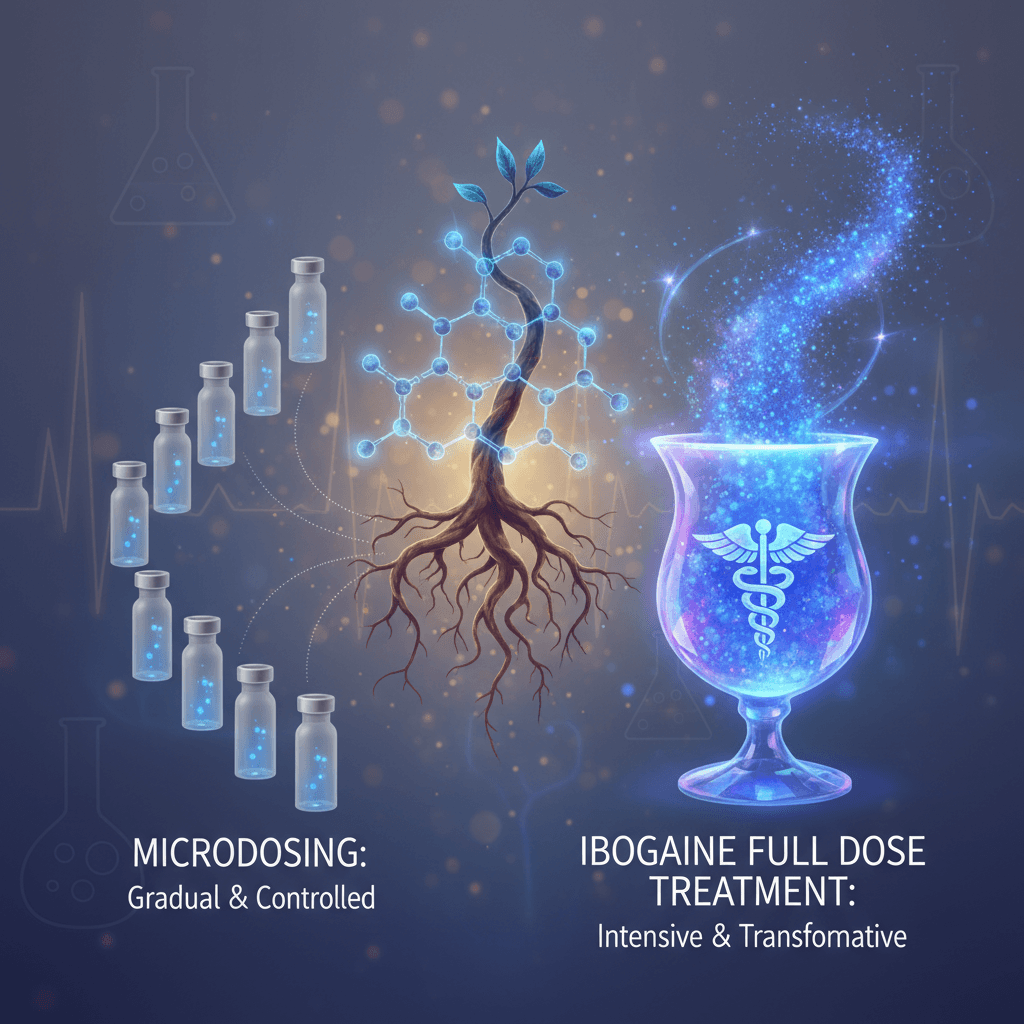
Ibogaine full dose treatment, often called a “flood dose,” involves taking a single, high dose of ibogaine under supervision, usually in a residential or hospital‑like setting. This approach contrasts with ibogaine microdosing, where you take very small amounts over days or weeks. The controversy comes from the gap between promising results and very real safety concerns, especially cardiac risks, as well as differences in legal status around the world.
To understand why ibogaine full dose treatment is so debated, it helps to look at how it works, what the research shows, and how it compares to microdosing and other psychedelic therapy methods.
How ibogaine works in your brain and body
Ibogaine is a psychoactive alkaloid derived from the African shrub Tabernanthe iboga. It affects multiple neurotransmitter systems at once, which is part of why it has such wide‑ranging effects.
Researchers have found that ibogaine and its long‑lasting metabolite noribogaine interact with opioid, serotonin, NMDA, and dopamine systems, and that noribogaine stays in your body for several days after a full or flood dose [1]. This extended presence is thought to support both the immediate interruption of withdrawal and the more gradual lifting of mood.
Ibogaine also appears to stimulate growth factors in the brain, including glial cell‑derived neurotrophic factor (GDNF) and brain‑derived neurotrophic factor (BDNF), which support neuroplasticity and dopaminergic neuron health [1]. This potential for brain repair and rewiring is one reason many people view ibogaine as more than just a detox aid.
At the same time, ibogaine has measurable effects on your heart rhythm, especially at higher doses, which becomes a central issue when you look at full dose protocols.
Flood dose versus microdosing
Before looking at the controversy, it is important to clarify the difference between a flood dose and a microdose, since the intentions, risks, and settings are very different. If you want a detailed overview, resources like ibogaine dosing methods explained and difference between ibogaine doses can be helpful.
What is ibogaine flood dosing?
In a flood dose, you take a relatively high, carefully calculated amount of ibogaine, usually in a single main dose with possible small booster doses. This is often done in specialized clinics that follow an ibogaine treatment dosing protocol that includes medical screening, continuous monitoring, and structured aftercare.
A flood dose typically aims to:
- Rapidly interrupt opioid or other substance dependence
- Dramatically reduce or eliminate acute withdrawal symptoms
- Trigger an intense, often introspective psychedelic or “wakeful dream” experience
- Initiate lasting changes in mood, motivation, and behavior
Subjectively, you may be largely immobile for many hours, with strong inner imagery and altered perception. Some people describe a “life review” or deep insight into past trauma and patterns, something you can explore further in guides like what is a flood dose ibogaine and ibogaine flood dose experience.
What is ibogaine microdosing?
Ibogaine microdosing involves taking very low doses, often a fraction of a typical psychedelic dose, over an extended period. The intention is not to induce a strong psychedelic state, but to gently influence mood, cravings, or cognitive function.
Microdosing protocols might be considered when you:
- Are not seeking an immediate opioid detox
- Want to explore gradual mood support or craving reduction
- Have medical or personal reasons to avoid a full flood dose
- Are more interested in functional, day‑to‑day changes than one major “reset” event
Resources like ibogaine microdose therapy, ibogaine microdosing benefits, and ibogaine microdosing vs flood dose explain this gentler approach in more detail.
In short, flood dosing is aimed at rapid, radical change, especially for addiction, while microdosing focuses on slow, incremental shifts. The controversy around ibogaine focuses mostly on full dose treatment, not microdosing.
What the research says about ibogaine full dose treatment
Ibogaine full dose treatment attracts attention because observational studies report substantial benefits, particularly for addiction and trauma, but also serious safety issues in some cases.
Addiction outcomes and withdrawal relief
Several observational studies from Mexico and New Zealand suggest that ibogaine can help people move from a dependent state to a non‑dependent state, especially with opioids. A review of these clinical observations concludes that ibogaine is particularly effective at reducing short‑term withdrawal and longer‑term depressive symptoms, though long‑term abstinence still depends on many personal and environmental factors [1].
In one 12‑month observational study in New Zealand involving 14 people with opioid dependence, a single full dose ibogaine treatment led to:
- Significant reductions in drug use composite scores on the Addiction Severity Index‑Lite from baseline to 12 months in participants who completed all follow‑ups (p = 0.002), indicating reduced opioid use [2]
- Significant decreases in depression scores on the Beck Depression Inventory‑II from baseline to 12 months (p < 0.001) [2]
- Significant acute reductions in Subjective Opioid Withdrawal Scale (SOWS) scores right after treatment, reflecting relief from withdrawal (p = 0.015) [2]
Other observational work, including a MAPS‑funded study of 30 subjects in Mexico and another in New Zealand, reported notable reductions in opioid use, although follow‑up data were incomplete because some people dropped out or returned to opioid maintenance programs such as methadone or buprenorphine [1].
Overall, compared to many standard addiction treatments, ibogaine outcomes in these studies appear relatively favorable in terms of reducing withdrawal and depressive symptoms, which is why you will often see it described as a “disruption” or “reset” therapy for dependence [1].
Mental health and trauma in full dose settings
Ibogaine full dose treatment is also being evaluated for trauma‑related conditions. A 2024 Stanford Medicine study followed 30 military veterans with traumatic brain injuries who received a full dose of ibogaine combined with magnesium at a clinic in Mexico. One month after treatment, the veterans showed:
- An 88 percent average reduction in PTSD symptoms
- An 87 percent reduction in depression
- An 81 percent reduction in anxiety
- A drop in World Health Organization Disability Assessment Scale 2.0 scores from 30.2 (mild to moderate disability) to 5.1 (near no disability) [3]
Neuroimaging in this study suggested increased theta brain wave activity correlated with improved executive function, which hints that ibogaine may support neuroplasticity and cognitive flexibility in people with TBI [3]. Importantly, no serious side effects or heart complications were reported in this particular cohort, and side effects were limited to issues such as headache and nausea under supervision [3].
These kinds of results explain why some programs strongly advocate for full dose ibogaine treatment in structured clinical environments, especially for complex conditions such as opioid dependence and PTSD.
Safety concerns and medical risks with full dosing
At the same time, ibogaine full dose treatment carries significant risks that cannot be ignored. The main concerns involve cardiac safety, neurologic side effects, and occasional serious adverse events, including death.
Cardiac risk and QTc prolongation
A 2022 open‑label study in the Netherlands provides a clear example of why medical oversight and conservative dosing protocols are so important. In this study, 14 opioid‑dependent patients received a single dose of 10 mg/kg ibogaine‑HCl:
- The average maximum QTc interval increase was 95 ms
- Half of the subjects had QTc values above 500 ms, a range associated with elevated risk for dangerous arrhythmias [4]
- QTc remained elevated above 450 ms in 29 percent of patients longer than 24 hours
Although no torsades de pointes or life‑threatening arrhythmias were observed during 24 hours of monitoring, these findings confirm that clinically relevant QTc prolongation is a predictable effect at full dose [4]. For you, that means an appropriate ibogaine treatment dosing protocol must include:
- Detailed cardiac screening
- Exclusion of high‑risk patients
- Real‑time ECG monitoring for at least 24 hours
- Careful management of other QT‑prolonging medications
In the same study, all patients experienced severe but reversible cerebellar ataxia, meaning they could not walk without support for a period of time, peaking 2 to 6 hours after dosing and resolving fully over 24 to 48 hours [4]. Psychomimetic effects were generally mild: most showed no signs of delirium, a few had low delirium scores, and some reported wakeful dreaming or brief visual hallucinations lasting 3 to 7 hours [4].
Three of the fourteen subjects returned to opioid substitution therapy with morphine within 24 hours, which suggests that while withdrawal relief was strong, complete abstinence was not always sustained even in the immediate post‑treatment period [4].
Mortality and serious adverse events
Safety concerns are not only theoretical. In the 12‑month New Zealand addiction study, one participant died during ibogaine full dose treatment [2]. While the exact circumstances and contributing factors are important to interpret that event, it underscores that full dose ibogaine is not a low‑risk intervention.
Ibogaine clinics in countries where full dosing is legal or unregulated have developed increasingly strict protocols to mitigate these dangers, often integrating cardiology input and excluding people with significant heart, liver, or electrolyte issues. However, because much of this activity happens outside tightly regulated systems, standards can vary widely, which contributes to the overall controversy.
Legal status and regulatory gaps
The legality of ibogaine full dose treatment varies dramatically by country, and these differences shape both access and safety.
- In Mexico, ibogaine is unregulated, which allows clinics to provide full dose ibogaine treatment without specific restrictions. This has made Mexico a popular destination for ibogaine therapy as of 2026 [5].
- In Brazil, the state of São Paulo legalized ibogaine for prescription use in hospital settings in 2016, and regulatory approval has expanded, allowing medically supervised full dose treatments for addiction recovery [5].
- South Africa classifies ibogaine as a Schedule 6 substance, which permits prescribing under strict medical oversight, enabling controlled use in modern medical contexts [5].
- New Zealand does not list ibogaine as a controlled substance, so medical professionals can legally prescribe and administer full dose ibogaine therapy. This has allowed clinics there to integrate more closely with health professionals [5].
- In the United States, ibogaine remains a Schedule I drug and is illegal to prescribe. However, legislative efforts such as New York Senate Bill S1817 and Texas House Bill 3717 aim to support research that could eventually open the door to supervised full dose ibogaine treatment in medical settings [5].
This patchwork legal landscape means that if you are considering ibogaine full dose treatment, you are likely looking at clinics in countries like Mexico or New Zealand, where regulation ranges from clinic‑driven standards to more formal medical oversight. The lack of uniform global regulation is a core reason why many clinicians and regulators remain cautious.
Why microdosing is viewed as less controversial
While full dose protocols remain heavily debated, ibogaine microdosing tends to trigger less concern, mostly because the doses are much lower and therefore carry reduced immediate risk, especially for cardiac events. That does not mean microdosing is risk‑free, but it is rarely associated with the acute complications seen at flood doses.
From a clinical perspective:
- Microdosing protocols are sometimes explored for mood, anxiety, or cravings, but they are not the standard approach for rapid opioid detox.
- Because lower doses may not fully engage ibogaine’s more intense psychedelic and withdrawal‑interrupting effects, they are less studied and less clearly defined in terms of long‑term addiction outcomes.
If you are comparing options, a resource like ibogaine dosage comparison can help you see how these strategies differ in intent, intensity, and risk profile. In practice, structured medical programs still tend to focus on full dose treatment when the goal is to interrupt severe opioid dependence, using microdosing more as an adjunct or alternative in specific scenarios.
Why structured dosing protocols matter
One reason ibogaine full dose treatment is controversial is the gap between rigorous, medically supervised protocols and informal or self‑directed use. The same substance and dose can be relatively safe in one context and highly dangerous in another.
Clinically oriented programs usually follow a detailed protocol that covers:
-
Pre‑treatment screening
You are evaluated for cardiac history, liver function, electrolyte balance, psychiatric stability, and current medications, especially anything that might increase QTc or interact with ibogaine. -
Careful dose calculation
Your dose is typically calculated by body weight and adjusted based on health status and substance use history. Protocols often stagger the dose into an initial portion followed by smaller boosters if tolerated. -
Continuous monitoring
Heart rhythm, blood pressure, and oxygen saturation are tracked throughout the acute phase and for a period afterward, since QTc prolongation can last more than 24 hours in some people. -
Medical staff on site
Staff trained in advanced cardiac life support are present, with access to emergency equipment and medications. -
Aftercare and integration
Because ibogaine is most effective as a catalyst rather than a complete solution, programs emphasize therapy, support groups, and lifestyle changes to sustain benefits.
Without such a protocol, your risk profile increases sharply. This is one of the main reasons health authorities are cautious about ibogaine, and why any self‑directed or underground use of full doses is particularly controversial.
Balancing promise and risk as you decide
If you are trying to decide between ibogaine full dose treatment and ibogaine microdosing, it can help to look at your goals, medical profile, and support system side by side. Resources like ibogaine microdosing vs flood dose can help you make a more structured comparison.
Ibogaine full dose treatment appears most effective for rapidly interrupting opioid dependence and reducing short‑term withdrawal and depression, but it carries clear cardiac and neurological risks that require strict medical oversight and careful screening.
Microdosing may appeal if you want a lower‑intensity, gradual approach and you are not in acute withdrawal, but evidence is less robust and outcomes can be more subtle. In either case, ibogaine is best viewed as one component in a broader recovery or healing plan, not a stand‑alone cure.
If you choose to explore ibogaine further, focusing on reputable programs with clear ibogaine treatment dosing protocol standards, transparent medical oversight, and realistic expectations will help you navigate both the promise and the controversy with more clarity and safety.