
Are You Ready for Ibogaine Detox for Opioids? Key Facts on Ibogaine for Methadone Withdrawal Inside
You called expecting to book a treatment date, and the intake coordinator asked for your ECG, your potassium level, your current medications, and whether you have ever had a seizure or a heart arrhythmia. You thought this was supposed to be alternative medicine, not something harder to qualify for than surgery. Here is the honest version: ibogaine detox for opioids, and especially ibogaine for methadone withdrawal, is one of the most medically demanding interventions in addiction care. The clinics that make it sound easy, the ones that say yes over the phone before they have seen a single lab result, are the ones you should walk away from.
We are not writing this to scare you off. We are writing it because the person on the other end of that call is someone’s son, daughter, spouse, parent, sibling, or best friend, and the only responsible way to answer “are you ready” is to look at what your health and your body can safely tolerate, not just what you want.
Why Ibogaine Detox for Opioids Depends on Medical Clearance, Not Just Motivation
Readiness for ibogaine is decided by your screening results and physician clearance, not by how badly you want it or whether you can pay. Motivation gets you to the phone. Medicine decides whether we are allowed to continue.
We worked with one applicant who felt completely ready and had built a plan around a specific timeline. After our medical team reviewed that person’s methadone use, medical history, other medications, lab work, and EKG, they determined that treating on the expected date was not safe. Instead of forcing the treatment to fit the calendar, we changed the plan and required a medically supervised transition and additional stabilization before ibogaine could even be reconsidered.
A less cautious provider might have focused only on whether the person was motivated and whether they could tolerate withdrawal. Our physicians were looking at the entire clinical picture: methadone exposure, QTc and cardiac risk, electrolytes, and how every one of those factors could interact with ibogaine. We would rather postpone a treatment than compromise someone’s safety. The question we ask before any date is set is simple: would we trust this with someone we love?
What Does Ibogaine Screening Involve, and What May Disqualify You?
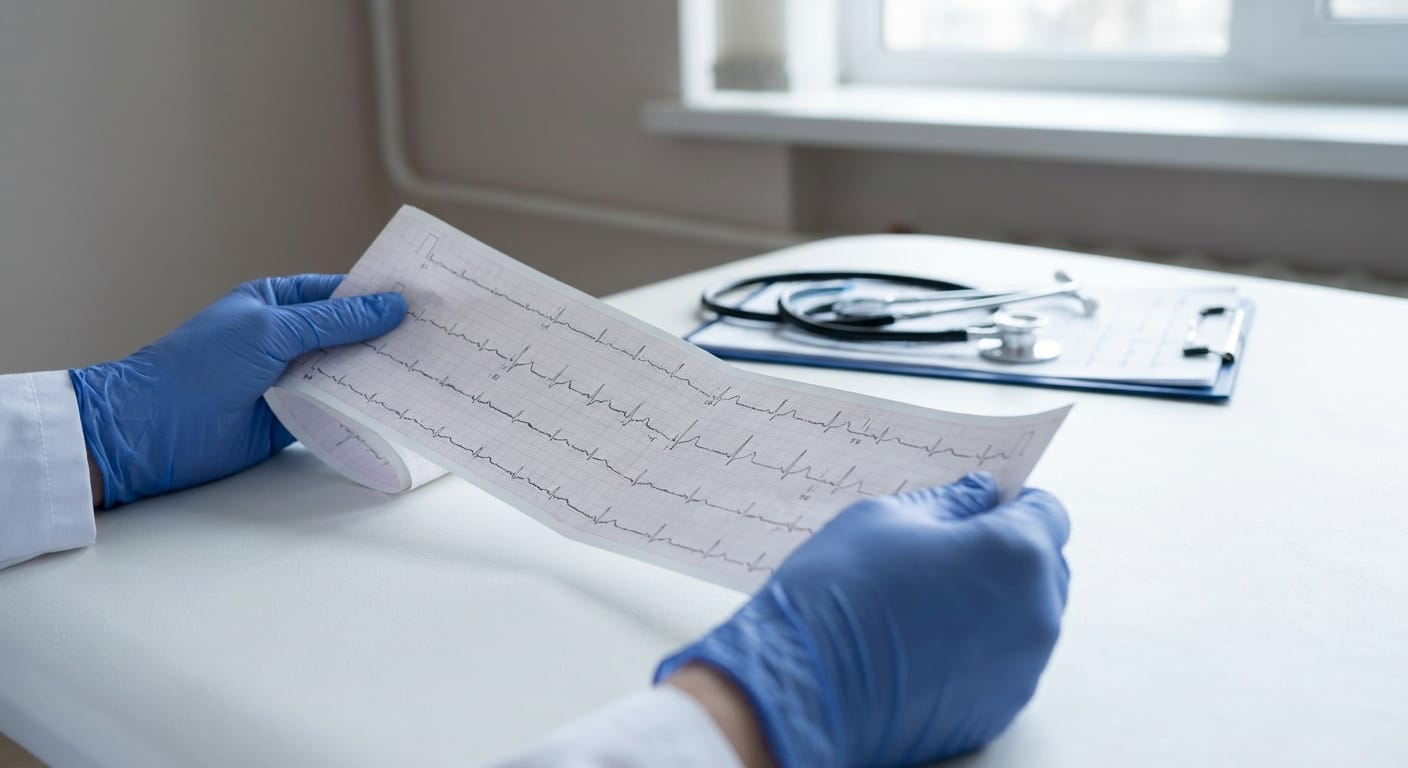
Screening is a full cardiac and metabolic workup, not a formality. Before treatment, we require your potassium to sit in the 4.2 to 4.8 range and your magnesium to be at least 2.0, with an ECG that shows no disqualifying abnormalities.
Here is why those numbers matter. Both methadone and ibogaine can prolong the QTc interval, which is the measure of how long your heart takes to reset between beats. When that interval stretches too far, the risk of a dangerous rhythm rises. Low potassium and low magnesium push it in the wrong direction, too. So we are not chasing arbitrary lab values. We are stacking the deck in favor of your heart health before we ever introduce a substance that stresses it.
We run an ECG and full labs before you travel, and we repeat them when you arrive at the clinic in Cozumel, because a number from three weeks ago is not the number that keeps you safe on treatment day. If something falls outside our safety parameters, we work to correct what can safely be corrected, then reassess. If your potassium comes back at 3.8 instead of 4.2, we work to raise it and recheck. If it cannot be safely corrected, or if the ECG shows a finding we cannot accept, treatment may be delayed or declined. Safety will always come before filling a bed.
Why Ibogaine for Methadone Withdrawal Requires a Transition Protocol First
If you are dependent on methadone maintenance, we require you to transition completely off it and onto an approved shorter-acting opioid under medical supervision before ibogaine treatment is scheduled. This is not negotiable, and it is the single most important thing to understand about ibogaine for methadone withdrawal.
Methadone is a long-acting opioid with a long half-life, which means it lingers in your system far longer than heroin or short-acting pain pills. That lingering matters because it overlaps with ibogaine’s own effect on the heart. When you combine a substance that prolongs QTc with another substance that prolongs QTc, you compound a cardiac risk that a shorter-acting opioid may not create. That overlap is exactly what a rushed provider may miss. Other maintenance medications, such as buprenorphine, carry their own considerations, which is why our team reviews every individual’s full medication list before deciding anything.
Before we schedule anything, our medical team reviews your current dose, how long you have used, your other medications, your labs, and your EKG. The transition itself is managed with medical oversight, step by step, to lower cardiac risk before ibogaine is ever introduced. It takes longer, and it costs us the fast yes that competitors offer. We accept that trade, because the alternative is putting a body under stress it was never cleared to handle.
How Are Fentanyl, Heroin, and Methadone Detox Different?
Yes, they are genuinely different, and your opioid history changes what preparation looks like. Fentanyl cases require extended stabilization and more rigorous screening, because synthetic potency and unpredictable analogs create cardiac and neurological risks that short-acting heroin or oxycodone dependence may not.
We treat fentanyl according to your physiology, not a fixed protocol. Street fentanyl is rarely just fentanyl. It is often cut with analogs and other synthetics that are hard to measure and harder to predict. That unpredictability means we look at your entire clinical picture: opioid exposure, QTc and cardiac risk, electrolytes, and every other medication you take, then we assess how all of it could interact with ibogaine. Some individuals need more time abstinent and stabilized before we can proceed. Some people we screen out entirely when the risk is too high, and we are willing to do that.
Contrast that with a clinic that accepts your case over the phone without ever asking for an ECG or a lab panel. That is not confidence. That is a red flag. A program that never says no may not be actually looking. What you will find with us instead is a team that reads the physiology in front of it and refuses to force one protocol onto every body that walks through the door.
What Happens During Ibogaine Treatment, and Why Must It Happen in Mexico?
Once you are medically cleared, the ibogaine flood dose is administered under continuous cardiac monitoring, with your care team present and 24/7 nursing available throughout. You are on telemetry the entire time, so your heart is watched beat by beat, not checked on now and then.
All of this happens at our licensed medical clinic in Cozumel, Mexico. It does not happen in Ohio, and it cannot. Ibogaine is a Schedule I substance in the United States and is not FDA-approved, which means it cannot be legally administered in Columbus or any other U.S. state. Our Columbus office exists for admissions, screening, and aftercare coordination only. That is where the phone calls, the lab review, and the follow-up planning happen. The treatment itself, along with the monitoring, the nursing, and the physician oversight, takes place in Cozumel.
We want you to understand that distinction before you make any plans, because some providers blur it. If a clinic implies you can receive ibogaine inside the United States, that alone tells you how carefully they follow the rules that exist to protect you. Being clear about legality, travel, and where treatment actually happens is part of treating you like a patient rather than a transaction. We are not just building a treatment center. We are trying to earn the trust of a family that has already been let down.
Why Ending Withdrawal Is Not the Same as Staying Off Opioids
Ibogaine may interrupt acute withdrawal symptoms in a matter of days, but it does not rewire the habits, triggers, and emotional patterns that kept a person using. Those show up in the weeks after you go home, and that is exactly why post-treatment integration is not optional in our program.
The medicine may open the door, but lasting recovery comes from the choices a person makes once they walk through it. We build that into the plan from the start with weekly post-integration therapy sessions, a personalized aftercare plan, and ongoing clinical follow-up after you return. We track how people do over the first twelve weeks and beyond, and many of the people who complete the program stay engaged through that early stretch, which is the window where old patterns push hardest to return. It is also the window where relapse, and the overdose risk that comes with lost tolerance, runs highest.
Clinical research on ibogaine for opioid dependence points in a promising direction, though the evidence base is still real but early. What that means for you is simple and honest: we are not looking for a miracle, and we do not promise one. Ibogaine addresses the physical grip of the drugs. The psychological and behavioral work addresses everything the drug was standing in for. Skip the second half, and you may have treated the withdrawal, not the life. Our goal is a life you no longer feel the need to escape from.
Questions Families and Patients Ask Before Ibogaine Treatment
Can I get ibogaine detox for opioids in Columbus, Ohio?
No. Ibogaine is a Schedule I substance and cannot be legally administered in Ohio or any other U.S. state. Our Columbus office handles admissions, screening, and aftercare coordination only. All treatment takes place at our licensed medical clinic in Cozumel, Mexico.
What lab results do I need before ibogaine treatment?
You need a recent ECG, a potassium level between 4.2 and 4.8, magnesium of at least 2.0, and a complete medical history review. Labs and an ECG are done before you travel and repeated when you arrive at the clinic, so your safety numbers are current on treatment day.
Can I do ibogaine for methadone withdrawal without transitioning off methadone first?
No. We require applicants dependent on methadone to transition completely off it and onto an approved shorter-acting opioid under medical supervision before ibogaine is scheduled. Methadone’s long half-life and effect on the QTc interval create cardiac risks that make combining the two substances unsafe.
What happens if my potassium level is too low for ibogaine treatment?
If your potassium is below 4.2, our medical team works to correct it and then reassesses. If it cannot be safely corrected, or if other disqualifying cardiac findings are present, treatment may be delayed or declined. We do not proceed outside our safety parameters.
Is fentanyl detox with ibogaine different from heroin detox?
Yes. Fentanyl cases require extended stabilization and more rigorous screening, because synthetic potency and unpredictable analogs create cardiac and neurological risks that shorter-acting opioids may not. Each case is assessed individually according to physiology.
What if I already paid a deposit and my treatment gets declined?
Our medical team may delay or decline treatment when risk is too high, even after a deposit is paid and a flight is booked. Our physicians hold final authority on medical clearance, because we prioritize safety over revenue.
Contact the Iboga Wellness Institute Columbus admissions office to begin the medical screening process and find out whether you may be a candidate for ibogaine detox for opioids at our licensed clinic in Cozumel, Mexico. Bring your most recent ECG and a current medication list to that first conversation, because the sooner we see your real numbers, the sooner we can tell you the truth about whether this may be safe for you.
If you are in a moment of crisis right now, the free and confidential government-run SAMHSA National Helpline is available 24 hours a day and can connect you with local treatment services and other assistance.
Important legal and safety information: Ibogaine is not approved by the FDA and is not available as a legal medical treatment in the United States. Iboga Wellness Institute provides ibogaine treatment exclusively at its licensed medical clinic in Cozumel, Mexico, under medical supervision. US locations handle admissions, screening, and aftercare coordination only.
Take the First Step Toward Freedom from Methadone
If you’ve been considering ibogaine treatment but aren’t sure whether it’s the right path for your situation, a conversation can bring clarity. Our admissions team understands the unique challenges of methadone withdrawal and can help you understand what to expect at our licensed medical clinic in Cozumel, Mexico. You don’t have to make any decisions today,just reach out to learn more about whether ibogaine detox aligns with your recovery goals.
Individual results vary. The experiences described here reflect one person’s case and are not a promise of any particular outcome.