Ibogaine treatment is not a one size fits all process. When you explore ibogaine microdosing benefits, you are really asking how very small, repeated doses compare to the large, single session “flood doses” used in most medical detox and trauma protocols. Understanding that difference helps you see what is used in structured clinical settings versus what remains experimental or self-directed.
In this guide, you will learn what ibogaine microdosing is, how it differs from a flood dose, what early research suggests about potential benefits, and why reputable programs follow strict ibogaine treatment dosing protocol guidelines rather than casual experimentation.
Understanding ibogaine dosing approaches
Ibogaine is a psychoactive compound derived from the African shrub Tabernanthe iboga. At different doses, it behaves like almost two different medicines. This is why you see terms like microdose, low dose, booster dose, and flood dose.
You can think of ibogaine dosing on a spectrum:
- Microdose: very small, sub perceptual amounts that rarely cause acute psychedelic effects
- Low or “therapeutic” dose: modest psychoactive effects and some introspection, but you remain mostly functional
- Flood dose: a single, high dose that produces an intense, multi hour experience often used for addiction interruption
A detailed overview of these categories is available in ibogaine dosing methods explained. Here, you will focus on how microdosing compares directly to a flood dose and what that means for your health and safety.
What ibogaine microdosing actually involves
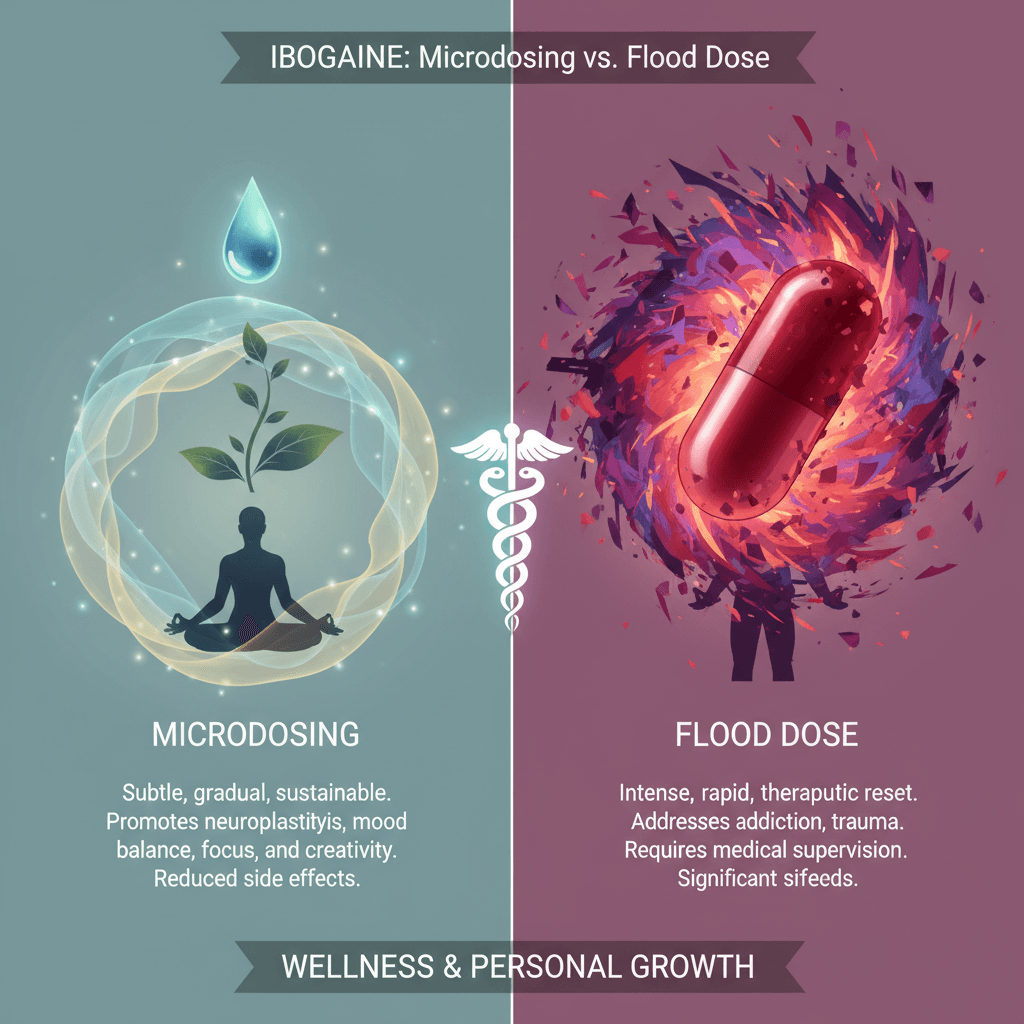
Microdosing typically refers to taking about 1 to 5 percent of a standard full dose, repeated at regular intervals. Instead of aiming for a dramatic breakthrough, you are looking for gradual shifts over weeks.
In a 2022 case report from a private clinic, a 47 year old woman with bipolar II disorder took two capsules of 4 mg ibogaine hydrochloride twice daily, which was about 1 percent of a full dose, for 60 days. She continued to be followed for 90 days total, including a 30 day period after stopping the microdoses [1]. This is a useful real world example of what a microdosing regimen can look like in a monitored setting.
You will find different informal protocols online, but there is no universally accepted, standardized schedule for ibogaine microdosing. This is an important contrast with medically supervised flood dose work, where dosage, monitoring, and timing are carefully defined in a formal ibogaine treatment dosing protocol.
Key ibogaine microdosing benefits reported so far
Formal research on ibogaine microdosing benefits is very limited. The strongest published evidence currently comes from individual case reports rather than large clinical trials. That means you need to view these potential benefits as promising, but not proven.
In the case report mentioned above, the patient experienced several positive changes during 60 days of supervised microdosing and follow up [1].
Mood and anxiety relief
Over the 90 day observation period, the patient showed substantial reductions in standardized depression and anxiety scores:
- Beck Depression Inventory (BDI) dropped by 35 percent at day 15, 85 percent at day 43, and 90 percent at day 90
- Beck Anxiety Inventory (BAI) dropped by 39 percent at day 15, 52 percent at day 43, and 56 percent at day 90
- Beck Hopelessness Scale (BHS) dropped by 60 percent at day 15, 70 percent at day 43, and 100 percent at day 90, meaning no measurable hopelessness at that point [1]
For you, this suggests that microdosing might help gradually reduce symptoms of depression, anxiety, and hopelessness rather than producing a single dramatic shift in one session.
Cognitive and functional improvements
The same report described a range of functional gains alongside symptom reduction. The patient reported:
- Increased mental clarity and more organized thinking
- Improved appetite and daily functioning
- Greater initiative for professional activities
- Restoration of personal and social contacts
Importantly, these changes appeared without triggering any manic episodes during treatment or the 30 day follow up period [1]. If you live with mood instability, avoiding manic or hypomanic flips is a key concern, which is why this detail is noteworthy, even though it comes from only one individual.
Possible neuroplasticity related effects
While the exact mechanism behind ibogaine’s antidepressant effects remains unclear, researchers hypothesize that it may involve:
- Neuroplastic adaptations in prefrontal limbic circuits
- Increased brain derived neurotrophic factors and related growth signals
These mechanisms are considered promising targets for treating depression and other psychiatric conditions [1]. When you microdose, the goal is often to nudge these systems gently and repeatedly instead of pushing them very hard for one night, as in a flood dose.
What is a flood dose ibogaine treatment
By contrast, a flood dose is a single, high ibogaine dose taken under intensive medical supervision. Flood dosing is the primary approach used in structured clinical programs for opioid and other substance use disorders. If you want a detailed overview of this high dose approach, see what is a flood dose ibogaine.
Flood doses can produce:
- A multi hour to multi day visionary or dreamlike state
- Strong physical effects, including ataxia and nausea
- Rapid, sometimes dramatic reduction in withdrawal symptoms and cravings
These intense experiences often require heart monitoring, lab work, and a clinical team present throughout. You can read more first hand style descriptions in ibogaine flood dose experience.
Where microdosing aims for gradual, integrative change while you remain functional, flood dosing targets a short term, high impact reset, usually within a residential or inpatient setting such as ibogaine full dose treatment.
Clinical research on high dose ibogaine vs microdosing
So far, high dose ibogaine has significantly more clinical data behind it than microdosing.
In a 2024 study from Stanford Medicine, 30 special operations veterans with traumatic brain injuries received oral ibogaine combined with magnesium at a clinic in Mexico. Within one month of treatment:
- Average disability ratings dropped from 30.2, considered mild to moderate disability, to 5.1, which reflects no disability
- PTSD symptoms decreased by 88 percent
- Depression decreased by 87 percent
- Anxiety decreased by 81 percent
Participants also reported improvements in concentration, memory, and impulsivity [2].
Electroencephalography and MRI analyses showed that better executive function after treatment correlated with increases in theta brain wave rhythms, which may support neuroplasticity and cognitive flexibility in this population [2].
No serious side effects or heart complications were reported in this study, only mild issues like headaches and nausea, suggesting a favorable safety profile when combined with magnesium and delivered in a monitored setting [2].
By comparison, ibogaine microdosing has only case level data, such as the bipolar II report mentioned earlier. That difference in evidence quality is important when you consider what kind of ibogaine dose might be appropriate for your situation.
For a high level look at how different doses compare, it can be helpful to review ibogaine dosage comparison and difference between ibogaine doses.
Safety concerns and risks with microdosing
You might assume microdosing is automatically safe because the doses are small. Ibogaine, however, has known cardiovascular and vestibular toxicity, so even low amounts call for caution.
The Brazilian case report authors emphasized that despite the benefits observed in bipolar depression, safety concerns remain. Ibogaine has documented risks involving heart rhythm and balance systems, and the overall risk benefit profile of microdosing still needs evaluation in larger clinical trials [1].
In practice, this means:
- You should not consider ibogaine microdosing a risk free wellness supplement
- Any ibogaine use, including microdosing, is best approached with medical screening and supervision
- Conditions like pre existing heart disease, certain medications, or electrolyte imbalances can significantly increase risk
When you look at clinically run programs, you will see that they generally favor lower frequency, high structure protocols such as ibogaine full dose treatment instead of daily unsupervised microdosing.
How ibogaine microdosing compares with flood dosing
To help you clearly see the contrast between approaches, it can be useful to look at them side by side.
| Aspect | Microdosing | Flood dose |
|---|---|---|
| Primary goal | Gradual mood, anxiety, or cognitive improvement | Rapid interruption of addiction, PTSD, or severe depression |
| Dose range | Roughly 1 to 5 percent of a full dose | Typically a full single dose calculated by weight |
| Experience | Usually sub perceptual or mild, you remain functional | Intense psychedelic and physical effects, you need full support |
| Evidence base | Case reports and early observations | Growing clinical research, including TBI and PTSD studies [2] |
| Main setting | Experimental, self directed, occasional private clinics | Structured medical programs with monitoring and protocols |
| Safety focus | Long term, cumulative cardiac risk and medication interactions | Acute cardiac, vestibular, and detox related risk during the session |
If you are specifically deciding between these approaches, you may find it helpful to read ibogaine microdosing vs flood dose and ibogaine dosing methods explained for more context.
How medical programs structure dosing protocols
Licensed or medically supervised centers typically follow structured protocols that prioritize safety. While exact details vary by clinic, a professional ibogaine treatment dosing protocol often includes:
- Comprehensive intake and screening, including ECGs and lab work
- Medication review to identify dangerous interactions
- Carefully calculated doses based on body weight, health status, and treatment goals
- Continuous monitoring during and after dosing, especially for flood doses
- Clear guidelines on when booster doses can be used and when they are contraindicated
In most of these settings, microdosing is not used as a first line approach. Instead, ibogaine is typically applied as:
- A single flood dose with or without small booster doses
- Part of an integrated program that includes psychotherapy, medical oversight, and aftercare
Where microdosing does appear in clinical contexts, it is usually experimental and closely monitored, as in the bipolar depression case report. If you are curious about lower level protocols, you can explore ibogaine microdose therapy for a more detailed discussion.
Choosing an approach that aligns with your goals
Your decision about ibogaine use should be driven by your specific goals, medical status, and tolerance for risk.
If you are mainly curious about mood or cognitive support and you are not in a medical crisis, ibogaine microdosing might seem attractive because it fits around daily life. Based on early evidence, you could potentially see benefits in mood, anxiety, and mental clarity, similar to what was reported in the bipolar II case. However, you are operating in an area with limited data and ongoing safety questions.
If you are seeking help for severe addiction, PTSD, or profound disability, a medically supervised flood dose may offer faster and more substantial relief, as seen in the special operations veterans whose disability ratings dropped from 30.2 to 5.1 and whose PTSD, depression, and anxiety symptoms fell by more than 80 percent [2]. In this situation, you trade a more intense short term experience for a higher likelihood of clinically measurable improvement, under professional monitoring.
In both cases, it is essential that you:
- Consult qualified medical professionals, ideally those familiar with ibogaine
- Avoid self medicating with unknown purity or dosing
- Consider alternative, evidence based treatments alongside any psychedelic option
You can use resources like ibogaine dosage comparison and difference between ibogaine doses to clarify which approach might align with your needs before having that conversation with a clinician.
Putting ibogaine microdosing benefits in perspective
Ibogaine microdosing benefits are a developing area. Early reports suggest that, under careful supervision, small daily doses may support:
- Significant reductions in depression, anxiety, and hopelessness
- Improvements in mental clarity, motivation, and social functioning
- Possible neuroplasticity driven changes over weeks rather than hours
At the same time, ibogaine’s known cardiovascular and vestibular toxicity means you cannot assume that “less is automatically safe.” Until larger, controlled trials are available, you should regard microdosing as an experimental practice that carries real risk.
Flood dose work, while more dramatic and resource intensive, currently has a stronger clinical evidence base, particularly in structured programs that integrate medical screening, magnesium support, and continuous monitoring [2].
As you evaluate your options, use the available research and educational resources, such as ibogaine microdose therapy, ibogaine full dose treatment, and ibogaine microdosing vs flood dose, to build a clear understanding of what each approach can and cannot offer. Then, work with medical professionals to decide whether ibogaine, in any form, is an appropriate and safe part of your treatment plan.