
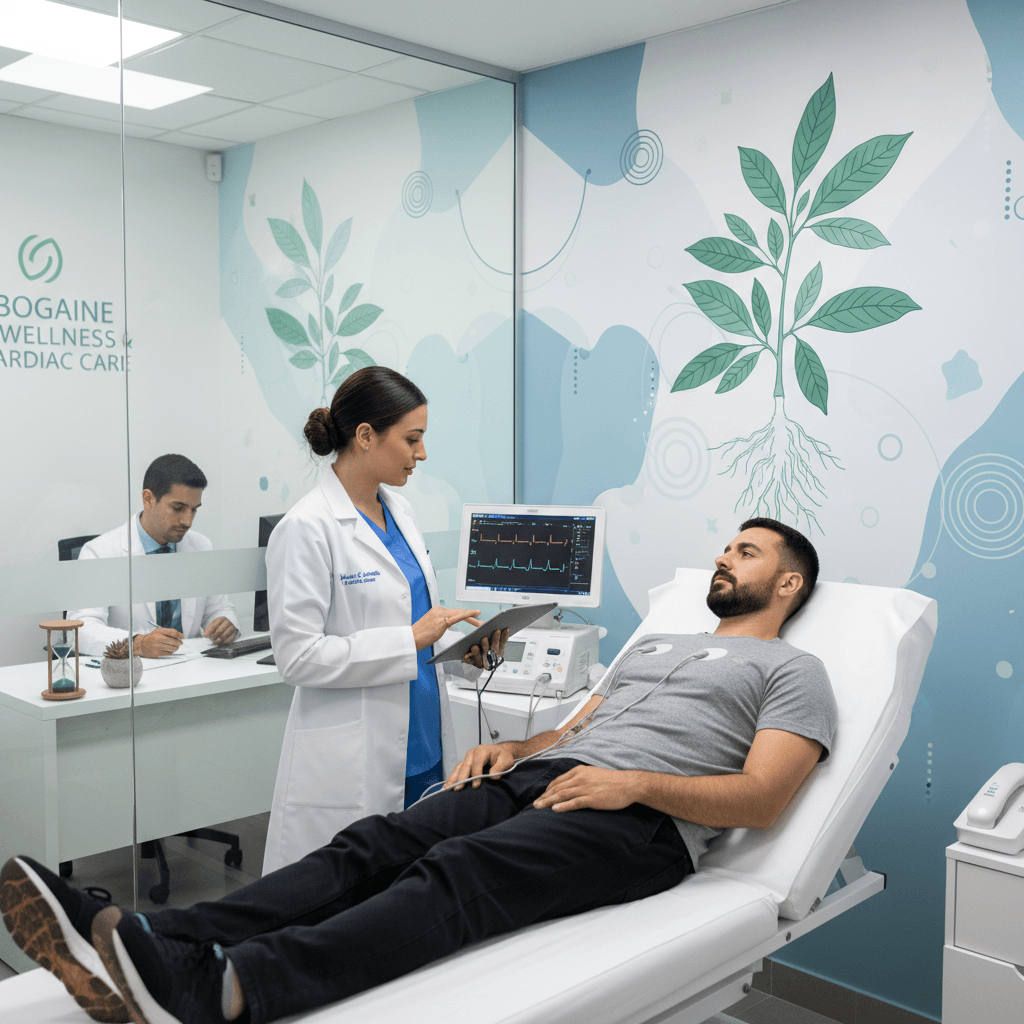
Ibogaine treatment cardiac screening is one of the most important factors you should understand before deciding on a clinic or program. While ibogaine shows promise for interrupting substance use disorders, it can also affect your heart’s electrical system and rhythm. Because of this, reputable centers build their entire medical protocol around thorough screening and continuous monitoring to reduce cardiac risk as much as possible.
This guide walks you step by step through how cardiac screening fits into ibogaine treatment safety protocols, what tests you should expect, why they matter, and how to evaluate whether a clinic is taking your safety seriously.
Why cardiac screening matters for ibogaine
Ibogaine affects the heart in ways that are very specific and well documented in the medical literature. Understanding this gives you context for why professional clinics put so much emphasis on cardiac clearance.
Clinical research has shown that ibogaine can block a particular potassium channel in the heart called hERG, which is critical for normal repolarization of the cardiac cycle. Blocking this channel can prolong the QT interval on an electrocardiogram (ECG), which means each heartbeat takes longer to reset electrically before the next one begins [1]. When the QT interval becomes too long, the risk of life threatening arrhythmias increases.
Case reports and forensic investigations have documented ibogaine associated events such as marked QTc prolongation, torsades de pointes, ventricular tachycardia, ventricular fibrillation, and cardiac arrest, sometimes with QTc intervals above 600 ms and changes that persisted beyond the acute dosing period [1]. Serious events have been reported after both modest and high doses, which highlights how individual cardiac susceptibility can vary significantly.
The long lived metabolite noribogaine also appears to contribute to prolonged QTc and delayed arrhythmic risk after the parent ibogaine has declined in the blood [2]. Because of this complex and prolonged effect on your heart’s electrical system, expert groups and scoping reviews stress that rigorous cardiac screening and extended monitoring are essential parts of any safe ibogaine protocol, and that standardized outcome measures and controlled trials are still needed to fully define safe practice [1].
In simple terms, ibogaine can be cardiotoxic. Cardiac screening is not optional. It is the foundation of any responsible ibogaine treatment medical protocol.
Key cardiac risks of ibogaine you should know
If you are considering treatment, it helps to understand the specific cardiac risks that screening aims to detect and prevent. The main concerns seen in published reports include:
- QT and QTc interval prolongation on ECG
- Torsades de pointes, a dangerous form of ventricular tachycardia
- Ventricular tachycardia and ventricular fibrillation
- Sudden cardiac arrest and sudden death
- Persistent ECG changes that last beyond the acute dosing window
The mechanism is closely tied to ibogaine’s inhibition of hERG potassium channels. Electrophysiological studies show that ibogaine blocks these channels at low micromolar concentrations, which delays repolarization and prolongs the cardiac action potential. Its metabolite noribogaine, which has a plasma half life of roughly 28 to 49 hours, also inhibits hERG and extends these effects [2].
Case reports from 1990 to 2014 describe at least 22 sudden deaths and many episodes of long QT intervals and ventricular arrhythmias in people who took ibogaine for addiction treatment, often in unregulated settings and sometimes with pre existing heart disease or co use of opioids, cocaine, or other substances [2]. More recent reports describe individuals who developed severe QTc prolongation within hours, such as one patient whose QTc increased from 435 ms to 588 ms, followed by cardiac arrest [3].
These events have occurred in both supervised and unsupervised contexts, and after both lower and higher doses, which underscores how narrow the therapeutic window can be and why structured ibogaine treatment risk assessment is critical in every case.
How cardiac screening fits into overall medical evaluation
Cardiac screening is one part of a broader medical screening for ibogaine therapy that looks at your entire health picture. The goal is to answer three questions before treatment:
- Is ibogaine medically appropriate for you at all
- If it is, what precautions and dose adjustments are needed
- How should your cardiac function be monitored during and after dosing
Because ibogaine affects heart rhythm, blood pressure, electrolytes, and can interact with other medications and substances, a comprehensive pre treatment evaluation usually includes:
- Detailed medical, psychiatric, and substance use history
- Full medication and supplement review
- Physical examination and vital signs
- Laboratory tests, including electrolytes and liver function
- Cardiac specific screening, including ECG and sometimes additional tests
Reputable clinics use this information to design an individualized plan that includes medical supervision during ibogaine treatment and a structured detox strategy. Without this level of preparation, cardiac risks increase significantly.
What happens in a pre treatment cardiac evaluation
When you see a clinic that follows robust ibogaine clinic safety standards, you can expect a highly structured cardiac screening process before any medication is given.
At experienced medical centers, the pre treatment cardiac evaluation typically includes:
- Baseline ECG to measure your QT and QTc intervals and look for conduction abnormalities
- Baseline heart rate and rhythm assessment
- Blood pressure and oxygen saturation
- Serum electrolyte levels, especially potassium and magnesium
- Sometimes cardiac biomarkers such as troponin, if there is any concern for underlying heart disease
For example, Bassé Ibogaine Treatment Center describes a comprehensive baseline evaluation that includes ECG, vital signs, electrolyte levels, and in some cases troponin assays, with treatment delayed or denied if significant abnormalities are revealed [4].
In addition to the tests themselves, a careful interpretation of your ECG and risk factors is essential. Clinics that take safety seriously evaluate for:
- Baseline QT prolongation
- Existing arrhythmias or conduction blocks
- Structural heart disease or prior heart attacks
- Bradycardia, which ibogaine can worsen
- Electrolyte disturbances like hypokalemia, which are common in people with heavy substance use [2]
If your baseline QTc is significantly prolonged, if you have known structural heart disease, or if your risk profile is high, a careful program may recommend against ibogaine or may refer you for further cardiology evaluation.
Hydration, electrolytes, and IV access as cardiac protection
Cardiac screening is not only about tests. It is also about preparing your body to tolerate ibogaine as safely as possible. Guidance from the Global Ibogaine Therapy Alliance emphasizes hydration, electrolyte management, and intravenous access as practical, evidence informed steps to reduce cardiac risk [5].
Recommendations include:
- Ensuring you are well hydrated before treatment, often with a target of about 1 fluid ounce of electrolyte containing fluids per kilogram of body weight spread throughout the day
- Continuing electrolyte rich hydration during treatment and for at least 72 hours after to maintain stable levels
- Establishing an intravenous port so staff can manage dehydration and electrolyte loss and deliver emergency medications rapidly if arrhythmias or seizures occur
- Using preparatory IV fluids such as 1 liter of lactated Ringer’s or normal saline, often combined with magnesium sulfate beginning about 1 hour before the flood dose and continuing for 2 hours after, which has been associated with reduced hypotension and protection against torsades de pointes
These measures are relatively straightforward for a medical team but are difficult or impossible in non medical, informal settings. Asking potential clinics how they implement hydration, electrolyte monitoring, and IV support will tell you a lot about their practical commitment to safety.
Continuous cardiac monitoring during ibogaine dosing
Pre treatment screening identifies risk, but active ibogaine cardiac monitoring treatment is what keeps you safe during the acute dosing window. Ibogaine and noribogaine can alter your heart rhythm over many hours, so continuous observation is vital.
At centers such as Bassé, cardiac telemetry is maintained throughout the 24 to 36 hour acute phase. This includes real time monitoring of:
- Heart rhythm and rate
- QT and QTc interval
- Oxygen saturation
- Blood pressure and other vital signs
Nursing staff and physicians observe continuously and escalate care immediately if they see concerning changes [4]. Guidelines from the Global Ibogaine Therapy Alliance recommend that you remain connected to at least a 3 lead heart monitor and under close supervision by Advanced Cardiac Life Support (ACLS) trained staff for 12 to 24 hours after dosing, because QT interval changes and T wave abnormalities can take up to a day to normalize [5].
Continuous monitoring gives the team a chance to:
- Detect early QT prolongation before it leads to dangerous arrhythmias
- Identify trends such as progressive bradycardia or changes in blood pressure
- Respond quickly with electrolyte correction, medication, or transfer to a higher level of care if needed
Without this level of observation, potentially life threatening rhythm problems can progress unnoticed until they become emergencies.
Post acute observation and follow up
Noribogaine’s long half life means cardiac risk does not end when the ibogaine experience feels over. Responsible programs extend monitoring and observation for days, not hours.
Experts recommend a stepped down approach:
- Close supervision with continuous or frequent cardiac monitoring for 12 to 24 hours post dose
- Ongoing monitoring of blood pressure, pulse, and oxygen saturation at least every 4 hours for a minimum of 72 hours after administration
- Ready access to ACLS trained staff and emergency response capacity throughout this period [5]
Your team may also repeat ECGs during this window to confirm that QTc intervals and T wave morphology are trending back toward baseline. This extended post acute observation is a crucial but sometimes overlooked part of ibogaine detox medical supervision.
When you evaluate a clinic, it is worth asking:
- How long you will remain on site after dosing
- How often vital signs and ECGs are repeated
- Who is physically present overnight and what training they have
Answers to these questions help you understand how seriously the facility takes sustained cardiac safety.
The role of physician leadership and ACLS trained staff
Cardiac events related to ibogaine can develop rapidly and require precise, time sensitive treatment. For that reason, advanced cardiac expertise is not a luxury, it is a minimum standard.
Bassé Ibogaine Treatment Center identifies the presence of an emergency medicine trained physician with ACLS certification on site as a baseline requirement for safe care. This physician must be available to interpret ECGs, manage arrhythmias, direct electrolyte therapy, and oversee any urgent interventions [4].
In addition to physician leadership, your care team should include:
- Nurses or paramedics trained in ACLS
- Staff experienced with cardiac telemetry and ECG interpretation
- Clear protocols for when and how to transfer you to a hospital if needed
This level of training and structure is a key part of any responsible ibogaine clinic medical safety protocol. In contrast, non medical or loosely supervised environments lack the personnel and equipment to manage fast moving cardiac emergencies, which is where many of the most serious adverse outcomes have occurred.
How professional protocols reduce cardiac risk
Although ibogaine carries inherent cardiotoxic risk, research and clinical experience indicate that structured medical care can significantly reduce this risk compared with informal or non medical settings.
Professional programs layer multiple safeguards, including:
- Rigorous pre treatment ibogaine therapy medical screening process that can exclude or defer high risk cases
- Laboratory based electrolyte assessment and correction
- Device based cardiac monitoring before, during, and after dosing
- Hydration and IV support tailored to your weight and baseline status
- ACLS level emergency response capacity on site
- Conservative dosing strategies that respect ibogaine’s narrow therapeutic window
Scoping reviews emphasize that ibogaine’s narrow safety margin and variable metabolism make this kind of structured risk mitigation essential, and call for further controlled trials to refine protocols and outcome measures [1]. While even the best ibogaine treatment doctor supervision cannot eliminate all risk, it can transform ibogaine from a high uncertainty, informal intervention into a medically managed procedure with clearly defined safeguards.
Warning signs of unsafe ibogaine cardiac practices
As you compare options and ask how safe ibogaine therapy is in a given setting, it helps to know what red flags to watch for. You may want to be cautious if a program:
- Minimizes or dismisses the need for ECG based cardiac screening
- Treats hydration and electrolytes casually or relies only on oral fluids without lab monitoring
- Offers no IV access or emergency medication plan
- Does not provide continuous heart monitoring during the acute phase
- Has no ACLS trained staff physically present overnight
- Cannot clearly describe its hospital transfer protocol
Case reports like the 2016 incident in which a 40 year old man self administered ibogaine for heroin withdrawal and suffered fatal cardiac arrest illustrate how dangerous it can be to use ibogaine without medical oversight. In that case, QTc prolongation and arrhythmias progressed to brain death despite later intensive care [3]. There are many similar examples involving unregulated clinics and internet purchased ibogaine.
If a clinic cannot answer detailed questions about ibogaine treatment safety protocols or seems unfamiliar with cardiac data from published research, it is reasonable to question whether that facility is prepared to manage serious events.
Questions to ask clinics about cardiac screening
When you speak with prospective programs, you can use targeted questions to understand how they approach ibogaine treatment cardiac screening and monitoring. For example, you might ask:
- What cardiac tests will you perform before treatment
- Who interprets my ECG and decides whether ibogaine is appropriate
- How do you manage electrolytes and hydration before and after dosing
- Will I have continuous heart monitoring during the acute treatment phase
- How long will I stay on site after treatment, and how will my vital signs be monitored
- What training do on site staff have in advanced cardiac life support
- What is your protocol if my QTc becomes prolonged or an arrhythmia develops
Clinics that follow strong ibogaine clinic safety standards will be able to answer these questions clearly and in detail. Their responses will help you decide how safe ibogaine therapy is likely to be in that particular environment.
Making an informed decision about ibogaine safety
Ibogaine is not a routine or risk free treatment. Its potential anti addictive properties coexist with significant, well described cardiac hazards. Human data and mechanistic studies make it clear that QT interval prolongation, arrhythmias, and sudden death are real possibilities, especially when ibogaine is used without structured medical oversight [2].
At the same time, your risk profile is not fixed. You can meaningfully influence it by where and how you seek treatment. Choosing a physician led program that prioritizes comprehensive cardiac screening, continuous monitoring, electrolyte management, and ACLS level response capacity gives you a very different safety environment than self administration or non medical retreats. Exploring resources such as how safe is ibogaine therapy and is ibogaine treatment safe can also help you frame the benefits and risks.
As you move forward, focus your questions on concrete protocols rather than general assurances. Understanding the details of ibogaine treatment cardiac screening and monitoring allows you to advocate for your safety, support your recovery goals, and make decisions that reflect both the promise and the seriousness of this form of treatment.