Understanding ibogaine treatment for brain injury recovery
If you live with the effects of a traumatic brain injury, you may feel as if your life split into “before” and “after.” Memory issues, mood swings, chronic fatigue, and PTSD symptoms can linger long after the original trauma. Ibogaine treatment for brain injury recovery is an emerging option that aims to support both your neurological healing and your emotional recovery, especially when conventional care has not given you the progress you hoped for.
Ibogaine is a psychoactive compound derived from the West African iboga shrub. It has a long history of ceremonial use and has more recently been explored in medical settings for addiction and, increasingly, for traumatic brain injury (TBI) and related conditions. While ibogaine is not a magic cure and still carries important medical risks, early clinical and preclinical research suggests it may help your brain repair, reset, and reorganize in ways that complement traditional rehabilitation.
In this guide, you explore how ibogaine is being studied for TBI, what potential benefits and risks you should know about, and how you might safely evaluate options like ibogaine therapy for TBI within a broader recovery plan.
How traumatic brain injury affects your brain
A traumatic brain injury interrupts how your brain cells communicate. That disruption can come from a blow to the head, a blast wave, a fall, a concussion in sports, or penetrating trauma such as a gunshot wound. You might look “fine” from the outside, yet still struggle to think clearly, manage emotions, or feel like yourself.
Common long-term effects of TBI include problems with attention, memory, decision-making, sleep, emotional regulation, anxiety, depression, and post-traumatic stress. For many people, these symptoms persist even after months or years of traditional rehab, talk therapy, and medications.
Behind these symptoms are several biological changes:
- Neural circuits that once worked efficiently become damaged or disconnected
- Neurotransmitters that regulate mood and focus fall out of balance
- The brain can lose some of its flexibility, or neuroplasticity, so it has a harder time forming new, healthy pathways
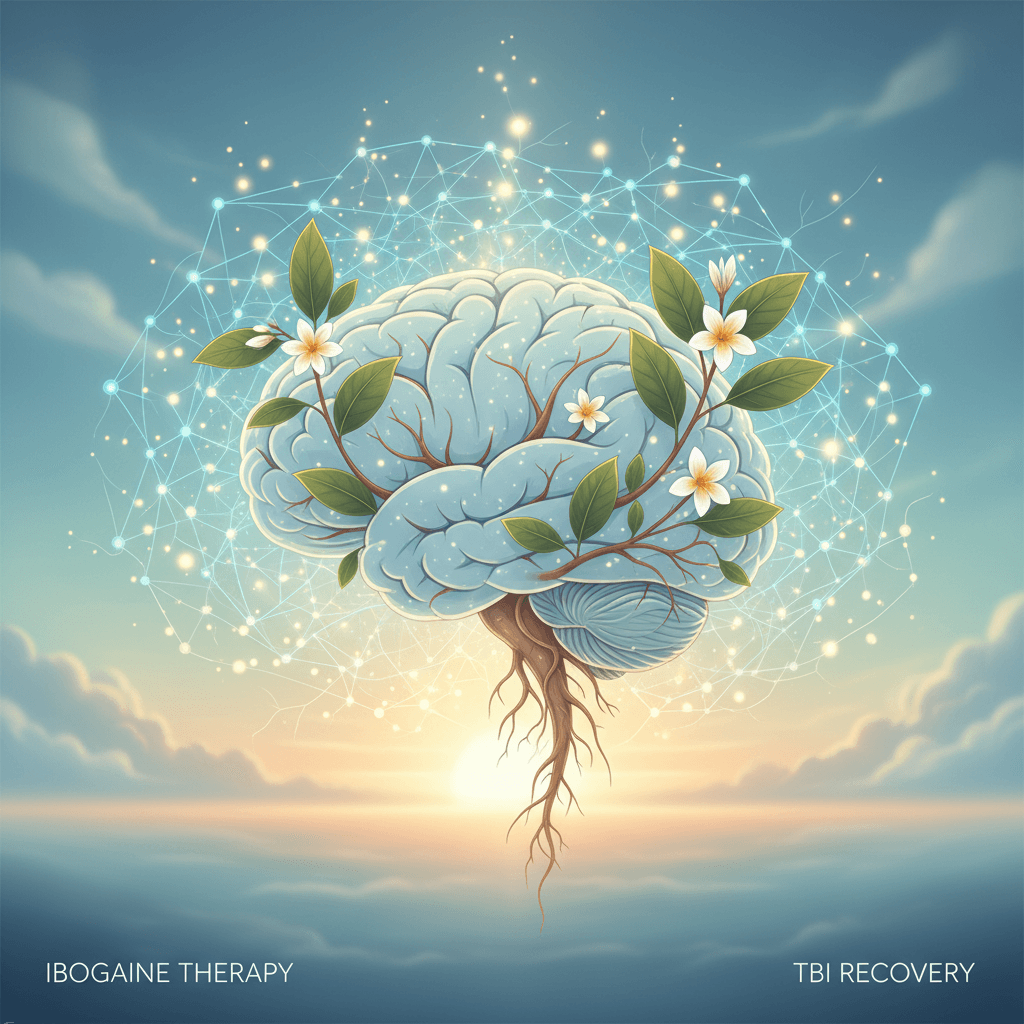
Ibogaine treatment for brain injury recovery is being explored precisely because it appears to influence these core brain processes, including neuroplasticity, neurotrophic factors, and network-level activity.
What ibogaine is and why it is being studied
Ibogaine is a naturally occurring psychoactive alkaloid. In medical settings it is given as a single, carefully calculated dose, usually in capsule form. The experience typically lasts 12 to 24 hours, followed by a period of rest and integration.
Clinicians first became interested in ibogaine because of its potential to interrupt addiction. Observational and preclinical research has suggested that ibogaine may reduce drug cravings, ease withdrawal, and support brain recovery after substance use by affecting multiple neurotransmitter systems and growth factors in the brain [1].
Those same properties are now being studied for traumatic brain injury and PTSD, especially in veterans and others who have not responded well to conventional care. A 2024 study from Stanford Medicine followed 30 special operations military veterans with TBI who received ibogaine with magnesium for heart protection. One month after treatment, participants showed large reductions in PTSD, depression, and anxiety, and they also reported better concentration, information processing, memory, and reduced impulsivity [2].
While this was not a randomized trial and more research is needed, it adds to growing interest in ibogaine treatment for traumatic brain injury as part of a comprehensive neurological recovery plan.
How ibogaine may support brain repair and plasticity
One of the most important reasons ibogaine is being explored for brain injury recovery is its apparent impact on neuroplasticity. Neuroplasticity is your brain’s capacity to change, adapt, and form new connections. After TBI, you rely on neuroplasticity to “rewire around” damaged areas and build healthier patterns of thought, behavior, and emotion.
Neurotrophic factors and brain healing
Laboratory research in animals has shown that ibogaine can sharply increase the expression of several neurotrophic factors, which are proteins that support neuron health and growth. In one study, acute ibogaine administration in rats increased levels of:
- GDNF (Glial cell line derived neurotrophic factor) in key dopaminergic regions like the ventral tegmental area and substantia nigra
- BDNF (Brain derived neurotrophic factor) in the nucleus accumbens, prefrontal cortex, VTA, and substantia nigra
- NGF (Nerve growth factor) in multiple areas linked to learning, reward, and motor control
These changes were strongest about 24 hours after ibogaine dosing and were dose dependent [3]. GDNF, BDNF, and NGF all play central roles in neuroplasticity, synapse formation, and the survival of injured neurons.
In the context of TBI, this neurotrophic “surge” could help your brain:
- Stabilize stressed or partially damaged neurons
- Strengthen existing healthy connections
- Support the formation of new pathways during rehabilitation
Although animal findings do not automatically translate to humans, they offer a plausible biological explanation for why some people report cognitive and emotional gains after ibogaine brain injury treatment.
Resetting neurotransmitter systems
Ibogaine also interacts with several neurotransmitter receptors that are disrupted after both TBI and chronic stress, including:
- NMDA receptors, which are deeply involved in learning, memory, and excitotoxicity
- Serotonin and dopamine systems that regulate mood, motivation, and reward
- Sigma-2 receptors, which appear to be linked to neuroprotective and neurorestorative effects [1]
By modulating these systems, ibogaine may help your brain reset unhealthy patterns of signaling that underpin anxiety, depression, impulsivity, and compulsive behaviors. Its long-acting metabolite, noribogaine, stays in your body for days to weeks and is thought to support extended anti-craving and mood-stabilizing effects [1].
In TBI recovery, this potential to restore a more balanced neurochemical environment could give you a more stable foundation for therapy, lifestyle changes, and cognitive rehabilitation.
What recent research suggests about ibogaine and TBI
The most widely discussed modern data on ibogaine for brain injury comes from the 2024 Stanford Medicine study of veterans with TBI, chronic trauma exposure, and significant psychiatric symptoms. In that study:
- Participants received ibogaine along with magnesium to protect the heart
- One month later, average PTSD symptoms had fallen by about 88 percent, depression by 87 percent, and anxiety by 81 percent compared to baseline
- Cognitive testing showed improvements in concentration, information processing speed, memory, and impulsivity
- Neuroimaging found that increases in theta activity, a type of brain rhythm, were associated with better executive function, and reductions in cortical complexity were tied to lower PTSD symptoms [2]
Importantly, the researchers did not report serious side effects or heart complications in this carefully monitored group. Those encouraging results helped motivate a 50 million dollar Texas initiative to fund further ibogaine clinical trials for psychiatric and neurological conditions [2].
Clinics like Experience Ibogaine in Tijuana, have already been offering structured ibogaine neurological therapy for TBI. They report that regulated doses of ibogaine, delivered within a 5 day psycho spiritual treatment program that may include 5 MeO DMT, can reduce PTSD, anxiety, and depression, while improving cognitive functioning and overall quality of life in people with both penetrating and closed brain injuries [4].
At the same time, all of these findings should be framed as early stage. You still need more large, controlled clinical trials before ibogaine can be considered an established, standard treatment for TBI. For now, it is best thought of as an experimental adjunct that may enhance your existing recovery efforts when approached carefully and medically.
Emotional and cognitive benefits you might experience
If you pursue ibogaine therapy for brain trauma in an appropriate setting, potential benefits often fall into two intertwined categories: emotional relief and cognitive improvement.
Emotional and psychological shifts
Many people with brain injuries also carry heavy psychological burdens, including:
- Post traumatic stress or complex trauma
- Survivor guilt or shame
- Chronic anxiety, irritability, or emotional numbness
- Depression and hopelessness about the future
The Stanford TBI study showed striking reductions in PTSD, anxiety, and depression one month after ibogaine treatment [2]. Clinically, you may experience:
- A decrease in intrusive memories, nightmares, or hypervigilance
- Greater capacity to feel emotions without being overwhelmed
- Less internal “static” or irritability
- More willingness to connect with others and engage in therapy
Ibogaine sessions are often described as “waking dream” experiences that bring up vivid life memories and themes. Therapeutic support around these experiences can help you process trauma and reframe your story in a way that restores meaning and self respect. This is a core aim of ibogaine therapy for traumatic brain injury symptoms.
Cognitive and functional gains
On the cognitive side, people with TBI commonly report:
- Brain fog and difficulty concentrating
- Slowed information processing
- Working memory problems
- Impulsivity and poor judgment
The Stanford veterans not only felt better emotionally, they also performed better on objective cognitive tests after ibogaine. Concentration, processing speed, memory, and impulse control all improved, and these gains were linked to specific changes in brain network activity [2].
In practical terms, you might notice that:
- You can follow conversations and tasks more easily
- You feel less mentally “stuck” or scattered
- You can pause and choose your responses instead of reacting automatically
- Everyday planning, organizing, and decision-making feel more manageable
Ibogaine will not repair physically destroyed brain tissue, but by boosting neuroplasticity and stabilizing network function, it may improve how well your remaining circuits work together. You can then build on that improvement through structured rehabilitation and lifestyle changes, much like adding ibogaine brain repair therapy on top of a solid foundation.
Why safe medical supervision is essential
While ibogaine shows promise, it also has a significant cardiac risk profile that you must take seriously, especially if you already live with neurological or other medical issues.
A carefully monitored Dutch study of 14 patients with opioid use disorder who received a single oral dose of ibogaine found:
- Clinically relevant QTc prolongation on the ECG in all participants, averaging 95 ms
- Half of the patients reached QTc intervals greater than 500 ms within 24 hours, which is considered high risk for arrhythmias
- Mild bradycardia and lowered blood pressure in the first 12 hours
- Severe but transient cerebellar ataxia, or loss of motor coordination, in all patients, which resolved within 24 to 48 hours
- No episodes of torsades de pointes were observed, but the authors still emphasized substantial cardiac risk [5]
Based on these findings, the researchers strongly recommended that ibogaine only be used in controlled medical settings with strict cardiac monitoring and that underground or unregulated use be actively discouraged [5].
If you are considering ibogaine treatment for TBI recovery, you should expect:
- Comprehensive pre treatment screening, including EKG, lab work, and medication review
- Continuous heart monitoring during and after the session
- Onsite medical staff equipped to manage cardiac events
- Clear exclusion criteria for people with specific heart conditions or interacting medications
Careful attention to these safeguards can significantly reduce risk and increase the likelihood that your ibogaine experience supports, instead of endangers, your recovery.
What to expect in a structured ibogaine program
Facilities that specialize in ibogaine therapy for brain injury healing, such as Experience Ibogaine in Tijuana, usually combine medical oversight with psychological, spiritual, and rehabilitative support.
A typical program may include:
- Medical evaluation and preparation
You complete a thorough medical intake, diagnostic tests, and psychiatric assessment. The clinical team reviews medications, screens for contraindications, and designs a personalized dosing plan focused on safety. - Therapeutic orientation
You meet with therapists or coaches to clarify your intentions and build trust. You explore your history of brain injury, trauma, and addiction if relevant, so that your ibogaine experience is grounded in clear therapeutic goals. - Ibogaine session and observation
On dosing day, you receive ibogaine in a controlled environment with continuous monitoring. As the psychoactive phase unfolds, you may have introspective, visionary, or emotionally intense experiences. Staff remain present to ensure physical safety and provide grounding support. - Acute recovery
After the main effects subside, you rest in a calm setting while your coordination and vital signs are monitored. Because ataxia and fatigue are common, you are supported in basic activities until motor function fully returns [5]. - Integration and follow up
In the following days, you work with therapists to make sense of the experience and connect insights to concrete changes in your life. This integration phase is where ibogaine’s boost to neuroplasticity can translate into new habits, coping skills, and health behaviors.
Some centers offer a 5 day comprehensive psycho spiritual program that bundles ibogaine with therapeutic workshops, counseling, and sometimes 5 MeO DMT, particularly for PTSD related to brain injury [4].
Combining ibogaine with conventional TBI rehabilitation
Ibogaine should not replace established treatments that you know are helpful, such as physical therapy, occupational therapy, speech therapy, or evidence based psychotherapy. Instead, ibogaine is better viewed as a short term catalyst that might enhance the impact of everything else you do for your brain.
You can think of it as one component of a layered approach:
Ibogaine may “open the door” by increasing neuroplasticity and emotional accessibility, while rehabilitation, therapy, and lifestyle choices walk you through that door and help you stay there.
After a course of ibogaine therapy for brain trauma, you may be in a better position to:
- Engage more fully in cognitive and physical therapy
- Practice mindfulness, meditation, or yoga to reinforce new neural pathways
- Make sustainable changes in sleep, nutrition, and movement that support brain health
- Address substance use or behavioral patterns that undermine your recovery
Facilities like Experience Ibogaine specifically highlight neuroplasticity as a key outcome, including increased oxytocin and other hormonal shifts that may support bonding, trust, and emotional healing after TBI [4]. That combination of biological and psychological readiness can make downstream therapies more effective.
Is ibogaine treatment appropriate for your brain injury?
Choosing whether to pursue ibogaine treatment for brain injury recovery is a highly personal decision. You may be a potential candidate if:
- You have a documented history of TBI with ongoing cognitive or emotional symptoms
- Traditional rehabilitation and medications have not provided enough relief
- You do not have serious heart disease or other absolute medical contraindications
- You are willing to travel to a regulated, medically supervised setting
- You are open to intensive psychological work before and after the session
You should be more cautious or consider alternatives if:
- You have known heart rhythm issues or a history of serious cardiac events
- You are taking medications that significantly prolong QTc or interact with ibogaine
- You have uncontrolled psychosis or bipolar disorder
- You cannot access proper medical monitoring and follow up
Before moving forward, you can consult both your current neurologist or rehabilitation physician and a reputable ibogaine provider. Use that dialogue to clarify:
- The specific goals you hope to achieve, such as reduced PTSD, better focus, or less impulsivity
- The realistic benefits and limitations of ibogaine treatment for brain injury recovery in your situation
- The safety protocols, clinical experience, and integration supports available at the facility
This collaborative, informed approach can help you decide whether ibogaine belongs in your recovery plan and, if so, how to incorporate it thoughtfully alongside existing therapies.
Moving forward with informed hope
Living with the long tail of a brain injury can be exhausting. When you have tried “everything” and still feel far from who you used to be, it is understandable to look for new pathways to healing. Ibogaine treatment for brain injury recovery is not a guaranteed solution, and it carries real medical risks that must be respected. At the same time, early research and clinical experience suggest that it may offer meaningful relief from PTSD, anxiety, and depression while supporting cognitive improvements and brain level changes that align with neuroplastic healing.
If you decide to explore options such as ibogaine neurological therapy for TBI or ibogaine therapy for brain injury healing, you can do so with both curiosity and caution. By prioritizing medical safety, integration, and alignment with your broader rehabilitation goals, you give yourself the best chance to turn a single powerful experience into long term progress in how you think, feel, and live after brain trauma.