
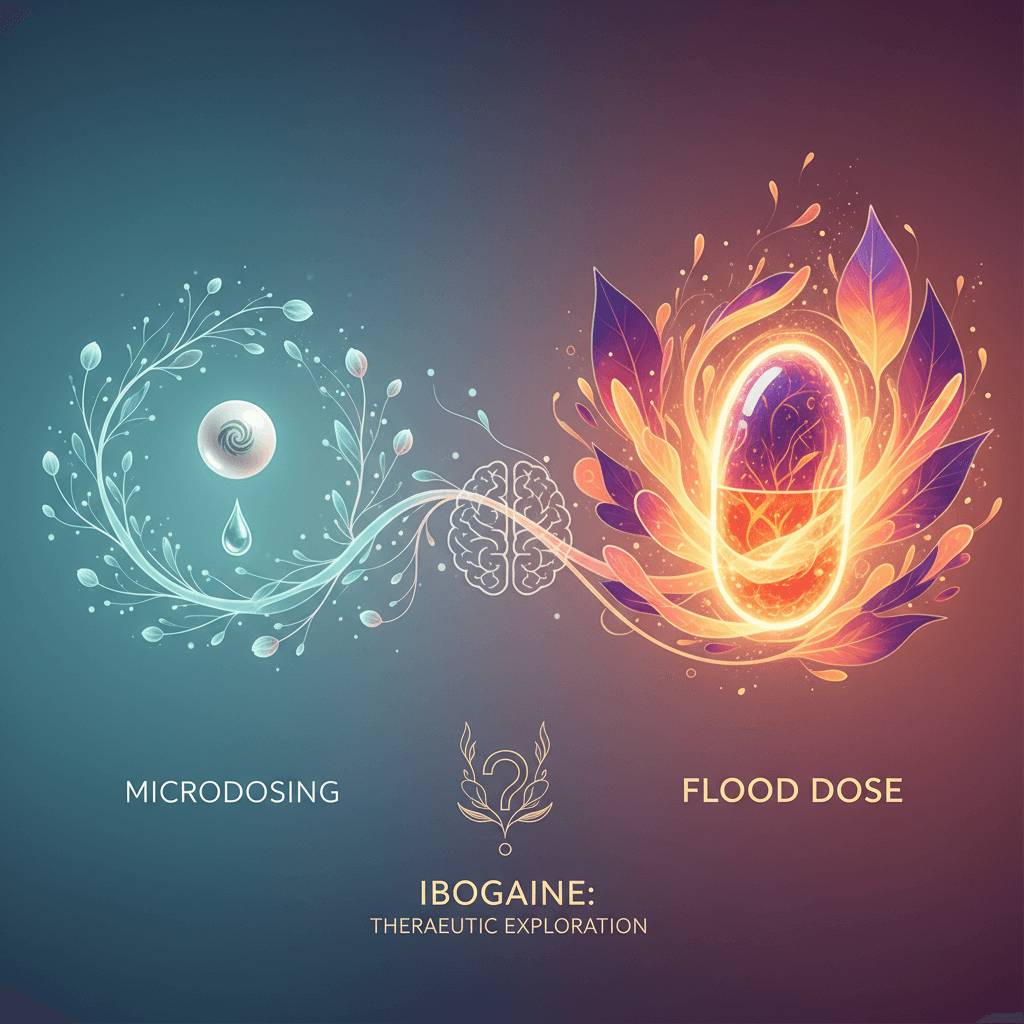
When you first encounter the term “flood dose,” it can sound dramatic and even a little alarming. Understanding exactly what a flood dose ibogaine treatment involves, and how it compares with microdosing, helps you make safer and more informed decisions about psychedelic therapy.
In clinical settings, ibogaine dosing is very structured. You are screened medically, stabilized, and then given carefully measured amounts of ibogaine according to clear safety guidelines. This is very different from experimental or self-directed use, where dose, setting, and monitoring are often uncertain. Knowing what a flood dose ibogaine protocol actually is can help you separate evidence-based treatment from risky improvisation.
What is a flood dose ibogaine treatment
A flood dose of ibogaine is a high, single-session dose intended to produce the full therapeutic effect at once. In medically supervised programs, a flood dose typically totals about 15 to 20 mg of ibogaine per kilogram of body weight, taken orally during a carefully monitored treatment session, usually after a smaller test dose of 2 to 3 mg per kilogram to check your response [1].
Ibogaine itself is a psychedelic compound derived from the root bark of the African shrub Tabernanthe iboga. In a flood dose format, it is used to interrupt addiction, rapidly ease opioid withdrawal, and reduce cravings, while also opening a deep psychological and spiritual process [1]. A flood dose is sometimes called a “saturation dose” because the goal is to reach a level in your system that activates the full range of ibogaine’s effects at once [2].
Clinical guidelines recommend strict upper limits to reduce medical risk. Doses above 12 mg per kilogram are linked with higher rates of cardiac abnormalities. You should never receive more than 24 mg per kilogram within any 24 hour period [2].
If you want a broader context for how this fits alongside other dosing styles, you can read more in resources such as ibogaine dosing methods explained and difference between ibogaine doses.
Why structured dosing matters for safety
Flood dose ibogaine is not simply a “take a high dose and see what happens” approach. In medical settings it is a highly structured protocol designed to balance efficacy with safety. This is especially important because ibogaine can affect your heart and nervous system in ways that require close monitoring.
Because ibogaine can lengthen the QT interval, a key part of your heart rhythm, reputable clinics perform thorough cardiac screening before dosing and then use continuous heart monitoring during and after treatment to reduce risk [1]. You are typically evaluated for:
- Personal and family history of heart disease
- Current medications that might also prolong the QT interval
- Electrolyte imbalances, such as low potassium or magnesium
- Liver function, which affects how you metabolize ibogaine
Clinical guidelines also recommend that a full flood dose only be given once you are medically stable, well hydrated, nourished, rested, and not overwhelmed by withdrawal symptoms. For people treated for opioid dependence, the optimal opioid withdrawal score (often measured with the OOWS scale) is usually between 3 and 7. This range balances safety with the goal of easing withdrawal [2].
Because of these risks, flood dose ibogaine treatment is not legal in the United States at this time. Some states, such as Colorado, are exploring regulatory frameworks. Texas is funding research that may eventually support supervised medical use [1]. For now, most clinical programs operate in countries where ibogaine is permitted under medical oversight.
How a clinical flood dose session is structured
Although different clinics use slightly different schedules, the core elements of a flood dose ibogaine protocol are quite consistent in the clinical literature and in practice.
Test dose and preparation phase
Before a full flood dose, you generally receive a test dose of ibogaine hydrochloride, usually 2 to 3 mg per kilogram, taken at least two hours before the main dose [2]. The goal is to see how your body metabolizes ibogaine, watch for any allergic reactions, and flag issues such as poor metabolism through liver enzymes like CYP2D6.
Clinics that follow published guidelines also emphasize psychological preparation. Many providers use some form of “life contract” or written agreement that clarifies your intentions, your commitment to safety, and your support plan after treatment [2]. Preparation usually covers:
- Medical stabilization and detox planning
- Discussion of expectations and fears
- Clarifying your motivations and goals
- Identifying support people and aftercare resources
You can think of this as designing the container for a very intense experience, so that what happens during your session can be integrated afterward.
Main flood dose administration
Once you are stable and the test dose is tolerated, the remainder of the flood dose is given in one or several closely spaced increments. Across the full session, total dosing typically reaches 15 to 20 mg per kilogram (within the 24 mg per kilogram safety ceiling) [3].
During this time you are usually:
- In a residential or inpatient setting
- Monitored with continuous ECG and vital signs
- Receiving intravenous saline and electrolytes as needed
- Supported psychologically by trained staff or therapists [4]
After the bulk of the dose is in your system, the session unfolds in several recognizable phases.
Three overlapping experiential phases
Clinical reports describe a typical flood dose ibogaine session, at 15 to 20 mg per kilogram, as lasting 12 to 36 hours, with effects falling into three main phases [4]:
- Acute visionary phase (4 to 8 hours)
This begins 1 to 3 hours after dosing. You may experience vivid waking dreams, especially with your eyes closed and in darkness. People often report intense visual imagery, revisiting life events, symbolic visions, and strong emotional material. Unpleasant effects can include auditory buzzing, hypersensitivity to stimuli, difficulty walking or coordinating movements (ataxia), dissociation, visual tracers, nausea, and vomiting [4]. - Evaluative phase (8 to 20 hours after dosing)
Visual imagery usually decreases, but introspection deepens. Many people report increased intuition, personal insight, and self reflection. For those addressing addiction, this phase can feel spiritually meaningful and is often described as understanding the roots of their substance use more clearly [4]. - Residual phase (24 to 72 hours)
In the day or two after, you may sleep less than usual but feel mentally clear and calm. People often describe a “reset” or a mental quietness, along with reduced cravings and withdrawal symptoms [5].
Clinical descriptions emphasize that a flood dose is a multi day process, not just the hours of intense visuals. You are essentially in treatment from the first milligram through the final integration conversation.
In a documented study of ibogaine treatment in Mexico between 2012 and 2015, these sessions were conducted in a residential setting with live cardiac monitoring, intravenous fluids, and medical supervision. Patients received emotional support during the experience and aftercare planning as part of a week long program [4].
Threshold and booster doses
Some clinics add smaller “booster” doses after the main flood. These are low threshold doses, usually 1 to 5 mg per kilogram, used to manage residual withdrawal or address lingering psychological material. Guidelines advise that these boosters be given either within 2 to 3 hours of the initial dose or after a 24 to 36 hour gap. This spacing is intended to minimize additive cardiac risk [2].
Programs that focus solely on high impact detox might not use boosters. Programs that emphasize psychological work sometimes pair them with therapy sessions in the days that follow.
How microdosing ibogaine is different
If you have read about ibogaine online, you have probably seen people describe both microdosing and flood doses. These are very different approaches with very different goals.
Core differences in dose and intent
Microdosing usually involves very small amounts of ibogaine or iboga root bark, taken repeatedly over weeks. The dose is low enough that you are not incapacitated and can often continue with daily activities. Flood dosing uses one large dose in a single tightly held window of time.
You can think of it this way:
- Flood dose
- One short, intense period
- High dose, 15 to 20 mg per kilogram
- Aims to disrupt addiction, ease acute withdrawal, and catalyze deep insight
- Microdose
- Many days or weeks
- Very low doses, well below visionary levels
- Aims to gently influence mood, cravings, or patterns over time
If you want to orient yourself more fully to the spectrum of options, it can help to look at dedicated resources such as ibogaine microdose therapy, ibogaine microdosing benefits, and ibogaine full dose treatment.
Different risk and supervision profiles
Microdosing may sound inherently safer, but it is not risk free. Even small amounts of ibogaine can affect your heart and interact with medications. The key difference is that a flood dose compresses most of the risk into a short window where you are ideally under continuous monitoring. Microdosing spreads lower level exposure across a longer timeline that is often not medically supervised.
From a clinical perspective, structured protocols are far more developed for flood doses than for microdosing. Published guidelines focus on screening, dosing caps, intervals, and monitoring for flood dose sessions because that is where most of the medical research and clinical experience currently sits [6]. Microdosing remains more experimental and tends to be used outside formal medical systems.
To compare methods side by side, including where each is most commonly used, you may find ibogaine dosage comparison and ibogaine microdosing vs flood dose helpful.
Why many medical programs favor flood dosing
Given the intensity of a flood dose ibogaine session, you might wonder why so many structured treatment programs still use this approach. For opioid dependence and some other substance use disorders, the reasons are fairly clear in both research and clinical practice.
Impact on withdrawal and cravings
In clinical reports, a properly administered flood dose often significantly reduces or nearly eliminates acute opioid withdrawal symptoms within hours. Patients who would normally experience days of severe discomfort can instead move through the worst of withdrawal while under medical supervision, with ibogaine helping to modulate the neurochemical shock of coming off opioids [7].
The intense visionary and evaluative phases also appear to contribute to changes in how people relate to their addiction. Many patients describe a sense that their cravings or compulsive patterns have been “reset,” even though integration and aftercare are still crucial for sustaining change [7].
Containment and therapeutic focus
A flood dose treatment is inherently contained. You clear your schedule, enter a controlled environment, and place your full attention on this one intervention. That makes it easier to:
- Manage medical risks in a monitored setting
- Provide continuous psychological support
- Build a bridge from the acute experience into an aftercare plan
In contrast, microdosing can be easier to hide or fragment around daily life. That can be beneficial for some mental health aims, but it can also dilute the seriousness with which you and your support system engage the process.
Programs that specialize in ibogaine typically use standardized dosing guidelines and step by step protocols. To understand how those look across clinics, you can explore resources such as ibogaine treatment dosing protocol and ibogaine flood dose experience.
How to think about your own options
If you are weighing microdosing versus a flood dose, or wondering what is realistic and safe for you, it can help to step through a few key questions.
First, consider your primary goal. If you are seeking rapid interruption of severe opioid dependence, most medical programs that work with ibogaine will focus on a carefully structured flood dose. If you are looking at ibogaine more for exploratory or mental health reasons, microdosing might seem appealing, but you should still treat it as a serious pharmacological intervention rather than a casual supplement.
Second, look honestly at your medical situation. Cardiac risk factors, liver issues, and medication interactions can make ibogaine unsafe at any dose. A proper evaluation with a clinician familiar with ibogaine is critical before you move forward with either approach.
Third, assess your support system and setting. A flood dose requires time away from everyday responsibilities, a safe place to stay, and people who can help you physically and emotionally. Microdosing requires consistent self monitoring across weeks or months and, ideally, periodic check ins with someone who understands the compound.
If you want a structured way to compare different approaches, from low dose regimens to full saturation protocols, the cluster of articles around ibogaine dosing methods explained and difference between ibogaine doses can give you more context.
Key takeaways about what a flood dose ibogaine involves
When you zoom out, a flood dose ibogaine treatment is not just a high dose of a psychedelic. It is an entire protocol that includes:
- Careful medical and psychological screening
- A small test dose to check for adverse reactions
- A large, single session dose of 15 to 20 mg per kilogram, under strict dose ceilings
- Continuous cardiac and vital sign monitoring
- A multi phase experience that lasts from 12 to 36 hours, with residual effects for up to 72 hours
- Optional booster doses within specific timing windows
- Structured aftercare planning and integration support
Microdosing and flood dosing sit on the same spectrum but serve different purposes and carry different levels of evidence and risk. Clinical programs tend to rely on flood dosing, with detailed dosing and monitoring guidelines, while microdosing remains more experimental and is often pursued outside formal medical settings.
If you choose to explore ibogaine in any form, prioritize safety, transparency, and medical oversight. Understanding exactly what a flood dose ibogaine protocol involves gives you a foundation to ask better questions, recognize reputable programs, and decide what aligns with your needs and values.