Why ibogaine cardiac monitoring treatment matters
If you are considering ibogaine for addiction treatment, safety is probably your first concern. Ibogaine has a complex effect on your heart, and without proper ibogaine cardiac monitoring treatment, the risks can be significant.
Clinical reports have linked ibogaine to dangerous heart rhythm changes, including QT interval prolongation and life threatening arrhythmias such as torsades de pointes and ventricular fibrillation [1]. At least 19 ibogaine related deaths were documented between 1990 and 2008, many involving cardiac complications during detox attempts [2].
These facts do not mean ibogaine therapy is never appropriate. They do mean that you should only work with clinics that have robust ibogaine treatment safety protocols, including thorough cardiac screening and continuous monitoring throughout treatment. Understanding why these measures matter helps you choose a clinic that prioritizes your life, not just your detox.
Understanding ibogaine’s cardiac risks
Ibogaine is an indole alkaloid from the shrub Tabernanthe iboga. It interacts with multiple brain systems, including nicotinic, opioid, glutamatergic, and monoaminergic pathways, which may help reduce withdrawal and cravings in substance use disorders [3]. At the same time, ibogaine and its active metabolite noribogaine affect your heart’s electrical system.
How ibogaine affects your heart
Ibogaine and noribogaine block hERG potassium channels, which are essential for cardiac repolarization. When these channels are inhibited, the QT interval on your ECG can become prolonged, which means your heart takes longer to reset between beats [3]. Prolonged QT significantly raises the risk of:
- Torsades de pointes
- Ventricular tachycardia
- Ventricular fibrillation
- Sudden cardiac death [1]
In several documented cases, QTc intervals exceeded 600 to even 700 ms after ibogaine ingestion, followed by serious arrhythmias [1].
Noribogaine has a half life of 28 to 49 hours, compared to 4 to 7 hours for ibogaine itself. As a result, QT prolongation and arrhythmia risk can persist for days after dosing, not just during the acute psychedelic phase [1].
Why uncontrolled use is especially dangerous
The clearest illustration of uncontrolled risk comes from case reports of self administration. In one case, a 40 year old man who took 4 g of ibogaine on his own, plus a booster dose, went into cardiac arrest within 8 hours and was later declared brain dead. His course was consistent with ibogaine induced cardiotoxicity and arrest [2].
Across reported fatalities, common themes appear:
- Preexisting cardiovascular disease
- Electrolyte imbalances, especially hypokalemia, were present in all fatal cases
- Concomitant drug use and polysubstance withdrawal
- Non standardized iboga or ibogaine preparations of unknown strength [1]
None of these cases involved the sort of comprehensive medical supervision during ibogaine treatment that reputable clinics provide. This is exactly why rigorous screening and ibogaine cardiac monitoring treatment are non negotiable.
The role of medical screening before treatment
Your safety starts long before you swallow an ibogaine capsule. A high quality clinic invests heavily in medical screening for ibogaine therapy to identify who can safely receive treatment and who should not.
Comprehensive risk assessment
Because ibogaine has a narrow therapeutic window and metabolism varies widely between people, especially due to CYP2D6 differences [3], a thorough ibogaine treatment risk assessment is essential. A proper medical workup usually includes:
- Detailed medical and cardiac history, including fainting, palpitations, or known arrhythmias
- Review of all prescription medications, supplements, and substances
- Family history of sudden cardiac death or prolonged QT
- Physical examination, with emphasis on cardiovascular and neurological systems
This evaluation helps your medical team decide whether ibogaine is appropriate and what level of monitoring you will require.
Baseline cardiac screening
Before any dosing, you should receive dedicated ibogaine treatment cardiac screening. At reputable facilities, this typically includes:
- Resting 12 lead ECG to measure QTc and detect conduction abnormalities
- Heart rate and rhythm evaluation
- Blood pressure and oxygen saturation
- Laboratory testing of electrolytes, especially potassium and magnesium [4]
Clinics that follow strong ibogaine clinic safety standards exclude clients with:
- Markedly prolonged baseline QTc
- Structural heart disease or significant cardiomyopathy
- History of serious arrhythmias
- Uncorrectable electrolyte disturbances
- Unstable medical or psychiatric conditions [1]
If your profile suggests elevated risk, a responsible medical team will not move forward with ibogaine. They may recommend alternative treatment pathways instead.
Continuous cardiac monitoring during ibogaine
Once you are cleared for treatment, the focus shifts to real time ibogaine cardiac monitoring treatment. Because QT changes and arrhythmias can emerge quickly, relying on a single pre treatment ECG is not adequate protection.
Telemetry and real time observation
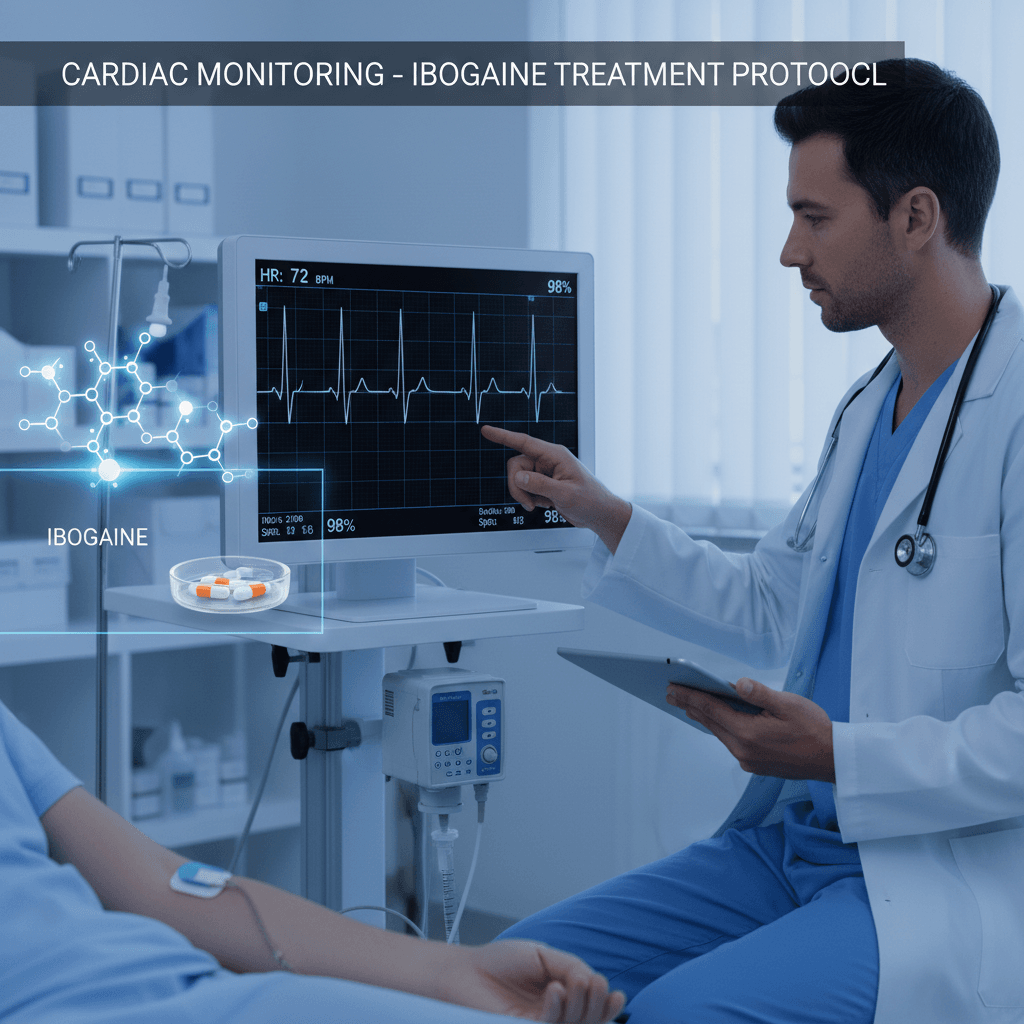
Expert recommendations call for continuous electrocardiographic monitoring during anti addiction ibogaine treatment [1]. At centers like Bassé Ibogaine, continuous telemetry is used through the 24 to 36 hour acute phase to track:
- Heart rhythm and rate
- QT interval trends
- Oxygen saturation
- Blood pressure and other vital signs [4]
Trained staff watch these parameters in real time so emerging problems are detected before they become critical. If your QTc begins to lengthen or your rhythm becomes unstable, protocols are in place to adjust your care immediately.
Qualified emergency response capability
Cardiac monitoring only helps if the team knows how to respond. At high standard clinics, staff members maintain Advanced Cardiac Life Support (ACLS) training so they can address acute arrhythmias or cardiac arrest without delay [4].
That level of preparation typically includes:
- On site emergency equipment, including defibrillator, oxygen, and resuscitation tools
- Intravenous access for rapid correction of electrolytes or medication administration
- Written escalation protocols that specify when to involve higher level emergency care
These safety layers reflect what you should expect from any facility that promotes medically supervised ibogaine therapy.
Structured protocols for detox and dosing
Ibogaine is often used during detox from opioids, alcohol, or other substances. This is one of the highest risk windows because your body is already under stress and you may be taking other medications. Structured ibogaine detox medical supervision is essential during this transition.
Medical stabilization before dosing
A careful ibogaine treatment medical protocol focuses on stabilizing you before ibogaine is given. That can include:
- Gradual reduction or transition off methadone, buprenorphine, or other long acting opioids
- Management of withdrawal with non QT prolonging medications where possible
- Correction of dehydration, malnutrition, and vitamin deficiencies
- Correction of electrolyte abnormalities before dosing [4]
This preparation helps reduce additive strain on your heart and minimizes drug drug interactions that can further prolong QT.
Individualized dosing and observation
Responsible clinics respect that there is no one size fits all ibogaine dose. Metabolism can differ by several fold between individuals [3]. For that reason, safer protocols typically involve:
- Weight based dose calculations with conservative upper limits
- Avoidance of “booster” doses in the absence of careful ECG reassessment
- Close clinical observation during peak effect, when blood levels and QT changes may be greatest
At every step, ibogaine treatment doctor supervision guides decisions, rather than rigid schedules or client pressure to increase the dose.
Risk reduction beyond the acute phase
Because noribogaine persists in your system, arrhythmia risk can extend for days after your main treatment session [1]. Recognizing this, comprehensive ibogaine cardiac monitoring treatment does not end when your visionary experience fades.
Extended monitoring and follow up
Clinics that prioritize safety often provide:
- Repeat ECGs after the acute phase to confirm QTc has normalized
- Continued telemetry or intermittent rhythm checks for higher risk clients
- Ongoing electrolyte management and hydration support
Where needed, your team may collaborate with cardiologists or local hospitals to further evaluate suspicious findings. This longer horizon view of risk is a key difference between structured clinical care and short stay or informal retreat models.
Medication and substance precautions
Noribogaine’s prolonged effects mean that anything you take in the days after treatment can interact with your heart’s electrical system. Your care team should clearly guide you about:
- Which medications or supplements to avoid because they prolong QT
- When it is safe to restart maintenance medications
- Warning signs, such as fainting, palpitations, or seizures, that require urgent evaluation [1]
You should leave with written instructions and contact information, not vague reassurances.
There are no controlled human studies that define a specific antidote or standardized treatment for ibogaine toxicity. Management focuses on vigilant monitoring and rapid, supportive care if complications arise [2].
This reality makes prevention and early detection through proper monitoring especially important.
How monitoring makes ibogaine therapy safer
With so many serious case reports, you might reasonably ask, “How safe is ibogaine therapy, even with monitoring?” The most accurate answer is that ibogaine remains a higher risk intervention, and no level of monitoring can reduce that risk to zero. However, rigorous screening and supervision can significantly lower the likelihood of serious complications.
Distinguishing clinic care from unsupervised use
When you look closely at published fatalities and near misses, patterns emerge:
- Many occurred in non medical settings such as private homes or informal retreats
- There was no baseline ECG, electrolyte testing, or formal ibogaine therapy medical screening process
- Continuous ECG monitoring was rarely or never used
- No ACLS trained staff or emergency equipment was available [5]
By contrast, clinics that adhere to strict ibogaine clinic medical safety protocol are designed around:
- Excluding high risk individuals before treatment
- Detecting cardiac changes early through monitoring
- Intervening promptly when abnormalities appear [4]
This structured oversight does not eliminate danger, but it shifts the odds substantially in your favor compared to unsupervised use.
Putting ibogaine risks in context
It is also important to see ibogaine’s cardiac risk in the broader context of addiction and withdrawal. Severe opioid or alcohol dependence carries its own substantial mortality risk. Sudden unsupervised withdrawal can also provoke cardiac events, seizures, or other medical crises.
When you weigh options, you are not comparing ibogaine to a risk free alternative. Instead, you are looking at:
- Ibogaine in a high quality medical setting
- Other evidence based addiction treatments
- Ongoing substance use without structured help
Resources such as how safe is ibogaine therapy and is ibogaine treatment safe can help you think through these tradeoffs with more nuance.
Choosing a clinic that prioritizes your heart
As you compare clinics, you will likely see many claims about safety, experience, and success rates. To evaluate whether a facility truly offers robust ibogaine cardiac monitoring treatment, focus on specific, verifiable practices rather than marketing language.
Here are key questions to ask any clinic you are considering:
-
What is your exact screening process?
Ask for details about ECGs, labs, and cardiology consults. A reputable clinic should easily explain their ibogaine therapy medical screening process. -
Do you provide continuous cardiac monitoring, and for how long?
Look for continuous telemetry through at least the main 24 to 36 hour acute phase [4]. -
Who is on site during treatment?
You should have direct physician involvement and ACLS trained staff throughout medical supervision during ibogaine treatment. -
What emergency resources are available?
Confirm that the clinic has a defibrillator, emergency medications, and a clear plan to transfer you to higher level care if needed. -
How do you handle dosing and boosters?
Avoid centers that routinely push very high doses or boosters without repeat ECGs or physician approval.
If a clinic cannot answer these questions clearly, or minimizes the importance of cardiac risk, you have valid reason to look elsewhere.
Moving forward with informed confidence
Choosing ibogaine therapy is a significant step. You deserve clear information and practical safeguards, not vague promises. Comprehensive ibogaine cardiac monitoring treatment is not an optional upgrade, it is the foundation of responsible care.
By prioritizing clinics that follow rigorous ibogaine clinic safety standards, insist on thorough screening, and maintain continuous medical oversight, you give yourself the best possible chance to benefit from ibogaine while minimizing avoidable risk.
If you are still weighing your options, it may help to explore resources that explain ibogaine treatment safety protocols and walk through what to expect from high quality medical supervision during ibogaine treatment. With the right information and a medically grounded team by your side, you can make a decision that honors both your recovery goals and your long term health.