
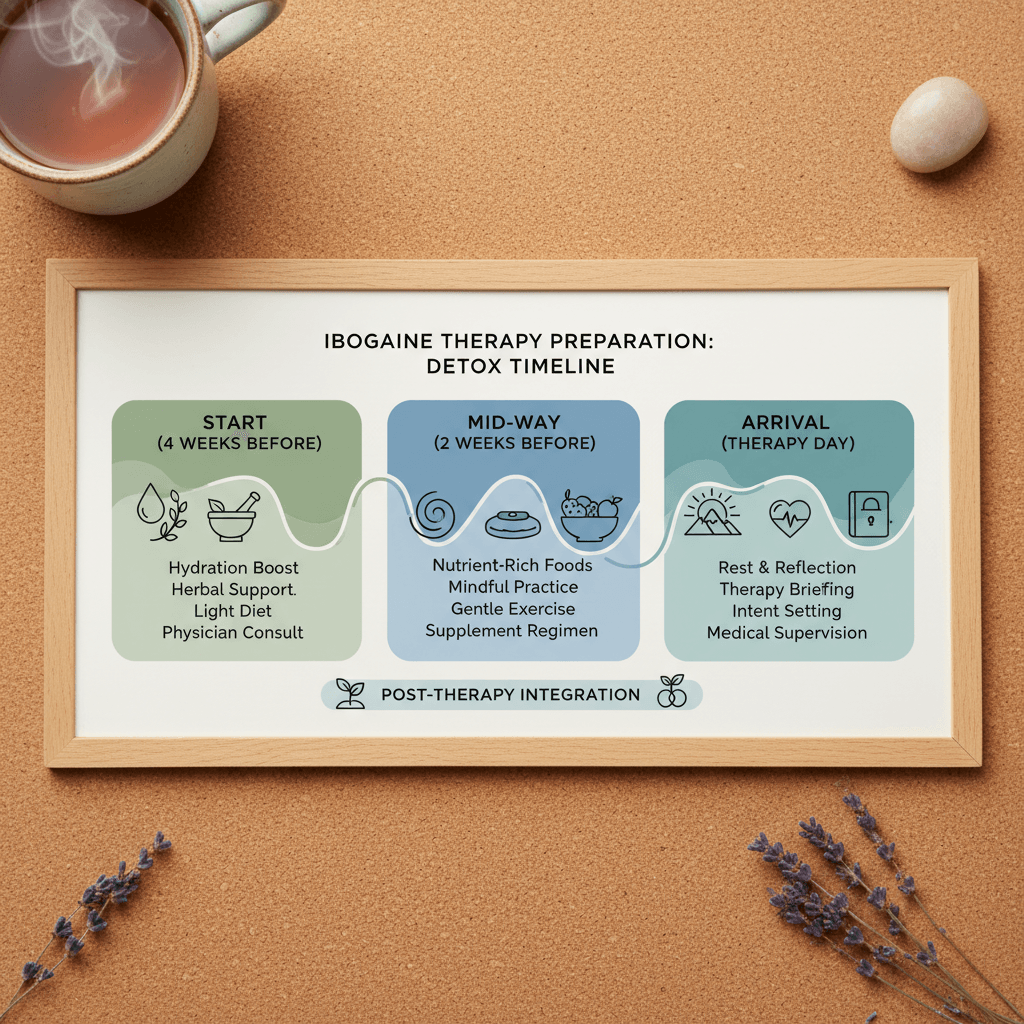
Understanding the ibogaine detox preparation timeline
If you have chosen ibogaine as part of your recovery plan, how you prepare in the weeks and days before treatment directly affects both safety and outcomes. An intentional ibogaine detox preparation timeline helps you organize medical evaluations, medication changes, detox, travel, and mindset work in a realistic order instead of trying to do everything at once.
Ibogaine is powerful, and it carries real medical risks if you skip key steps. Research from the Netherlands that monitored patients with opioid use disorder after a single dose of ibogaine hydrochloride used intensive cardiac, neurological, and psychological observation to prioritize safety, including frequent ECGs and electrolyte checks during the first 24 hours of treatment [1]. Structured preparation is designed to bring that same safety mindset into your own treatment journey.
The following ibogaine detox preparation timeline is a general guide. Your exact schedule depends on your health history, substance use, and the protocols of your chosen clinic. Always follow your medical provider’s instructions even if they differ from this overview. For a broader look at the process, you can also review resources like preparing for ibogaine detox treatment and steps before ibogaine treatment.
6–8 weeks before treatment: Big-picture decisions and screening
In the early phase of ibogaine detox preparation, you focus on three things: choosing a medically responsible program, completing initial screenings, and starting conversations about tapering or detox. This is where you set the foundation for safety.
Choose a medically supervised program
Your first step is to choose a treatment center that treats ibogaine as a medical intervention, not a casual retreat. You want a program that:
- Requires detailed medical and psychiatric history
- Screens for cardiac and liver risks
- Has on-site or immediate access to medical professionals
- Uses continuous or frequent ECG monitoring during treatment
- Provides structured aftercare or referrals
Reputable clinics emphasize that ibogaine treatment begins with a full health evaluation. Centers such as Experience Ibogaine describe a process that includes assessing liver and heart function, reviewing medications, and explaining the procedure before you are ever scheduled for dosing [2].
Complete initial medical intake and disclosures
During this period, you typically complete questionnaires and interviews about:
- Current and past substances, including dose, frequency, and route of use
- Prescription medications and supplements
- Past medical history, especially heart, liver, kidney, or neurological issues
- Psychiatric history, including trauma, mood disorders, and psychosis
- Any prior adverse reactions to anesthesia or psychoactive substances
Being completely honest here is critical. Ibogaine detox is not the place to hide benzodiazepine use, recent methadone, or past heart problems. Your team uses this information to determine whether ibogaine is appropriate and what preparation steps are needed to keep you safe.
Start planning medication and opioid tapering
If you are on opioids, opioid substitution therapy (such as methadone or buprenorphine), benzodiazepines, or other psychoactive medications, you will almost always need a structured taper well before ibogaine detox.
Published protocols and clinical experiences often convert patients from long-acting opioid substitution medications to a short-acting opioid like morphine before ibogaine dosing. For example, in a 2022 study, patients with opioid use disorder were moved from substitution treatment to oral morphine sulfate for 8 days, then received a single dose of ibogaine after an 8 day morphine washout, with intensive monitoring, ECGs, and lab work before and after dosing [1].
Your provider may recommend:
- Gradually reducing your opioid or methadone dose
- Transitioning from a long-acting medication to a short-acting opioid
- Coordinating a medically supervised detox before travel
- Adjusting psychiatric medications to avoid dangerous interactions
You should never attempt to design or accelerate a taper on your own. Work closely with your prescriber, the ibogaine clinic’s medical team, or a detox facility.
4–5 weeks before treatment: Detailed medical workup
Once you have committed to a program and begun high-level planning, the next phase of your ibogaine detox preparation timeline involves formal medical testing and individualized clearance.
Schedule core medical evaluations
A typical pre-ibogaine medical workup may include:
- Comprehensive physical exam
- Laboratory tests (complete blood count, metabolic panel, liver and kidney function)
- Cardiac evaluation, such as a 12-lead ECG
- Electrolyte levels including potassium, calcium, and magnesium
In the Netherlands study, clinicians measured serum potassium, calcium, and magnesium 30 minutes before ibogaine dosing and used ECGs to establish a baseline for QTc intervals as a key cardiac safety step [1]. Many clinics now follow similar guidelines.
If any concerns appear on your ECG or labs, additional tests such as echocardiograms or specialist consultations might be required. You may need to correct anemia, manage high blood pressure, or stabilize other conditions before you are cleared for detox.
Correct electrolyte and nutrition issues
Balanced electrolytes are central to ibogaine safety because imbalances can worsen QTc prolongation and increase cardiac risk. The Global Ibogaine Therapy Alliance emphasizes the importance of addressing abnormal potassium or magnesium levels before treatment. If your labs show deficiencies or excesses, you should work with your provider to supplement or adjust intake until blood tests normalize [3].
Alongside electrolytes, you should:
- Focus on a balanced diet with adequate protein, complex carbohydrates, and healthy fats
- Avoid extreme dieting, fasting, or “cleanse” regimens before treatment
- Maintain a consistent eating schedule
GITA specifically advises against severe dietary restrictions or cleansing protocols between application and discharge to maintain physical energy and electrolyte stability during ibogaine detox [3].
Discuss psychiatric stability and support
Your mental health history is as important as your physical examination. At this stage, you should talk with both your ibogaine team and your regular mental health providers about:
- History of psychosis, bipolar disorder, or severe dissociation
- Current mood symptoms and any suicidal thoughts
- Trauma history and current triggers
- How you plan to continue therapy after ibogaine
Psychological preparation is highlighted in ibogaine clinical guidelines as a core element of safety. Working with therapists to set realistic intentions and plan continuing care after treatment helps frame ibogaine as one part of a broader recovery strategy, not a one-time cure [3].
If you want more structure for this stage, you can review high-level resources like ibogaine therapy preparation guide or medical preparation for ibogaine therapy.
2–3 weeks before treatment: Detox planning and body preparation
As your treatment date approaches, your focus shifts toward the practical pieces of detox, travel, and physical conditioning. This is when your ibogaine detox preparation timeline becomes more concrete.
Finalize detox and medication changes
For many people, this is the period when you:
- Complete or intensify your taper from methadone or buprenorphine under medical supervision
- Transition to short-acting opioids if your protocol requires it
- Reduce or discontinue medications that interact dangerously with ibogaine, only with professional direction
- Plan or enter a supervised detox for alcohol or benzodiazepines if needed
The exact schedule should come from your prescriber or a detox physician. Trying to “push through” withdrawal alone just to arrive at ibogaine faster can actually increase risk. Safe detox is part of ibogaine preparation, not an obstacle to it.
Build physical resilience without overexertion
You do not need to become an athlete before ibogaine detox, but you do benefit from arriving in reasonable physical condition. During this period, focus on:
- Regular, moderate movement like walking, gentle yoga, or stretching
- Sleep hygiene, aiming for a consistent sleep schedule each night
- Hydration habits that include electrolytes, not just plain water
Guidelines from the Global Ibogaine Therapy Alliance recommend daily electrolyte-containing fluids, especially for people with hypotension, at roughly 1 fluid ounce per kilogram of body weight per day [3]. Coconut water or low-sugar electrolyte drinks can be useful options.
Avoid intense exercise programs or sudden fitness “overhauls” that leave you exhausted. Your body needs energy reserves for detox and the ibogaine experience.
Prepare veins if you have access challenges
If you know that nurses have difficulty placing IVs or drawing blood, you may be asked to follow a specific vascular pre-care plan. GITA notes that people with poor vein access should follow a vascular protocol for at least 10 days, or until veins are reliably accessible, before ibogaine detox [3].
This may include:
- Adequate hydration
- Avoiding repeated unnecessary needle sticks
- Gentle warming or exercise before blood work as directed
Tell your treatment team about any history of collapsed veins, IV drug use, or central line placements so they can plan appropriately.
7–10 days before treatment: Practical logistics and mindset
In the final one to two weeks, your ibogaine detox preparation timeline becomes more focused on concrete details: travel, packing, final health checks, and mental readiness.
Confirm medical clearance and travel plans
Well before your travel date, confirm:
- You have written medical clearance or a clear “go ahead” from the clinic
- Your most recent labs and ECG are accepted by the treatment team
- You understand when your last dose of any psychoactive medication or opioid should occur
- Your passport, visa (if needed), and travel insurance are in order
You should also plan travel in a way that respects your physical state. If you expect to be in late-stage opioid taper or post-detox, booking flights with minimal layovers and arranging transport from the airport to the clinic can reduce stress.
Pack thoughtfully for comfort and safety
Your clinic will provide its own packing list, but in general you will want to bring:
- Comfortable, loose clothing for multiple days
- Easy-on footwear for unsteady periods after dosing
- Personal items that help calm you, such as a journal or photos
- Copies of medical records and medication lists
Avoid bringing any non-approved substances, supplements, or medications. If you are unsure whether something is allowed, ask your treatment team in advance.
Deepen psychological and emotional preparation
Psychological preparation remains important right up to treatment. GITA recommends working with therapy providers to mentally prepare and set realistic intentions before ibogaine detox [3]. You can support this by:
- Clarifying what you hope to gain from ibogaine, in realistic terms
- Identifying fears or expectations and discussing them with a therapist
- Planning what you will do in the weeks and months after treatment, such as therapy, support groups, or sober housing
This is also a good time to look at resources like how patients prepare for ibogaine detox and ibogaine therapy pre treatment preparation to make sure you are not overlooking key steps.
24–72 hours before treatment: Final medical and practical steps
The last days before dosing are typically tightly structured by your treatment team. This is where small details have an outsized impact on safety.
Follow pre-treatment fasting and medication instructions
Your clinic will give specific rules about:
- When to stop eating solid food before ibogaine
- What and when you can drink, especially electrolyte-containing fluids
- Which medications, if any, you should take on the morning of treatment
Avoid experimenting with new supplements or over-the-counter medications. Pay particular attention to any instructions about drugs that can affect heart rhythm.
In the Netherlands safety study, patients received their last dose of morphine sulfate 4 hours before ibogaine, and baseline labs and ECGs were taken 30 minutes prior to dosing [1]. Your clinic may follow a similar rhythm with its own timing modifications.
Maintain hydration and stable energy
Continue to drink fluids with electrolytes, especially if you have any history of low blood pressure. As GITA notes, electrolyte-rich hydration helps maintain stable blood volume and reduces risks associated with hypotension during detox and treatment [3].
At the same time, avoid overhydration that leaves you uncomfortable or disrupts sleep. Follow the specific fluid intake guidelines from your treatment team.
Prioritize rest and emotional steadiness
Sleep may be difficult as you anticipate treatment, but rest is one of the best ways to support your nervous system. In the final 24 to 72 hours, try to:
- Keep your schedule simple and avoid unnecessary social conflict or travel
- Use calming techniques that work for you, such as breathing exercises, gentle stretching, or short walks
- Journal about what you are feeling instead of trying to suppress it
If you notice panic, suicidal thoughts, or extreme emotional instability during this time, tell your treatment team right away. They may adjust your plan or provide additional support.
Day of treatment: On-site safety and monitoring
While the focus of an ibogaine detox preparation timeline is on what happens before you arrive, understanding what to expect on the treatment day can help you prepare more effectively.
Baseline checks and safety protocols
Before you receive ibogaine, you can expect:
- A brief physical exam and review of your current symptoms
- Verification of when you last ate, drank, and took any medications
- A new ECG to assess your heart rhythm and QTc interval
- Possibly a repeat check of key electrolytes like potassium and magnesium
In the 2022 study, ECGs were performed every 30 minutes for the first 12 hours after ibogaine ingestion, then hourly or every 4 hours depending on QTc values. QTc thresholds of 450 milliseconds in males and 470 milliseconds in females triggered intensified monitoring, and QTc above 500 milliseconds led to magnesium infusion and potential transfer to a coronary care unit if needed [1]. While your clinic’s numbers may differ, the principle is the same: careful cardiac observation is not optional.
Anticipated physical and neurological effects
It is helpful to know that certain side effects are expected. In the same Netherlands cohort, all patients experienced transient severe ataxia, a type of movement and balance disturbance, which peaked between 2 and 6 hours after ibogaine and resolved within 24 to 48 hours. Mild psychomimetic effects occurred but did not progress to delirium in that study [1].
Being aware that unsteadiness, difficulty walking, and unusual mental states are anticipated can reduce fear when they occur. Your job during this period is to follow staff directions, allow support, and let the medical team focus on monitoring your safety.
Aftercare planning as part of your preparation timeline
An effective ibogaine detox preparation timeline does not end on the day of dosing. Planning for aftercare before treatment even starts is a strong predictor of longer-term stability.
Build your aftercare framework in advance
Experience Ibogaine notes that long-term success significantly depends on a robust aftercare plan that can include counseling, holistic practices, and possible booster doses when clinically appropriate [2]. Before your trip, you should already know:
- Which therapist, counselor, or program you will see after treatment
- Whether you will attend support groups or peer recovery meetings
- Where you will live in the weeks following ibogaine, and whether that environment supports recovery
- How you will handle triggers, cravings, or emotional waves post-treatment
Treat your return plan as part of your ibogaine detox preparation timeline, not something to figure out later.
Use checklists to stay organized
Many people find it helpful to create or follow a written checklist to make sure nothing slips through the cracks. You can use resources such as an ibogaine treatment readiness checklist, or your clinic’s own materials, to track items like medical clearances, detox completion, travel arrangements, and aftercare appointments.
Bringing your ibogaine detox preparation timeline together
Ibogaine is not a casual intervention. It is a medically sensitive treatment that demands planning, honesty, and collaboration with experienced professionals. When you structure your ibogaine detox preparation timeline over 6 to 8 weeks, you give yourself the best chance to:
- Complete necessary medical evaluations and corrections
- Taper or detox safely from opioids and other substances
- Stabilize your physical health with adequate nutrition, hydration, and rest
- Prepare mentally and emotionally for an intense experience
- Put real aftercare supports in place before you ever take ibogaine
Your exact path will be unique, and it should always be guided by qualified medical providers and an experienced ibogaine team. As you move forward, you can continue deepening your understanding with resources such as what to do before ibogaine treatment and how to prepare for ibogaine therapy.
By approaching ibogaine detox preparation as a structured timeline rather than a last-minute scramble, you respect both the power of the medicine and the importance of your own safety.