Suboxone Detox Without the Endless Taper: A Deeper Reset Option
You tried tapering Suboxone twice, and both times you made it down to 2 mg before the anxiety, insomnia, and cravings forced you back up. Now you are searching for a way to get off buprenorphine without spending six months in low-grade withdrawal, and you are trying to figure out whether ibogaine is real medicine or just another expensive gamble. This guide walks through a different kind of Suboxone detox: a physician-led ibogaine protocol that may offer a faster transition for some people than months-long tapers, but only if you can pass strict cardiac and metabolic clearance and complete a medically managed transition off buprenorphine first. Safety will always come before filling a bed, and part of doing this honestly is telling you where the door closes.
Why Your Suboxone Taper Keeps Failing at the Last Few Milligrams
The final milligrams of a Suboxone taper are often the hardest part for many people, and that is not a failure of willpower. Buprenorphine is a partial opioid agonist with a long half-life, and both of those traits can work against you at the low end of a taper.
The long half-life means the drug lingers in your system and leaves slowly, so every dose reduction can ripple out over days instead of clearing in hours. The partial-agonist “ceiling effect” means buprenorphine binds tightly to your opioid receptors and holds on, which is exactly why it can be useful for stabilizing some people, and also why cutting the last 2 mg may feel so disproportionate for many. The FDA prescribing information for Suboxone describes buprenorphine as a partial agonist with high receptor affinity, the pharmacology that can make those final steps challenging.
So you drop from 4 mg to 2 mg and feel fine for a week. Then you drop to 1 mg and the sleep goes, the restlessness climbs, and the cravings that had gone quiet start whispering again. You are not imagining it. Your nervous system may be recalibrating around a molecule that will not fully let go. This is a physiological reason some people stall at the bottom of a taper, decide they cannot white-knuckle another month, and go looking for something that might reset the whole system at once instead of shaving it down a fraction at a time.
What Can Ibogaine Do for a Suboxone Detox, and What Can It Not?
Ibogaine may interrupt opioid withdrawal and reduce cravings for some people in a single treatment window, which is why it draws people out of the endless-taper trap. What it cannot do is cure addiction, and it cannot be given legally inside the United States.
Ibogaine is a Schedule I controlled substance under the federal Controlled Substances Act and is not FDA-approved for any medical use. That legal status is not a technicality you can work around. It is the reason all ibogaine treatment happens at our licensed medical clinic in Cozumel, Mexico, which operates within the Mexican healthcare system and holds a relationship with COFEPRIS, the country’s regulatory body. Our Columbus, Ohio office handles admissions, medical screening coordination, and aftercare only. No ibogaine is administered on United States soil, by us or by anyone else operating legally.
What ibogaine appears to do at the neurochemical level is act on multiple receptor systems at once, which may influence some of the signaling that drives withdrawal and craving in certain individuals. For some people the shift can feel dramatic within a day or two, though responses vary. But the medicine may open the door, and lasting recovery comes from the choices a person makes once they walk through it. Anyone promising ibogaine as a permanent, guaranteed cure is selling you something we will not. A single treatment can create an opening for some people. Whether that opening becomes a real recovery depends on the work that follows it.
The Medical Clearance You Must Pass Before You Book Travel
Before we accept anyone for a Suboxone detox with ibogaine, you must clear a full cardiac and metabolic workup, and the physicians make that call, not admissions staff. This step is non-negotiable, and for people on buprenorphine it matters even more, because ibogaine can affect the heart’s electrical timing.
Every prospective patient completes a detailed medical history, a full medication review, laboratory testing, and a 12-lead ECG that evaluates cardiac rhythm, QTc interval, electrolytes, liver and kidney function, and a complete blood count. We look for a QTc below roughly 450 ms in men and 470 ms in women, with a hard line at 460 ms above which the team will not proceed. We target potassium between 4.2 and 4.8 mmol/L and magnesium of at least 2.0 mg/dL, correcting low electrolytes before anyone moves forward. These are not numbers we bend to fill a schedule. We would rather lose a patient than compromise our standards.
Two physicians own the final decision. Our Chief Medical Director is an anesthesiologist, the kind of specialist trained to manage exactly the cardiac and airway risks that ibogaine demands respect for. Our psychiatrist brings more than two decades in addiction medicine and psychiatry. When you ask whether we would trust this protocol with someone we love, this is the layer that lets us answer yes: every acceptance passes through their review. If your numbers say the risk is too high, we stop there and talk about other options.
Step 1: How the Transition From Suboxone to Short-Acting Opioids Works (Days 1 to 8)
You cannot dose ibogaine directly on top of Suboxone, so the first step of the protocol is a medically supervised transition from buprenorphine to a short-acting opioid, usually about eight days before the flood dose. This happens on site at the clinic, managed by our team, not left to you to figure out at home.
The reason is the same pharmacology that made your taper so miserable for many people. Buprenorphine’s long half-life and tight receptor binding mean it stays parked on your opioid receptors, and ibogaine is not given while a long-acting agent is still occupying that space. So we transition you to a shorter-acting opioid first, under medical management, which clears the receptors on a predictable timeline and lets us dose ibogaine safely when the window opens.
There is no fixed calendar here. Roughly eight days is the working estimate, but the actual timeline is assessed individually based on your Suboxone dose, how long you have been on it, and your broader opioid history. Someone stable on 2 mg for a year may move differently than someone who was on 24 mg for five years. Throughout this phase you are monitored, and comfort medications are used to manage symptoms as your body shifts off buprenorphine. Standard opioid withdrawal care during a transition like this, from hydration to symptom-targeted medication, follows established withdrawal management principles. You are not doing this alone, and you are not doing it cold.
Step 2: Why the Team Repeats Every Test the Day Before Treatment
We repeat the full workup after you arrive in Cozumel, including a fresh 12-lead ECG immediately before the flood dose, because your cardiac and metabolic status can move during the transition off buprenorphine. The clearance you passed weeks ago does not automatically hold on treatment day.
That is the whole point of retesting. Coming off a long-acting opioid, adjusting to a short-acting one, traveling, eating and sleeping differently, and shifting fluid and electrolyte balance can all nudge your numbers. A potassium level that was in range during screening can drift low. A QTc that read safely at home can lengthen. So the physicians draw labs again, run the ECG again, and correct any electrolyte gaps before anyone touches ibogaine. Magnesium and potassium in particular are optimized right up to the last check.
This repeat step is one of the clearest lines between a real medical program and a retreat that treats screening as a formality. A weekend model runs people on the strength of paperwork from three weeks earlier. We treat the day-before assessment as a genuine gate: if the numbers have moved outside safe parameters, the flood dose waits until they are corrected, or it does not happen at all. Would we trust this with someone we love? Only if we checked again, right before, every time.
Step 3: What Happens During the Ibogaine Flood Dose
The flood dose is a single, carefully calculated treatment given under continuous medical monitoring, and the effects unfold over roughly 24 to 36 hours. During that window you may enter a deeply introspective state while the medicine works on the receptor systems that can influence your withdrawal and cravings.
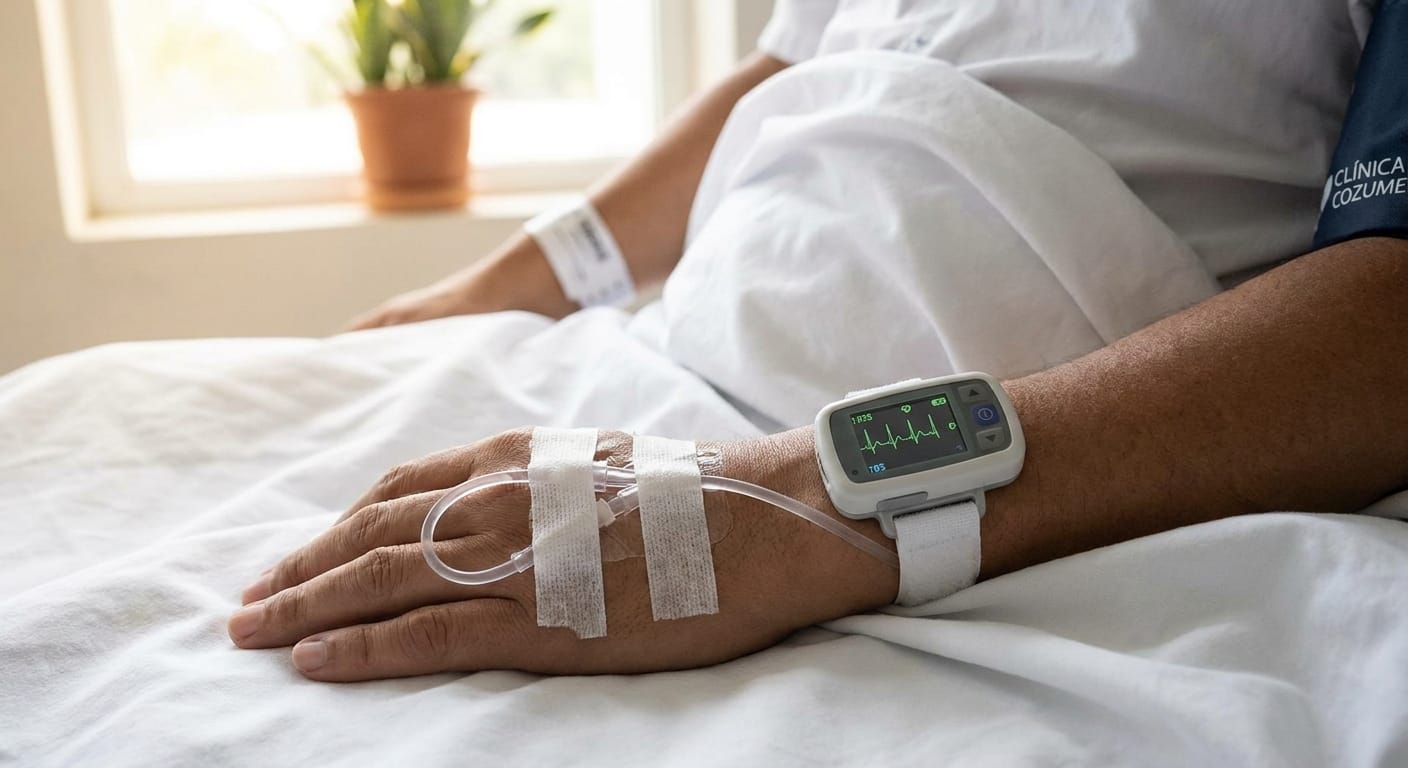
Throughout the entire dose you are on continuous cardiac telemetry, with ICU-trained nurses at the bedside 24 hours a day. This is not a facilitator in a candlelit room. Our anesthesiologist leads the medical oversight, and the protocol is built to catch and respond to cardiac changes the moment they appear. Our dosing protocols also reflect emerging clinical research on magnesium co-administration, which is part of why we push electrolytes into a protective range before treatment: magnesium status is directly tied to how the heart tolerates the medicine.
What the experience feels like varies. Some people describe a long, dreamlike introspective phase followed by a quieter processing period as the acute effects settle. Physically, the withdrawal symptoms that would normally be peaking during a taper may be blunted or absent for some individuals, which is the interruption people come here for. Your job during these hours is simply to rest and let the team watch the monitors. Their job is to keep you safe while the medicine does its work, and to intervene instantly if anything moves in the wrong direction.
Step 4: How the Team Knows You Are Stable Enough to Go Home
After the flood dose, you stay under medical observation for several days while the team confirms your body has stabilized before releasing you from the clinical phase. Discharge from treatment is a medical decision, not a fixed checkout time.
During this stabilization period the team tracks several things at once: any residual withdrawal symptoms, your sleep patterns, your mood and emotional stability, and the return of your cardiac readings to normal. Ibogaine’s effects on heart rhythm can persist for a while after the acute experience ends, so telemetry and check-ins continue. Sleep is often disrupted in the first day or two for some people, appetite may return gradually, and it is common to feel physically wrung out even as the cravings may feel quieter than they have in a long time for certain individuals.
The medical team is looking for a clear picture of stability before you travel: withdrawal well controlled, cardiac status normalized, and mood grounded enough to begin the next phase. If any of those lag, you stay longer. This is also where expectations get set honestly. The acute reset may be significant for some people, but it is the beginning of recovery, not the finish line. Leaving the clinic feeling lighter than you have in months can be a positive sign. It is not a guarantee, and the days ahead are where the real work starts.
Step 5: Why Integration After You Return Home Can Influence the Outcome
Integration is the phase that may help turn a powerful treatment into a lasting change, and it happens after you go home through structured, ongoing sessions with licensed mental health professionals, not a single debrief before you fly out. This is where people who succeed and people who relapse most often part ways.
Our integration program is led by licensed clinicians, with team members trained in psychedelic-assisted therapy through accredited clinical training programs. That training matters because the introspective material ibogaine surfaces needs somewhere to land. Cravings may be reduced for some people, but the trauma, the depression, the habits, and the environment that fed the opioid use are all still yours to work through. Structured integration sessions help you process what came up and build the relapse-prevention scaffolding around it.
This is the honest limit of any deep-reset treatment, and we say it plainly because pretending otherwise sets you up to fail. The flood dose may lower the withdrawal and quiet the obsession for some individuals. What you build after can influence whether that opening becomes a life you no longer feel the need to escape from. Your aftercare is coordinated through our Columbus office, which can help connect you with local providers for ongoing mental health or medical support, so the follow-up does not stop the moment you land back in Ohio.
What Happens If You Do Not Pass Medical Clearance?
If you do not clear the cardiac, metabolic, or psychiatric screening, we will not proceed, and the admissions team will talk through other pathways with you. Being screened out is not a rejection of you as a person. It is us refusing to take a risk with your heart that we would not take with our own family.
Specific reasons we stop include a QTc above 460 ms, electrolyte or organ-function results that fall outside safe parameters and cannot be corrected, and active, untreated psychiatric conditions. We do not administer ibogaine during acute psychiatric emergencies, active suicidal crisis, or psychosis, and certain cardiac and bipolar presentations are also exclusions. These lines exist because ibogaine’s cardiac and psychological demands are real, and pushing past them to fill a bed is exactly the thing that gets people hurt at less careful clinics.
When someone is not a candidate, the conversation does not just end. The admissions office will discuss alternatives, which may include correcting a fixable issue and re-screening later, pursuing a traditional medically supervised detox, or continuing medication-assisted treatment with a referral to an appropriate specialist. Sometimes the right answer is “not now,” and sometimes it is “not this.” We would rather give you an honest no than a dangerous yes.
What Should You Plan for Cost, Travel, and Logistics?
Plan for international travel to Cozumel, roughly 10 to 14 days away from home for the full detox and treatment protocol, and one to three weeks of medical clearance before you ever book a flight. The Columbus office handles admissions, screening coordination, and aftercare, and the treatment itself happens only at the licensed clinic in Mexico.
The sequence matters, because clearance comes first. Once you begin the process, you complete labs and a 12-lead ECG, and the physicians review your results. That review typically takes one to three weeks depending on how quickly you get your testing done. Only after the medical team clears you do you travel. If you do not have a current passport, start that process early, since processing time can add weeks and can quietly derail a plan that otherwise looked ready.
On cost, ibogaine treatment is a private-pay service. Our records show no insurance is accepted for this program, so you should budget for the program fee plus international travel, and confirm current pricing and exactly what is included directly with the admissions office rather than relying on figures from a forum. Once you are in Cozumel, the stay covers the transition off Suboxone, the flood dose, medical stabilization, and the beginning of your integration planning before you head home. Build the whole timeline backward from the treatment window: passport, testing, clearance, travel, then the 10 to 14 days on site.
What Does a Successful Reset Actually Look Like?
A successful reset for some people may look like a sharp reduction in withdrawal symptoms and cravings within days, followed by months of steady work to keep that opening from closing. It does not look like a cured, finished, never-think-about-it-again ending, and any program that promises that is not being straight with you.
For some people the shift can feel immediate and striking: the constant pull toward using goes quiet, and for the first time in a long while there may be mental space that was not there before. Others may feel real relief physically but still have to face co-occurring depression, trauma, or environmental triggers that ibogaine did not erase. Both are normal. The medicine may address the withdrawal and the craving for some individuals, and it does not rewrite your history or empty out your old neighborhood. This is why continued engagement with integration therapy, mental health support, and community matters so much in the weeks and months after treatment.
We are not looking for a miracle, and we would rather you did not either. What we are offering is a genuine chance for some people to step out of the taper-and-relapse cycle and into a recovery you actually build. If you are in a dark moment right now, the SAMHSA National Helpline is free, confidential, and available 24 hours a day. And when you are ready to find out whether this protocol is even an option for you, the next step is a medical question, not a sales call.
Common Questions About Suboxone Detox and Ibogaine
Can I do ibogaine while I am still on Suboxone?
No. You are transitioned to a short-acting opioid roughly eight days before the flood dose, under medical supervision at the clinic, because ibogaine is not dosed on top of buprenorphine. The exact timing depends on your dose, how long you have used, and your opioid history.
Is ibogaine legal in the United States?
No. Ibogaine is a Schedule I controlled substance in the U.S. and is not FDA-approved. That is why all treatment happens at the licensed medical clinic in Cozumel, Mexico, and the Columbus office handles only admissions, screening, and aftercare coordination.
What if my heart test results are abnormal?
If your QTc is above 460 ms, or other cardiac or metabolic results fall outside safe parameters and cannot be corrected, the medical team will not proceed. The admissions office will then discuss alternative detox or treatment options with you.
How long does the whole process take from first contact to going home?
Medical clearance usually takes one to three weeks, depending on how fast you complete labs and your ECG. Once cleared, you travel to Cozumel for 10 to 14 days covering the transition off Suboxone, the ibogaine flood dose, and medical stabilization before returning home.
Does ibogaine cure opioid addiction permanently?
No treatment cures addiction. Ibogaine may significantly reduce withdrawal and cravings for some people, but long-term outcomes depend on ongoing integration therapy, mental health support, and relapse-prevention planning after treatment.
What happens after I get home from Cozumel?
You continue structured integration sessions with licensed therapists trained in psychedelic-assisted therapy pathways, coordinate aftercare through the Columbus office, and may work with local providers for ongoing mental health or medical support.
Take the Next Step
Call the Columbus admissions office to request the medical screening packet and schedule your initial consultation with the clinical team. That first conversation is about your ECG, your labs, and your history, because whether this is safe for you is a question only the physicians can answer, and it is the only place an honest process can start.
Important legal and safety information: Ibogaine is not approved by the FDA and is not available as a legal medical treatment in the United States. Iboga Wellness Institute provides ibogaine treatment exclusively at its licensed medical clinic in Cozumel, Mexico, under medical supervision. US locations handle admissions, screening, and aftercare coordination only.
Ready to explore whether ibogaine-assisted detox aligns with your recovery goals?
If you’ve been caught in the cycle of tapering without progress, or if you’re looking for a medically supervised reset that addresses both the physical dependence and the underlying patterns, a conversation costs nothing. Our admissions team can walk you through what happens at our Cozumel clinic, answer your questions about the process, and help you understand whether this approach makes sense for your situation.
Individual experiences and outcomes vary. Ibogaine is not FDA-approved, is not a cure for addiction, and is not available or legal within the United States.