Expertise provided by James Collins, Owner
A person finally works up the nerve to call. They are hoping to hear an address across town, and instead they learn that treatment happens in another country. Our admissions team at Iboga Wellness Institute answers that moment the same way every time: “You can start by talking with us from home. You do not need to make travel arrangements just to find out whether this could be an appropriate option.” If you typed “ibogaine clinic near me” for someone you love, you may be in that moment right now, feeling hopeful and tired and quietly afraid that this will be one more door that does not open.
Here is the honest answer, up front.
There is no legal ibogaine clinic down the street anywhere in the United States. Ibogaine is a Schedule I controlled substance under federal law and is not FDA-approved. It remains an investigational drug with significant risks, including dangerous changes in heart rhythm. Iboga Wellness Institute gives every ibogaine dose at its licensed medical clinic in Cozumel, Mexico.
So what does “near” mean? For the families we work with at Iboga Wellness Institute, it means a U.S.-based admissions and aftercare team you can talk with from your kitchen table. That conversation starts before anyone books a flight, and it continues after the person you love comes home. This guide covers:
- The law and the research
- The screening and the medications
- The moments when the answer is “not yet”
- The questions to ask about travel and cost
Why Is There No Legal Ibogaine Clinic Near Me in the United States?
There is no legal ibogaine clinic near you because ibogaine is a Schedule I controlled substance in the United States and is not approved for any medical use. No U.S. clinic, in any state, can offer it as routine treatment.
Schedule I is the strictest category in federal drug law. It covers substances the government considers to have a high potential for misuse and no currently accepted medical use. Outside of an authorized research study, ibogaine is not part of American medical care. That holds true whether you live in Columbus, Phoenix, or a small town three hours from the nearest hospital.
When callers ask us at Iboga Wellness Institute why, we keep the explanation short on purpose. You need to understand why the door is closed locally, but you do not need a long lecture on drug policy while you are worried about someone’s son, daughter, spouse, parent, sibling, or best friend. The legal answer takes about thirty seconds. The rest of the conversation should be about the person you love and what they actually need.
The legal status also reflects a real medical concern. Ibogaine can slow the way the heart’s electrical system resets between beats. On an ECG, this shows up as a longer QTc interval, and a long QTc can lead to dangerous rhythms. A review of ibogaine’s therapeutic potential and cardiac safety treats heart risk as a central concern for anyone studying or giving this drug. That is why every responsible conversation about ibogaine starts with the heart, not the travel plan.
If someone offers ibogaine to you inside the United States outside an authorized study, treat that as a warning sign. Ask who is giving it, who is watching the heart, and what happens in an emergency. At Iboga Wellness Institute, the answer is a physician-led team at a licensed medical clinic in Cozumel, with continuous cardiac monitoring throughout treatment.
Are U.S. Ibogaine Research Trials a Way to Get Treatment?
No. Research trials exist to study whether a drug is safe and whether it works. They are not a way to buy, book, or secure treatment for someone you love.
Authorized research is a separate pathway from clinical care. In October 2026, news reports described the first U.S. government-funded ibogaine trials moving forward. That matters for science, but it does not create a new treatment option for your family this year. Trials have:
- Strict eligibility rules
- A limited number of spots
- Fixed study protocols
Some participants may receive a comparison treatment instead of the study drug. You cannot pay your way into a trial, and acceptance does not depend on how badly someone needs help.
It also helps to know what the current evidence can and cannot tell you. Many ibogaine reports come from observational studies. In these, researchers look back at people who were already treated, or they follow a small group with no comparison group. Those studies can raise good questions, but they cannot establish that ibogaine is safe or that it works.
What does the evidence say about ibogaine’s effect on the brain and on outcomes? No established success rate exists for ibogaine. Researchers are still studying how it acts on brain systems tied to craving, mood, and withdrawal, and how its long-acting byproduct, noribogaine, stays in the body for days. A 2024 study from a U.S. university medical school followed 30 Special Operations veterans with traumatic brain injury. They received ibogaine with magnesium at a clinic in Mexico and reported lower PTSD, depression, and anxiety symptoms one month later. The study was small and had no control group, so it cannot show that ibogaine caused those changes or that others would respond the same way. The cardiac safety review makes the matching point: the potential is worth studying, and the heart risk requires careful screening.
What does that mean for you? Be wary of any program that quotes a success rate as settled fact. At Iboga Wellness Institute, we tell families plainly that we’re not looking for a miracle. We are looking for a person who is medically ready, honestly informed, and supported before and after the dose.
What Does ‘Near’ Really Mean When Treatment Is in Cozumel, Mexico?
“Near” means a U.S.-based team you can reach from home for admissions, screening coordination, and aftercare. Every ibogaine dose is given at Iboga Wellness Institute’s licensed medical clinic in Cozumel, Mexico.
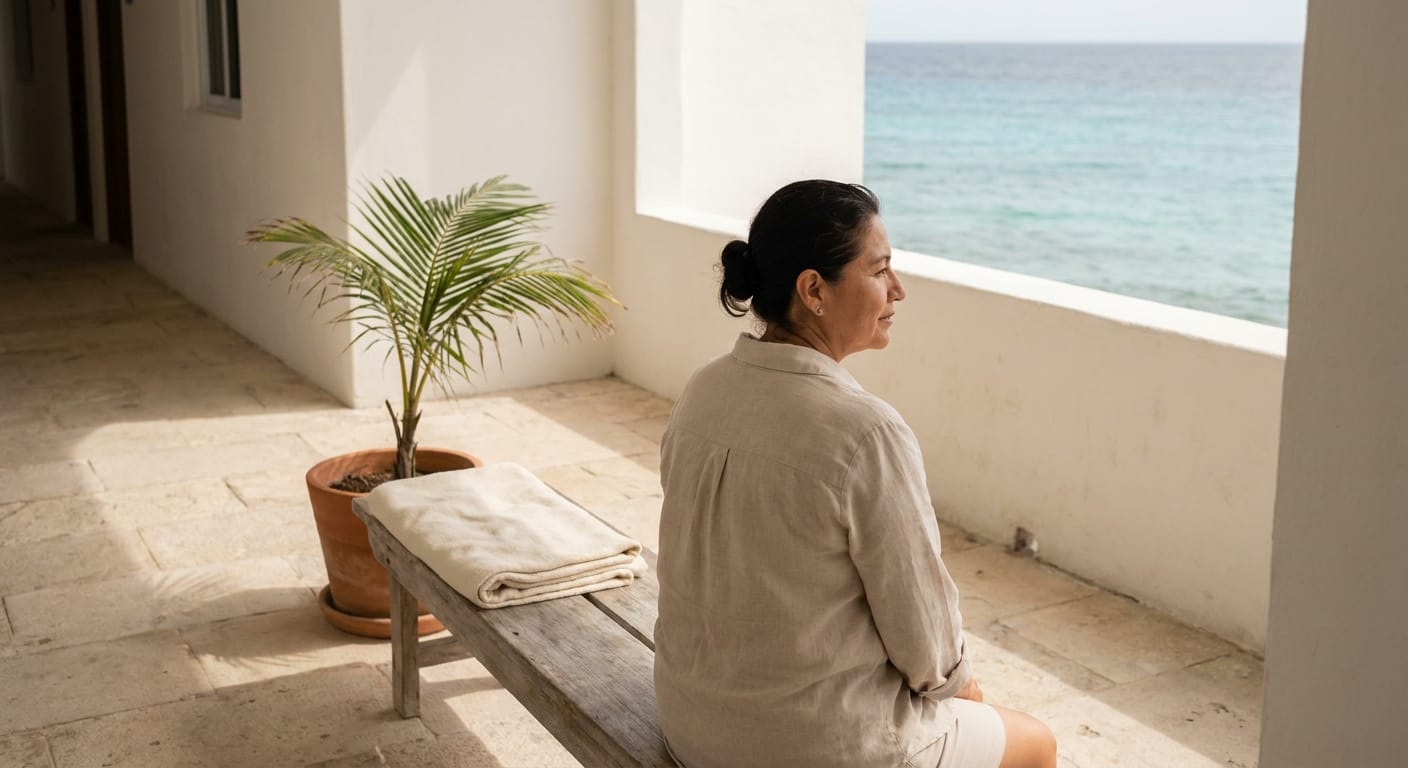
Where is the clinic, and how do you get there? The Iboga Wellness Institute clinic is on the island of Cozumel, in the Mexican state of Quintana Roo. Most people get there in one of two ways:
- Fly into Cozumel’s international airport.
- Fly into Cancún, travel south to Playa del Carmen, and take the passenger ferry across.
The Iboga Wellness Institute admissions team walks you through the arrival plan before you book anything.
Now that you know where treatment happens, here is what the U.S. side does. Iboga Wellness Institute’s U.S. office in Columbus, Ohio handles four jobs:
- Admissions
- Gathering medical records
- Coordinating with the person’s existing therapist or prescriber, with the person’s consent
- Aftercare once they return home
No ibogaine is given in Ohio or anywhere else in the United States. The Iboga Wellness Institute office is a point of contact, not a treatment site. Its value is simple: you can talk with real people here who explain each step and stay with you through it.
Roles stay clear. Admissions answers your questions and collects the information the medical team needs, while the Iboga Wellness Institute physicians in Cozumel make the medical decisions about eligibility, medication planning, and readiness. You should always know who is answering a question and who is responsible for a clinical decision.
One point matters more than any other: a booked flight never guarantees treatment will happen. The Iboga Wellness Institute medical team reassesses every person on arrival, and new findings can change the plan. Safety will always come before filling a bed. Families sometimes find this frustrating at first, and we understand why.
A family can open the first call by saying, “Here is our situation. What would happen next?” Nothing about that call commits you to travel. Often the real worry is not the distance itself. It may be flying alone, leaving children, missing work, paying for travel, or receiving care somewhere unfamiliar. Naming the hardest part first lets us have a useful conversation about it. Cozumel can offer a peaceful setting, but the decision should rest on the medical care and the person’s needs, not the scenery.
How Does the Path From First Call to Flight Actually Work?
The path runs from a conversation at home, through records and testing, through a medication taper when needed, to travel, a stay in Cozumel, and a return home with integration support. Most of the work happens before anyone packs a bag.
Picture a family in Columbus, or anywhere in Ohio. The first step is a phone or video call with admissions. Next, Iboga Wellness Institute’s medical team asks for four things:
- A detailed medical history
- A complete medication review
- Lab work, including liver enzymes
- A 12-lead ECG
Physicians review those results before travel is discussed in detail. If something needs more testing, the plan waits for that testing.
When medications need to change, the taper usually starts 14 to 30 days before treatment. Across that window, there are four handoffs and six check-ins before treatment day. These include two pre-integration sessions, a preparation session, a medical session, and a final check right before travel to confirm everything is ready. The person works with the same team throughout, so no one is handed off to a stranger. Iboga Wellness Institute is also bringing on a U.S.-based physician for pre-travel telehealth consults to help build tapering schedules. That service is still being added and is not yet in place.
The standard Iboga Wellness Institute program is seven days and six nights. Some people need a 10- or 14-day stay because they need more stabilization or a medically supervised transition. A longer booking does not make someone eligible, though, and if a longer stay is recommended, you should hear the specific medical reason for it.
What does an ibogaine treatment stay look like, and how long does it last? Once the person lands in Cozumel, the stay follows this order:
- Arrival and repeat testing. The team runs another 12-lead ECG, updated labs and electrolytes, a urine drug screen, and a physician exam. They do not rely only on records from home.
- Preparation and stabilization. The person rests and completes any final medication transitions, such as a move to short-acting opioids through the Detoxification Program. Preparation sessions with the team also happen now.
- Final clearance on treatment day. The team repeats the ECG, checks electrolytes, runs a second urine drug screen, and reviews medications. The medical director then gives final clearance.
- The flood dose. The dose takes several hours. It happens under physician supervision, with continuous cardiac telemetry and 24/7 nursing.
- Monitoring and recovery. Close monitoring continues for at least 24 to 72 hours after dosing, because noribogaine stays in the body for a long time.
- Integration and adjunct care. The person takes part in therapeutic sessions and builds a personalized aftercare plan. Hyperbaric oxygen therapy and cognitive behavioral therapy are offered during the stay.
- Return home and follow-up. The U.S. team stays in contact and, with consent, coordinates with the person’s local therapist or prescriber.
How Are Medications Handled Before Treatment?
For many families, medications are the part of the plan that feels most confusing, so it helps to know who is in charge. Iboga Wellness Institute’s medical team plans and supervises every medication change for that specific person. The timeline is set by how the person responds, not by a calendar. No one should stop a prescribed medication or a heavily used substance on their own to get ready for ibogaine.
Antidepressants and benzodiazepines. The Iboga Wellness Institute medical team tapers SSRIs and benzodiazepines under a titration protocol. Benzodiazepines need special care because withdrawal can push the nervous system toward instability and raise seizure risk. The team slows down if a person shows warning signs, such as:
- Worse sleep
- Rising anxiety
- Tremor
- Unstable vital signs
A person can hit a target dose on paper and still not be stable enough for ibogaine. In that case, the physicians may hold the taper, change the approach, or refer the person for more medical stabilization first.
Opioids. These timelines differ by drug:
- Buprenorphine: A person usually moves to short-acting opioids about 8 days before dosing. This is handled on-site through the Detoxification Program.
- Methadone: It lasts a long time in the body, and both methadone and ibogaine can lengthen the QTc interval. The team usually requires a full, medically supervised transition off methadone to a shorter-acting opioid before travel.
- Fentanyl: It stores in fatty tissue and releases slowly, so withdrawal timing is hard to predict. Fentanyl, methadone, and benzodiazepine timelines are always set individually. If your loved one takes Suboxone, our guide on moving off Suboxone with ibogaine explains that transition in more detail.
Do not stop medication on your own. Buprenorphine, methadone, and naltrexone are established, evidence-based treatments for opioid use disorder. Taking them is not a failure, and interest in ibogaine is never a reason to stop them without clinicians. Stopping suddenly can cause severe withdrawal. It also lowers tolerance, which raises overdose risk if the person uses again. If the person you love drinks heavily or takes benzodiazepines daily, talk with a doctor or a medical detox program before making any change, because withdrawal from either can be dangerous.
Before your first call, write down every medication, dose, and schedule, plus any supplements. Our separate guides on fentanyl and benzodiazepine dependence go deeper, but that list is the most useful thing you can bring.
Why Is Repeat Testing the Safety Step Most Families Do Not Expect?
A person’s clinical condition can change between initial screening and arrival. IWI’s medical team reassesses readiness before treatment and considers the current ECG, laboratory findings, medications and overall condition. Clearance comes from clinical judgment, not the date on the calendar.
Many families assume the ECG they sent weeks ago settles the question. It does not. Our team at Iboga Wellness Institute keeps asking one thing: would we trust this with someone we love? That question shapes a screening process with several layers.
Cardiac risks and screening checks before the flood dose:
- QTc interval: Treatment does not go forward if the QTc reading is above about 460 milliseconds.
- New or concerning arrhythmias: Any new irregular rhythm pauses treatment for physician review.
- Structural heart disease: The person may need an echocardiogram or formal cardiology clearance. Significant disease rules out treatment.
- Potassium: The target range is 4.2 to 4.8 mmol/L. Low levels are corrected and rechecked.
- Magnesium: The target is at least 2.0 mg/dL. IV magnesium is used when needed.
- Medication review: The team looks for any drug that can lengthen QTc or interact with ibogaine.
- Second urine drug screen: This catches recent use that could make dosing unsafe.
- Physician exam: The physician confirms withdrawal is controlled and the person is medically and neurologically stable.
One patient, whom we’ll call Mike (name and details changed to protect privacy), arrived with completed records and pre-arrival tests. His earlier ECG made him look like an appropriate candidate. On the morning of his scheduled flood dose at Iboga Wellness Institute, the repeat 12-lead ECG showed a significant change from his earlier tracing, including a new arrhythmia. Our physician reviewed it, paused treatment, and referred him for further medical evaluation. No ibogaine was given.
We will never know what would have happened if we had gone ahead, and we were not willing to find out.
Once someone is cleared, the monitoring continues. Iboga Wellness Institute provides:
- Continuous cardiac telemetry during the flood dose
- 24/7 nursing
- A 4:1 staff-to-patient ratio
- Monitoring for at least 24 to 72 hours afterward, because heart effects can be delayed while noribogaine is still active
The protocols are not extra paperwork. They are designed to help catch the unexpected.
When Will the Answer Be ‘No’ or ‘Not Yet’?
All of that testing leads to an honest answer, and sometimes that answer is not the one a family hoped for. The answer is “no” when ibogaine’s medical or psychiatric risk outweighs its possible benefit. It is “not yet” when someone needs more testing, stabilization, or medication changes first. Iboga Wellness Institute treats those honest answers as part of the care.
Iboga Wellness Institute declines treatment for people with any of the following:
- Significant cardiac or structural heart disease
- A QTc over 460 ms
- Active psychosis or schizophrenia
- Severe bipolar I in an active episode
- An acute suicidal crisis with intent or plan
- Significant liver or kidney disease
- Pregnancy
- Uncontrolled diabetes
At Iboga Wellness Institute, we turn applicants away every year based on ECG findings and other medical concerns. We would rather decline treatment than compromise our standards. “Not yet” is common, too: a methadone timeline may need more time, or a benzodiazepine taper may need to slow down. We would rather delay than force a schedule.
One of the hardest conversations we have had was with a family who had traveled together, full of hope. During treatment at Iboga Wellness Institute, their loved one had a serious medical event. It was later linked to undisclosed narcotic use shortly before dosing, despite two drug screens. The team stopped the ibogaine, shifted fully to emergency medical care, and stayed with him until he was stable. Afterward, we told him and his family that treatment could not continue safely.
We did not walk away. The Iboga Wellness Institute team kept supporting him after he went home through integration and follow-up.
Ibogaine is not a cure, and it does not replace therapy, family support, healthy habits, or long-term recovery work. Recovery depends on many factors, including the choices a person makes after treatment. Recovery also cannot be forced. If the person you love does not want treatment, no program can do the work for them.
If you or the person you love is in crisis right now, call or text 988 to reach the Suicide and Crisis Lifeline. If someone is in immediate danger, call 911. Iboga Wellness Institute does not provide emergency psychiatric care, and getting urgent help today always comes first.
Who Is Typing ‘Ibogaine Clinic Near Me,’ and What Do They Need to Know?
Sometimes the person searching is living with addiction, PTSD, depression, or grief. Sometimes it is a spouse, parent, sibling, or close friend doing the research for them. Iboga Wellness Institute does not assume which, because each person brings different questions.
A person searching for themselves may feel worn down by repeated attempts to stop, by stretches of progress followed by a return to use, or by depression that has not lifted despite care. A family member often wants to know other things:
- Is the medical team credible?
- What does screening involve?
- What are the real risks?
- Does support continue afterward?
Sometimes the person you are researching for does not know yet that you are looking. They still need to be part of the decision, because recovery has to be a choice the person makes for themselves.
The words “near me” usually point to practical worries. You may be thinking about children at home, time away from work, the cost of travel, or discomfort with care in an unfamiliar place. We ask which of those matters most before we talk about Cozumel at all, because answering the real concern is more useful than telling you “it’s easy.”
Prior care matters to screening. This can include detox, residential treatment, counseling, buprenorphine, methadone, naltrexone, talk therapy, EMDR, or antidepressants. “Three programs” tells us little on its own. We want to know whether those were short detox stays or longer programs, what helped during the better stretches, and whether side effects got in the way. A return to use does not erase that progress. Having tried several treatments does not make someone a candidate, and it does not mean they are out of options.
Iboga Wellness Institute’s programs include three tracks:
- Detoxification Program: for people experiencing opioid, benzodiazepine, pain pill, and kratom dependence
- Mental Health Program: for people experiencing depression, PTSD, trauma, and anxiety
- Medical Conditions Program: for people with certain other health concerns, reviewed case by case
Grief gets its own conversation. Still hurting after a loss is not a disorder, and we will not suggest ibogaine just because someone is grieving.
What Does Care in Cozumel Include Beyond the Dose, and What Should You Ask About Travel and Cost?
Once a family understands who the program is for, the next questions are usually about what the stay includes and what it costs. Care at Iboga Wellness Institute includes:
- Preparation before travel
- The medically supervised flood dose
- Integration programs
- Hyperbaric oxygen therapy
- Cognitive behavioral therapy
- Post-treatment follow-up after the person comes home
Cost depends mainly on length of stay. The clearest way to compare programs is to ask, line by line, what is part of the price.
Integration is where the stay connects to real life. Coming home can bring back old responsibilities, tension in relationships, and triggers. A person might say, “I’m back at work, I’m not sleeping well, and I’m struggling to explain this experience to my spouse.” They should have a place to bring that. The same Iboga Wellness Institute team stays with the person through preparation and integration, and with consent, the U.S. office coordinates next steps with their local therapist or prescriber. Integration support does not replace medical or psychiatric care, and the team will say so when someone needs more.
The medicine itself is sourced with care. Iboga Wellness Institute gets its iboga directly from Gabon, in West Africa, through a contact with direct relationships with Indigenous communities there. The clinic uses only iboga, never voacanga, and works with both the TA and HCL forms of ibogaine.
What does ibogaine treatment cost, and what is included? Pricing is discussed during your consultation, because it depends on the person’s medical needs and length of stay. Use this table to get clear answers:
| Cost piece | Why it matters | What to ask Iboga Wellness Institute |
|---|---|---|
| Length of stay | Standard program is 7 days and 6 nights; 10 or 14 days when more stabilization is needed | “If you recommend a longer stay, what is the medical reason, and how does the price change?” |
| Pre-travel screening | Medical history, medication review, liver enzyme labs, and a 12-lead ECG happen before travel | “Which tests do we arrange at home, and which costs fall to us?” |
| Medication taper | Tapers run 14 to 30 days and are individualized | “Who supervises the taper before travel, and what part happens on-site?” |
| On-site medical care | Repeat ECG, labs, urine screens, physician exam, telemetry, 24/7 nursing | “Is all on-site testing and monitoring part of the program price?” |
| Integration and adjunct services | Integration programs, hyperbaric oxygen therapy, CBT, follow-up | “Which of these are part of my stay, and which are add-ons?” |
| Travel | Flights to Cozumel or Cancún, the ferry, local transport | “What transport does your team arrange, and what do we book ourselves?” |
| A paused or stopped treatment | Plans can change after repeat testing | “What happens to cost if physicians pause or decline treatment after arrival?” |
Insurance deserves a straight answer. The federal Mental Health Parity and Addiction Equity Act requires many health plans that cover mental health and substance use care to apply limits no stricter than those for medical care. That law does not require a plan to pay for an investigational drug given outside the United States, so do not assume a plan will cover ibogaine treatment. Ask the admissions team directly about payment. Then ask your insurer about related care at home, such as local labs, an ECG, or ongoing therapy after the person returns.
What Else Do Families Ask Before They Call?
Most final questions come back to three things: whether this is legal, whether it is safe, and what happens before a flight. Here are the plain answers.
Is there a legal ibogaine clinic in the United States?
No. Ibogaine is a Schedule I controlled substance and is not FDA-approved, so no U.S. clinic offers it as routine treatment. Authorized research trials are a separate pathway and are not a way to receive care.
Can I talk to someone in the U.S. before traveling to Mexico?
Yes. Iboga Wellness Institute’s U.S. admissions team can talk through your situation while you are at home. You do not need to make any travel commitment to learn whether ibogaine may be an appropriate option.
Does buying a flight guarantee I will receive ibogaine treatment?
No. Physicians make the final decision after a repeat ECG, labs, and an exam in Cozumel. Treatment can be paused or declined if new findings make it unsafe.
Can I stop my medication on my own to prepare for ibogaine?
No. Clinicians must supervise every taper. Medications such as buprenorphine or methadone should never be stopped without medical guidance, because stopping suddenly can cause severe withdrawal and raise overdose risk.
How long does an ibogaine stay in Cozumel last?
The standard stay is seven days and six nights. Some people need 10 or 14 days when more stabilization or a supervised medication transition is required.
Can I join a U.S. ibogaine research trial to get treatment?
Trials are research with strict eligibility rules, not a way to buy treatment. Ibogaine remains investigational and carries significant risks, including to the heart.
Start With One Conversation, Not a Plane Ticket
Your first step does not involve Mexico at all. It is a confidential phone call or form with the Iboga Wellness Institute admissions team, made from home, with no obligation and no travel plans required.
Call Iboga Wellness Institute or submit the confidential form to start that conversation. Have your loved one’s medication list and recent medical records nearby for the first screening call, including any past ECG and lab results. The team will explain what the physicians need to review, what happens next, and what would lead to a “not yet.” You will not be asked to decide everything on that call.
Here is one thing you can do tonight. Write down every medication and substance the person takes, with doses, dates, and anything that has changed in the past month. That single page shapes the screening, the taper, and the timeline more than any other information you can share. It also lets the medical team give you an honest answer sooner, whether that answer is “yes,” “not yet,” or “here is a better fit for right now.”
What families want most is for the person they love to build a life they no longer feel the need to escape from. No program can promise that, but a careful first conversation is where an honest plan can begin.
Important legal and safety information: Ibogaine is not approved by the FDA and is not available as a legal medical treatment in the United States. Iboga Wellness Institute provides ibogaine treatment exclusively at its licensed medical clinic in Cozumel, Mexico, under medical supervision. US locations handle admissions, screening, and aftercare coordination only.
Closer Than It Looks
If you have been searching for an ibogaine clinic near you, it may help to know that the distance is often smaller than the hesitation. Treatment takes place at the Iboga Wellness Institute licensed medical clinic in Cozumel, Mexico, and our admissions office can walk you through screening, what travel involves, and how aftercare is coordinated. Calling is a simple first step, and it commits you to nothing beyond a conversation.
Experiences with ibogaine vary from person to person, and nothing here predicts how any individual will respond.