You served your country. You did things most people can’t imagine. You saw things that changed you forever.
Now you’re home, but part of you never left the battlefield.
The VA gave you pills. Therapy. More pills. They told you about prolonged exposure, cognitive processing, EMRT. You tried it all. Some of it helped—a little, temporarily. Most of it didn’t touch what’s really wrong.
The nightmares still come. The hypervigilance never stops. You can’t sit with your back to a door. Loud noises send you into fight-or-flight. Your family says they don’t recognize you anymore. Maybe you don’t recognize yourself.
And if you took hits to the head—blast exposure, IED concussions, training accidents—you’re dealing with cognitive fog, memory problems, and symptoms the doctors can’t quite explain or fix.
You did everything right. You served with honor. But the system designed to heal you is failing.
There’s something else. Something the VA won’t tell you about because it’s not approved yet, even though the research is undeniable.
The Treatment That’s Changing Everything for Combat Veterans
Ibogaine therapy.
If you haven’t heard of it, that’s not surprising. It’s not FDA-approved in the United States. It’s classified Schedule I—same category as heroin—despite decades of evidence showing it can do what nothing else can for trauma survivors.
But veterans aren’t waiting for bureaucracy to catch up. They’re traveling to legal clinics in Mexico, Costa Rica, and other countries. They’re coming back transformed. And they’re telling their brothers and sisters in arms: this is what finally worked.
The Stanford Study That Changed the Conversation
For years, ibogaine’s benefits for veterans were anecdotal—powerful stories, but not “scientific proof.” That changed in 2023.
Stanford Medicine conducted a landmark study of 30 U.S. Special Operations Forces veterans diagnosed with both traumatic brain injury (TBI) and post-traumatic stress disorder (PTSD). These weren’t just any veterans—these were Special Ops warriors who’d been through hell and couldn’t find their way back.
The results were unprecedented:
One month after a single ibogaine treatment:
- 88% reduction in PTSD symptoms
- 87% reduction in depression
- 81% reduction in anxiety
- Significant improvements in cognitive function (memory, processing speed, executive function)
- Dramatic reduction in suicidal ideation
And here’s what matters most: these improvements held at six-month follow-up.
This wasn’t temporary relief. This was fundamental healing.
Dr. Nolan Williams, the Stanford psychiatrist who led the research, called the results “remarkable” and “unprecedented.” When Stanford researchers use those words, pay attention.
Why Ibogaine Works When Everything Else Fails
Traditional PTSD treatment tries to help you manage symptoms or process trauma through talk therapy. Those approaches can help—but they’re working with one hand tied behind their back.
Here’s why: PTSD and TBI aren’t just psychological—they’re neurological.
Combat trauma doesn’t just create painful memories. It fundamentally changes your brain structure. Chronic stress shrinks your hippocampus (memory center) and prefrontal cortex (decision-making, emotional regulation). Blast exposure damages neural pathways and triggers neuroinflammation that persists for years.
Your brain isn’t the same organ it was before deployment. Talk therapy alone can’t fix structural brain damage.
Ibogaine can.
The Neurological Reset
Ibogaine works on multiple systems simultaneously:
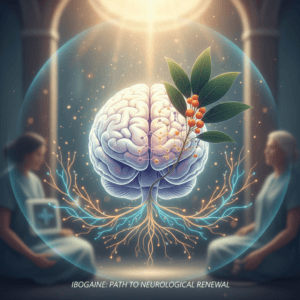
1. Neuroplasticity Activation Ibogaine dramatically increases your brain’s ability to form new neural pathways and reorganize existing ones. Stanford researchers found that veterans who improved after ibogaine showed increased theta brain waves—the signature of neuroplasticity and cognitive flexibility.
Think of it this way: trauma carved destructive pathways in your brain. Every time you have a flashback or panic response, you’re running down those same damaged roads. Ibogaine doesn’t just help you avoid those roads—it helps your brain build entirely new ones.
2. Neurotrophic Factor Stimulation Ibogaine triggers production of GDNF (glial-derived neurotrophic factor) and BDNF (brain-derived neurotrophic factor)—proteins that promote survival and growth of neurons.
For veterans with TBI, this is critical. Blast exposure kills neurons and damages the connections between them. These neurotrophic factors can help repair that damage, explaining why veterans report improvements in cognitive function, memory, and mental clarity after ibogaine treatment.
3. Trauma Reprocessing During the ibogaine experience (which lasts 12-24 hours), you enter what’s called an “oneirogenic state”—essentially a waking dream. Many veterans report experiencing their combat trauma during this state, but from a completely different perspective.
You might see events that haunt you, but without the overwhelming terror. You might understand why you made certain decisions. You might experience forgiveness—of yourself, of others, of circumstances beyond anyone’s control.
One Special Forces veteran described it as “watching my deployments like a movie where I finally understood the plot instead of being trapped in the worst scenes.”
4. Default Mode Network Reset PTSD involves hyperactivity in your brain’s default mode network (DMN)—the system responsible for rumination, self-referential thinking, and mind-wandering. In PTSD, this network is stuck in overdrive, constantly replaying trauma and scanning for threats.
Ibogaine temporarily reduces DMN activity. Stanford researchers found that veterans with lowered PTSD symptoms after treatment showed reduced complexity in cortical brain activity—essentially, their brains stopped the constant hypervigilant scanning.
Your nervous system, perhaps for the first time since combat, can finally stand down from high alert.
What the Experience Is Actually Like for Veterans
Let’s be direct: ibogaine isn’t easy. It’s not comfortable. It’s not recreational.
It’s medicine. Powerful medicine that demands respect.
The Timeline
Days 1-2: Medical Screening Before treatment, you undergo comprehensive medical evaluation:
- EKG and cardiac screening (ibogaine affects heart rhythm, so this is non-negotiable)
- Blood work checking liver, kidney, electrolytes
- Detailed health history
- Medication review (some meds must be tapered before treatment)
- Mental preparation with therapeutic staff
Many veterans have cardiac issues from years of stress or stimulant use. Some have TBI-related concerns. The screening isn’t to exclude you—it’s to customize your protocol and ensure your safety.
Day 3-4: The Treatment You’re in a private room, comfortable, monitored continuously by medical staff. You take a precisely calculated dose of pharmaceutical-grade ibogaine.
Within 2-3 hours, you enter the visionary state. For 8-18 hours, you’re lying still with an eye mask, experiencing vivid internal imagery. Many veterans describe:
- Life review: Seeing your deployments, your decisions, your actions from new perspectives
- Trauma processing: Confronting what happened without being overwhelmed by it
- Symbolic experiences: Some encounter fallen brothers, receive messages from deceased friends, or experience spiritual insights
- Pattern recognition: Suddenly understanding why you react certain ways, where your anger comes from, what you’re really afraid of
One Marine described seeing the firefight where he lost his best friend—but this time, he could feel his friend’s gratitude that he made it home, that he survived to tell the story. The guilt he’d carried for a decade released.
A Navy SEAL processed 15 years of deployments in a single night, describing it as “watching my entire career on fast-forward, finally understanding that I did the best I could with what I knew.”
It’s intense. It’s often uncomfortable. It’s deeply emotional.
But here’s what veterans consistently say: “It was the hardest thing I’ve done since combat—and the most healing.”
Days 5-7: Integration The acute effects fade, but the work continues. Your brain is in a heightened state of neuroplasticity—primed for new patterns.
This is when you process what came up, work with therapists to translate insights into action, and begin building the life you saw was possible during treatment.
Many veterans describe this phase as feeling “reset”—like someone adjusted their internal settings back to pre-deployment baseline.
Real Stories from Real Veterans
Craig, Navy Veteran, 27 Years of Service: “I wasn’t willing to admit I was dealing with any TBI challenges. I just thought I’d had my bell rung a few times—until the day I forgot my wife’s name. Since treatment, my cognitive function has been fully restored. I’ve regained my mental clarity and emotional connection, both at home and in my professional life.”
Anonymous Special Forces, Multiple Combat Deployments: “The hypervigilance is gone. I can sit in a restaurant with my back to the door now. I can watch fireworks with my kids. I sleep through the night. My family says they have me back—the real me, not the shell that came home.”
Marine Corps Veteran, OIF/OEF: “I tried everything the VA offered. Medications made me feel like a zombie. Therapy helped me understand my trauma but couldn’t make the nightmares stop. Ibogaine did in one weekend what 10 years of treatment couldn’t touch. The flashbacks just… stopped.”
Why the VA Won’t Tell You About This
Here’s the frustrating reality: ibogaine works, but it’s not FDA-approved. It’s Schedule I, meaning officially, the US government considers it to have “no accepted medical use.”
This classification is political, not scientific. The research is clear. The clinical outcomes are undeniable. But the approval process takes years, costs hundreds of millions, and ibogaine can’t be patented (it’s a naturally occurring compound), so pharmaceutical companies have no incentive to fund trials.
Meanwhile, veterans are suffering. Twenty-two veterans die by suicide every day. Hundreds of thousands live with untreated or inadequately treated PTSD and TBI.
So veterans are voting with their feet—and their wallets. They’re traveling to legal clinics internationally. They’re experiencing healing that the VA system couldn’t provide. And they’re coming back to tell others.
Organizations like Veterans Exploring Treatment Solutions (VETS) are funding research and helping veterans access ibogaine therapy. The Stanford study was conducted in partnership with VETS, reflecting the veteran community’s determination to bring this treatment to light.
The Honest Reality: What Ibogaine Can and Can’t Do
We won’t lie to you. Ibogaine isn’t a magic cure. It’s a powerful tool—but it’s still just a tool.
What Ibogaine Can Do:
- Dramatically reduce or eliminate PTSD symptoms
- Improve cognitive function impaired by TBI
- Reduce or eliminate depression and anxiety
- Interrupt substance dependence (many veterans are also battling opioid, alcohol, or stimulant use)
- Create a neurological reset that makes therapy and recovery work much more effective
- Provide profound psychological insights that facilitate trauma integration
What Ibogaine Can’t Do:
- Erase your memories (the trauma still happened; you just relate to it differently)
- Replace ongoing work (therapy, lifestyle changes, building support systems)
- Fix all physical TBI symptoms (though cognitive improvements are common)
- Guarantee you’ll never struggle again (healing is a journey, not a destination)
What ibogaine does—better than any other intervention we’ve seen—is create the conditions for healing. It opens a door. You still have to walk through it.
Most veterans describe ibogaine as “finally giving me the tools to do the work.” The 88% reduction in PTSD symptoms doesn’t mean they forget combat—it means they can finally live with it, process it, and move forward.
The Risks You Need to Know About
Ibogaine affects heart rhythm. This is serious. Proper medical screening and monitoring is non-negotiable.
Who Should Not Do Ibogaine:
- Anyone with certain heart conditions (prolonged QT interval, arrhythmias, heart failure)
- Anyone taking certain medications that affect heart rhythm
- Anyone with severe liver or kidney disease
- Anyone currently in acute alcohol or benzodiazepine withdrawal
This is why medical screening is essential. Underground or casual ibogaine use has killed people—almost always because they had undiagnosed cardiac issues or inadequate monitoring.
In properly screened, medically monitored settings following established protocols, ibogaine is remarkably safe. Stanford’s study had zero serious adverse events. Properly run clinics have safety records that conventional psychiatric treatment would envy.
But you must—MUST—receive treatment at a facility with:
- Comprehensive cardiac screening before treatment
- Continuous medical monitoring during treatment
- Licensed medical staff present throughout
- Emergency equipment and protocols
- Experience treating veterans specifically
This isn’t optional. This is life-or-death. Don’t trust your care to anyone who doesn’t meet these standards.
What Proper Treatment Looks Like
At Iboga Wellness Institute, we’ve refined our protocols specifically for veterans over two decades of clinical experience.
Our Approach Includes:
- Comprehensive Pre-Screening: We require detailed medical history, EKG, blood work. If we identify risks, we work with you to address them or determine if alternative protocols are safer.
- Veteran-Specific Protocols: We understand military trauma is different. Our staff includes people who’ve worked extensively with combat veterans. We know how to create safety for people whose threat detection never turns off.
- Medical Excellence: Licensed physicians and registered nurses with you 24/7. Continuous cardiac monitoring. Immediate intervention capability. We follow Global Ibogaine Therapy Alliance guidelines enhanced by our own clinical experience.
- Trauma-Informed Care: Our therapeutic staff understands military trauma, moral injury, survivor guilt, and the specific challenges veterans face. You’re not explaining combat to civilians who don’t get it—you’re working with people who understand.
- Integration Support: The ibogaine experience opens the door; integration makes the healing last. We provide therapeutic support during and after treatment to help you translate insights into lasting change.
- Ongoing Connection: Many veterans form bonds with others in treatment. We facilitate connections with our veteran community because you shouldn’t walk this path alone.
The Question Every Veteran Asks
“How do I know this will work for me?”
Honest answer: We don’t. Nobody can guarantee specific outcomes.
But here’s what we can tell you:
The Stanford study showed 88% of Special Ops veterans experienced dramatic improvement. Our clinical experience mirrors those numbers. The vast majority of veterans who complete ibogaine treatment report significant, lasting benefits.
The veterans who benefit most share certain traits:
- They’re truly ready to heal (not just trying to appease someone)
- They’re willing to do the difficult psychological work during treatment
- They’re committed to integration and ongoing recovery afterward
- They’re medically cleared (cardiac health especially)
- They approach the experience with openness and respect
If that describes you, the odds are strongly in your favor.
For the Families: What You Need to Know
If you’re reading this because your veteran is considering ibogaine—or because you’re desperately hoping they’ll try something, anything that might help—we see you.
We know you’ve watched someone you love disappear. We know you’ve dealt with rage, isolation, substance use, or lived with the fear they might not survive their pain.
Ibogaine isn’t a miracle—but it’s the closest thing we’ve seen.
Here’s what you should know:
Safety is our priority: Properly administered ibogaine is safe. The medical screening, continuous monitoring, and experienced staff ensure that.
The experience is intense: Your veteran will face their trauma during treatment. It will be difficult. But they won’t be alone, and the outcome is usually profound healing.
Your support matters: Having someone to come home to—someone who believes in their healing—significantly impacts outcomes. Your veteran needs to know you’re there.
This is their choice: The decision to do ibogaine must be theirs. Pressure doesn’t work. But education, support, and removing barriers (helping research, facilitating contact with our team) can help them make an informed decision.
There’s real hope: We’ve seen veterans who were suicidal become vibrant again. We’ve seen families reunited. We’ve seen warriors finally find peace.
The Path Forward
If you’re a veteran reading this—if conventional treatment hasn’t worked, if you’re tired of just surviving and want to actually heal, if you’re ready to try something that might finally address what’s really wrong—we’re here.
Here’s what happens next:
- Free Consultation: Contact our team for a confidential discussion. We’ll explain exactly how ibogaine works, what treatment involves, and answer every question you have.
- Medical Pre-Screening: If you decide to move forward, we conduct comprehensive health screening to ensure you’re a safe candidate and customize your protocol.
- Treatment Planning: We design your specific treatment plan, prepare you for what to expect, and ensure you’re ready mentally and physically.
- Treatment Week: You come to our Cozumel facility for approximately 7-10 days of treatment and integration support.
- Integration and Aftercare: We provide ongoing support to help you maintain and build on your healing.
You’ve Sacrificed Enough
You’ve given years of your life to service. You’ve endured things most people can’t imagine. You’ve carried burdens that would crush civilians.
You don’t have to carry them forever.
The military taught you that the only easy day was yesterday. That’s true in healing too—this won’t be easy. But it might be the mission that finally brings you home.
The brothers you served with would want you to heal. The family waiting for you deserves to have you fully back. And you—you deserve to rediscover who you are beyond the trauma.
Ibogaine can’t erase what happened. But it can free you from being defined by it.
At Iboga Wellness Institute, we honor your service by providing the level of care you’ve earned but the VA system hasn’t delivered. You protected us. Let us protect you through this healing journey.
Contact us today for a confidential veteran consultation. No judgment. No pressure. Just honest answers about whether ibogaine might be your path to finally coming home.