Expertise provided by James Collins, Owner
You called four ibogaine programs. Three of them answered your questions about price and travel within ten minutes. The fourth asked you to send labs first. Then it scheduled a consultation to review the methadone dose, the medications, and the ECG before it would even confirm a candidate was eligible. You hung up frustrated that it was taking so long. That frustration might have just saved a life. The program that made you wait was doing medicine, and the ones that said yes right away were doing sales. Learning to spot that difference is important before you commit to any ibogaine medical detox program, Iboga Wellness Institute’s included, whether the heart on the line is your own or belongs to someone you love.
Our Iboga Wellness Institute admissions team works with people across Central Ohio, so we understand what it feels like to sit at a kitchen table in Columbus and think about traveling to another country for medical care. You may have already been through detox more than once. You may have finished a residential program, felt hopeful, and then watched the old patterns return. Or you may be the parent, spouse, or adult child who has driven to every one of those programs and waited for the phone to ring afterward. Now you are reading about ibogaine late at night and trying to work out which programs are serious and which ones take advantage of people who feel out of options.
Here is the truth before anything else. Ibogaine is a Schedule I substance in the United States. It is not FDA-approved, and it is still considered investigational. Iboga Wellness Institute provides ibogaine treatment only at its licensed medical clinic in Cozumel, Mexico. Our Columbus office handles admissions, screening, and aftercare coordination. No ibogaine is given in Ohio or anywhere else in the U.S.
We’re not looking for a miracle, and you shouldn’t be either. What you need is a program that will tell you the truth, even when the answer is no. The sections below walk through the same questions our own Iboga Wellness Institute team asks before every admission, starting with the simplest one: Would we trust this with someone we love?
Which Cardiac Finding Should Stop Treatment, and Will the Program Actually Enforce It?
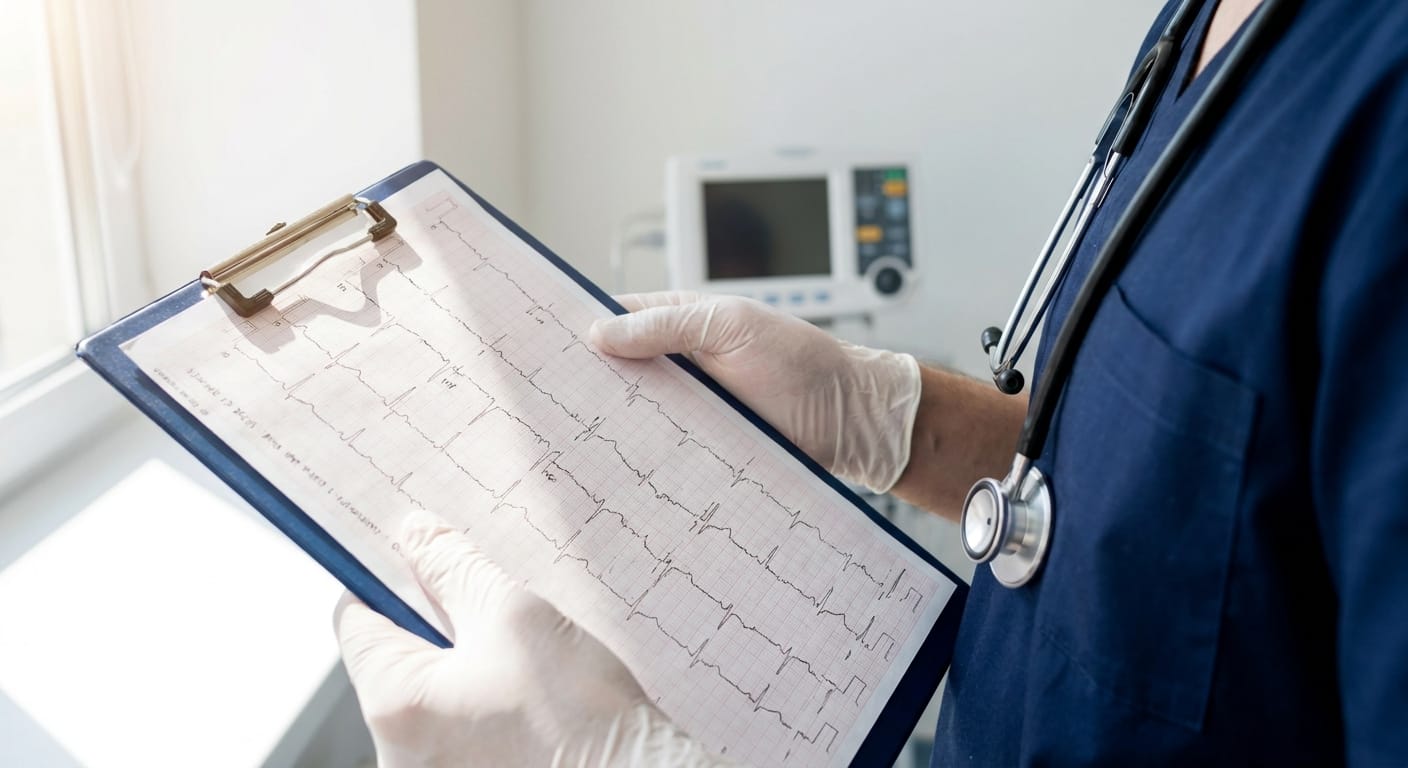
A QTc interval over 460 milliseconds on a 12-lead ECG should stop treatment until the cause is found and addressed. A serious program also repeats that ECG right before the flood dose, because a reading taken at intake can change by the time the medicine is given.
The QTc measures how long your heart takes to reset its electrical system between beats. Ibogaine can lengthen that interval. Researchers reviewing ibogaine’s therapeutic potential and cardiac safety describe QT prolongation as the central safety concern with this medicine. In rare cases, a lengthened QT can set off Torsades de Pointes, a dangerous heart rhythm that needs immediate medical response. That risk is why the cutoff is not up for discussion.
At Iboga Wellness Institute, the QTc is read with an adjustment for sex, since normal ranges differ between men and women. Electrolytes matter just as much as the ECG itself. Low potassium or magnesium makes a long QT interval more dangerous, so potassium must sit between 4.2 and 4.8, and magnesium must be at least 2.0 before treatment can go forward. These numbers are fixed, and they do not bend because someone has already booked a flight or paid a deposit.
The repeat ECG is the step many people skip, and in our own care at Iboga Wellness Institute it is the one that has mattered most. In one case, shared here without any identifying details, the repeat 12-lead ECG taken just before dosing showed a new-onset arrhythmia that had not appeared at intake. Treatment stopped. That patient was referred for further evaluation, and no ibogaine was given. This single documented case illustrates the screening protocol in action. We cannot predict which patients will show changes between intake and dosing ECGs, so our protocol requires repeat testing for every patient to identify any new findings.
Nothing about that day was convenient.
It was the right call.
So when you compare programs, ask four plain questions. What is your QTc cutoff? Do you repeat the ECG right before the flood dose? What are your potassium and magnesium targets? Can you tell me about a time you stopped treatment because of a cardiac finding? A program that answers with vague comfort (“we monitor everyone closely”) instead of numbers and real examples is telling you something important. For us at Iboga Wellness Institute, safety will always come before filling a bed, and we would rather decline a patient than compromise our standards.
What Happens When a Program Follows Your Timeline Instead of Your Physiology?
The program stops practicing medicine. A physician-led program sets the treatment date based on how stable the body actually is. It moves that date when the evidence says a person is not ready, even if everyone is frustrated by the delay.
Wanting speed makes sense. You may have arranged time off work, braced your family, or worked up the courage after months of hesitation. Every extra week can feel like another chance for something to go wrong. Some programs understand that pressure and use it, promising a set date and a set protocol because that is easy to sell. Your heart, your liver, and your nervous system do not follow a calendar, though.
Two cases from our own Iboga Wellness Institute screening show how this plays out. Both are shared without identifying details. The first involved a patient taking methadone who came to us expecting to start on their own timeline. Methadone stays in the body for a long time. After the team reviewed this patient’s methadone use, medical history, medications, labs, and ECG, they decided that timeline was not safe. Instead, the person needed a medically supervised transition to a shorter-acting opioid and more time to stabilize before ibogaine would be reconsidered. This is a single documented case that shows how our screening works. Not every methadone patient requires the same changes, but our medical team assesses each person individually and may delay or modify the protocol when indicated.
The second involved a patient tapering off a benzodiazepine on schedule. On paper, everything looked fine. In person, the patient showed breakthrough symptoms: worse sleep, rising anxiety, shakiness, and autonomic instability, which means swings in things like heart rate and sweating. The team slowed the taper and had the physicians reassess instead of pushing toward the original date. This is a single case, and benzodiazepine tapers vary by individual, but it shows how our Iboga Wellness Institute team monitors for withdrawal symptoms and adjusts timelines when clinical signs point to instability. A person can hit a target on paper and still not be clinically stable.
That lesson matters for you right now. Please do not cut your methadone or stop a benzodiazepine on your own to “get ready” for ibogaine, and please don’t encourage a loved one to do it either. The National Institute on Drug Abuse warns that stopping central nervous system depressants such as benzodiazepines suddenly can cause serious withdrawal, including seizures. Any change should happen with your prescriber and the program’s physicians involved. When you talk with a program, ask what would cause them to delay the date and who makes that call. At Iboga Wellness Institute, if Dr. Rubio and the medical team do not believe a person is ready, treatment is delayed. That is not a setback. It is the screening doing its job.
Which Physician Credentials Matter, and Why Isn’t Ibogaine Experience Enough?
The physician overseeing the flood dose should be trained in cardiovascular monitoring, airway management, and emergency response, because those are the skills that matter if a heart rhythm changes. Years of ibogaine experience are valuable, but they do not replace a medical specialty built around keeping a person stable in a crisis.
Think about the hours after the flood dose. The person receiving treatment is not fully in control of their body, and their heart is being watched for rhythm changes. If something shifts, the person in charge has to recognize it fast and know exactly what to do. Specialties such as anesthesiology, emergency medicine, and critical care train physicians for that kind of moment. Someone who has “sat with hundreds of ibogaine sessions” may be kind and well meaning, yet still lack the training to manage an airway or treat a dangerous arrhythmia.
Dr. Eduardo Rubio Ruiz, Chief Medical Director at Iboga Wellness Institute, is a board-certified anesthesiologist who completed his specialty training at the National Autonomous University of Mexico (UNAM). His background includes cardiovascular monitoring, airway management, medication management, and emergency response. Those skills guide the medical oversight of the ibogaine flood dose.
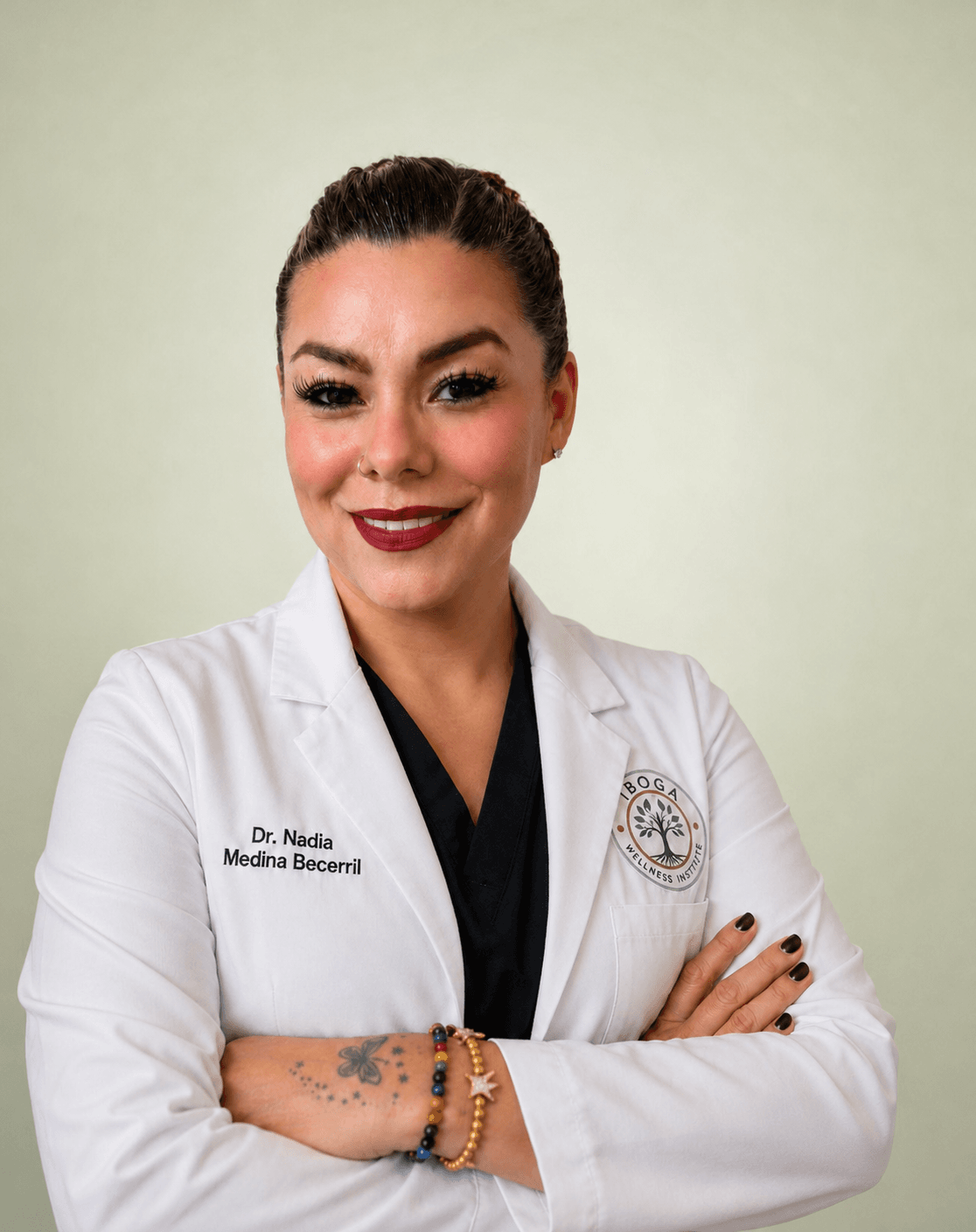
Dr. Lori Nation Legrand, our Chief Medical Consultant at Iboga Wellness Institute, is board-certified in psychiatry and addiction medicine. She has years of experience caring for people with substance use disorders and complex mental health needs, including earlier medical leadership roles in opioid treatment. The two specialties work together. Anesthesiology covers the physical monitoring and medical judgment during treatment, while addiction psychiatry helps the team understand medication history, psychiatric stability, and how much preparation a person needs before they are ready. Our wider multidisciplinary team includes Dr. Aldo Diosdado, a physician and medical advisor, and Dr. Nadia Medina Becerril, a sports medicine physician. Luisa Cab, RN, leads the nursing team that provides 24/7 nursing care throughout each stay.
Credentials alone never guarantee safety. They have to be backed by comprehensive medical screening, continuous cardiac monitoring during the flood dose, round-the-clock nursing, and clear emergency procedures. Before you pay any deposit, ask for the full name of the physician overseeing treatment, along with their specialty and board certification. For physicians practicing in Mexico, you can also ask for their professional license number (cédula profesional) and look it up in Mexico’s public professional registry. Then ask who, by name, will be present during the session. You deserve direct answers to every one of those questions.
Integration Is Where Most Programs Fail People. What Should You Demand Before Coming Home to Columbus?
Strong credentials protect a person during treatment, but the weeks after treatment decide whether the change lasts. Anyone leaving a program should go home with a written integration plan built around their actual life in Columbus, plus scheduled follow-up with trained professionals. A phone number to call after a relapse is not integration.
The medicine may open the door, but lasting recovery comes from the choices a person makes once they walk through it. Coming home means going back to work, relationships, bills, stress, and maybe the same streets, people, or routines tied to past use. Many programs put almost all their effort into the few days around the flood dose and very little into the months after. That is often where people who had a meaningful experience lose their footing.
What most people would never guess from the outside is how much of our program at Iboga Wellness Institute happens around the medicine rather than during it. The website shows the ocean and the rooms. It doesn’t show the time spent learning each guest’s medical history, their fears, what they have tried before, and what they are going home to. Many people arrive after several rehabs feeling discouraged or ashamed. We want every guest to feel safe being honest with us, including about recent use, medications, or worries about treatment, because that honesty matters medically and emotionally. During the stay, there is time for individual conversations, rest, and reflection.
Our Iboga Wellness Institute integration program is led by Lindsey White, M.Ed., Director of Client Integration and author of The Crown and the Root, a book on integration after ibogaine and 5-MeO-DMT experiences. Lindsey brings years of prior psychotherapy experience and now works in a coaching role, helping guests prepare and then apply what they learned. The wider team includes licensed clinical psychologists, LMFTs, LCSWs, and certified addiction professionals, many with formal training in psychedelic-assisted therapy. Dr. Jennifer L. Turner, our Lead Mental Health Coordinator, is a licensed clinical social worker with a doctorate in social work and training in substance use, trauma-informed care, and suicide intervention. Before discharge, each guest works with the team on an integration plan, and follow-up support continues after they return home.
We at Iboga Wellness Institute are also building a prospective outcomes program that checks in with guests at one week, one month, three months, six months, and one year. It uses validated tools: PROMIS Global Health, WHO-5, PGIC, PHQ-9, GAD-7, ISI, and BAM. Ask any program you’re considering how it tracks what happens to people after they leave.
Local care still matters too. Conventional treatment, therapy, and recovery groups in Ohio can all be part of the plan. The SAMHSA National Helpline (1-800-662-4357) can point you toward local options any time of day. Some people need a longer residential stay or a level of psychiatric care that our program cannot replace, and we will tell you so.
Why a Program That Accepts Everyone Who Can Pay Is Not Screening for Safety
That honesty about limits leads to one of the clearest warning signs you can watch for. A program that never says no isn’t screening. It’s selling. Ibogaine is not safe for everyone, and a real medical program will decline or delay people based on what the screening shows, no matter what they are willing to pay.
Iboga Wellness Institute does not guarantee ibogaine treatment to anyone who applies or pays. We do not treat people with psychosis or certain bipolar disorder presentations. We do not provide ibogaine for acute psychiatric emergencies or for anyone in an active suicidal crisis. When cardiovascular or psychiatric findings point to too much risk, the person is referred for further evaluation or for other care that fits their needs better.
It helps to know who does what. Our Iboga Wellness Institute Columbus admissions office gathers medical history, medication lists, lab results, ECGs, and urine toxicology screening. The team also answers your questions and coordinates aftercare. However, the admissions team cannot approve anyone for treatment. Every medical decision about whether a person is a candidate rests with the physicians at our licensed clinic in Cozumel, Mexico. That separation is deliberate, because it keeps the people who talk with you about logistics away from the decision about whether a body and mind can safely handle the medicine.
Every person who calls us is someone’s son, daughter, spouse, parent, sibling, or best friend. Telling one of them “not right now” or “not here” is hard, and we never do it lightly. A “no” from a careful program is not a judgment of anyone’s worth or effort. It is information about risk, and it usually comes with a referral toward care that fits. If you or your loved one is in crisis right now, please call or text 988 to reach the Suicide and Crisis Lifeline, or go to the nearest emergency room. Ibogaine is not emergency psychiatric care, and no program should present it that way.
Here is a simple test to use on the phone. Ask the program, “What kinds of people do you turn away, and how often does screening change someone’s plan?” If the answer is “almost never,” keep looking.
What Does the Legal Gap Mean for Columbus Residents Choosing an Ibogaine Medical Detox Program?
It means the job of checking a program falls on you. Ibogaine is a Schedule I substance in the United States and is not FDA-approved. No U.S. licensing board inspects ibogaine clinics in Mexico, and you won’t have the same local recourse you would have with an Ohio facility.
Ibogaine’s legal status is still being debated across the country, and that debate includes serious critics. In 2026, for example, testimony was submitted to Maryland lawmakers opposing a bill related to ibogaine clinical research. Until federal law changes, legitimate medical programs operate outside U.S. borders. Ibogaine is not prohibited in Mexico, which is why Iboga Wellness Institute provides treatment only at its licensed medical clinic in Cozumel. Because no Ohio agency oversees that care, the questions in this guide about QTc cutoffs, repeat ECGs, physician specialties, exclusions, and integration are your real protection.
What about insurance and cost?
Insurance is usually the first question families ask, so here is the plain answer. Because ibogaine is not FDA-approved, U.S. health plans generally do not cover it, and Iboga Wellness Institute does not accept insurance for ibogaine treatment. Local follow-up care in Ohio, such as therapy or outpatient treatment, may be a different story, so check with your plan about those services.
Cost needs the same careful look. A low quote often leaves out the things that keep a person safe: continuous cardiac monitoring, the repeat ECG before dosing, electrolyte testing, 24/7 nursing, a physician on site during the session, and integration support after returning home. Ask every program for a written list of exactly what the price covers. We at Iboga Wellness Institute go over costs openly during the consultation, after the physicians have reviewed whether treatment is appropriate.
Planning the trip safely
Then there’s the trip itself. Traveling while still dependent on opioids, kratom, or benzodiazepines takes planning, because withdrawal on a plane or in an airport is both miserable and risky. Keep taking medications as prescribed unless the physicians say otherwise. Carry a current medication list and the prescriptions themselves. Tell the admissions team about every substance in use, including kratom, so the medical team can plan the timing. Our Iboga Wellness Institute Columbus office coordinates those details before departure and stays involved in aftercare once you or your loved one is home.
What Do People in Columbus Ask Before Committing to Ibogaine Treatment?
These are the questions we hear most often from people in Central Ohio who are weighing an ibogaine medical detox program, whether for themselves or for someone they love. Each answer reflects how Iboga Wellness Institute handles screening and care.
What cardiac test results should disqualify me from ibogaine treatment?
A QTc interval over 460 milliseconds on a 12-lead ECG should stop treatment until the cause is addressed. Potassium below 4.2 or above 4.8, or magnesium below 2.0, should also pause treatment. A legitimate program reads the QTc with an adjustment for sex and repeats the ECG right before dosing, not only at intake.
How do I verify the physician overseeing my treatment is qualified for the cardiac risks ibogaine poses?
Ask for the physician’s full name, specialty, and board certification. Look for training in anesthesiology, emergency medicine, or critical care, including cardiovascular monitoring, airway management, and emergency response. Ibogaine experience alone is not enough. For physicians in Mexico, ask for the professional license number and check it in the country’s public registry.
What should happen if I am on methadone or benzodiazepines and want ibogaine treatment?
A careful program may require a medically supervised transition from methadone to a shorter-acting opioid, or a slower benzodiazepine taper, if your body is not stable. That can push back your preferred date. Never change these medications on your own, since stopping benzodiazepines suddenly can cause dangerous withdrawal, including seizures.
Why does ibogaine treatment happen in Mexico instead of Columbus?
Ibogaine is a Schedule I substance in the United States and is not FDA-approved, so it cannot legally be given as medical treatment in Ohio. Iboga Wellness Institute provides ibogaine only at its licensed medical clinic in Cozumel, Mexico. The Columbus office handles admissions, screening, and aftercare coordination.
What kind of integration support should I expect when I return to Columbus after treatment?
You should leave with an integration plan written before discharge, follow-up support from professionals trained in psychedelic preparation and integration, and structured check-ins over time. A good plan accounts for work, relationships, stress, and the situations tied to past use. It can also include ongoing local care in Ohio.
How much should I expect to pay for a legitimate ibogaine medical detox program?
Cost varies, so focus first on what the price includes. Very low quotes often leave out continuous cardiac monitoring, a repeat ECG before dosing, 24/7 nursing, and integration after returning home. Ask for a written list of inclusions. Iboga Wellness Institute does not accept insurance and reviews costs openly during the consultation.
Send Your Labs Before You Send a Deposit
The safest first step with any ibogaine program is a physician review of labs, medications, and the ECG before anyone talks about dates or payment. If a program reverses that order, you already know which kind of program it is.
To begin, contact Iboga Wellness Institute’s Columbus admissions office to start the screening process. Our team will ask for labs and medical history for physician review, then schedule a consultation. From there, the physicians can decide, honestly and without pressure, whether ibogaine treatment is appropriate. If it isn’t, we will tell you why and help point you toward care that fits.
Before you call us or anyone else, write down three questions and keep them by the phone. What is your QTc cutoff, and do you repeat the ECG right before the flood dose? Who, by name and specialty, will be present during treatment? What does support look like 30 days after coming home to Columbus? A program that answers all three clearly is worth a longer conversation. A program that dodges any one of them is not ready to care for you or the person you love. You deserve a team that takes every heartbeat seriously and helps build a life you no longer feel the need to escape from.
Important legal and safety information: Ibogaine is not approved by the FDA and is not available as a legal medical treatment in the United States. Iboga Wellness Institute provides ibogaine treatment exclusively at its licensed medical clinic in Cozumel, Mexico, under medical supervision. US locations handle admissions, screening, and aftercare coordination only.
Ready to Ask the Right Questions?
Choosing an ibogaine medical detox program is a serious decision that deserves clear, honest answers about credentials, safety protocols, and what happens at the licensed clinic in Cozumel, Mexico. If the criteria in this article resonate with you, our admissions team can walk you through how Iboga Wellness Institute meets each standard and answer the questions that matter most to your situation. You don’t have to commit to anything on the first call,just get the information you need to decide with confidence.
Individual experiences with ibogaine treatment vary; no specific outcome can be predicted for any individual.