Know exactly what you are paying for before you commit to care
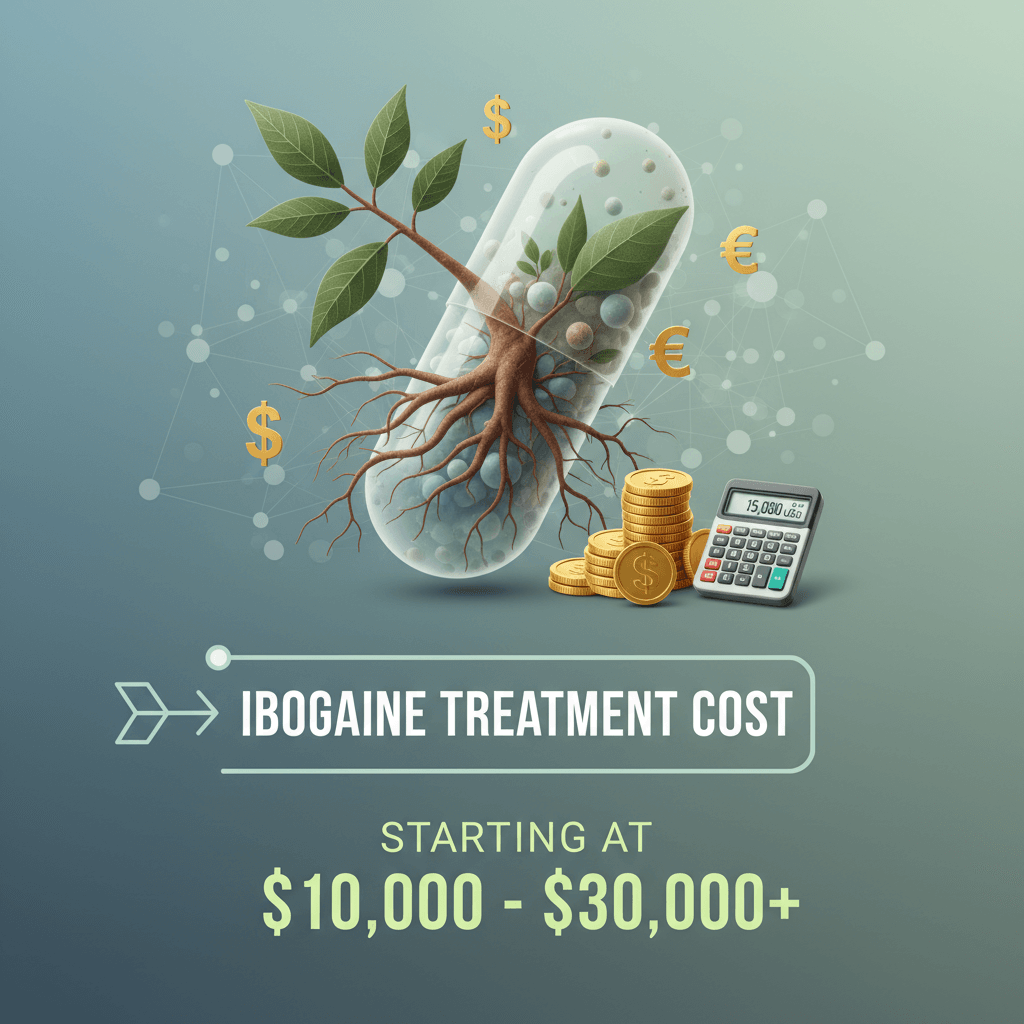
The price range for ibogaine treatment can be confusing. Programs run from a few thousand dollars for a short stay to well over ten thousand dollars for longer, medically intensive, or luxury options. The range does not reflect a simple markup. It reflects real differences in medical oversight, detox needs, length of stay, location, and amenities.
Iboga Wellness Institute is located at Calle 23 Sur 7, Cozumel, Q.R. 77668. Most of our patients travel internationally to reach us, many of them from Columbus and other cities across the United States. Families comparing programs are usually doing two things at once. They are trying to find care that is safe, and they are trying to understand the full financial commitment. This page lays out our pricing, what it covers, what it does not, and how it compares to other options. That way you can judge the care behind the number, not just the number.
What is the average cost of an Ibogaine treatment?
Most published ibogaine programs in Mexico fall between about $3,000 and $15,500 for a stay of roughly one week. Longer, medically complex, or luxury stays can cost far more.
The detail matters more than the average. A $3,000 week and a $15,000 week are rarely the same product. The low end often describes a short, retreat-style stay for someone who arrives already detoxed and medically stable. The higher end usually reflects physician involvement, continuous monitoring, more nursing hours, and more structured preparation and integration.
Some programs publish weekly rates starting around $6,500, with final pricing tied to structure and duration. At the far end of the market, a luxury residential program in Tulum estimates costs as high as $100,000 per month. That figure is driven largely by high-end amenities and an extended stay format.
Outside Mexico, published examples include a 28-day resort-style program near Madagascar starting around €12,000. A program in Johannesburg starts from about R22,000 per month, with final cost based on length and program type.
These numbers give you a map of the market. They do not tell you what any one person will pay. Two programs can list similar prices and deliver very different levels of care.
How much does Beond Ibogaine treatment cost?
That center publishes a cash-pay estimate of $8,000 to $15,500 for ibogaine therapy at its Mexico location. It describes that estimate as typically including medical monitoring and complementary holistic therapies.
We include this figure because families often use it as a reference point. It sits close to our own published starting price. That makes the comparison useful only if you look past the headline and ask what each program includes, how long the stay lasts, and what is billed separately.
How much does an Iboga Wellness Institute program cost?
The standard 7-day Addiction & Substance Abuse program at Iboga Wellness Institute starts at $8,500. Longer or medically complex care is quoted individually and may exceed the published starting price.
That starting price applies to a person who is medically ready for a standard program. Someone who needs a longer detoxification or stabilization period will have a different cost. We work to clarify this during the assessment process, before anyone books travel.
James Collins of Iboga Wellness Institute explains why: “We don’t want a family budgeting around a short stay only to discover that the person’s circumstances require more time.”
What ibogaine treatment program cost usually includes
When you pay for an ibogaine program, you are not paying only for the medicine. You are paying for the screening, the people, the monitoring, and the time that surround it.
At Iboga Wellness Institute, the program brings medical oversight, preparation, treatment, and integration together in one coordinated plan. The services confirmed as part of our care include:
- Comprehensive medical screening to review medical history, medications, substance use, and individual needs before anyone receives ibogaine
- 12-lead ECG as part of cardiac evaluation
- Urine toxicology screening to confirm what substances are present in the body
- Physician oversight throughout the program
- 24/7 nursing care during the stay
- Continuous cardiac monitoring during treatment
- Preparation before the ibogaine session
- Ibogaine flood dose treatment where it is medically appropriate
- Therapeutic support during the stay
- Integration programs, including one-on-one integration and group support
- Post-treatment follow-up after the person returns home
James Collins describes the purpose of this structure at Iboga Wellness Institute: “Before someone receives ibogaine, we want to understand their medical history, medications, substance use, and individual needs. During treatment, our medical team provides monitoring and nursing support. Afterward, we help the person begin making sense of the experience and translating it into practical changes at home. Those parts of the program matter when someone is deciding what they are paying for.”
What is usually not included
Across the industry, the base price of most programs does not cover everything a family will spend. At Iboga Wellness Institute, we encourage families to plan for these costs separately:
- Airfare to and from Cozumel
- Lodging outside the scheduled stay
- Travel expenses for a companion, such as a spouse or parent
- Time away from work for the patient and anyone traveling with them
“If a spouse or parent is coming along, that can change the overall budget considerably,” says James Collins of Iboga Wellness Institute. “We encourage people to get a clear explanation of what is included and what they should expect to arrange separately.”
What factors affect ibogaine treatment pricing?
Most of the difference between one quote and another comes from a handful of factors:
- Level of medical supervision. On-site physicians, 24-hour nursing, cardiac screening and monitoring equipment, and emergency protocols cost more than a model with minimal medical presence. Ibogaine affects the heart and nervous system, so this is the area where cutting cost carries the most risk.
- Detox complexity. A person who arrives detoxed and stable needs less time and fewer resources. A person coming off alcohol, benzodiazepines, methadone, fentanyl, or kratom may need days or weeks of preparation and stabilization first. Published guidance from one Tijuana program notes alcohol detox alone may require 5 to 12 days, depending on what steps the person completed before arrival.
- Length of stay. More nights mean more staff time, more meals, more monitoring, and more integration work. Stays across the market range from about 5 days to 2 months.
- Accommodation and setting. Private rooms, resort-style surroundings, and luxury hospitality raise the price. Part of what you pay in a high-end setting goes to comfort, not clinical care.
- Therapeutic services. Individual sessions, group work, holistic supports, and structured aftercare add value and cost.
- What is billed separately. Extra nights, additional lab work, and emergency hospital care may sit outside a base package at some programs.
This is why most honest programs cannot give a final quote until they understand the person’s full history. Iboga Wellness Institute does not use a fixed dosing protocol or a calendar-driven schedule. Treatment follows the person’s physiology. That is good medicine, and it is also why a medically complex case is quoted individually.
How much does ibogaine treatment cost at different locations (US vs Mexico vs abroad)?
Location shapes price through law, overhead, staffing, and setting. Here is how the published figures above line up:
| Location | Published cost examples | What shapes the price |
|---|---|---|
| United States | Not available as a legal medical treatment | Ibogaine is a Schedule I substance and is not approved for medical use, so families looking for care travel abroad |
| Mexico, standard programs | About $3,000 to $15,500 for a 7-day stay; weekly rates from about $6,500 | Medical oversight, detox needs, inclusions, and amenities |
| Mexico, Iboga Wellness Institute (Cozumel) | Standard 7-day Addiction & Substance Abuse program from $8,500; complex care quoted individually | Physician oversight, 24/7 nursing, cardiac monitoring, preparation, and integration in one program |
| Mexico, luxury residential | Up to about $100,000 per month | High-end amenities and extended stays |
| Madagascar region | 28-day program from about €12,000 | Resort-style setting and longer stay |
| South Africa (Johannesburg) | From about R22,000 per month | Length and type of program |
Because ibogaine is not an approved treatment in the United States, the real comparison for most American families is between programs abroad. James Collins of Iboga Wellness Institute frames it this way: “We’re located in Cozumel, Mexico, so coming to Iboga Wellness Institute also involves international travel for most of our patients. The comparison is really between what different programs in Mexico provide and what someone will spend from the time they leave home until they return.”
That framing is honest about the tradeoff. A lower-cost program closer to the border may save on airfare. A program in a resort area may cost more in overhead. Neither fact on its own tells you whether the care is right for your loved one.
Why medical oversight changes the price, and why it matters
The lowest prices online often come with the thinnest descriptions of safety protocols or staffing. It is tempting to see ibogaine as a low-risk plant retreat. It is not. Cardiac and neurological effects are the reason screening and monitoring exist.
Programs built on medical supervision cost more because they pay for:
- Thorough screening that looks for heart issues, electrolyte problems, and medication interactions
- Monitoring during dosing so staff can catch problems early and respond quickly
- Structured detox and stabilization before ibogaine is given
- Licensed medical staff, who cost more than retreat facilitators
At Iboga Wellness Institute, this is why screening comes first. It is also why treatment is not guaranteed to everyone who applies or pays. We do not provide ibogaine to people with serious cardiovascular conditions, to people with psychosis, to people with certain bipolar disorder presentations, or to anyone in an acute psychiatric emergency or active suicidal crisis. A program that screens people out when the risk is too high is protecting the person, even when it costs that program a booking.
For families, this is the real weight of the decision. You are balancing the cost of a thorough, supervised program against the cost of incomplete care or complications. Ongoing addiction carries its own long-term financial and personal cost, as federal resources from SAMHSA and NIDA make clear when they describe substance use disorders as chronic conditions that affect health, work, and family life.
Who this program is built for
Iboga Wellness Institute serves people for whom conventional rehab has not worked, and the families who are trying to help them. We treat opioid addiction, heroin addiction, pain pill addiction, kratom addiction, and benzodiazepine dependence. We also support people living with trauma and PTSD, depression, anxiety, grief, and Parkinson’s disease.
Our levels of care include detox, residential treatment, medication-assisted support, and ibogaine treatment. That range matters for cost. A person who needs detox before ibogaine can receive it within the same coordinated program instead of being sent somewhere else first.
Treatment is always voluntary. We do not provide forced treatment. The person entering care has to want to be there, and the program is built around their own goals.
What to expect from first contact to follow-up
The process is designed so cost becomes clear early, before money and travel are committed.
It begins with assessment. Our team reviews medical history, medications, current substance use, and individual needs. This is where we learn whether a standard program fits, or whether a longer detox or stabilization period is needed. It is also where we learn whether ibogaine is safe for this person at all.
On arrival in Cozumel, the medical team reassesses. Testing such as a 12-lead ECG and urine toxicology confirms where the person is right now, not just where they were weeks ago. Preparation follows, so the person is physically and mentally ready.
During treatment, physician oversight, 24/7 nursing, and continuous cardiac monitoring stay in place. The pace is set by the body, not the calendar.
After treatment, integration begins. “One-on-one integration and group support can help patients work through challenges, build routines, and stay connected as they return to everyday life,” says James Collins of Iboga Wellness Institute. Post-treatment follow-up continues that connection once the person is home.
What makes Iboga Wellness Institute different
Many programs sit at one of two ends. Some are luxury retreats with limited medical presence. Others are clinical detox units with little attention to meaning or recovery. Iboga Wellness Institute sits between them, with safety and structure at the center and a setting built for rest.
Care is physician-led, with 24/7 nursing and continuous cardiac monitoring. We operate three private Cozumel settings, IWI Reserve, Azure Cove at IWI, and Ocean Sanctuary, and all three hold one clinical standard. Accommodation can differ. The medical care does not.
James Collins of Iboga Wellness Institute puts the value question plainly: “A higher price by itself does not prove that a program is better, and a lower price does not tell you everything about the care being offered. We want families to have enough information to compare the full experience: the medical team, the monitoring, the time available for their loved one, and the support that follows treatment.”
Does insurance cover ibogaine treatment?
No. U.S. medical insurance does not cover ibogaine treatment, so programs abroad, including ours, operate on a cash-pay basis.
Ibogaine is classified as a Schedule I substance in the United States and is not approved for medical use there. Insurers do not reimburse treatment with it, whether it takes place in Mexico, South Africa, or elsewhere. Lawmakers in some states have begun reviewing the research on ibogaine for opioid use disorder, as a Kentucky legislative presentation shows. That review has not changed coverage. Families should plan on paying privately and should not count on reimbursement after the fact.
Some costs around treatment may be handled differently. Testing your home doctor performs, or therapy you continue after returning home, is billed through your own providers. Ask those providers directly about coverage.
What payment options are available for ibogaine treatment?
Because insurance does not pay for ibogaine treatment, the program fee at Iboga Wellness Institute, like most programs in Mexico, is paid directly by the patient or family. That makes planning the most important part of payment. The figure to plan around is not only the program price. It is the full cost from the day the person leaves home to the day they return, including airfare, any lodging outside the scheduled stay, a companion’s travel, and time away from work.
The quote itself is part of how we make that planning possible. A person who is medically ready for the standard 7-day program can budget from the $8,500 starting price. A person who needs a longer detox or stabilization period receives an individual quote after assessment, so the family is not surprised mid-stay. Our admissions team can walk you through the accepted payment methods, the timing of payment, and what happens if the medical team recommends more time.
Across the market, some programs offer discounts for specific groups, such as veterans and first responders. Policies differ from clinic to clinic, so ask any program you are weighing what it offers and confirm it in writing. When comparing payment terms, also ask whether integration and follow-up are included in what you pay or charged separately. James Collins of Iboga Wellness Institute advises families to ask “how that support works, how long it lasts, and whether it carries an additional cost.”
Questions worth asking every program
The same questions work for us and for anyone else you are considering. James Collins of Iboga Wellness Institute suggests families “look closely at what the treatment price covers. Ask about the length of stay, physician involvement, medical screening, nursing coverage, cardiac monitoring, accommodations, meals, preparation, and integration afterward. Also ask what is billed separately.”
Write the answers down side by side. Patterns appear quickly. One program may list a lower price but include fewer nights. Another may cover dosing but bill separately for detox. A third may not be able to tell you who monitors the heart and for how long. The clearest program on paper is often the one that has thought hardest about care.
Trusted by families across the United States
Iboga Wellness Institute serves patients from Columbus, from across the country, and from Cozumel itself. Most of the people who reach us have already tried conventional rehab, sometimes more than once. Many of the calls come from a parent, spouse, or sibling who has carried the weight of a loved one’s addiction for years.
We respect that this is a significant investment, financially and emotionally. Our goal is to make the financial commitment clear and to help you understand the care behind it. When you know what the price includes, what it leaves out, and why it differs from the program down the coast, you can make the decision with confidence instead of guesswork.
Ibogaine is not approved by the FDA for medical use and is a Schedule I substance in the United States. Treatment at Iboga Wellness Institute takes place in Mexico. Eligibility depends on medical screening, and treatment is not guaranteed to all who apply. Prices listed for other programs reflect their published estimates and may change. This page is for information only and is not medical advice. If you or someone you love is in crisis, contact local emergency services.