Ibogaine for Heroin Addiction: A Medically Supervised Path Out of the Cycle
The last time you tried to stop heroin, you made it about 48 hours. Then the shaking, the nausea, and the terror that your body was breaking apart from the inside sent you back to the dealer before you could even get to an intake appointment. Now you are reading about ibogaine for heroin addiction because someone said it might help interrupt withdrawal in a single session. You need to know two things: is that real, and is it safe enough to risk?
Those are the right questions, and they are the same ones our medical team at Iboga Wellness Institute asks before we accept anyone.
The people who built Iboga Wellness Institute lost a friend to heroin. That loss shapes every decision we make, and it comes down to one test: Would we trust this with someone we love? Every person who calls us is someone’s son, daughter, spouse, parent, sibling, or best friend. That includes you.
You may be reading this for someone else. Maybe you are a parent, spouse, or adult child who has watched rehab fail more than once. If so, this guide is for you too. You are allowed to feel hopeful and skeptical at the same time.
This guide explains what ibogaine does to heroin dependence and how we screen the heart and blood chemistry. It covers what the dosing day really feels like, what happens after you go home, and why treatment at Iboga Wellness Institute happens in Cozumel. We’re not looking for a miracle. We’re looking for a safer, more honest way off the withdrawal and relapse treadmill.
How Does Ibogaine for Heroin Addiction Interrupt the Dependence Cycle?
Ibogaine appears to interrupt heroin dependence by acting on several brain systems at once, including the opioid receptors heroin uses, though individual responses vary considerably. For some people, one medically supervised session sharply reduces withdrawal and cravings, while others experience more modest relief. It is not a cure, and it does not replace the work that comes after.
To see why that matters, start with what heroin does. The National Institute on Drug Abuse (NIDA) explains that heroin turns into morphine in the brain. It then binds to opioid receptors, the same receptors that manage pain, mood, and reward. With daily use, your brain adjusts. Picture a thermostat. Your brain turns its own “heat” down to make room for heroin. When heroin wears off, the room goes ice cold. That cold is withdrawal: the sweats, the aching, the panic you felt at hour 48.
Conventional detox waits out the cold over a set number of days. Maintenance therapy uses medicines like buprenorphine or methadone to keep the room warm with a steadier opioid. Both are real, evidence-based options, and they help many people. But if you have cycled through them more than once, you already know their limits for you.
Ibogaine works differently. It comes from the root bark of the Tabernanthe iboga shrub. The liver breaks it down into noribogaine, which stays in the body far longer than ibogaine itself (UC Berkeley Center for the Science of Psychedelics). Some people report that the session appears to reset the withdrawal response, and they come out the other side without days of white-knuckling, though this varies considerably from person to person. That is the “interrupt” people talk about. You can read more about what [ibogaine treatment](https://theibogainstitute.org/ibogaine-treatment-complete-guide/) involves on our main site.
You also need the legal facts up front. Ibogaine is a Schedule I controlled substance in the United States and is not FDA-approved. Iboga Wellness Institute provides ibogaine only at its licensed medical clinic in Cozumel, Mexico. Our Columbus, Ohio office handles admissions, screening, and aftercare coordination. No ibogaine is ever given there.
There is one more reason heroin matters here. Heroin is a short-acting opioid, which makes it simpler to plan around than long-acting opioids. Fentanyl is fat-soluble. It stores in body tissue and releases slowly, so its washout is long and hard to predict. Ibogaine is never dosed directly on top of fentanyl or other long-acting opioids. People on those drugs are first moved to shorter-acting opioids under medical management. For someone on buprenorphine, that switch starts about 8 days before treatment at Iboga Wellness Institute. Methadone is also long-acting, so your physician decides that plan case by case. Heroin usually does not need that long bridge. However, if there is any chance your supply has been cut with fentanyl, tell us. That changes the plan, and we would much rather know.
Why Would a Clinic Turn You Away? The Screening That Starts Weeks Before You Arrive
Knowing how ibogaine works is only half the picture. The other half is knowing who should not receive it. Before anyone receives ibogaine, our medical team at Iboga Wellness Institute checks the heart, blood chemistry, liver, and kidneys, starting weeks before travel. If the results show the risk is too high, we say no. In our experience, roughly 5 percent of applicants are declined because of ECG findings alone.
Here is why the heart comes first. Ibogaine can slow how quickly the heart recharges after each beat. On an ECG, that recharge time is measured as the QTc interval. You can think of it as the time the heart’s lower chambers need to reset before they are ready to beat again. If ibogaine stretches that reset too far, a dangerous rhythm can develop. Cardiac risk is the most serious known safety concern with ibogaine (UC Berkeley Center for the Science of Psychedelics), so we build the whole protocol around it.
Screening starts with a full medical history and a review of every medication you take. Next come lab tests: a complete blood count, a comprehensive metabolic panel, liver and kidney function, and electrolytes. Then you get a 12-lead ECG. At Iboga Wellness Institute, we target a QTc below about 450 ms for men and about 460 ms for women, with 460 ms as our hard line for all applicants. We also correct electrolytes to specific targets before dosing: potassium between 4.2 and 4.8 mmol/L, and magnesium at 2.0 mg/dL or higher. Some people also need an echocardiogram or clearance from a cardiologist.
When you arrive in Cozumel, Iboga Wellness Institute does it all again. That means another 12-lead ECG, more labs, an electrolyte check, urine toxicology, and a physician exam. Right before dosing, we run a second urine drug screen and give IV magnesium.
Those electrolyte numbers are not paperwork. During one patient’s treatment, her QTc started to lengthen, and the Iboga Wellness Institute team corrected it with IV magnesium before a dangerous rhythm could develop. Another patient’s pre-dose ECG caught a new arrhythmia that had not been there before. The physician paused everything and referred him for cardiac care. He did not get the treatment he traveled for. He got the outcome that kept him safe.
These are the conditions that stop treatment:
- QTc over 460 ms, prolonged QT syndrome, or other concerning ECG findings
- Structural heart disease or uncontrolled arrhythmias
- Dangerous medication interactions or unstable medical illness
- Active psychosis or schizophrenia
- Severe bipolar I disorder in an active episode
- Significant liver or kidney disease
- Pregnancy
- Uncontrolled diabetes or obesity
Safety will always come before filling a bed. We would rather lose a patient than compromise our standards. If you are declined, the physician will explain the specific concern in plain language. Where it makes sense, they will point you toward other treatment options. If you or someone you love needs help finding care right now, the SAMHSA National Helpline is free, confidential, and open 24 hours a day at 1-800-662-4357.
What Actually Happens During the 8 to 10 Hour Flood Dose Session?
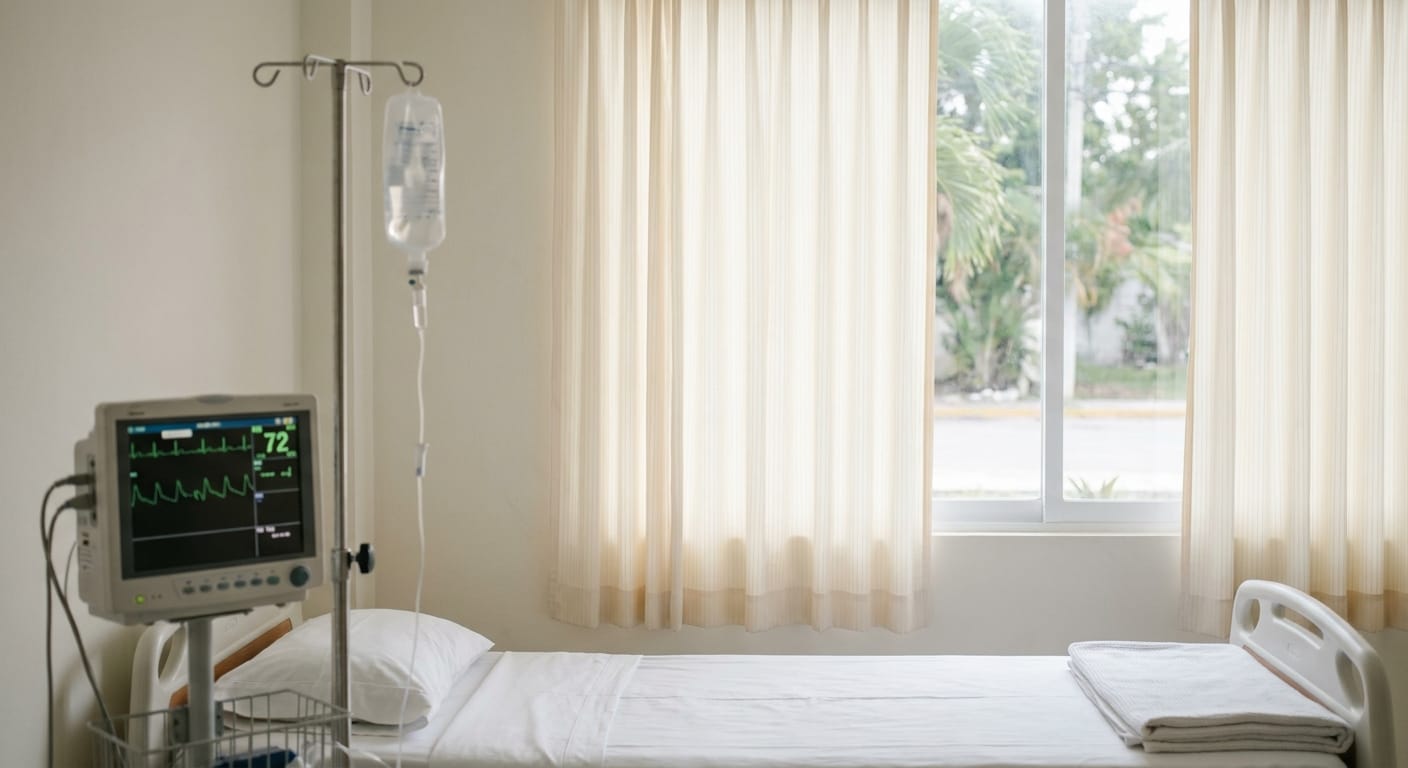
Once screening clears you, the next question is usually about the day itself. The flood dose is a single, larger dose of ibogaine given while your heart is monitored continuously. At Iboga Wellness Institute, ICU-trained nurses stay at your bedside, and a physician checks in every 2 to 4 hours. The active effects last about 8 to 10 hours, and medical monitoring continues for at least 24 to 72 hours afterward.
Your physician sets your dose for you. It is not pulled from a fixed chart. Throughout the session, continuous cardiac telemetry with automated QT analysis tracks your heart rhythm beat by beat. Nurses also watch your blood pressure, oxygen level, breathing rate, neurological status, hydration, temperature, nausea, and comfort. You are never alone in the room.
Be ready for this: it is not a comfortable experience, and it is not recreational. Most people lie still with their eyes closed. The body often feels heavy, and nausea is common. Some people describe dreamlike memories or images, while others mostly remember the physical intensity. Either way, it is inward, demanding work, and many people describe it as a long, honest look at their own life. Meanwhile, the medical team watches the numbers so you don’t have to.
If your QTc rises past what the physician considers safe (460 ms is the hard line), treatment is paused. The team corrects reversible causes with IV magnesium and electrolytes, then repeats the ECG. A new arrhythmia also triggers a pause or a full stop, and a serious medical event moves everything to emergency medical care.
We have seen this happen. One patient secretly used a narcotic before dosing, had a serious medical event, and was stabilized through emergency medical management. That case is the reason for two drug screens. It is also why we ask you to tell us everything you have used, even if you feel embarrassed. Honesty with your team is part of your safety plan.
The effects fade after about 8 to 10 hours, but noribogaine stays in your body much longer, which is why monitoring continues for at least 24 to 72 hours. Medical stability comes first. Reflection, journaling, and integration only begin after the physician confirms you are stable. During your stay at Iboga Wellness Institute, a psychotherapist also leads daily sessions of about one hour. That way, the first steps of making sense of the experience happen with support, not in isolation.
Does Ibogaine Keep Working After You Fly Home?
For families who have watched loved ones relapse after every program, this is often the question that matters most. Ibogaine for heroin addiction can interrupt withdrawal and quiet cravings for some people, but whether recovery lasts depends mostly on the months that follow, and outcomes vary considerably from person to person. That is why every Iboga Wellness Institute client leaves with a personalized aftercare plan and is guided into weekly integration sessions for at least the first 12 weeks.
Our founder says it simply: the medicine may open the door, but lasting recovery comes from the choices a person makes once they walk through it. If you have been through rehab before, you know the risky part isn’t always the first week. It’s the third Tuesday at home, when the old stress, the old people, and the old routes to the dealer are all still there. Integration exists for exactly that stretch.
Weekly sessions run about one hour. Clients can meet one-on-one by video or join group integration meetings. The Iboga Wellness Institute team includes licensed clinical psychologists, licensed marriage and family therapists (LMFTs), licensed clinical social workers (LCSWs), and certified addiction professionals. Many also have extra training through graduate-level certificate programs in psychedelic-assisted therapy and integration. The program is led by Lindsey White, author of The Crown and the Root, a book on ibogaine and 5-MeO-DMT integration. Her approach matches ours: insight alone is not enough, so the real work is turning insight into daily habits.
The early sessions focus on stabilization. Are you sleeping? Are you eating? How strong are the cravings? Over time, the work moves to trigger mapping, calming the nervous system, building a relapse-prevention plan, and rebuilding who you are beyond heroin. Progress is measured in your relationships, your work, and your health.
We are honest about the limits. Some people return to use in the first year, and we track that internally. In our experience, people who stay engaged with weekly integration appear to do noticeably better than those who drop off, though outcomes vary. Iboga Wellness Institute is also building a formal outcomes program that uses validated clinical assessments at one week, one month, three months, six months, and one year. We will publish results once the data is mature enough to trust, not before.
Here is one example of what engagement can look like for one person. Addiction had taken a lot from one client’s life. More than seven months after treatment at Iboga Wellness Institute, he remains sober. He is back at full-time work as a cook, his family relationships have improved dramatically, and he still attends weekly integration. His story is one person’s experience, not a promise or a typical outcome. It does show what we work toward with every client: a life they no longer feel the need to escape from.
Why Do You Have to Travel to Cozumel, and Is That a Red Flag?
Many families hesitate at this point, and that hesitation makes sense. You travel to Cozumel because ibogaine is a Schedule I controlled substance in the United States and is not FDA-approved, so no US facility can legally provide it. Iboga Wellness Institute is American-owned and provides ibogaine only at its licensed medical clinic in Cozumel, Mexico, under physician oversight.
If you live in Columbus or anywhere else in Ohio, the answer is the same. Ibogaine is not legal for treatment in Ohio or in any other state. You may hear about “underground” sessions held in a house or a rented room in the US. Please don’t take that risk. Those settings usually have no cardiac telemetry, no electrolyte correction, no ICU-trained nurses, and no physician who can step in if the QTc climbs. Given what ibogaine can do to the heart, that gap can be life-threatening.
Traveling for treatment is not the red flag. Weak protocols are. You can judge any clinic with a few direct questions:
- Who reads the ECG, and what QTc cutoff do they use?
- Do they repeat the ECG right before dosing?
- Who sits at the bedside during the session, and what training do they have?
- What happens after the person flies home?
A clinic that can’t answer clearly is telling you something important.
Our process is built so no one steps into the unknown, and it begins with the Iboga Wellness Institute Columbus office. Admissions starts the medical screening there. A US-based physician then holds a telehealth consult before travel to review history, medications, and labs. That physician builds the preparation plan, including a tapering schedule if the situation calls for one. By the time you arrive in Cozumel, the plan is already in place and the care team there has your full workup. When you return home, Columbus coordinates aftercare and weekly integration.
A word on insurance, since many families have already spent so much on past treatment. Iboga Wellness Institute does not accept insurance for ibogaine treatment. Because ibogaine is not FDA-approved, US health plans generally do not cover it. Admissions will walk you through the full costs on your first call, so there are no surprises later.
Common Questions About Ibogaine for Heroin Addiction
Is ibogaine legal in the United States?
No. Ibogaine is a Schedule I controlled substance in the United States and is not FDA-approved. Iboga Wellness Institute provides ibogaine only at its licensed medical clinic in Cozumel, Mexico. The Columbus, Ohio office handles admissions, screening, and aftercare coordination only.
How long does ibogaine treatment take for heroin addiction?
The flood dose session lasts about 8 to 10 hours. Medical monitoring continues for at least 24 to 72 hours afterward because noribogaine stays in the body a long time. After that, weekly integration is recommended for at least 12 weeks.
What cardiac screening is required before ibogaine treatment?
You need a 12-lead ECG with a QTc below 460 ms, a comprehensive metabolic panel, and liver and kidney tests. Electrolytes must be corrected to potassium of 4.2 to 4.8 mmol/L and magnesium of at least 2.0 mg/dL. The ECG is repeated immediately before dosing.
What happens if my ECG shows I am not eligible for ibogaine?
In our experience, roughly 5 percent of applicants are declined each year because of ECG findings. If that happens, the physician will explain the specific concern and may refer you to cardiac care or other treatment options. The SAMHSA National Helpline can also help you find care.
Does ibogaine eliminate heroin withdrawal completely?
Not always. For some people, ibogaine sharply reduces withdrawal severity, while others experience more modest relief. Results vary, and ibogaine cannot prevent a return to use on its own. Long-term recovery depends heavily on aftercare and integration, which is why weekly sessions are built into every plan.
What does the aftercare program include after ibogaine treatment?
Aftercare includes weekly one-hour integration sessions for at least 12 weeks, either one-on-one by video or in groups. Licensed psychologists, LMFTs, LCSWs, and certified addiction professionals lead the sessions, which focus on trigger mapping, nervous system regulation, and relapse prevention.
Your First Step Is a Phone Call, Not a Plane Ticket
You do not have to decide everything today. You only have to find out whether treatment is safe for you or for the person you love. Call the admissions team in Columbus to begin medical screening and schedule a telehealth consult with the physician who will prepare the treatment plan before travel to Cozumel. If you are reading this for someone you love, you can make that first call for them.
Before you call, write down every substance used in the past 30 days. Include anything you suspect was cut with fentanyl, plus every prescription and supplement. That list is the first thing the physician needs, because it is what tells the team whether the heart can safely handle ibogaine. Being completely honest on that list is one of the most protective things you can do.
Important legal and safety information: Ibogaine is not approved by the FDA and is not available as a legal medical treatment in the United States. Iboga Wellness Institute provides ibogaine treatment exclusively at its licensed medical clinic in Cozumel, Mexico, under medical supervision. US locations handle admissions, screening, and aftercare coordination only.
Take the First Step Toward Breaking Free from Heroin Dependence
If you’ve been caught in the cycle of heroin addiction and traditional approaches haven’t worked, medically supervised ibogaine treatment in Cozumel may offer the reset you’ve been looking for. Our team can walk you through what the process looks like, answer your questions about safety and eligibility, and help you understand whether this path is right for your situation. A confidential conversation with our admissions office is the natural next step.
Individual responses to ibogaine vary considerably, and outcomes depend on many factors including personal circumstances, aftercare engagement, and medical history.