Hyperbaric oxygen therapy in Cozumel has evolved well beyond its origins in dive medicine. Today, the island’s hyperbaric infrastructure serves a much broader clinical population: patients recovering from neurological injury, managing complex conditions, or completing intensive treatment protocols that demand serious physiological support.
What Hyperbaric Oxygen Therapy Actually Does
A 2020 study published in Aging by Dr. Shai Efrati and colleagues at Tel Aviv University treated 35 healthy aging adults with 60 sessions of hyperbaric oxygen therapy. Researchers documented significant increases in telomere length and reductions in senescent cells, alongside measurable improvements in attention, processing speed, and executive function. The mechanism driving these results is straightforward: when you breathe pure oxygen at pressures 1.5 to 3 times greater than sea level, your plasma carries dissolved oxygen to tissues that red blood cells cannot reach. Damaged, oxygen-starved cells receive fuel they would otherwise go without.
For neurological applications specifically, this matters because the brain is the body’s most oxygen-dependent organ. Elevated oxygen delivery reduces neuroinflammation, supports mitochondrial function, and accelerates the cellular repair processes that follow any form of neurological insult. If you are traveling to Cozumel for ibogaine therapy, trauma recovery, or TBI rehabilitation, HBOT is not a wellness add-on. It is a physiologically grounded intervention that addresses the same neural tissue your primary treatment is targeting.
Why Cozumel Became a Hub for Hyperbaric Treatment
Cozumel’s hyperbaric infrastructure was built to handle decompression sickness in the tens of thousands of divers who descend its reefs every year. That origin matters. Treating DCS requires immediate access to high-quality multiplace chambers, certified hyperbaric physicians, and clinical staff who understand pressure medicine under real stakes. Facilities built for emergency dive medicine are not the same as chambers installed as a wellness amenity. The training, the equipment standards, and the depth of clinical experience are categorically different.
The practical advantage for medical tourists is significant. Cozumel sits roughly two hours from Miami, Houston, and other major departure cities, making it logistically accessible for U.S. patients who need extended treatment stays. The combination of institutional experience with hyperbaric medicine and proximity to major U.S. markets is precisely why the island attracts patients seeking adjunctive support for neurological conditions and recovery protocols, not just divers in distress.
What a Hyperbaric Session in Cozumel Looks Like
Arrival at a reputable Cozumel hyperbaric clinic begins with a pre-session intake screening. You will review current medications, recent medical history, and any contraindications with clinical staff before entering the chamber. Cotton clothing is standard because synthetic fabrics carry a static electricity risk in high-oxygen environments. You will be asked to remove jewelry, watches, and any battery-operated devices.
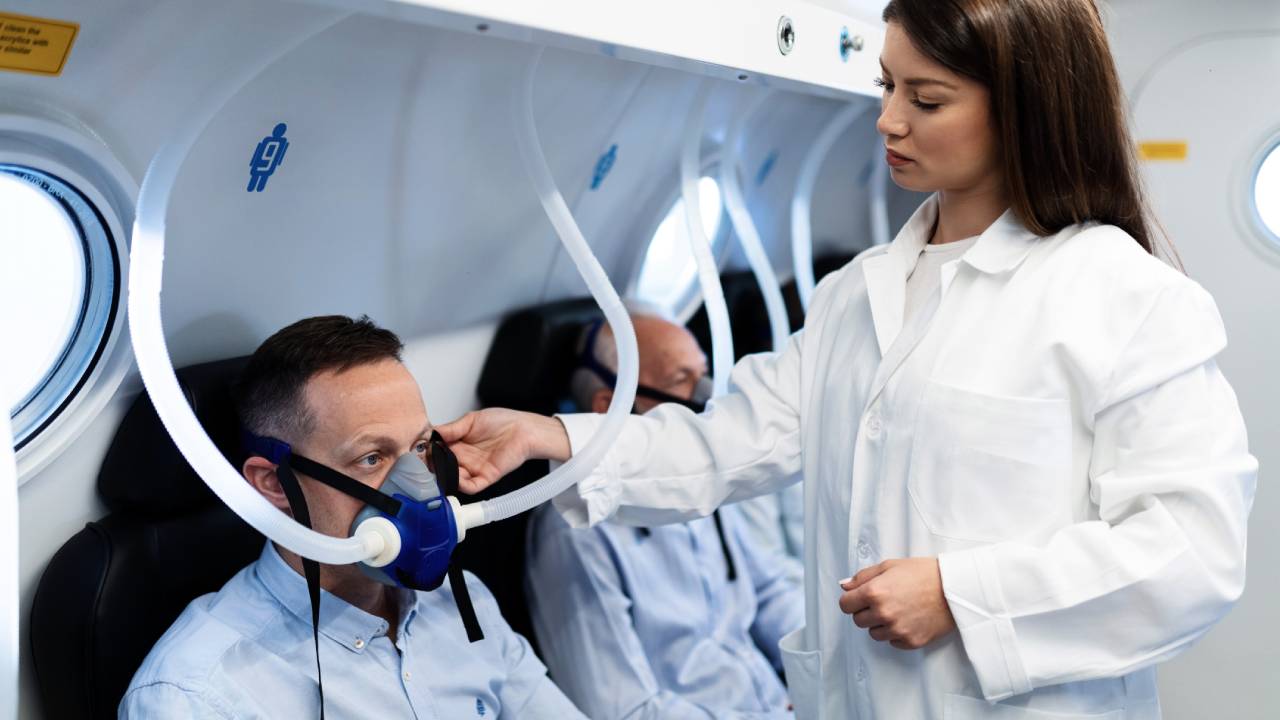
Inside a multiplace chamber, you sit or recline in a pressurized room alongside other patients, breathing 100% oxygen through a mask or hood. The pressure increases gradually over roughly ten minutes. During this phase, the sensation is similar to descending in an airplane: your ears will need to equalize, and the staff will coach you through this if needed. Treatment depth typically runs between 2.0 and 2.4 atmospheres absolute (ATA) for neurological applications, and sessions last 60 to 90 minutes at pressure. On the way back to surface pressure, you remove the mask and breathe normally. Most patients feel calm, sometimes mildly fatigued, in the hour following a session.
Before your first appointment, ask the clinic directly what pressure protocol they use for your specific indication, whether a physician reviews your intake, and what the supervision ratio is during treatment.
How Many Sessions You’ll Typically Need
The Efrati lab’s 2022 randomized controlled trial published in PLOS ONE treated 73 veterans with mild TBI and persistent post-concussion syndrome. The protocol was 40 sessions over two months, with significant improvements in cognitive function and quality of life compared to sham controls. That number, 40 sessions, is consistent with what clinical evidence supports for chronic neurological conditions. Acute applications, like post-dive decompression sickness, often resolve in fewer sessions.
For patients integrating HBOT with ibogaine therapy, the typical approach is a series of sessions in the days following the primary treatment, during the neuroplastic window when the brain is most receptive to structural support. Plan for a minimum of 10 to 20 sessions as an adjunctive protocol, and budget travel time accordingly. If you are addressing a chronic condition rather than acute recovery, a longer stay or return trip for a second round is standard practice.
What to Do Before and After Each Session
Arrive well-hydrated. A 2018 review in Undersea and Hyperbaric Medicine confirmed that adequate systemic hydration improves oxygen diffusion at the cellular level and reduces the likelihood of middle-ear barotrauma during compression. Avoid alcohol for at least 24 hours before each session, and flag any changes to your medication list, since some drugs interact with high-oxygen environments. Your clinic should review this list formally.
After each session, expect a period of mild fatigue, occasionally followed by a noticeable clarity or energy increase a few hours later. Avoid strenuous exercise for two hours post-session, and give your body adequate sleep between treatments. The single most important preparation step: hydrate consistently across your full treatment course, not just on session days. Cellular oxygen transport is a systemic process and responds to systemic conditions.
How to Choose a Hyperbaric Clinic in Cozumel
The primary distinction that separates clinically serious facilities from substandard ones is chamber type and medical oversight. Multiplace chambers, which pressurize an entire room and allow nursing staff to attend patients inside, are the clinical standard for complex or adjunctive applications. Monoplace chambers, which treat one patient in an enclosed tube, are adequate for straightforward protocols but limit real-time clinical response if a complication arises.
Look for facilities where a licensed physician, ideally with formal hyperbaric medicine certification, reviews patient cases and supervises protocols. In Mexico, the Consejo Mexicano de Medicina Subacuática e Hiperbárica is the relevant credentialing body. Ask whether the facility is recognized by Divers Alert Network (DAN) as a preferred provider. DAN accreditation requires documented equipment standards, staff training, and emergency protocols, and it is one of the more reliable proxies for overall clinical quality.
One specific question to ask any clinic before booking: “What is your treatment protocol for neurological recovery patients, and which physician will oversee my case?” If the answer is vague or defaults to a sales process rather than a clinical one, that is your signal to look elsewhere. Understanding the full scope of what hyperbaric oxygen programs involve for brain health will help you evaluate the answers you receive.
Red Flags to Watch For
Clinics that cannot name a supervising physician, or where intake screening is handled exclusively by non-medical staff, present a real safety risk. HBOT carries contraindications, including untreated pneumothorax and certain chemotherapy agents, that require physician review before treatment begins.
Outcome guarantees are another disqualifier. No reputable hyperbaric facility promises specific results. Pressure levels below 1.5 ATA are insufficient for neurological applications regardless of how they are marketed. If a clinic cannot tell you exactly what ATA their chamber operates at, or deflects the question, treat that as a red flag. Aftercare guidance should be explicit and provided in writing. Any facility that clears you and offers no post-session instructions is not operating at a clinical standard.
Hyperbaric Therapy as Part of an Ibogaine Treatment Protocol
Ibogaine produces rapid and measurable effects on neuroplasticity, but the neural environment following treatment is also one of heightened metabolic demand. The brain requires resources to consolidate and structurally reinforce the changes that ibogaine initiates. This is where HBOT earns its place as a clinical adjunct rather than an add-on.
A 2022 study in Frontiers in Neurology examined HBOT’s neuroprotective effects following neurological injury and documented significant reductions in inflammatory cytokines alongside improvements in white matter integrity. For patients completing ibogaine therapy for addiction, trauma, or TBI, these effects map directly onto the recovery process: reduced neuroinflammation, improved oxygenation to regions undergoing repair, and structural support for the synaptic reorganization that ibogaine drives. Research into how oxygen therapy supports neuroplasticity makes the clinical rationale clear.
Facilities in Cozumel that offer both treatments under integrated medical oversight, rather than as separate bookings at separate clinics, are the better clinical choice. An integrated protocol means the supervising physician can sequence HBOT sessions relative to ibogaine timing, adjust pressure and duration based on how you are responding, and monitor across both interventions. If you are evaluating programs that combine these treatments, the coordination of care is as important as the presence of each modality individually. A detailed look at what to know before combining these therapies is worth reviewing before you finalize a program.
What It Costs and How to Plan Your Stay
In Cozumel, individual HBOT sessions at clinical facilities typically run between $150 and $300 USD per session, depending on the chamber type and clinical oversight included. A 10-session adjunctive protocol runs $1,500 to $3,000. By comparison, U.S.-based hyperbaric centers charge $250 to $450 per session for out-of-pocket patients, and most do not offer the integrated ibogaine protocols that make Cozumel a destination for this population.
Book sessions at least two weeks in advance if you are coordinating HBOT around an ibogaine program. Availability at quality facilities is not unlimited, and scheduling after your primary treatment without a confirmed plan creates logistical risk. The concrete next step: contact the clinic directly this week, confirm the physician-supervised protocol they use for neurological and adjunctive applications, verify chamber type and operating pressure, and request a written cost breakdown before you commit to travel. The difference between a well-planned stay and a frustrating one is almost always the specificity of the questions you ask before you arrive.