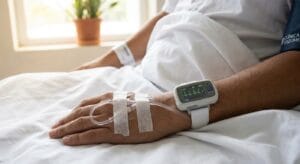

Hyperbaric therapy for neurological conditions sits at one of the more interesting intersections in modern medicine: a well-established physical mechanism with a rapidly expanding body of clinical evidence pointing toward applications that, even five years ago, most neurologists wouldn’t have discussed with patients. This guide covers how HBOT works in neural tissue, which conditions have the strongest research backing, what a real clinical protocol looks like, and how to evaluate whether a provider is equipped to deliver it.
Here is what you will find in this guide:
- The core mechanism: how pressurized oxygen changes what the brain receives
- The specific biological processes HBOT triggers in neural tissue
- A condition-by-condition review of the clinical evidence
- What a neurological HBOT protocol actually involves
- Safety parameters and contraindications
- How to evaluate a provider and measure whether treatment is working
What Hyperbaric Therapy Actually Does to the Brain
Most people understand that the brain needs oxygen. What most people don’t fully appreciate is how profoundly the delivery method changes what neural tissue receives. Hyperbaric oxygen therapy (HBOT) places you inside a pressurized chamber where you breathe 100% pure oxygen at pressures above atmospheric level, typically between 1.5 and 2.4 atmospheres absolute (ATA). The result is a measurable, dramatic increase in the oxygen dissolved directly into your blood plasma, cerebrospinal fluid, and tissue, far beyond what your red blood cells carry under normal breathing conditions. This isn’t a subtle shift. It’s a fundamentally different physiological environment, and the brain responds to it in ways that have real clinical implications.
The Oxygen-Pressure Relationship
Henry’s Law states that the amount of gas dissolved in a liquid is proportional to the pressure applied. In plain terms: more pressure means more oxygen dissolves directly into plasma, bypassing red blood cells entirely. Under normal conditions, plasma carries roughly 0.3 mL of oxygen per 100 mL of blood. At 2.4 ATA with 100% oxygen, that figure rises to approximately 6 mL per 100 mL, a twenty-fold increase. A 2016 review published in Medical Gas Research quantified tissue oxygen partial pressures during HBOT at values eight to ten times above resting baseline in neural tissue.
The practical significance of this is substantial. Injured or inflamed brain tissue often suffers from localized oxygen deficits not because blood flow is completely absent, but because damaged vessels can’t deliver adequate oxygen to compromised cells. HBOT bypasses that bottleneck. Oxygen dissolved in plasma reaches tissue even when hemoglobin transport is impaired, which is precisely the scenario in traumatic brain injury, stroke penumbra, and neuroinflammatory conditions.
FDA-Cleared Indications vs. Off-Label Neurological Use
The FDA has cleared HBOT for 13 specific indications, including decompression sickness, carbon monoxide poisoning, delayed radiation injury, diabetic foot ulcers, gas gangrene, arterial insufficiencies, and several wound-care applications. Neurological applications, with the exception of carbon monoxide poisoning, are classified as off-label use.
Off-label does not mean unsubstantiated. It means the FDA approval pathway, which is expensive and slow, hasn’t been completed for those indications. Physicians prescribe off-label treatments routinely, and the legal and ethical standard is whether the available evidence supports the clinical decision. For neurological applications of HBOT, the evidence base has grown substantially through peer-reviewed randomized controlled trials, not just case reports. The framework for evaluating any specific application is the quality and volume of that evidence, not the FDA label.
How HBOT Rewires and Repairs Neurological Tissue
A 2022 review published in Frontiers in Neuroscience examining HBOT as a neuromodulatory technique across multiple clinical populations identified neuroplasticity as the central mechanism linking all observed neurological benefits. Neuroplasticity refers to the brain’s capacity to reorganize, form new connections, and repair damaged pathways. HBOT doesn’t simply flood injured tissue with oxygen and produce temporary relief. At adequate pressure and over a sufficient number of sessions, it triggers a cascade of cellular processes that remodel neural architecture. This is the distinction that separates HBOT from purely symptomatic treatments, and it’s the reason why neuroplastic mechanisms activated by HBOT are now a serious topic in peer-reviewed neuroscience, not just integrative medicine.
Mitochondrial Function and Neuroprotection
Neurons are among the most metabolically demanding cells in the body, and their function depends on mitochondrial efficiency. A 2016 study published in Brain Research demonstrated that HBOT significantly increased ATP production in neural mitochondria in models of traumatic brain injury, with measurable improvements in mitochondrial membrane potential and oxidative phosphorylation rates. The key insight from this research is that many damaged neurons retain structurally intact mitochondria that are simply not operating at capacity due to oxygen limitation and inflammatory burden. Restoring oxygen availability at the cellular level reactivates that latent function.
The practical translation: patients who report improved cognitive clarity, better processing speed, or reduced mental fatigue after a series of HBOT sessions are not experiencing a placebo response. They are experiencing the downstream effect of mitochondria in compromised neurons returning to functional output.
Neurogenesis and Angiogenesis
A landmark 2020 study by Efrati et al. at Tel Aviv University, published in Aging, enrolled 35 healthy aging adults through a 60-session HBOT protocol. Post-treatment imaging showed a statistically significant increase in cerebral blood flow and, more notably, evidence of neurogenesis and angiogenesis in areas associated with cognitive function. This was measured in aging adults without diagnosed neurological conditions. The mechanisms driving these findings were increased vascular endothelial growth factor (VEGF) and other angiogenic signaling proteins stimulated by the hyperoxygenation-reoxygenation cycling that occurs across a treatment course.
New blood vessels don’t just support neurons during treatment. They persist after the protocol ends, which is the mechanism behind sustained improvement. Patients who see continued gains weeks after finishing their last session are benefiting from vascular remodeling that occurred during the protocol.
Brain-Derived Neurotrophic Factor (BDNF) Elevation
A 2021 study published in Frontiers in Psychology documented significant BDNF elevation in participants following a 40-session HBOT protocol, with increases measured at both the serum and central nervous system level. BDNF is the protein that signals the brain to grow, strengthen synaptic connections, and repair damaged pathways. It is the same target that antidepressants aim to upregulate through serotonin pathway modulation, and that exercise stimulates through aerobic exertion. HBOT reaches the same endpoint through a distinct physiological pathway: hyperoxygenation followed by relative reoxygenation creates a cellular stress signal that upregulates BDNF expression.
Before committing to any provider, ask specifically what protocol parameters their sessions use and whether they track BDNF or related neurotrophic markers before and after treatment. A provider engaged with outcomes data will have an answer.
Synaptic Formation and Axonal Repair
White matter integrity, the density and health of the axonal connections that carry signals between brain regions, is measurable on diffusion tensor imaging (DTI). A 2013 study by Boussi-Gross et al., published in PLOS ONE, examined 56 TBI patients who underwent 40 sessions of HBOT at 1.5 ATA. DTI imaging showed significant improvements in white matter microstructure in treated patients compared to controls, including regions associated with attention and executive function. The functional correlate was improved cognitive performance on standardized neuropsychological testing.
Axonal repair means signals travel faster and more reliably between regions that were previously poorly connected. Before-and-after neuroimaging is the objective standard for verifying this is happening, not just patient-reported outcomes.
Anti-Inflammation and Telomere Effects
The Tel Aviv University aging study by Hachmo et al., published in Aging in 2020, produced findings that extended well beyond cognitive function. In 35 adults over age 64, 60 sessions of HBOT at 2.0 ATA produced measurable telomere lengthening of 20-38% in immune cells, alongside a 37% decrease in the number of senescent cells. Inflammatory cytokine markers declined significantly across the treatment course.
The neurological relevance is direct: chronic neuroinflammation drives neurodegeneration. Elevated IL-6, TNF-alpha, and other inflammatory markers are present in TBI, Alzheimer’s disease, and PTSD. Reducing systemic and central nervous system inflammation is not a secondary benefit of HBOT. It’s a primary mechanism, and the anti-inflammatory effects on neural tissue are increasingly recognized as central to why the therapy produces durable neurological results.
Neurological Conditions With the Strongest Clinical Evidence
The Frontiers in Neuroscience 2022 review analyzing HBOT as a neuromodulatory technique provides a useful organizing framework: evidence strength varies considerably by condition. Some applications have randomized controlled trial data with imaging confirmation. Others rest on well-designed case series. Evaluating each condition honestly matters, both for setting realistic expectations and for identifying which patient profiles are the strongest candidates.
Traumatic Brain Injury (TBI)
The Boussi-Gross et al. 2013 trial in PLOS ONE remains one of the most methodologically rigorous studies in this space. Fifty-six chronic TBI patients at least one year post-injury were randomized to HBOT at 1.5 ATA or a crossover control condition. Treated patients showed significant improvements on cognitive performance batteries and measurable white matter changes on DTI imaging. The mechanism specific to TBI is the “ischemic penumbra” concept applied to contusion zones: tissue surrounding the primary injury retains metabolically active but oxygen-deprived cells that remain responsive to hyperoxygenation.
If you’re evaluating HBOT for TBI, ask any provider how long post-injury they have experience treating, what pressure protocol they use, and whether they conduct neuroimaging at baseline and post-treatment. The evidence supports treatment even years after injury. For a deeper review of what TBI patients should understand before starting a protocol, the research is worth working through before committing to a facility.
Post-Traumatic Stress Disorder (PTSD)
A 2022 randomized controlled trial by Eshel et al., published in PLOS ONE, enrolled 35 veterans with treatment-resistant PTSD and randomized them to 60 sessions of HBOT at 2.0 ATA or a sham condition. The HBOT group showed a 30% reduction in PCL-5 symptom scores. More significantly, SPECT imaging revealed normalization of hyperactive amygdala perfusion and improved prefrontal cortex blood flow in treated patients. This is the key finding for anyone evaluating PTSD treatment: the neurological changes in PTSD are measurable on imaging, and HBOT produces measurable normalization of those same imaging findings.
Veterans and first responders with PTSD often have documented structural and perfusion abnormalities on brain imaging alongside their symptom burden. That combination, confirmed imaging abnormalities plus clinical symptoms, represents the strongest candidate profile for HBOT in PTSD.
Stroke and Cerebrovascular Recovery
A 2013 trial by Efrati et al. in PLOS ONE enrolled 74 patients with chronic neurological deficits from stroke, all more than six months post-event. Forty sessions of HBOT at 2.0 ATA produced significant improvements in neurological function, with SPECT imaging showing increased activity in previously hypoperfused regions. The ischemic penumbra, the ring of metabolically suppressed but salvageable tissue surrounding the infarct core, is the target. These cells survive the initial event in a state of functional dormancy, and HBOT provides the oxygen signal that can reactivate them.
HBOT in stroke is an adjunct to standard rehabilitation, not a replacement. The evidence shows the greatest gains when combined with active physical and speech therapy, where the neuroplastic window opened by HBOT is filled with purposeful rehabilitation activity.
Alzheimer’s Disease and Cognitive Decline
The 2020 Efrati et al. study in Journal of Alzheimer’s Disease examined five Alzheimer’s patients through 60 sessions of HBOT at 2.0 ATA, with full biomarker and imaging workup. Post-treatment findings included improved cerebral blood flow on SPECT, reduced amyloid burden on PET imaging, and measurable improvement on standardized cognitive assessments. The mechanism is dual: angiogenesis improves cerebral perfusion, and reduced neuroinflammation slows the degenerative cascade.
If you’re pursuing HBOT for Alzheimer’s or cognitive decline, establish a baseline before session one. This means amyloid PET if available, SPECT perfusion imaging, inflammatory bloodwork (CRP, IL-6), and a standardized cognitive battery such as the MoCA. Without baseline measurements, you have no objective standard for evaluating whether the protocol is working.
Multiple Sclerosis (MS)
MS has one of the longer evidence histories in HBOT research, and a Cochrane review by Bennett and Heard examining nine randomized trials found consistent improvement in bladder function, fatigue, and certain mobility parameters. What the evidence does not support is significant change in lesion load on standard MRI. The distinction matters: HBOT appears to address symptom burden and functional decline in MS through neuroinflammation reduction and metabolic support of surviving tissue, not through reversal of established demyelinating lesions.
The honest translation for MS patients is this: specific symptoms, particularly fatigue, bladder dysfunction, and quality of life measures, show consistent benefit across multiple trials. Expecting lesion reduction on MRI is not supported by current evidence.
Autism Spectrum Disorder (ASD)
A double-blind, randomized controlled trial by Rossignol et al., published in BMC Pediatrics in 2009, enrolled 62 children with ASD in a 40-session protocol at 1.3 ATA with 24% oxygen. Treated children showed significant improvements in overall functioning, receptive language, social interaction, eye contact, and sensory sensitivity as rated by both clinicians and parents. A subsequent 2012 meta-analysis by Rossignol and Frye examining six studies confirmed the pattern. The proposed mechanisms include reduced neuroinflammation and improved cerebral perfusion in regions associated with social cognition.
This is one of the more rigorously studied off-label pediatric applications. The pressure used (1.3 ATA) is lower than adult neurological protocols, which also means it sits within the soft chamber range, an important nuance discussed below.
Cerebral Palsy
A 2001 randomized trial by Montgomery et al. in Undersea and Hyperbaric Medicine examined HBOT in pediatric cerebral palsy, with outcomes showing improvements in gross motor function, spasticity scores, and attention. Subsequent case series and a 2002 systematic review identified consistent signals in motor function and cognitive performance, with the clearest gains in patients treated at earlier stages. The mechanism is rooted in the hypoxic-ischemic injury model underlying CP: perilesional tissue retains oxygen-responsive capacity, and HBOT activates it.
Earlier treatment windows show stronger results because the plasticity window in the developing brain is wider. This doesn’t mean HBOT is without value in older patients with CP, but the magnitude of functional gains is better documented in pediatric populations.
Post-COVID Neurological Symptoms (Long COVID)
The 2022 randomized controlled trial by Zilberman-Itskovich et al. at Tel Aviv University, published in Scientific Reports, enrolled 73 patients with long COVID cognitive symptoms. The HBOT group received 40 sessions at 2.0 ATA; controls received sham treatment. Post-treatment SPECT imaging showed significant improvement in cerebral blood flow in the HBOT group, alongside measurable gains on cognitive function assessments and fatigue scales. The mechanism is consistent with what’s observed in TBI: microclotting disrupts cerebral perfusion, neuroinflammation persists well beyond acute infection, and both respond to HBOT.
Before starting a long COVID protocol, request baseline cognitive testing (MoCA or a full neuropsychological battery) and SPECT perfusion imaging. These two measurements give you an objective framework for evaluating treatment response.
What a Clinical HBOT Protocol Actually Looks Like
A neurological HBOT protocol differs meaningfully from the wound-care protocols that dominate hospital hyperbaric units. Standard wound-care protocols typically run 20-30 sessions at 2.0-2.4 ATA for 90 minutes. Neurological protocols, as used in the published clinical trials, tend toward 40-60 sessions at 1.5-2.0 ATA for 60-90 minutes per session. The lower pressure ceiling reflects the fact that the neuroplasticity mechanisms, particularly BDNF upregulation and angiogenesis, don’t require the highest pressures used for wound healing, and that the hyperoxygenation-reoxygenation cycling across many sessions drives the cumulative neuroplastic effect.
The parameters cited in the Efrati, Boussi-Gross, and Eshel trials consistently cluster around 40-60 sessions, 60-90 minutes each, five days per week for eight to twelve weeks. That is the protocol architecture supported by the strongest evidence.
Monoplace vs. Multiplace Chambers
Monoplace chambers are single-occupancy tubes in which the entire chamber is pressurized with 100% oxygen, which you breathe directly. Multiplace chambers are larger rooms accommodating several patients simultaneously, pressurized with air, while patients breathe 100% oxygen through a hood, mask, or endotracheal tube. From a patient experience standpoint, monoplace chambers are enclosed and individual; multiplace chambers feel less confining and allow clinician access during treatment.
The clinical difference in oxygen delivery is negligible when both are operated correctly. For neurological protocols, either chamber type produces equivalent outcomes when the pressure and session parameters match what the evidence supports. The oxygen delivery to neural tissue is determined by the inspired oxygen concentration and pressure, not the chamber architecture.
Soft-Shell Chambers and Why They Don’t Apply Here
The consumer and wellness market for portable hyperbaric chambers has grown substantially, and these devices are widely marketed for neurological benefits. They operate at a maximum of 1.3 ATA. The clinical trials supporting HBOT for TBI, PTSD, stroke, Alzheimer’s, and long COVID used pressures between 1.5 and 2.4 ATA. The Rossignol ASD trial, which used 1.3 ATA, is the notable exception, and even that trial used 24% oxygen rather than 100%, which reduces the dissolved oxygen delivery substantially.
At 1.3 ATA with ambient or mildly enriched oxygen, the Henry’s Law increase in dissolved plasma oxygen is modest. If a provider is offering soft-chamber sessions for TBI or PTSD at 1.3 ATA, the pressure they are delivering does not match the pressure used in the efficacy studies they are citing.
What to Expect Session by Session
A session begins with entering the chamber and a gradual pressurization phase lasting approximately ten minutes. The most noticeable sensation is ear fullness and pressure equalization, similar to descent in an airplane. The technique for managing this is identical to flying: yawning, swallowing, or gentle Valsalva maneuver. Most patients adapt to this within the first few sessions.
At full treatment pressure, you breathe normally through a mask or hood delivering 100% oxygen and rest, read, or listen to audio for the duration. Some protocols include air breaks, short periods of breathing ambient air, to reduce oxygen toxicity risk during longer or higher-pressure sessions. Depressurization at the end takes another ten minutes and produces no discomfort.
Temporary vision changes, specifically a slight blurring or myopic shift that resolves after the protocol ends, occur in a minority of patients in longer courses. Ear discomfort is the most common early complaint and resolves as patients learn equalization technique. Sinus congestion during upper respiratory illness is a reason to defer a session. Completing the full prescribed number of sessions is the single most important compliance factor, as the cumulative neuroplastic effect builds across the treatment course.
Risks, Contraindications, and Safety Parameters
A 1999 analysis by Plafki et al. examining 1,505 patients across 782 HBOT courses documented a serious adverse event rate below 0.4% at therapeutic pressures. More recent FDA adverse event data confirm that HBOT at 1.5-2.4 ATA in appropriately screened patients is among the safer medical procedures available. Establishing this baseline matters, because overstating risk is as misleading as understating it, and differentiating HBOT from genuinely higher-risk interventions requires accurate safety framing.
Absolute Contraindications
Untreated pneumothorax is the only true absolute contraindication to HBOT. Air trapped in the pleural space under elevated pressure expands in ways that cannot be controlled and creates a tension pneumothorax, which is life-threatening. No reputable provider will initiate treatment without screening for this condition. Any provider who skips a pre-treatment screening history and physical examination is not operating at an acceptable clinical standard.
Relative Contraindications and Risk Factors
Several conditions require physician evaluation before proceeding with HBOT. Uncontrolled seizure disorders require neurological clearance and a modified protocol, as oxygen toxicity risk adds to existing seizure threshold concerns. Certain chemotherapy drugs, specifically bleomycin and doxorubicin, have documented interactions with high-pressure oxygen that can potentiate pulmonary and cardiac toxicity, and patients with current or recent exposure to these agents require oncological consultation before treatment. Severe COPD with carbon dioxide retention presents risk because these patients rely on hypoxic drive; elevating oxygen tension can suppress respiratory drive. Severe claustrophobia requires evaluation for a multiplace chamber option or anxiolytic support. Active ear or sinus infections are temporary contraindications resolved with treatment before starting HBOT.
Relative contraindications are exactly what the name implies: they require evaluation and clinical judgment, not automatic exclusion. A physician-supervised facility handles this through a pre-treatment consultation, not a waiver.
Oxygen Toxicity: What the Research Actually Shows
Central nervous system oxygen toxicity, which presents as a generalized seizure, is the adverse event most cited in connection with HBOT. A 2000 review by Hampson and Atik examining CNS oxygen toxicity rates across therapeutic protocols found a seizure incidence of approximately 1 per 10,000 patient-treatment sessions at pressures between 2.0 and 2.4 ATA. At 1.5-2.0 ATA with session lengths of 60-90 minutes, the rate is substantially lower.
Protocols are designed around established safety windows: the CNS toxicity risk is pressure- and duration-dependent, and clinical protocols stay well within those parameters. Ask any provider what their CNS oxygen toxicity protocol includes, specifically how they handle air breaks during longer sessions and what their response protocol is for in-chamber events. A provider without a clear answer to that question has not adequately thought through their safety infrastructure.
How to Evaluate a Hyperbaric Therapy Provider
The credentialing standard for clinical HBOT is established by the Undersea and Hyperbaric Medical Society (UHMS) and the American Board of Preventive Medicine (ABPM), which certifies physicians in hyperbaric medicine. UHMS accreditation requires physician oversight, staff training protocols, equipment standards, and outcome documentation processes. The gap between an accredited facility and an unaccredited wellness-oriented operation is not marginal. It involves physician supervision, appropriate screening for contraindications, validated pressure delivery, and the ability to respond to adverse events.
Choosing a program built specifically around brain health outcomes rather than wound care or general wellness makes a meaningful difference in neurological applications, because protocol design, session count, pressure parameters, and adjunct care integration are all calibrated differently.
Questions to Ask Before Committing to a Protocol
Ask the facility whether a board-certified hyperbaric physician conducts the pre-treatment evaluation and oversees the protocol. This is not a question about whether a doctor is associated with the practice. It is a question about who performs the pre-treatment screening, reviews your imaging, and adjusts the protocol based on your response.
Ask specifically what pressure (ATA) they use for neurological protocols and how many sessions they recommend. If the answer doesn’t align with the parameters from the clinical trials for your condition, ask why. A competent provider has a clear rationale.
Ask whether they conduct baseline and post-treatment imaging. SPECT perfusion imaging before and after treatment is the standard used in the strongest clinical trials. A provider who doesn’t track objective outcomes is operating on faith rather than evidence.
Ask how the neurological protocol differs from their wound-care protocol. If the answer is “it doesn’t,” that is a red flag. Neurological applications use different pressure parameters and session counts than wound care.
Ask how HBOT will be sequenced and integrated with any other therapies you are receiving. Providers who think about HBOT as one tool in a coordinated protocol, not a standalone intervention, are operating at a higher clinical standard.
How HBOT Fits Into a Broader Neurological Treatment Plan
Multiple studies have demonstrated that HBOT combined with active rehabilitation outperforms either intervention alone. The 2013 Efrati stroke trial noted that the neurological gains seen in HBOT patients were amplified when combined with active physical and occupational therapy. The mechanism is straightforward: HBOT opens a neuroplastic window, a state of heightened cellular receptivity to learning and repair, and structured rehabilitation fills that window with purposeful activity.
The same principle applies to the combination of HBOT with ibogaine protocols, where ibogaine-driven neuroplastic changes and HBOT-supported oxygenation and neuroinflammation reduction work through complementary pathways. Ask your neurologist or treatment coordinator specifically how the sequencing is planned: HBOT-then-rehabilitation, concurrent, or integrated within a multi-modality protocol. The answer reflects how seriously a facility has thought through treatment design.
Measuring Whether HBOT Is Working
The clinical trials that established HBOT’s neurological efficacy didn’t rely on patient self-report alone. The Efrati, Boussi-Gross, Eshel, and Zilberman-Itskovich studies all used imaging-confirmed outcomes alongside validated symptom scales. If you are going through a 40-60 session protocol and the only measure of success is how you feel, you are missing the objective verification layer that distinguishes rigorous clinical treatment from wellness experimentation.
The outcome measures used in peer-reviewed trials include SPECT perfusion imaging, diffusion tensor imaging for white matter integrity, standardized cognitive batteries (MoCA for screening, full neuropsychological testing for detailed assessment), and condition-specific symptom rating scales such as the PCL-5 for PTSD or the ADAS-Cog for Alzheimer’s. Subjective improvement is valuable data. Objective imaging and cognitive testing are the standard that confirms the mechanism is doing what the research says it should do.
Biomarkers and Imaging Protocols Worth Tracking
Inflammatory biomarkers are the most accessible starting point: CRP and IL-6 provide a baseline of systemic inflammatory burden that should decline across a course of treatment. These are standard blood tests available through any laboratory, and tracking them pre-, mid-, and post-protocol gives you a quantitative signal on one of HBOT’s primary mechanisms.
BDNF serum levels, while not as widely available as inflammatory panels, are increasingly offered through specialty laboratories and provide direct measurement of the neurotrophic signaling that underlies HBOT’s cognitive benefits.
For imaging, SPECT (single-photon emission computed tomography) provides the clearest signal for perfusion-related changes in TBI, PTSD, and long COVID. Standard structural MRI will not show perfusion abnormalities or the functional changes that HBOT produces; this is why some patients are told their MRI is normal while remaining significantly symptomatic. SPECT is more sensitive to the perfusion deficits and improvements that HBOT targets. Get a SPECT scan before treatment starts if cognitive symptoms, PTSD, or post-TBI deficits are your primary target.
The Clearest Next Step
The research base supporting HBOT for neurological conditions is established enough to act on. The gap between knowing it and getting into the right protocol is almost always logistical rather than evidential.
The single most useful move right now is to find a UHMS-accredited facility that has a physician experienced in neurological HBOT protocols, schedule a consultation, and arrive at that consultation with baseline measurements already ordered. That means a SPECT scan if cognitive or PTSD symptoms are primary, an inflammatory panel (CRP, IL-6), and a standardized cognitive assessment. The consultation itself costs nothing compared to entering a 40-60 session protocol without the baseline data needed to know whether it’s working.
If you are also evaluating ibogaine or other neuroplasticity-focused treatments as part of a broader protocol, understanding how HBOT supports addiction recovery and neuroregeneration is worth working through before that first consultation. The two interventions address complementary mechanisms, and the sequence and integration matter.
The evidence is there. The barrier is starting with the right information, at the right facility, with a baseline you can actually measure against.