A 2022 Tel Aviv University study of 73 post-stroke patients found that hyperbaric oxygen therapy produced measurable improvements in neurological function years after the initial injury, at a point when conventional medicine had nothing more to offer. That result says something important: the brain retains more capacity for repair than most clinical frameworks assume, and oxygen is one of the primary tools for unlocking it. Choosing the right hyperbaric oxygen program for brain health, though, requires more than finding a chamber and booking sessions. The difference between a program that produces documented neurological outcomes and one that sells wellness packages in a pressurized room is significant, and this guide gives you the criteria to tell them apart.
What Hyperbaric Oxygen Therapy Actually Does to the Brain
The mechanism is straightforward once you understand it. Under normal atmospheric pressure, oxygen binds to hemoglobin in red blood cells and travels through the bloodstream. When pressure is elevated inside a hyperbaric chamber, oxygen dissolves directly into blood plasma, cerebrospinal fluid, and interstitial fluid. That means oxygen reaches tissues with compromised circulation, damaged capillary beds, or chronic hypoxia that standard delivery cannot penetrate.
A 2020 study published in Aging by Dr. Shai Efrati and colleagues at Tel Aviv University measured what happens in the brain after 60 HBOT sessions at 2.0 atmospheres absolute (ATA). Using MRI and cognitive assessments in healthy adults over 64, the researchers documented increased cerebral blood flow and significant improvements in attention, information processing speed, and executive function. These were not marginal changes. Perfusion in areas associated with attention and higher cognition increased by measurable percentages even in brains without diagnosed pathology.
The practical implication is that HBOT does not simply support healing in injured tissue. At therapeutic pressures, it activates cellular repair processes, reduces neuroinflammation, promotes angiogenesis, and upregulates brain-derived neurotrophic factor (BDNF), a protein directly involved in neuroplasticity. For patients with TBI, PTSD, post-COVID neurological symptoms, or conditions involving neuroinflammation, this is the mechanism that makes HBOT clinically relevant, not a wellness add-on.
Program selection matters here because none of these effects occur at any pressure. They require the right dose.
The Clinical Evidence Base You Should Demand From Any Program
A 2022 study published in Frontiers in Aging Neuroscience examined HBOT in patients with mild cognitive impairment. The 65-participant trial measured cognitive performance using validated neuropsychological tools before and after a 60-session protocol at 2.0 ATA. Participants showed statistically significant improvements across memory, attention, and processing speed. Brain imaging confirmed increased cerebral blood flow in the hippocampus and prefrontal cortex, regions central to memory and executive function.
That study is useful not just for what it found, but for what it modeled: a defined protocol, a measurable baseline, validated outcome instruments, and published results that can be scrutinized. Any program worth evaluating should be able to point to something equivalent. Published or peer-reviewed outcomes data, IRB-approved research participation, and documented use of validated assessment tools are the floor, not exceptional features.
Before booking any program, request its published or peer-reviewed outcomes data directly. Ask which conditions the program has treated under which protocols and what the measured results looked like. If the response is testimonials and general descriptions of benefits, that is your answer.
Why Protocol Pressure and Session Length Change Everything
HBOT is dose-dependent. A 2013 study by Dr. Paul Harch and colleagues, published in PLOS ONE, treated 30 veterans with persistent post-concussion syndrome using 40 sessions at 1.5 ATA. Participants showed significant improvements on the PTSD Checklist and the Rivermead Post-Concussion Symptoms Questionnaire. What the study also confirmed is that protocol variables, specifically pressure, session duration, and total session count, are not interchangeable. Changing any one of them changes the biological outcome.
The difference between 1.5 ATA and 2.0 ATA is not marginal. At 1.5 ATA, plasma oxygen levels rise meaningfully but fall short of the concentrations needed to drive robust angiogenesis and BDNF upregulation in deeper tissue. At 2.0 ATA, which most neurological protocols target, the effect on hypoxic or inflamed neural tissue is substantially greater. Session duration also matters: most evidence-backed neurological protocols run 60-minute sessions, not 30-minute abbreviated versions that cut costs without evidence behind the compression.
Wellness-oriented programs operating at 1.3 ATA in soft-shell chambers are at a different level of intervention entirely. That distinction is covered next.
The Difference Between Medical-Grade and Wellness HBOT
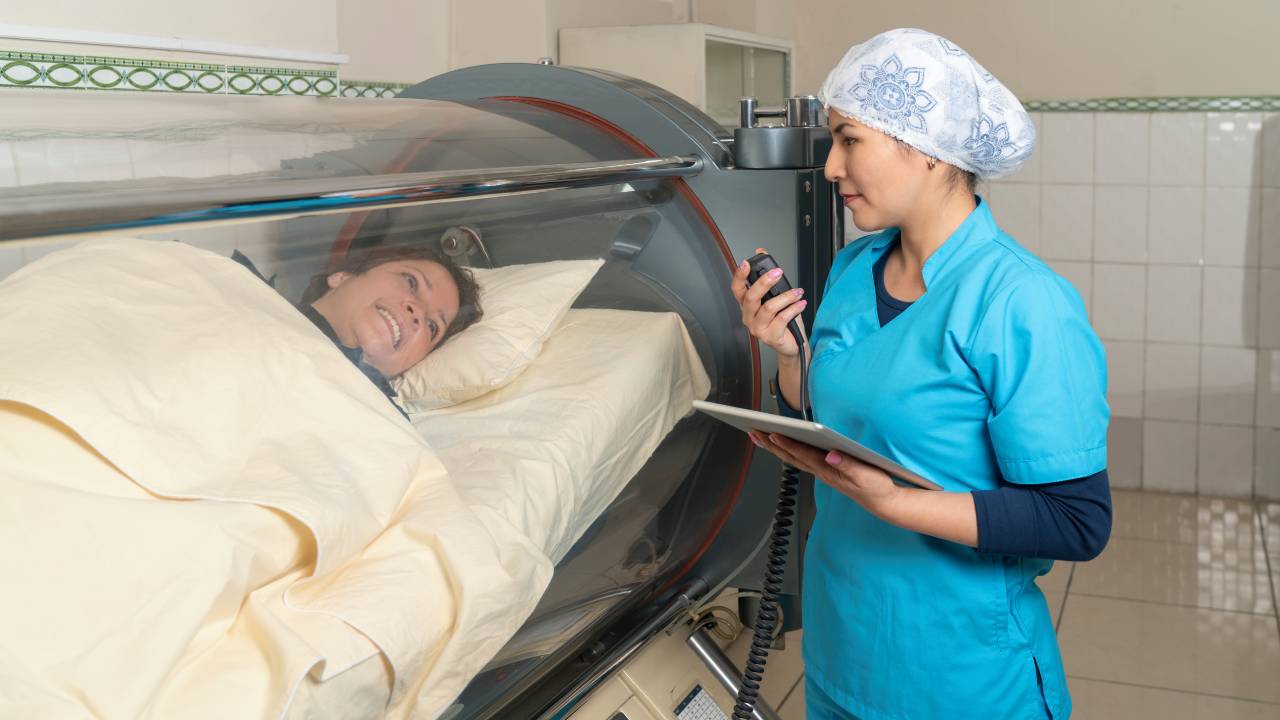
Hard-shell hyperbaric chambers are FDA-cleared medical devices capable of reaching and sustaining pressures at or above 2.0 ATA with 100% oxygen delivery. Soft-shell portable chambers, by contrast, typically reach only 1.3 ATA and cannot deliver 100% oxygen, operating instead with ambient air or low-concentration oxygen. The FDA classifies hard-shell monoplace and multiplace chambers as Class II or Class III medical devices depending on their design and intended use. Soft-shell units are not equivalent and are not used in any peer-reviewed neurological trial that produced meaningful brain health outcomes.
When evaluating a program, ask directly: What type of chamber do you use, and what is its maximum pressure capacity? Request the manufacturer name and FDA clearance number if you want certainty. A program treating TBI, cognitive decline, or neurological injury that cannot confirm it operates a hard-shell chamber at therapeutic pressure has already failed a basic qualification test.
How to Evaluate a Program’s Medical Team
A 2019 review in Undersea and Hyperbaric Medicine examined adverse event rates across HBOT facilities and found that the presence of on-site physician supervision and formal hyperbaric medicine training was the primary predictor of safe, uneventful treatment. The review identified oxygen toxicity, barotrauma, and contraindicated use in specific patient populations as the three most common preventable adverse events, all of which require clinical judgment to anticipate and manage.
For brain health applications, the medical team matters beyond safety. Neurological conditions require a physician who understands how HBOT interacts with the specific pathology being treated. Board certification through the Undersea and Hyperbaric Medical Society (UHMS) or the American Board of Preventive Medicine (ABPM) in hyperbaric medicine is the credential to look for. If the program is treating TBI or post-stroke patients, neurological specialization or documented experience with those populations should also be on the table.
The concrete action here is simple: request the supervising physician’s board certification number and verify it through the UHMS or ABPM directly. Programs with qualified physicians on staff will not hesitate to provide this.
Questions to Ask Before You Commit
Start with the protocol question: What is your standard protocol for my specific condition, and what pressure, session duration, and session count does it use? The answer should cite a published rationale or named clinical guideline. If the program gives you a number without a reason, that is a gap worth pressing on.
Follow with the measurement question: How do you establish baseline function, and what validated tools do you use to track progress? Acceptable answers name instruments such as the Montreal Cognitive Assessment (MoCA), the Rivermead Post-Concussion Symptoms Questionnaire, or neuropsychological batteries validated for your condition. “We monitor how you feel” is not a clinical answer.
Then ask about adverse event experience: What complications have you managed, and how? This question separates programs with genuine clinical volume from ones that have treated a handful of patients without meaningful challenge. A program that has never encountered an adverse event has either not treated enough patients or is not being candid.
Each of these questions has a research basis. The pressure and duration question is grounded in dose-response literature. The measurement question reflects the standard for evidence-based medicine: if you cannot measure it, you cannot demonstrate it worked. The adverse event question speaks to clinical competency under pressure, which is precisely what a neurological patient needs the team to have.
Conditions Where HBOT Shows the Strongest Brain Health Evidence
The evidence base for HBOT in neurological conditions has grown substantially over the past decade. The strongest indications for brain health applications are traumatic brain injury, PTSD, post-COVID neurological symptoms, stroke recovery, and early-stage neurodegenerative conditions. For patients exploring treatment options for neurological injury and recovery, understanding where the evidence is strongest helps narrow the program search.
Post-COVID neurological symptoms have drawn significant recent research attention. A 2022 randomized controlled trial published in Scientific Reports by Efrati and colleagues treated 73 long-COVID patients with HBOT at 2.0 ATA across 40 sessions. Participants showed significant improvements in cognitive function, energy, sleep quality, and brain perfusion on MRI, with effect sizes that exceeded what symptomatic management alone had produced.
For stroke recovery, the 2022 Frontiers in Aging Neuroscience trial cited earlier represents one of several studies documenting functional neurological improvement in patients well outside the acute treatment window. HBOT’s ability to revive chronically hypoxic but still-viable tissue, what researchers call the “ischemic penumbra,” is the mechanism that makes late-stage stroke recovery possible.
Traumatic Brain Injury and PTSD
A 2020 Department of Defense-funded trial examined HBOT in active-duty service members with persistent post-concussive symptoms and PTSD. The study, published in Medical Gas Research, measured outcomes using the PTSD Checklist for DSM-5 (PCL-5) and neuropsychological testing at baseline and post-treatment. Participants completing 40 sessions at 2.0 ATA showed clinically meaningful reductions in PCL-5 scores alongside measurable improvements in cognitive performance.
The overlap between TBI and PTSD in this population is not incidental. Both conditions involve neuroinflammation, dysregulated autonomic function, and compromised cerebral perfusion. HBOT addresses all three through the same core mechanism: restoring oxygen availability to hypoxic tissue, reducing inflammatory cytokine activity, and promoting new vascular formation.
When evaluating programs, ask specifically whether they maintain a TBI or PTSD treatment cohort with documented outcomes data. Programs with genuine experience in this area track their results systematically and can share aggregate data even if individual records are protected.
Neurological Recovery and Cognitive Decline
Dr. Shai Efrati’s lab at Tel Aviv University has produced the most extensive body of HBOT research specifically targeting neuroplasticity and aging. A 2020 study published in Aging demonstrated that HBOT could lengthen telomeres and reduce senescent cell burden in healthy aging adults, two cellular markers associated with brain aging and cognitive decline. More practically, it documented that neuroplasticity, the brain’s capacity to reorganize and form new connections, is not fixed in older adults and can be augmented with targeted intervention.
What this means in practice is that a program treating cognitive decline or neurodegenerative conditions should screen for baseline cognitive function using a validated instrument before treatment begins. The MoCA, the Repeatable Battery for the Assessment of Neuropsychological Status (RBANS), or a full neuropsychological evaluation provides the reference point against which progress is measured. If a program does not conduct baseline cognitive assessment, it has no mechanism for demonstrating that the treatment worked.
Understanding Treatment Protocols: Sessions, Frequency, and Duration
The 40-session protocol appears repeatedly across the most rigorous HBOT research in neurological conditions, and that is not a coincidence. A 2013 clinical study by Harch et al. established 40 sessions as a threshold for producing durable neurological change in TBI patients, rather than transient symptomatic improvement. The biological basis is angiogenesis: new blood vessel formation requires sustained signaling across multiple sessions to become structurally permanent.
Programs offering 10 or 20 sessions for neurological conditions may be responding to cost and scheduling constraints rather than clinical evidence. Abbreviated protocols may produce short-term symptomatic relief without the structural brain changes that make improvement lasting. Before committing to any program, ask directly: why does your session count match your claimed outcomes? If the program cannot tie its protocol to a published clinical rationale, treat that as a significant flag.
Intensive vs. Maintenance Programs
An intensive protocol, typically 40 sessions delivered five days per week over eight weeks, represents the evidence-backed approach for serious neurological conditions. The concentration of sessions matters. A 2017 review in Neurological Research found that spacing sessions too far apart reduces the cumulative signaling effect that drives angiogenesis and BDNF expression. The brain responds to a sustained oxygen signal, not an occasional one.
Maintenance HBOT, usually monthly or quarterly sessions after an initial intensive course, has a different purpose: preserving gains and supporting ongoing neural health rather than producing new structural change. For patients with progressive or chronic neurological conditions, both phases have a role. For patients in acute recovery, whether from TBI, stroke, or post-ibogaine neuroregeneration, the intensive protocol is the appropriate starting point.
Red Flags That Signal a Program Isn’t Worth Your Investment
The wellness HBOT market has expanded faster than its clinical evidence base. Industry data from the Global Wellness Institute estimates that the broader wellness technology sector, which includes hyperbaric oxygen, grew at double-digit rates between 2020 and 2024, with much of that growth driven by direct-to-consumer marketing rather than clinical uptake. The result is that patients with genuine neurological conditions are navigating a market populated heavily by programs built around optimization marketing rather than medical outcomes.
Specific red flags include: no physician on-site during sessions; equipment limited to soft-shell chambers below 1.5 ATA; no baseline assessment before treatment begins; outcome claims without citations to named studies; and pressure to purchase session packages before any clinical evaluation. Walk away from any program that cannot produce a written protocol, including pressure, session duration, and session count, before accepting payment.
Marketing Language That Signals Low Clinical Standards
Terms like “anti-aging,” “detox,” “optimization,” and “cellular wellness” in HBOT marketing are not inherently false, but they signal a wellness positioning that is categorically different from medical-grade neurological care. A program using this language without clinical context is targeting a different patient than someone with TBI, PTSD, or post-stroke cognitive impairment.
The practical test is straightforward. Take any specific outcome claim the program makes and search for the study behind it on PubMed. Use the program’s claimed pressure, session count, and condition. If the study does not exist or does not match the parameters the program uses, the claim is not evidence-based. Programs that anchor their marketing in named, published research, with specific sample sizes and measured outcomes, are operating at a different standard. The gap between the two is visible the moment you look.
The Role of Integrative Protocols: When HBOT Pairs With Other Therapies
A 2021 paper in Frontiers in Neuroscience examined the intersection of neuroplasticity-promoting interventions and found that HBOT creates a biological window during which concurrent therapies produce amplified effects. The proposed mechanism involves BDNF upregulation and increased cerebral blood flow following sessions, both of which prime neural tissue for adaptive change. Cognitive rehabilitation, sleep optimization, and structured physical activity delivered in this window produced greater functional gains than when delivered independently.
This research is directly relevant to patients combining HBOT with other neurological interventions. For the patient population considering how ibogaine and hyperbaric oxygen work together, the clinical logic is coherent: ibogaine drives acute neuroplasticity through serotonergic and NMDA receptor mechanisms, while HBOT supports the metabolic and vascular conditions that allow those changes to consolidate. Ask any program you evaluate how they structure adjunct therapies around oxygen sessions, specifically whether cognitive work, physical rehabilitation, or other interventions are timed relative to HBOT.
Cost, Insurance, and What You’re Actually Paying For
Per-session HBOT costs in the United States range from $150 to $450 for wellness-oriented programs and $250 to $600 or more for medical-grade programs with physician supervision and formal assessment protocols. Intensive packages of 40 sessions commonly run between $10,000 and $20,000 depending on facility, location, and included services. Insurance covers HBOT for a narrow list of FDA-approved indications, primarily wound healing and decompression sickness. Brain health applications, including TBI, PTSD, cognitive decline, and neurological recovery, fall outside approved coverage in nearly all cases, making out-of-pocket planning the reality for most patients.
What the cost difference between programs actually reflects is the clinical infrastructure behind the sessions: physician oversight, baseline and follow-up assessments, documented protocols, and the equipment capacity to deliver therapeutic pressures. A program charging at the lower end without those components is not a bargain; it is a different product.
Before committing, request a full itemized cost breakdown that includes physician fees, all assessment costs, and any off-site services. If the program cannot produce this before payment, that is itself a red flag.
Medical Tourism Programs: What Changes When You Travel for HBOT
Medical tourism for neurological HBOT has grown alongside the broader international treatment-seeking trend. Patients traveling for intensive protocols, whether standalone or as part of a broader neurological treatment program, face a distinct set of considerations that domestic patients do not. For those already considering HBOT as part of treatment in a clinical setting outside the US, regulatory oversight differs meaningfully across countries. Some international programs operate under rigorous accreditation frameworks; others operate with minimal oversight.
Continuity of care is the primary practical concern. An intensive HBOT course produces neurological changes that require follow-up assessment and, in some cases, ongoing management. Before traveling, confirm that the program has a documented hand-off protocol with your home physician, including written records of the protocol used, outcome measures taken, and any adverse events. Medical record transfer should be part of the conversation before you book, not an afterthought after you return.
How to Assess Outcomes and Know If the Program Is Working
A 2022 study in Scientific Reports on HBOT for long-COVID neurological symptoms used resting-state functional MRI, neuropsychological batteries, and symptom inventories to measure outcomes at baseline, mid-protocol, and six months post-treatment. The multi-point measurement approach matters because neurological recovery is not linear, and single post-treatment assessments can miss meaningful patterns in how function returns.
A program worth the investment gives you a written outcomes report that documents your baseline scores, changes at protocol midpoint, and post-treatment results across validated instruments. Subjective reports of feeling better are not outcomes data. For patients managing TBI recovery or other neurological conditions, the difference between subjective improvement and measured change on a validated neuropsychological tool is the difference between knowing the treatment worked and assuming it did. Programs that measure rigorously are confident in their results. Programs that avoid measurement have a reason for doing so.
What to Separate Clinical Programs From Marketing Operations
Start this week by identifying two or three programs that align with your specific neurological condition and send each one the same three questions from this guide: What is your protocol for my condition (pressure, session duration, session count, and published rationale)? What validated tools do you use for baseline and outcome assessment? Can you provide documentation of your supervising physician’s board certification?
The responses will sort the programs for you faster than any other method. A program with genuine clinical standards answers all three questions specifically, with citations and documentation. A marketing-first operation deflects, generalizes, or redirects to testimonials. For patients with serious neurological conditions, that distinction is exactly what choosing the right kind of program for your condition requires. The questions are the filter. Use them before you commit to anything.