
Medical Conditions Treatment Program: How Ibogaine Treatment Changes for Parkinson’s, MS, and Neurological Disease
You called expecting to schedule a consultation for your father’s Parkinson’s disease, and the intake coordinator asked about his most recent ECG, his magnesium level, his current medication list, and whether he can travel to Mexico for 14 to 21 days instead of a long weekend. You want to understand what a medical conditions treatment program actually is when the condition is Parkinson’s or multiple sclerosis rather than opioid addiction, and why the protocol, the dose, the timeline, and the medical team’s entire approach change with it.
Before we go further, two things have to be said plainly. Ibogaine is not FDA-approved for Parkinson’s, MS, stroke, chronic pain, or any neurological disease. In the United States it is a Schedule I substance and cannot be legally administered. Every ibogaine treatment described here happens only at the licensed medical clinic in Cozumel, Mexico. The Columbus office handles admissions, medical screening coordination, and aftercare, and it is not a place where treatment happens.
We are careful with the word “treat.” What follows is how we approach selected patients clinically, not a promise that ibogaine will produce any particular outcome for any individual.
What Is a Medical Conditions Treatment Program, and How Does It Differ from Addiction Treatment?
A medical conditions treatment program is a physician-directed protocol built for people managing chronic neurological or complex medical conditions, and it differs from addiction treatment in dose, length, and daily reassessment. It uses smaller doses given over 14 to 21 days with repeated medical and functional checks, not a single flood dose, because we are looking for any change in tremor, rigidity, gait, pain, mood, or cognition rather than an interruption of withdrawal, though outcomes vary widely and no specific change is guaranteed.
Here is why that matters. When someone comes to us for opioid or alcohol dependence and clears the medical and psychiatric screening, we are generally looking at the traditional flood-dose pathway, where the intense psychoactive experience can be part of what we are trying to accomplish. A neurological patient is a different situation entirely. If your father is 65 or 70, has lived with Parkinson’s for years, takes several medications, and may have autonomic dysfunction and blood-pressure swings, there is no reason to put him through the same experience as a medically healthy 30-year-old coming for a behavioral addiction.
For Parkinson’s specifically, we use a microdosing protocol dosed twice a day by milligrams per kilogram of body weight, paired with roughly one hour of psychotherapist support each day. One patient we worked with experienced what he described as a drop in anxiety and depression, moving from what he characterized as very heavy anxiety and depression to lighter levels. That is one person’s experience, not evidence that ibogaine repairs neurological damage or will produce similar results for others. Responsible medicine, the kind reflected in published clinical practice guidelines, requires us to separate what we have seen in individual patients from what is established as consistent across a population. The protocol follows the patient. The patient is never forced into the protocol.
Why Does Every Candidate Still Need Full Cardiac and Metabolic Screening?
Every candidate goes through the same cardiac and metabolic screening an addiction patient receives, because ibogaine carries real cardiac risk regardless of why a person is taking it. It can prolong the QT interval and, in rare cases, trigger dangerous arrhythmias, and older patients on multiple medications carry a higher baseline risk that has to be measured before any dose.
The screening is specific. We run a 12-lead ECG with QTc analysis, read with sex adjustment, and a QTc over 460 ms is a hard line where we will not proceed. We run a full electrolyte panel and correct it before dosing, targeting potassium between 4.2 and 4.8 mmol/L and magnesium of at least 2.0 mg/dL, because low potassium and low magnesium are known contributors to drug-induced arrhythmia risk. We run comprehensive bloodwork that includes a complete blood count, a metabolic panel, and liver and kidney function. We review every prescription, supplement, and substance for interactions and for QT-prolonging drugs.
We do not accept outside testing as the final word. Screening is repeated on-site, right before dosing, because a person’s physiology today matters more than a tracing from three weeks ago. Two cases show why. One patient arrived with pre-treatment records that made him look like a straightforward candidate, but his repeat ECG on the morning of his scheduled flood dose showed a new-onset arrhythmia that was not on his earlier tracing, so the physician paused treatment and referred him out. During another patient’s session, the physician noticed her QTc lengthening past the comfortable range, paused, gave IV magnesium, and corrected her electrolytes before her QTc improved. Neither of those decisions happens if you rely on paperwork alone. This proactive approach to screening is why safety will always come before filling a bed.
Why an Anesthesiologist Leads the Medical Team for Neurological and Complex Cases
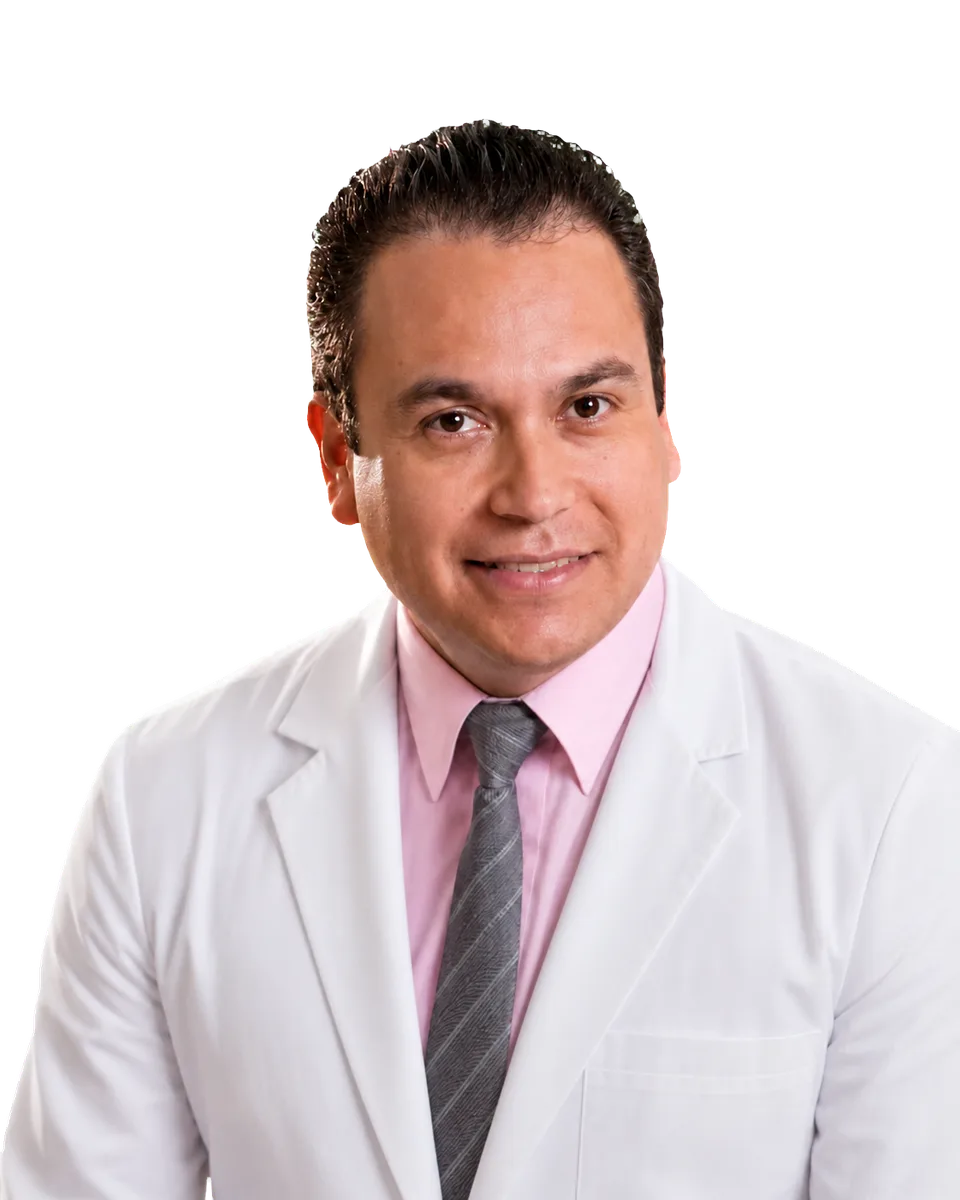
An anesthesiologist leads the medical team because managing a medically complex patient on ibogaine requires continuous physiologic control, not once-an-hour check-ins. Our Chief Medical Director, Dr. Eduardo Rubio Ruiz, is an anesthesiologist, and that background is directly relevant to this kind of medicine.
Anesthesiology is built around continuously managing physiology while medications alter a patient’s state. An anesthesiologist is trained to read cardiac rhythm, heart rate, blood pressure, oxygenation, and ventilation in real time, and to act the moment those numbers move. That is a different skill than facilitating a psychedelic experience. Dr. Rubio is also trained in airway management, vascular access, resuscitation, and emergency pharmacology, and he brings advanced trauma and emergency experience to the role. That is the kind of physician you want watching over a 70-year-old with autonomic dysfunction, not someone who has simply read about psychedelics.
The monitoring around him matters just as much. Treatment runs with continuous cardiac monitoring and 24/7 nursing care from ICU-trained nurses under physician oversight. Anybody can buy a cardiac monitor. The main question is who is watching it, whether they can recognize ventricular ectopy, bradycardia, or a rhythm starting to deteriorate, and whether a physician can intervene immediately. Because ibogaine is metabolized to noribogaine, which acts longer, we do not stop watching when the patient opens their eyes and says they feel fine. We monitor based on what their physiology is telling us, and for a medically complicated patient, that threshold for extra observation goes up, not down.
How Candidacy Is Decided by the Whole Medical Picture, Not the Diagnosis Name
Candidacy is decided by the whole person, not the label on the chart. Two people can carry the same diagnosis and be completely different candidates, which is why we cannot build one protocol around a disease name.
Dementia shows this clearly. Someone with mild cognitive impairment who still understands the treatment, can communicate with the team, and can give meaningful informed consent presents one question. Someone with advanced dementia who cannot reliably understand what is happening, describe symptoms, or consent presents a completely different ethical and medical situation. Calling both people “dementia patients” does not tell us enough to make a treatment decision. Informed consent capacity is not a formality here. It is a line we do not cross.
Stroke works the same way. When someone tells us they have had a stroke, we want to know what kind, when it happened, what caused it, what neurological deficits remain, and what their cardiovascular and cerebrovascular risk looks like today. A person with a remote, stable event is a very different candidate than someone with a recent stroke or unstable vascular disease. This is the honest version of individualized medicine, the version reflected in serious WHO clinical guidelines: the diagnosis tells us where to begin the conversation, and the person’s physiology decides whether we are allowed to continue. Sometimes the most important thing we do is recognize that this is someone’s mother or brother, and that the safest answer is no.
What Supportive Therapies Do You Use, and Why Are They Not Sold as Cures?
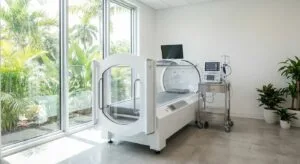
We use supportive therapies for exactly what they are meant to do, which is support the patient. That means IV fluids and electrolyte replacement when medically indicated, magnesium and nutritional support based on lab results, and wellness modalities such as hyperbaric oxygen, massage, physical therapy, and somatic practices matched to the individual’s needs and lifestyle.
These are physician-directed decisions, not a bundled menu handed to everyone who walks in. If someone is dehydrated, we correct hydration. If potassium or magnesium needs correcting, the medical team corrects it. If someone is deconditioned, physical therapy and movement become more prominent. If someone carries heavy physical tension from trauma, somatic work and massage may help. We also evaluate selected patients for regenerative-medicine consultations where it is legally and medically appropriate. None of that is automatic.
Here is the boundary we hold. We should not tell someone that an IV, a hyperbaric oxygen session, or any supportive modality will produce a specific outcome for their Parkinson’s disease, PTSD, or depression unless there is adequate evidence to support that statement. Two therapies happening under one roof does not mean combining them creates a proven treatment for a neurological disease. Each intervention has its own evidence, its own limits, and its own risks, and each one should stand on its own. We are not building the longest possible list of conditions ibogaine supposedly addresses. We would rather be honest about what supportive medicine is for than oversell it to a frightened family.
How Do You Track Outcomes, and Why Will the Medical Team Turn People Away?
We track functional outcomes over the long term using standardized neurological and psychiatric measures, and this ongoing follow-up continues well past a patient’s week at the clinic. We want to know how someone is doing at one month, three months, six months, and a year, not just whether they had a powerful experience on treatment day.
The questions we ask afterward are concrete. Did depression actually improve? Did anxiety change? Did sleep improve? Did gait, rigidity, tremor, or functional ability change in any way? Has their quality of life improved in any measurable way? Did any neurological improvement we thought we saw persist, or did it fade? We are equally willing to document when something does not work, and that honesty is the whole point. Measuring outcomes carefully is what separates real clinical care from simply selling experiences, and it is a standard held across serious standard treatment guidelines.
That same honesty is why a medical conditions treatment program declines people. If cardiac risk, medical complexity, or a lack of informed consent capacity makes treatment unsafe, the physician has the authority to say no, and no one on the business side overrides that decision. It does not matter whether the patient already traveled, how disappointed they are, or how strongly they believe ibogaine might help them. A smaller dose never becomes a workaround for a real contraindication. Sometimes the safest dose is zero. We would rather lose a patient than compromise our standards, and when we say no, we do not send someone out the door alone. The physician explains what was found in plain language and points to the right next step, whether that is cardiology, an echocardiogram, a medication review with their primary care doctor, or conventional healthcare. The question we are always trying to answer is simple: would we trust this with someone we love?
Frequently Asked Questions
Can ibogaine help with Parkinson’s disease or multiple sclerosis?
Ibogaine is being studied for neurological conditions, but there is no FDA approval and no way to predict who might experience any particular response. Candidacy depends on an individual medical assessment, not the diagnosis alone. What we can offer is careful patient selection, a personalized protocol, and honest outcome tracking, with no guarantee of any specific result.
Why does the medical conditions treatment program take 14 to 21 days instead of a weekend?
The neurological protocol uses smaller, repeated doses with daily reassessment to track any functional changes that may or may not occur, rather than a single flood dose. The longer timeline lets the medical team watch how a person responds between doses and hold or stop treatment if their physiology changes.
Is ibogaine safe for older adults with chronic medical conditions?
Ibogaine carries cardiac risk regardless of age or diagnosis. Every candidate goes through cardiac screening, electrolyte correction, and continuous monitoring, but that risk cannot be eliminated. For medically complex patients, the threshold for additional testing and observation is higher, and some are declined.
Where does treatment for medical conditions happen?
All ibogaine treatment happens at the licensed medical clinic in Cozumel, Mexico. The Columbus office handles admissions, screening coordination, and aftercare only. Treatment does not happen in Ohio or anywhere in the United States.
What happens if I am declined for treatment?
The medical team declines candidates when cardiac risk, medical complexity, or a lack of informed consent capacity makes treatment unsafe. The physician has full authority to decline regardless of business pressure, and we help identify the appropriate next step in care rather than simply turning someone away.
Will insurance cover ibogaine treatment for a medical condition?
No. Ibogaine is not FDA-approved for any medical condition, and U.S. insurance does not cover experimental treatment in Mexico. The Columbus admissions office can walk you through cost and travel questions directly.
If you are researching this for a parent, spouse, or someone else you love, call the Columbus admissions office to request a medical screening consultation and find out whether the medical conditions treatment program might be appropriate for your specific situation. The first honest thing we can do is tell you the truth about whether this is right for them, and that is where every safe decision starts.
Important legal and safety information: Ibogaine is not approved by the FDA and is not available as a legal medical treatment in the United States. Iboga Wellness Institute provides ibogaine treatment exclusively at its licensed medical clinic in Cozumel, Mexico, under medical supervision. US locations handle admissions, screening, and aftercare coordination only.
Take the Next Step Toward Neurological Support
If you’ve been living with Parkinson’s, MS, or another neurological condition and conventional healthcare hasn’t given you the relief you hoped for, you’re not alone in exploring alternative approaches. Our medical team at the Cozumel clinic has adapted ibogaine protocols specifically for neurological conditions, with careful attention to your unique health profile and quality of life. Reach out to our admissions office to discuss whether this treatment path makes sense for your situation.
Outcomes vary significantly from person to person, and no individual should expect any particular result. Any experience described here is one patient’s report and is not representative of what others will experience.