Expertise provided by James Collins, Owner
You typed “where can I find psychedelic assisted therapy for addiction in Columbus, Ohio” expecting to find a local clinic, and the results surprised you. Psilocybin is still federally illegal. One form of ketamine is FDA-approved for depression, and some providers prescribe ketamine off-label for addiction. Ibogaine, the option families most often hear about for opioid dependence, is a Schedule I substance, and legal medical treatment with it, including at Iboga Wellness Institute, requires travel to Mexico.
If you are searching for someone you love, that answer probably landed hard.
You have already watched treatment end in relapse, maybe more than once. Now the option that sounds different comes with a passport, a plane ticket, and a warning about the heart. You want to know what might help, and you want to know it without being sold to.
This page gives you a clear picture of what is legal in Columbus, what each option can and cannot do, and how Iboga Wellness Institute fits in. Iboga Wellness Institute is a US-based ibogaine program. Its Columbus, Ohio office handles admissions, medical screening, and aftercare coordination. All ibogaine treatment takes place at its licensed medical clinic in Cozumel, Mexico. You will also learn the limits of this care, because a decision this important deserves honesty first.
Where Can I Find Psychedelic Assisted Therapy for Addiction in Columbus, Ohio, and What Is Actually Legal?
In Columbus, ketamine is the only psychedelic-type medicine your loved one can legally get outside a research study, and doctors prescribe it off-label for addiction. Psilocybin is limited to clinical trials. Ibogaine has no legal treatment pathway anywhere in the United States, so medically supervised ibogaine care means travel to a licensed clinic in Mexico.
These three medicines often get grouped together online, but the law treats them very differently. Psilocybin is a Schedule I substance under federal law. The National Center for Complementary and Integrative Health explains that psilocybin is still being studied for mental health conditions and addiction and is not approved for general medical use. In Ohio, access comes only through research. Psilocybin-assisted psychotherapy for major depression is being studied in clinical research settings, but that is not the same as walking into a clinic for addiction care. As of this writing, Ohio has no state-regulated psilocybin program.
Ketamine sits in a different category. It is a Schedule III substance, and the FDA approved it decades ago as an anesthetic. A related nasal spray, esketamine, is FDA-approved for treatment-resistant depression. When a Columbus clinic offers ketamine for addiction, it is using the medicine off-label. That is legal when a physician prescribes it, but it is not a first-line treatment for opioid or alcohol use disorder.
Ibogaine is the hardest case. It is Schedule I, has no FDA approval for any use, and is still investigational. No clinic in Ohio or any other state can legally give it to your loved one. In Mexico, physicians can administer it under medical supervision at licensed clinics, which is why Iboga Wellness Institute provides treatment only in Cozumel.
| Medicine | Federal status | Legal access from Columbus | Does it ease opioid withdrawal? |
|---|---|---|---|
| Psilocybin | Schedule I, not FDA-approved | Clinical trials only | Not established |
| Ketamine | Schedule III, approved as an anesthetic; esketamine approved for depression | Off-label prescription at local clinics | No |
| Ibogaine | Schedule I, not FDA-approved, investigational | Licensed medical clinics in Mexico | Early studies and clinical reports suggest it may in some cases, but large controlled trials are lacking |
Can Ketamine Therapy in Columbus Help With Opioid Addiction?
Ketamine may help some people with depression and cravings, but it does not stop opioid withdrawal or break physical dependence. If your loved one is dependent on fentanyl, heroin, or prescription opioids, they would need a separate medical detox before ketamine could address the psychological side of addiction.
Ketamine works mainly by blocking the brain’s NMDA receptors, which play a role in how nerve cells communicate and adapt. That is part of why researchers study it for treatment-resistant depression. A review of psychedelics in the treatment of substance use disorders describes early research on ketamine for alcohol and cocaine use. The studies are small, though, and the evidence is still developing.
In Columbus, ketamine sessions usually take place in outpatient psychiatry or addiction medicine offices. A medical professional gives the dose by injection or IV, monitors the person for an hour or two, and then follows with talk therapy. For someone who is already off opioids and struggling with depression, trauma, or cravings, this can be a reasonable thing to explore with a psychiatrist. Ketamine also carries its own misuse potential, so a careful clinic will screen for that.
Now picture your son, physically dependent on fentanyl, booking a ketamine series. Within a day of his last use, his body would start going into withdrawal, with sweating, aching, vomiting, and sleepless nights. Ketamine would not stop that. He would still need detox, and detox is often the exact point where past treatment broke down.
That gap is why many families who start out searching for psychedelic therapy end up reading about ibogaine instead.
Is Ibogaine Safe Enough to Trust With Someone You Love?
Ibogaine carries real cardiac risk, and no responsible provider can promise it is completely safe. What may make care safer is strict medical screening before treatment, continuous heart monitoring during it, and a medical team willing to stop or say no.
Ibogaine is known for its potential to interrupt active opioid dependence and ease acute withdrawal in some individuals, which is the foundational work ketamine cannot do. The same review linked above discusses research on ibogaine for opioid use disorder. It also notes that ibogaine can affect the heart’s electrical activity. It can lengthen the QTc interval, which reflects how the heart recovers between beats, and that can trigger dangerous arrhythmias. A person may not feel an abnormal rhythm developing, so the heart has to be watched on a monitor.
At Iboga Wellness Institute, the medical team makes every acceptance decision, not admissions. Screening starts with a detailed medical history, a review of every medication and supplement, bloodwork, and a 12-lead ECG. The Iboga Wellness Institute physicians target a QTc below about 450 ms in men and 470 ms in women, and they hold a hard line at 460 ms, above which they will not proceed. They look for potassium between 4.2 and 4.8 mmol/L and magnesium of at least 2.0 mg/dL, and they correct reversible problems first. Liver and kidney function, blood counts, hydration, and nutrition all matter too. Depending on what the tests show, an echocardiogram or specialist review may be needed.
Approval before travel does not guarantee treatment. On arrival, the Iboga Wellness Institute team repeats the labs, a urine drug screen, and the ECG, then runs another ECG right before the ibogaine flood dose. During the dose, continuous cardiac telemetry with automated QT analysis runs the whole time. Nurses stay at the bedside, a physician checks in and is immediately available, IV access stays in place, and emergency medications are on hand. Monitoring continues for at least 24 to 72 hours afterward, because noribogaine, the compound the body makes from ibogaine, lasts a long time and heart effects can be delayed. The protocol also includes IV magnesium, drawing on a 2024 study published in Nature Medicine that paired ibogaine with magnesium to help protect the heart.
Here is what that looks like in practice, shared with identifying details removed:
-
The following are individual documented safety interventions from this facility’s own records. They illustrate the protocol in action but do not represent typical or expected outcomes:
-
One man arrived at Iboga Wellness Institute with records and an earlier ECG that made him look like a potential candidate. His repeat 12-lead ECG on the morning of his scheduled flood dose showed a new arrhythmia. The physician paused treatment before any ibogaine was given and referred him for further medical evaluation.
- During one woman’s session, telemetry showed her QTc lengthening beyond a safe range. The team paused dosing, gave IV magnesium, checked her potassium, and adjusted fluids. They continued only after her ECG stabilized.
- One patient secretly used a narcotic before treatment. The team stopped ibogaine and shifted to emergency medical management. They then told him and his family, honestly and with compassion, that treatment could not continue, and they kept supporting him through follow-up.
- One applicant with bipolar II disorder, a QTc in the danger range, and obesity was declined. The medical director called personally to explain exactly why.
Iboga Wellness Institute holds one standard here: “We would rather lose a patient than compromise our standards.” Every person on that monitor is someone’s son, daughter, spouse, parent, sibling, or best friend.
Safety will always come before filling a bed.
How Does a Columbus Family Get Ibogaine Treatment When It Happens in Mexico?
Your family starts with the Iboga Wellness Institute office in Columbus, which handles admissions, records review, physician evaluations, medication tapering plans, and preparation sessions weeks before travel. Treatment then happens at the licensed medical clinic in Cozumel, Mexico, and aftercare continues once your loved one is home.
Someone on the Iboga Wellness Institute team is from Central Ohio, so a call from Columbus feels personal. The team knows that sending someone you love out of the country for care is a big decision. You deserve clear answers about who will care for them, what the program involves, what it costs, and how medical eligibility gets decided. Iboga Wellness Institute does not accept insurance. Because the team believes healing shouldn’t wait for financial readiness, admissions will walk through costs openly with you on the phone, before you commit to anything.
Preparation is where much of the safety work happens. A US-based Iboga Wellness Institute physician holds telehealth consults to build a medication plan, and nobody is asked to stop a prescribed medication suddenly just to qualify. For someone taking Suboxone, the protocol requires a 30-day, physician-supervised detox and transition, coordinated with the doctor they already see. The physicians may prescribe a short-acting opioid to make that transition manageable. Finishing those 30 days does not automatically mean someone is ready, because the physician still has to confirm medical readiness. For alcohol, detox and medical stabilization come first, and liver health decides whether treatment can move forward.
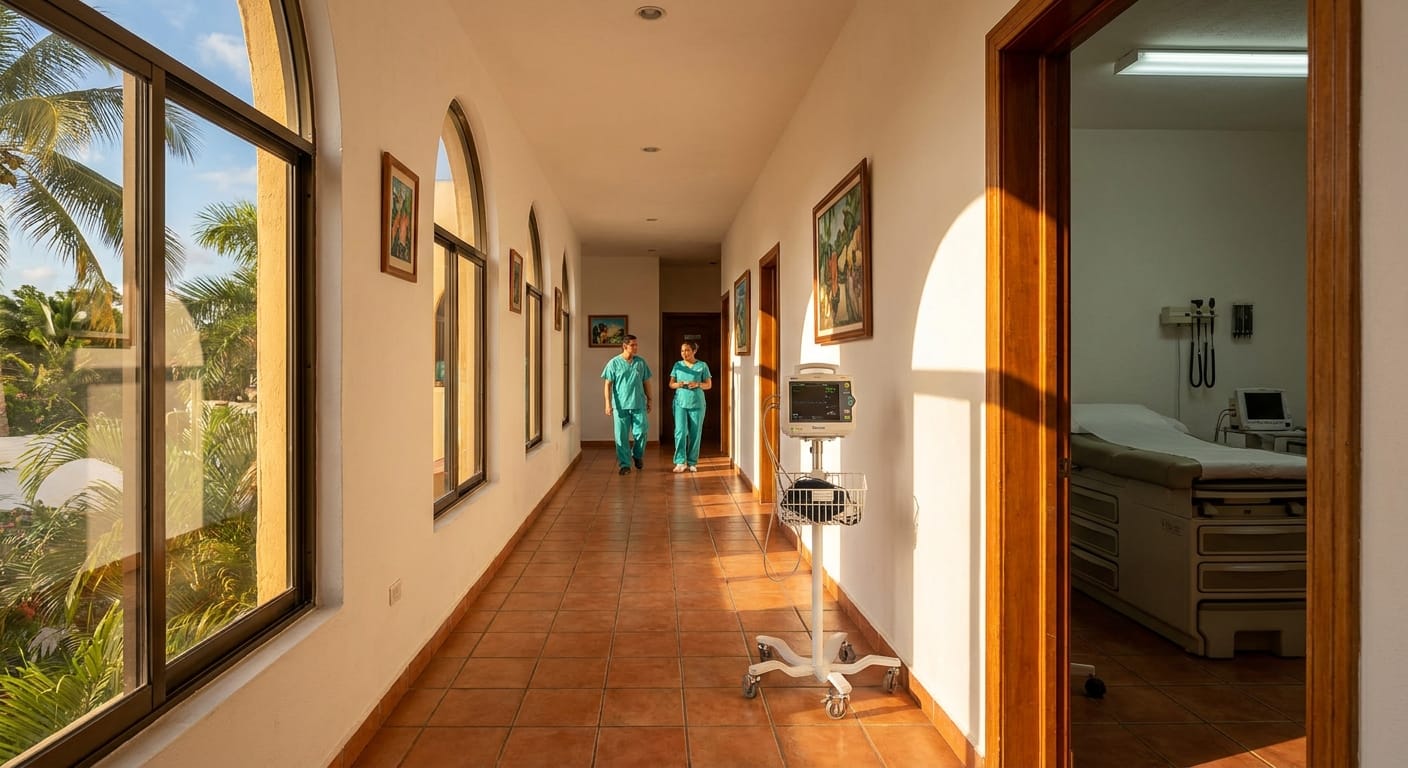
Once cleared, your loved one flies to Cozumel, where airport transportation is included. The Iboga Wellness Institute clinic operates within the Mexican healthcare system and has a relationship with COFEPRIS, Mexico’s federal health regulator. Care is physician-led, with 24/7 nursing and a 4:1 staff-to-patient ratio. You may also want to know how a hospital transfer would be handled in an emergency. That is a fair question for any program, and you should get a clear answer before your loved one travels.
With your loved one’s permission, the Iboga Wellness Institute team will explain the care plan to you and how communication will work while they are away. The hope and the worry can arrive at the same time, and you do not have to carry either one alone.
Ketamine Here or Ibogaine in Mexico: Which One Fits the Person You Love?
The right choice depends on three things: whether your loved one is physically dependent on opioids right now, what their heart and psychiatric history shows, and what they need help with most. Honest medical screening should guide this decision, not desperation or marketing.
If your loved one is physically dependent on fentanyl, heroin, or prescription pain pills, ibogaine’s potential to interrupt dependence and ease withdrawal in some people is the reason families consider it. To be a candidate, they must pass cardiac screening. Structural heart disease, uncontrolled arrhythmias, or a QTc over 460 ms would rule them out. So would active psychosis or schizophrenia, bipolar I in an active episode, acute mania, significant liver or kidney disease, pregnancy, or uncontrolled medical illness.
If your loved one is already off opioids but still struggling with depression, trauma, or cravings, ketamine therapy in Columbus may be worth discussing with a psychiatrist, as long as they meet that clinic’s psychiatric criteria. Just remember that ketamine will not help if physical dependence returns.
If your loved one is in an acute psychiatric crisis or having suicidal thoughts, neither option is right. Ibogaine is never offered for emergencies. Call or text 988, or reach the SAMHSA National Helpline at 1-800-662-4357, and get them immediate care.
Whatever you choose, ask every provider the same questions:
- Who makes the final medical decision, and what findings would stop treatment?
- Is the heart monitored continuously, and for how long afterward?
- What happens if something goes wrong, including a hospital transfer?
- What support continues after my loved one comes home?
A good program answers all four without hesitating. Iboga Wellness Institute asks itself a fifth question about everything it does: “Would we trust this with someone we love?”
Why Does the Real Work Start After the Medicine Wears Off?
**
Before your loved one ever travels, they complete three preparation sessions with an Iboga Wellness Institute integration specialist. During the program, they have daily psychotherapy, journaling, and a personalized aftercare plan. Supportive care such as hyperbaric oxygen therapy, massage, breathwork, and meditation is also available. The multidisciplinary integration team includes mental health professionals such as Lindsey White, author of The Crown and the Root.
Coming home to Columbus means coming home to the same relationships, routines, and responsibilities. Sometimes it also means the same people and places tied to past use. So before discharge, the Iboga Wellness Institute team works through practical questions with your loved one. Who will support them? How will they handle pain, stress, and cravings? What care needs to continue? The team also talks about overdose risk, because tolerance drops after detox and returning to a previous amount can be fatal. Keep naloxone in your home.
Once home, your loved one meets weekly for about an hour of integration work, and Iboga Wellness Institute recommends at least three months of it. Standardized questionnaires track mood, anxiety, sleep, overall health, and recovery behaviors at one week, one month, three months, six months, and one year. Measuring change this way shows whether the work is reaching daily life.
The medicine may open the door, but lasting recovery comes from the choices a person makes once they walk through it. Iboga Wellness Institute is not looking for a miracle. The goal is a life your loved one no longer feels the need to escape from.
What Do Columbus Families Ask Before They Call?
When families ask where they can find psychedelic assisted therapy for addiction in Columbus, Ohio, the same six questions come up: what is legal, what ketamine can do, why Mexico, how serious the heart risk is, how the Columbus office helps, and who gets turned away. Here are short, direct answers to each one.
Is psilocybin-assisted therapy legal in Columbus, Ohio?
Psilocybin is a Schedule I substance under federal law and is not FDA-approved. In Columbus, it is only available through approved clinical research studies. You cannot legally receive psilocybin therapy for addiction at a local clinic, and Ohio does not currently have a state-regulated psilocybin program like some other states.
Can ketamine treat opioid addiction?
Ketamine is FDA-approved as an anesthetic, and a related nasal spray is approved for depression. Some Ohio physicians prescribe ketamine off-label for addiction. It does not stop opioid withdrawal or break physical dependence, though, so a person dependent on opioids would need a separate medical detox first.
Why does ibogaine treatment require travel to Mexico?
Ibogaine is a Schedule I substance in the United States, with no FDA approval and no legal treatment pathway. In Mexico, physicians can legally administer it under medical supervision. That is why Iboga Wellness Institute provides all ibogaine treatment at its licensed medical clinic in Cozumel, while its Columbus office coordinates admissions, screening, and aftercare.
What cardiac risks does ibogaine carry?
Ibogaine can lengthen the QTc interval and cause dangerous arrhythmias. At Iboga Wellness Institute, safety starts with a 12-lead ECG, electrolyte correction, and a repeat ECG right before dosing. It continues with telemetry throughout the flood dose and monitoring for at least 24 to 72 hours afterward. These steps may lower the risk, but they cannot remove it.
How does the Columbus office support ibogaine treatment that happens in Mexico?
The Iboga Wellness Institute Columbus office handles admissions, medical records review, physician evaluations, medication tapering plans, and preparation sessions before travel. After your loved one returns home, it coordinates weekly integration sessions and check-ins at one week, one month, three months, six months, and one year, so your family has continuity from the first call forward.
Who should not consider ibogaine treatment?
People with structural heart disease, uncontrolled arrhythmias, a QTc over 460 ms, active psychosis or schizophrenia, acute mania or bipolar I in an active episode, significant liver or kidney disease, or pregnancy are not candidates. Certain medications also rule someone out. The Iboga Wellness Institute medical team makes these decisions, not admissions.
Your First Call Is a Conversation, Not a Commitment
Calling Iboga Wellness Institute starts with an honest conversation about your loved one, not a sales pitch. The team listens first, explains the risks plainly, and tells you if ibogaine is not the right fit.
The first questions are simple. What is your loved one struggling with? What treatments have they tried? What medications do they take? What are you both hoping might change? Many families who search for psychedelic therapy know very little about ibogaine, and that is fine. The Iboga Wellness Institute team takes time to explain the approach without promising any particular outcome. Sometimes the answer is “not yet,” because more preparation or testing is needed. Sometimes a different kind of care makes more sense. Either way, you will understand why.
To get the most from that call, gather three things first: a full list of your loved one’s medications and doses, including Suboxone or methadone; any recent ECG or bloodwork; and a short history of past treatment and what happened afterward. Those details let the physicians tell you much sooner whether this path is even possible.
When you are ready, contact the Iboga Wellness Institute Columbus admissions office through theibogainstitute.org to request a confidential medical screening. You will learn whether ibogaine treatment in Mexico may fit your loved one’s substance use history, heart health, and goals, or whether another option, such as local ketamine therapy after detox, may serve them better.
If past programs failed at the moment withdrawal began, that is the first thing to tell the team, because it is often the clearest sign of which path makes sense next.
FDA Off-Label Use Disclosure: Spravato (esketamine) is FDA-approved for treatment-resistant depression. Ketamine for other uses is prescribed off-label (outside its original FDA approval) based on clinical judgment. Talk with your medical team to understand whether this treatment is right for you.
Important legal and safety information: Ibogaine is not approved by the FDA and is not available as a legal medical treatment in the United States. Iboga Wellness Institute provides ibogaine treatment exclusively at its licensed medical clinic in Cozumel, Mexico, under medical supervision. US locations handle admissions, screening, and aftercare coordination only.
Ready to Learn More About Medical Ibogaine Treatment
If you’ve been searching for psychedelic assisted therapy options in Columbus and feel frustrated by limited local availability, you’re not alone. Iboga Wellness Institute works with individuals throughout Ohio who are exploring ibogaine treatment as part of their recovery journey. Our team can answer your questions about the treatment process at our licensed medical clinic in Cozumel, Mexico, eligibility requirements, and what to expect before, during, and after care.
A psychedelic experience can open a window, but lasting change depends on what a person does after treatment. That is why Iboga Wellness Institute builds integration in before, during, and for months after care. Individual responses to psychedelic-assisted therapies vary; outcomes discussed reflect specific cases and are not typical or guaranteed.