Fentanyl Detox: Surviving the Hardest Withdrawal With Medical Supervision
You stopped fentanyl for 18 hours once, and the bone-deep aching, the panic, and that crawling-out-of-your-skin sensation sent you back to using before you even hit the 24-hour mark. Now you are researching fentanyl detox, trying to figure out whether there is a version of this that does not require you to suffer alone in a locked room until your body finally decides to cooperate.
There is. It is not painless, and anyone who promises you painless is not telling you the truth. But there is a version where a nurse is at your side, where your blood pressure and heart rhythm are watched in real time, where fluids and medication may help address some of the physical symptoms, and where you are not left to white-knuckle it by yourself. This article walks you through what makes fentanyl so hard to come off of, what medical supervision actually does hour by hour, and why the difference matters more with this drug than with almost any other opioid.
What Makes Fentanyl Detox Different From Other Opioid Withdrawals
Fentanyl detox is harder to manage than heroin or pill withdrawal because fentanyl is fat-soluble. It stores itself in your fatty tissue and then leaks back into your bloodstream slowly and unpredictably, so the “washout” takes longer and does not follow a clean schedule. That single fact changes almost everything about how a safe program handles you.
This is why some clinics will not simply have you stop cold. When fentanyl is stored in the body and releasing on its own timeline, jumping straight into another intervention on top of it can be riskier. Instead, long-acting opioids like fentanyl are sometimes transitioned down to shorter-acting opioids first, under a physician’s direct management, before any further step is even on the table. That transition is not guesswork. A United States-based physician may run a telehealth consultation with you before you ever travel, review your dose, how long you have been using, and your full history, and then build a tapering schedule made for your body rather than a template.
Here is what that means for you in plain terms. If a program tells you fentanyl is “too hard” to detox from safely, what they may be admitting is that they are not equipped to manage the fat-solubility problem and the medication transition it can require. Fentanyl-specific timelines are assessed one person at a time, because the drug behaves differently in someone using long-term at a high dose than it does in someone who started recently. The physiology informs the plan, not the calendar.
What Medical Supervision Actually Means During Fentanyl Withdrawal
Medical supervision during fentanyl withdrawal means 24-hour nursing care, continuous monitoring, IV fluids and electrolyte replacement, medication management to address your symptoms, and physician oversight that watches for complications like dehydration, electrolyte imbalances, and cardiac issues. It is the difference between suffering through danger and being supported through it safely.
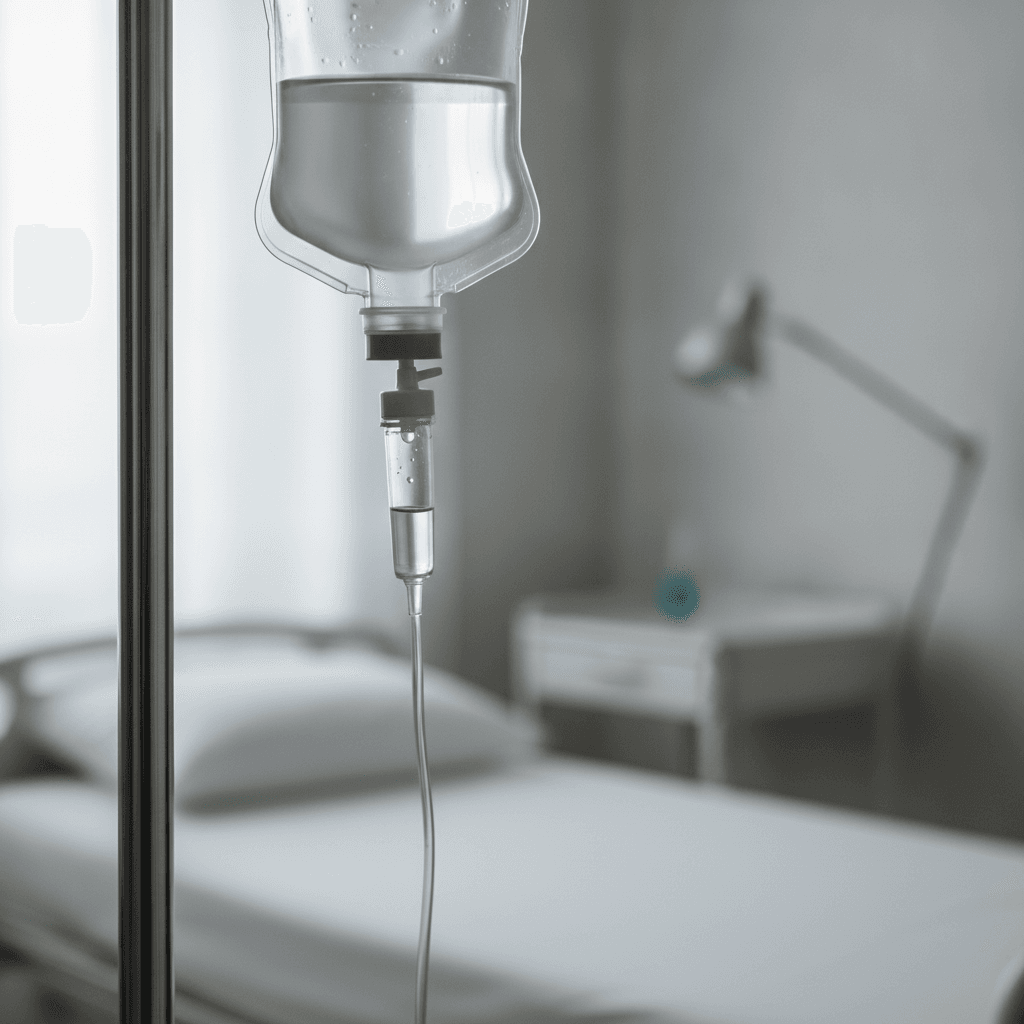
Break that down into what it looks like on the ground. When withdrawal makes you vomit for hours and you cannot keep water down, an IV may replace the fluid and the electrolytes you are losing before dehydration becomes a real medical threat. When your blood pressure climbs, someone sees the number and can act on it. When the symptoms peak and every cell in your body is screaming, medication may be adjusted to help keep you inside a safer range instead of leaving you to endure whatever your nervous system throws at you. This is care built around intervention, not around the fantasy that discomfort can be erased.
The people running that care matter as much as the equipment. At Iboga Wellness Institute, the Chief Medical Director is an anesthesiologist, a specialty built entirely around watching vital signs and reacting to them in real time. The medical team also includes a physician with more than two decades in addiction medicine and psychiatry, and the nursing staff includes ICU-trained nurses, the people you want at your bedside when something needs a fast, calm response. This is the standard the team holds, because the question they ask about every protocol is simple: would we trust this with someone we love?
Why Cardiac Screening and Electrolyte Optimization Happen Before Fentanyl Detox Starts
Cardiac screening and electrolyte correction happen first because fentanyl withdrawal itself stresses your cardiovascular system, and some programs will not move forward without knowing your heart can handle what is coming. Before anything that carries cardiac risk, a 12-lead ECG with QTc analysis looks for structural heart disease, uncontrolled arrhythmias, and a dangerously prolonged QT interval.
Those numbers are not vague. A QTc reading above 460 milliseconds may be a point where the team will not proceed, and it is read with sex adjustment and re-checked on a repeat ECG immediately before any further step. On the electrolyte side, potassium may be brought into a range of 4.2 to 4.8 mmol/L and magnesium to at least 2.0 mg/dL, supported with IV magnesium. This matters because low potassium and magnesium can make the heart more electrically unstable exactly when withdrawal is already taxing it, and correcting them is one way to address a rhythm problem before it starts.
For you, this is the honest answer to whether you are being put at risk with something experimental. Safety comes before filling a bed. Screening exists to find the people for whom this may not be safe and to tell them so, not to wave everyone through. If your heart shows something serious, you deserve to hear that plainly. The ASAM clinical guidelines for opioid use disorder reflect this same principle: medical assessment and monitoring come before treatment, not after something goes wrong.
The Fentanyl Withdrawal Timeline and Why It Varies Person to Person
Acute fentanyl withdrawal generally peaks somewhere between 24 and 72 hours after the last dose in many cases, but the physical and psychological aftermath can stretch on for weeks. Standard opioid withdrawal patterns are described in the NCBI clinical withdrawal management guidance, and fentanyl often runs longer and less predictably than shorter-acting opioids because of the fat-storage issue.
That is why fixed schedules may not work for everyone. Medical stabilization means treating the person in front of you, not the calendar. Your timeline depends on your dose, how long you have been using, your individual metabolism, and whether you were using pharmaceutical fentanyl or street fentanyl cut with analogs and other substances. Street supply is rarely one clean drug, and the presence of other compounds changes how withdrawal unfolds and what has to be managed. Two people who used for the same number of months can move through this at completely different speeds.
Picture the difference this makes. On a calendar-driven plan, you might be pushed to a milestone on day three whether your body was ready or not. On a physiology-driven plan, the peak may be met with more support, and the long tail of low energy, poor sleep, anxiety, and cravings that follows is treated as the real work it is, rather than an afterthought once the acute phase passes. The medicine may open the door, but the days and weeks after it are where the actual recovery lives.
What Medical Detox Provides That White-Knuckling at Home Cannot
Medically supervised detox gives you what white-knuckling at home cannot: real-time intervention when your blood pressure spikes, when dehydration becomes dangerous, when you cannot keep food or fluids down, and when the psychological weight of withdrawal makes continuing feel impossible. At home, there is no one to catch those moments, and those are often the moments that send people back to using or into a hospital.
The at-home risk is not a scare tactic. The World Health Organization guidance on drug withdrawal management notes that opioid withdrawal, while often survivable, can produce complications like severe fluid loss and electrolyte disturbance that may need a clinical response. Vomiting and diarrhea for days on end are not just miserable, they can become a route to genuine cardiac and metabolic danger when no one is replacing what your body is losing.
But the part that addresses your real fear is this: you would not be alone. Around-the-clock nursing means someone is always awake and watching. Beyond the physical care, there is roughly an hour of psychotherapy each day, because the mental grind of withdrawal is where many people struggle, not just the body. The integration side is led by licensed clinical psychologists, LMFTs, LCSWs, and certified addiction professionals, several with psychedelic-assisted therapy training, and the integration program itself is led by a published author and clinician. The point of all of it is that when the moment comes where you would normally quit and use, there is a person there instead of an empty room.
Why Post-Detox Integration and Aftercare Matter for the First 90 Days
Getting through the acute peak is only the first step, and treating it like the finish line is one reason people may relapse. Fentanyl withdrawal may peak in the first one to three days, but the physical and psychological aftermath can last weeks, which is why integration support, a personalized aftercare plan, and long-term follow-up may matter for whether you stay stable or return to use inside the first 90 days.
The early months can be fragile because your brain and body are still recalibrating long after the sharpest symptoms fade. Sleep is off. Moods swing. Cravings arrive out of nowhere. Without a plan and people to lean on, that stretch is where good intentions sometimes collapse. That is why the work does not end at discharge in some programs. There may be post-treatment integration sessions, a weekly post-integration program, and medical follow-up after treatment, all built to support you through the window where some relapses happen.
This is also where honesty matters more than marketing. Lasting recovery comes from the choices you make once you walk through the door the medicine opens, not from the door itself. The team tracks its own outcomes rather than inflating them, and stays engaged with clients through those first critical weeks, because engagement in the weeks after treatment is one signal tracked among those who maintain their recovery. You are not being sold a miracle. You are being offered a path with support attached to it.
How Iboga Wellness Institute Approaches Fentanyl Detox and Treatment
If you are searching from Ohio, here is the exact structure. The Columbus office is the corporate and admissions location. It handles admissions screening, the pre-treatment telehealth physician consults that may build your individualized tapering schedule, and your aftercare coordination. All medically supervised detox and treatment happens at the licensed medical clinic in Cozumel, Mexico, where continuous cardiac monitoring, 24/7 nursing care, and physician oversight are legal and fully available.
That location matters legally and clinically. Ibogaine is a Schedule I substance in the United States and is not FDA-approved, so it cannot be administered in Ohio or any other US state. The Cozumel clinic operates within the Mexican healthcare system and maintains a relationship with COFEPRIS, the country’s health regulatory authority, and its protocols draw on current research, including recent work on magnesium co-administration alongside ibogaine. Your fentanyl transition to shorter-acting opioids may be completed under physician management first, and during any session continuous cardiac telemetry with automated QT analysis runs the entire time, with monitoring continuing for 24 to 72 hours afterward because noribogaine’s long half-life can delay cardiac effects. Federal treatment standards for opioid programs, including careful medication management and monitoring, are laid out in SAMHSA’s federal guidelines, and the same seriousness drives this team’s protocols.
What you will not find here is a promise that this is easy. What you will find is a program that screens people carefully, that may screen people out when the risk is too high, and that treats your fentanyl case according to your physiology instead of a fixed protocol. If you are in crisis right now while you weigh your options, the free and confidential SAMHSA National Helpline can connect you with immediate support today.
Common Questions About Fentanyl Detox
How long does fentanyl withdrawal last?
Acute withdrawal usually peaks between 24 and 72 hours after the last dose in many cases. Physical and psychological symptoms, including poor sleep, anxiety, low energy, and cravings, can persist for weeks. The length depends on your dose, how long you used, your metabolism, and whether you used pharmaceutical or street fentanyl.
Can you detox from fentanyl at home safely?
At-home detox carries serious risks, including dangerous dehydration from prolonged vomiting and diarrhea, electrolyte imbalances, and cardiac complications that may need real-time intervention. Without monitoring, the moments that turn dangerous can go unnoticed. Medically supervised detox is recommended because someone is there to respond when your body needs help.
Why do some detox programs say they cannot treat fentanyl cases?
Fentanyl is fat-soluble and releases back into the bloodstream unpredictably, which can require physician-directed medication transitions and continuous cardiac monitoring. Many detox-only programs are not equipped for that level of oversight, so they turn fentanyl cases away rather than manage a risk they cannot handle safely.
What does cardiac monitoring during fentanyl detox actually catch?
Continuous telemetry watches for dangerous arrhythmias, QT interval prolongation, blood pressure changes, and electrolyte-driven cardiac events before they become emergencies. A 12-lead ECG with QTc analysis may be done first, with a QTc above 460 ms as a potential stopping point, and monitoring may continue for 24 to 72 hours after any session.
Does insurance cover fentanyl detox at Iboga Wellness Institute?
Insurance does not typically cover ibogaine treatment, and Iboga Wellness Institute does not currently accept insurance for it. The admissions team can discuss payment plans, financing options, and what documentation you can submit for possible out-of-network reimbursement, so you know the real costs before you commit.
How does Iboga Wellness Institute handle fentanyl differently than other opioids?
A United States-based physician may run telehealth consults to build an individualized tapering schedule that transitions you from fentanyl to shorter-acting opioids before any further treatment begins. Timelines are assessed by dose, duration, and history rather than a fixed protocol, because fentanyl’s fat-storage makes each case different.
Call the Columbus admissions office to schedule a confidential pre-treatment telehealth consultation with a physician who will review your fentanyl use history and discuss an individualized tapering and treatment plan for your body, not a template. It is one conversation, it costs you nothing to ask, and it will tell you honestly whether this may be a safe fit for you.
Important legal and safety information: Ibogaine is not approved by the FDA and is not available as a legal medical treatment in the United States. Iboga Wellness Institute provides ibogaine treatment exclusively at its licensed medical clinic in Cozumel, Mexico, under medical supervision. US locations handle admissions, screening, and aftercare coordination only.
Medical Support Through Fentanyl Withdrawal
Fentanyl withdrawal doesn’t have to be faced alone. If you’re weighing the fear of detox against the risk of staying dependent, our medical team at our licensed clinic in Cozumel provides monitored ibogaine treatment designed to interrupt withdrawal and reduce cravings during the detox process. Reach out to our admissions office to discuss your situation and learn whether our approach might be right for you.
Individual responses to treatment vary widely. No treatment outcome is guaranteed, and ibogaine is not approved by the US Food and Drug Administration.