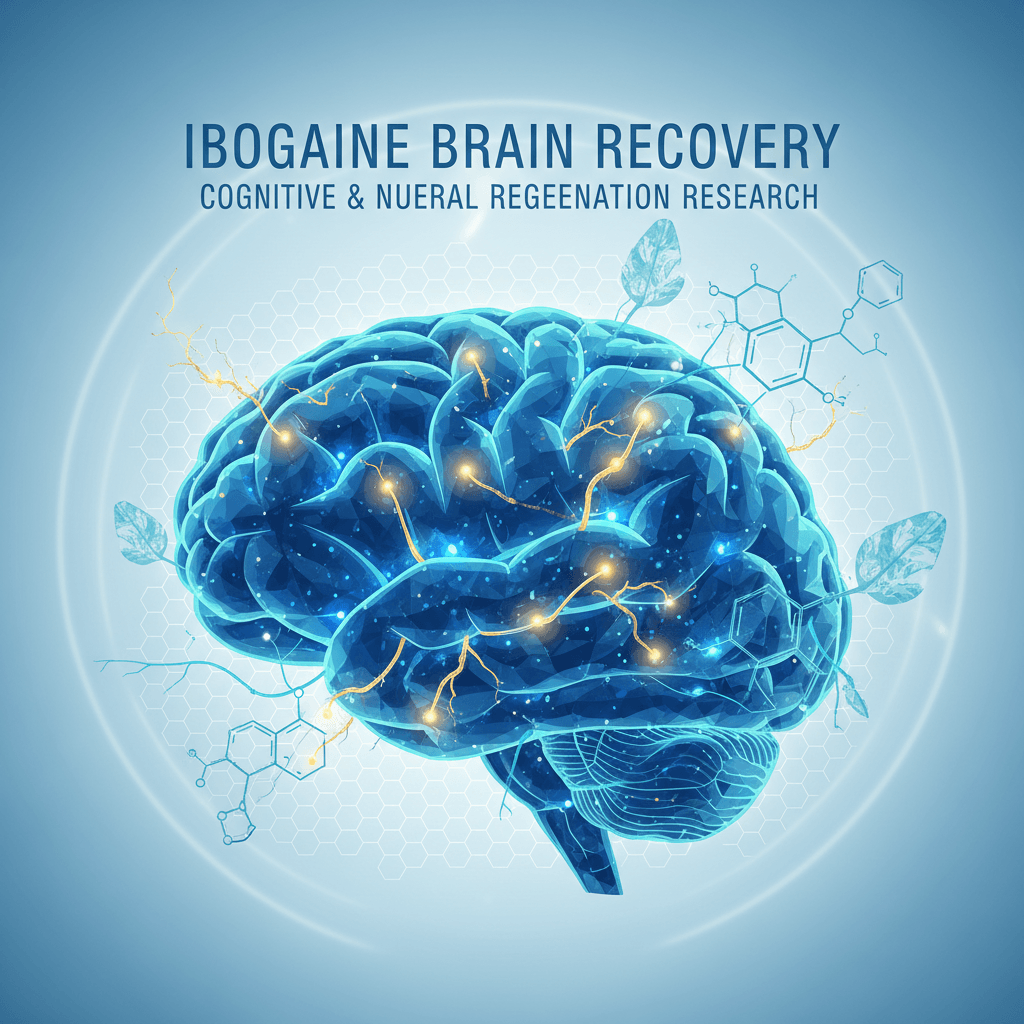
Ibogaine brain recovery treatment is emerging as a possible way to support brain healing, especially if you are dealing with traumatic brain injury (TBI), persistent PTSD, or the neurological effects of long-term substance use. You might hear terms like “neuroreset,” “neuroplasticity boost,” or “cognitive reboot” associated with ibogaine. These ideas all center on one core question: can a single, carefully managed psychedelic experience help your brain function more effectively again?
You are not going to find simple answers yet. Ibogaine is still experimental, carries real medical risks, and is not approved by the FDA in the United States. At the same time, emerging data suggests that ibogaine brain recovery treatment could have significant effects on neuroplasticity, cognitive performance, and emotional regulation when it is delivered in a structured, medically supervised protocol.
This article helps you understand what is actually known so far, where the evidence is strongest, and what questions remain open.
Understanding ibogaine as a brain-active medicine
Ibogaine is a psychoactive alkaloid that comes from the root bark of the African shrub Tabernanthe iboga. Traditionally it has been used in spiritual and initiation ceremonies. In the last several decades, you see it explored as a potential intervention for addiction, treatment-resistant mental health conditions, and now, for neurological recovery.
You will often see ibogaine discussed alongside concepts like ibogaine brain reset therapy or ibogaine neurological treatment. These phrases describe the same broad idea. A single, intensive treatment may interrupt rigid patterns in your brain, both at the level of neurochemistry and at the level of thought and behavior.
From a neuroscience perspective, ibogaine interacts with multiple systems at once. It affects:
- Serotonin receptors
- NMDA (glutamate) receptors
- Opioid receptors
- Dopamine transporters
This multi-target profile is likely part of why it can feel like a “reset” for deeply embedded patterns. It is also why you need careful medical screening and monitoring if you ever pursue ibogaine brain recovery treatment.
How ibogaine may promote neuroplasticity
If you are interested in brain optimization and performance, neuroplasticity is probably already on your radar. Neuroplasticity is your brain’s ability to reorganize itself, create new connections, and update old patterns.
Current evidence suggests that ibogaine, especially in combination with magnesium in medical protocols, may enhance this plasticity window in a few key ways.
Modulating brain waves and network dynamics
In recent work with Special Operations veterans living with TBI, PTSD, and mood symptoms, researchers found that ibogaine treatment with magnesium correlated with changes in brain activity patterns that may support plasticity.
Veterans who showed improvements in executive function also showed increased theta brain wave activity, which is associated with learning and neuroplasticity. At the same time, reductions in cortical complexity, a measure of how chaotic or disorganized brain activity is, were linked with reductions in PTSD symptoms [1].
For you, this suggests that ibogaine might temporarily shift your brain into a state that supports learning new emotional and cognitive patterns, while calming down unhelpful hyperarousal or chaotic signaling.
Opening a “window” for psychological and behavioral change
Neuroplasticity is not just about cells and receptors. It is about how you use that plasticity with new experiences and behaviors.
In the magnesium-ibogaine protocol tested in Special Operations veterans, participants showed:
- Significant reductions in PTSD, depression, and anxiety symptoms at one month
- Significant improvements in day to day functioning
- Better cognitive processing speed, executive function, and memory [2]
These changes did not happen in isolation. Ibogaine sessions were paired with therapeutic support and integration. For you, this means that if ibogaine does boost neuroplasticity, it will likely work best when you combine it with structured therapy, behavior change, and lifestyle design that align with your goals.
Resources like ibogaine neuroplasticity therapy and ibogaine neuroplasticity treatment explore this concept in depth.
What brain recovery really means in this context
When you think about ibogaine brain recovery treatment, you might imagine “fixing” the brain in a single session. The reality is more nuanced.
In the most carefully studied magnesium-ibogaine protocol, researchers worked with 30 male Special Operations veterans who had predominantly mild TBI along with severe psychiatric symptoms. After a single, closely monitored ibogaine treatment:
- Functional disability scores dropped from mild or moderate disability into the “no disability” range one month later
- PTSD symptoms decreased by about 88 percent, depression by 87 percent, and anxiety by 81 percent on clinician administered scales [1]
- Cognitive performance improved in multiple domains, including processing speed, executive function, and memory, with no observed declines [2]
You can think of “recovery” here in three layers:
-
Symptom relief
Less PTSD, anxiety, and depression, improved sleep, and reduced emotional reactivity. -
Functional improvement
Easier time performing daily tasks, working, maintaining relationships, and managing responsibilities. -
Cognitive performance
Sharper attention, faster thinking, better memory, and stronger executive control.
Ibogaine seems to touch all three layers in this specific population, at least in the short term. That is part of why many people now talk about ibogaine for brain healing rather than only focusing on addiction.
Evidence from TBI and PTSD research
If you are evaluating ibogaine through a neuroscience lens, the most compelling data so far come from veterans with TBI and complex psychiatric symptoms.
The MISTIC protocol for TBI
The Magnesium–Ibogaine: the Stanford Traumatic Injury to the CNS protocol, often called MISTIC, is one of the first systematic attempts to study ibogaine brain recovery treatment in a high risk group.
Key points that matter for you:
- Participants were male Special Operations veterans with predominantly mild TBI and significant PTSD, depression, and anxiety.
- Ibogaine was administered in a Mexican clinic with extensive cardiovascular screening. Magnesium was used to protect heart health [1].
- Functional disability improved significantly right after treatment and continued to improve at one month, with large effect sizes [2].
- No serious or unexpected adverse events occurred. There were transient issues like ataxia, which resolved within 24 hours, and no clinically meaningful QT prolongation or fatal arrhythmias in this sample [2].
Exploratory analyses also found a sharp drop in suicidal ideation, from 47 percent at baseline to 0 percent immediately after treatment, and 7 percent at one month [2]. If you are familiar with how persistent and dangerous suicidality can be in TBI and combat trauma, these numbers are striking.
Why Texas is funding ibogaine trials
Based in part on this emerging evidence, the state of Texas approved a 50 million dollar initiative in 2024 to fund ibogaine clinical trials for TBI and related neuropsychiatric conditions such as PTSD, anxiety, and depression [1].
For you, this signals that ibogaine is moving from fringe experimentation toward rigorous clinical evaluation. It is not yet a standard of care. However, large, state backed trials usually mean that regulators and researchers see enough signal to justify deeper investigation.
You can track these developments and broader ibogaine neuroscience research to stay current.
Ibogaine and cognitive performance
If you are a biohacker or performance focused entrepreneur, your interest might lean toward whether ibogaine can help you think better, not just feel better.
The MISTIC research suggests that ibogaine may improve several aspects of cognition, at least in people who start from a compromised baseline:
- Processing speed
- Executive functions such as planning and inhibition
- Visual and verbal memory
- Sustained attention [2]
In addiction focused work, case reports also describe individuals who experience clearer thinking, more flexible problem solving, and greater capacity for self reflection after treatment. In one case, a woman with a 19 year history of severe opioid use disorder remained abstinent for at least 18 months after a carefully supervised four day ibogaine protocol and reported a deep psychological shift that helped her disengage from addictive patterns [3].
If you look at this through a cognitive optimization lens, ibogaine may support:
- A reduction in “mental noise” from trauma, craving, or chronic stress
- A temporary period of enhanced plasticity where you can encode new habits and mental models
- A deeper, integrative understanding of your own behaviors and motivations
Resources such as ibogaine cognitive benefits and ibogaine mental clarity treatment explore how this might translate into real world performance.
It is important to underline that current evidence largely comes from people with significant impairment. There is very limited data on using ibogaine to enhance already normal or high level cognition, and the medical risks are substantial. Ibogaine is not comparable to typical nootropics or daily supplements.
Safety, risks, and constraints you must weigh
When you evaluate ibogaine brain recovery treatment, you should weigh potential benefits against real and documented risks.
Cardiovascular and neurological risks
Ibogaine can prolong the QT interval on an ECG, which increases the risk of a dangerous arrhythmia called torsades de pointes. In a 2022 study from the Netherlands, a single oral dose of ibogaine hydrochloride (10 mg/kg) given to 14 patients with opioid use disorder led to:
- Clinically relevant QTc prolongation over 500 ms in 50 percent of participants
- An average maximum QTc increase of 95 ms
- No observed torsades events during 24 hour monitoring, but clearly elevated cardiac risk [4]
All patients in that same study experienced severe but transient cerebellar ataxia. They were unable to walk without support for a period, with gait and balance severely affected, though these symptoms resolved within 24 to 48 hours [4].
Other observed effects included mild bradycardia, lowered blood pressure, occasional vomiting, and manageable psychomimetic phenomena like wakeful dreaming and vivid memory recall [4].
You should take this seriously. Any legitimate program should include:
- Comprehensive cardiovascular screening and ECG
- Review of your medications and substance use
- Continuous cardiac monitoring during dosing
- On site medical staff ready to intervene
The MISTIC protocol used magnesium in part to mitigate cardiac risk, and in that carefully managed setting, no serious arrhythmias or clinically meaningful QT prolongation were observed [2]. This does not mean ibogaine is safe outside such a protocol.
Limitations of current evidence
So far, you are looking at:
- Small sample sizes
- Observational and open label studies
- Limited long term follow up
- Highly selected populations such as Special Operations veterans or treatment resistant addiction cases
You cannot assume that the same outcomes will generalize to broader populations or to self directed “biohacking” use. You also cannot assume durability of benefits beyond the measured follow up windows.
The case literature, including the Vancouver case of long term opioid abstinence after ibogaine, supports the idea that profound change is possible. It does not replace the need for large, controlled trials [3].
How ibogaine fits into a broader brain optimization strategy
If you are exploring ibogaine, it is useful to see it not as a stand alone cure, but as an intensive intervention that might amplify everything else you are doing for your brain.
You likely already work with tools such as:
- Sleep optimization
- Nutrition and metabolic health
- Targeted supplementation
- Resistance and aerobic training
- Meditation and breath work
- Cognitive training and productivity systems
Ibogaine will not replace any of these. Instead, the most promising use case is where ibogaine creates a window in which you can more effectively adopt and stick to the practices that support long term brain health.
You can think in terms of three phases:
-
Preparation
Clarify your goals, stabilize your physical health as much as possible, reduce risky substances, and build the habits you want to strengthen. -
Intervention
Engage with a medically supervised ibogaine protocol, ideally one framed as ibogaine neuroplasticity therapy or ibogaine neurological treatment rather than a purely “detox” experience. -
Integration
Use the post treatment plasticity window to lock in behavior changes, strengthen relationships, restructure your work and lifestyle, and deepen therapy.
If you approach ibogaine as a one time event with no integration plan, you risk wasting the potential gains and amplifying instability instead of healing.
Questions to ask if you are considering ibogaine
Given the current research and risk profile, you should approach ibogaine brain recovery treatment with the same rigor you would bring to a major investment or surgical procedure.
Some questions to ask any provider or program:
- What medical screening is required before treatment?
- How is cardiac risk assessed and managed? Do you use ECG and cardiac monitoring during dosing?
- Is magnesium or another cardioprotective strategy built into your protocol, as in the MISTIC approach?
- What is your experience with TBI, PTSD, or long term substance use, if those are part of your picture?
- How do you handle acute neurological side effects like ataxia and disorientation?
- What does your integration process look like in the weeks and months after treatment?
- How will we measure outcomes that matter to me, such as functional ability, mood, cognitive performance, and relationships?
You can also explore educational resources that outline ibogaine for brain healing, ibogaine brain reset therapy, and ibogaine cognitive benefits to refine your own framework before speaking with any clinic.
If you decide to pursue ibogaine, you are not simply choosing a psychedelic trip. You are deciding to undergo a major, medically intensive intervention that interacts directly with your heart, your nervous system, and your most deeply held mental patterns.
Approach it with that level of seriousness, and with a clear understanding of both its promise and its limits.