Understanding ibogaine neuroplasticity therapy
If you are exploring ibogaine neuroplasticity therapy, you are likely interested in whether a single or short series of deep-acting treatments can “reset” your brain, improve cognitive performance, and help you break out of rigid emotional and behavioral patterns. You may also have questions about safety, mechanisms, and how much of the hype is backed by actual neuroscience.
Ibogaine is a psychoactive compound derived from the African shrub Tabernanthe iboga. Traditionally used in ceremonial contexts, it has attracted intense interest in addiction medicine and, more recently, in brain optimization circles. You now have early, but growing, evidence that ibogaine can influence neuroplasticity, mood, and cognition, alongside very real medical risks that must be taken seriously.
As you evaluate whether ibogaine neuroplasticity therapy is right for your brain health, it helps to understand both what the science currently supports and where the uncertainties remain.
How ibogaine affects your brain
Ibogaine acts on multiple neurotransmitter systems at once. That complexity is part of what makes it compelling and also harder to predict.
Multi‑target pharmacology
Research suggests that ibogaine and its primary metabolite, noribogaine, interact with:
- Serotonin transporters (SERT)
- Dopamine and norepinephrine systems
- NMDA (glutamate) receptors
- Opioid receptors
- Sigma and other lesser understood targets
By modulating several systems simultaneously, ibogaine appears to interrupt entrenched patterns of reward, craving, and mood. For someone thinking like a biohacker, you can think of it as a broad, acute “pattern disruptor” for networks tied to motivation, stress, and habit.
At the same time, this broad pharmacology is linked to cardiac risks, especially QTc prolongation, which you will want to understand before considering treatment.
What neuroplasticity means in this context
Neuroplasticity is your brain’s capacity to reorganize itself by forming new connections and modifying old ones. For performance and mental health, you are often trying to:
- Loosen rigid patterns of thought and behavior
- Enhance learning and cognitive flexibility
- Recover function after damage or chronic stress
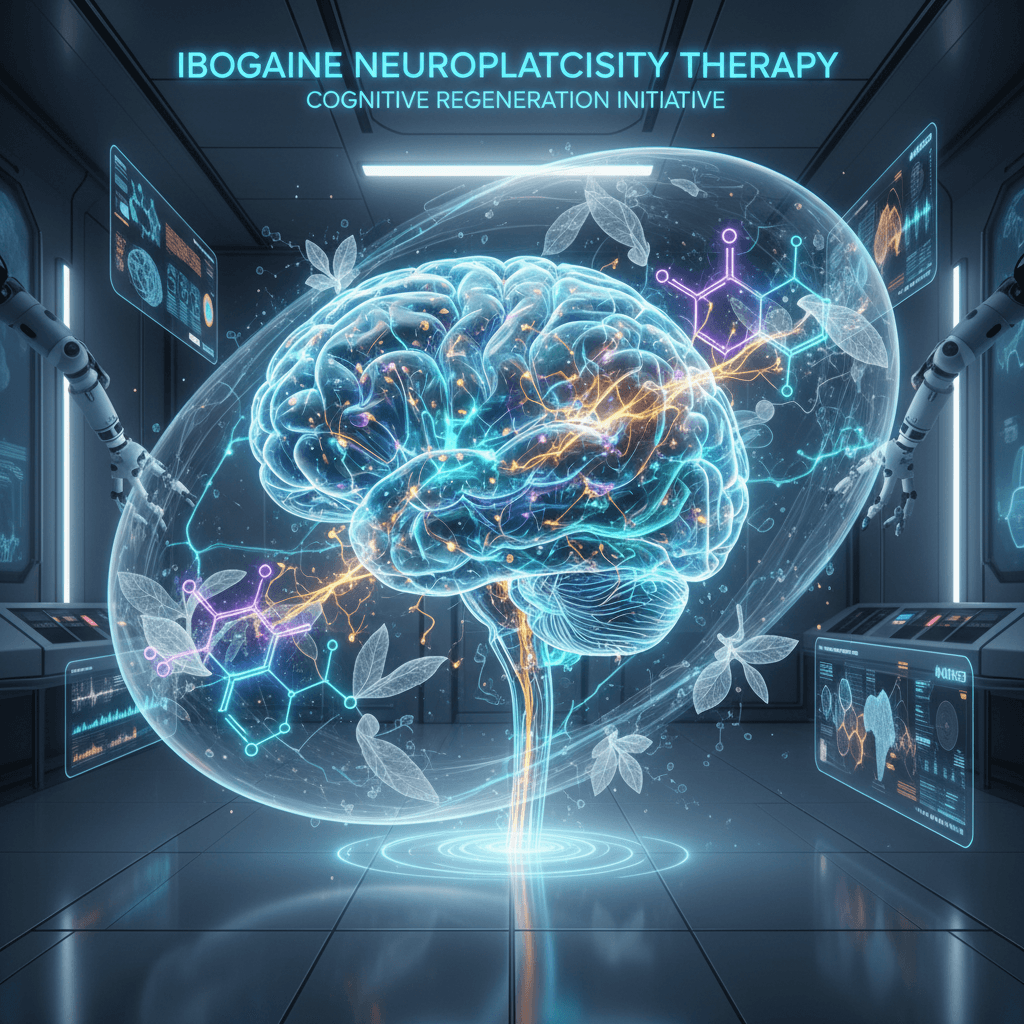
Ibogaine neuroplasticity therapy aims to create a window of heightened plasticity. During that window, your brain may be more receptive to new patterns, insights, and behaviors, especially if paired with intentional integration, therapy, and lifestyle changes.
Animal and early human research suggest that ibogaine can shift neurotrophic factors and brain activity in ways that align with a plasticity “window,” but the time course and degree of change are still being mapped out.
Evidence for neuroplasticity and brain “reset” effects
You might see ibogaine portrayed as a “brain reset” or as a rapid-acting neuroplasticity tool. Several research lines help you understand what that actually means.
Neurotrophic factors and brain circuits in animals
Preclinical studies in rats show that a single dose of ibogaine can alter key molecules involved in plasticity:
- A 40 mg/kg dose of ibogaine selectively increased Glial Cell Derived Neurotrophic Factor (GDNF) mRNA and mature protein in the ventral tegmental area (VTA) 24 hours after administration, but not at 20 mg/kg, indicating a dose and region specific effect on dopaminergic circuits linked to drug seeking and motivation [1].
- Both 20 mg/kg and 40 mg/kg doses substantially increased Brain Derived Neurotrophic Factor (BDNF) mRNA in the nucleus accumbens, substantia nigra, and prefrontal cortex at 24 hours, but mature BDNF protein did not increase in those regions at that time point, which suggests complex timing for translation into protein-level change [1].
- Ibogaine also raised the precursor form proBDNF in the nucleus accumbens for both doses, and upregulated nerve growth factor (NGF) mRNA across several dopaminergic regions in a dose dependent way [1].
These changes indicate that ibogaine is not just acutely psychoactive, it is also altering growth factor signaling that underpins synaptic remodeling. Behavioral testing in the same study showed decreased novelty induced locomotion 24 hours after 40 mg/kg dosing, temporally aligned with these neurotrophic shifts [1]. For you, this points toward ibogaine’s capacity to reconfigure motivation and reward circuits, at least in animal models.
If you are interested in broader mechanistic work, you can explore more detail in resources like ibogaine neuroscience research and ibogaine neuroplasticity treatment.
Cognitive function and brain activity in veterans
Early human work is especially relevant if you are looking at ibogaine neuroplasticity therapy for cognitive or emotional performance.
A 2024 Stanford Medicine study followed 30 military veterans with traumatic brain injuries, severe PTSD, depression, and anxiety who received ibogaine combined with magnesium to protect the heart at a clinic in Mexico [2]. Findings included:
- Dramatic reductions in symptoms one month after treatment, with average reductions of 88 percent for PTSD, 87 percent for depression, and 81 percent for anxiety.
- A drop in average disability rating on the WHO Disability Assessment Scale from 30.2, in the mild to moderate disability range, to 5.1, consistent with no disability.
- Improvements in executive function and cognitive capacities, including concentration, information processing, memory, and impulsivity, suggesting restoration of neurocognitive function tied to plasticity [2].
Electrophysiological measures added more detail. Veterans who improved in executive function showed increased theta rhythms, which are thought to promote neuroplasticity and cognitive flexibility. Those with reduced PTSD symptoms showed decreased complexity in cortical activity, which may signal a calmer, less hyper responsive stress system [2].
No serious cardiac events were reported in this study when ibogaine was paired with magnesium, and side effects were mostly mild, such as headaches and nausea [2]. This is promising, but it involved a highly specific population and setting, and it was not a randomized controlled trial.
If you are evaluating ibogaine for cognitive reset, these findings point toward meaningful shifts in function and brain rhythms, not just subjective psychological change. For a performance focused lens, you might also want to review ibogaine cognitive benefits and ibogaine mental clarity treatment.
Novel ibogaine inspired compounds
One concern with ibogaine neuroplasticity therapy is safety, especially regarding heart rhythm. That concern is driving the development of new molecules that mimic some of ibogaine’s pharmacology without its most dangerous side effects.
In a 2023 study, scientists from UCSF, Yale, and Duke used ibogaine’s action on the serotonin transporter (SERT) as a template for designing new compounds. They virtually screened 200 million molecules to find candidates that block SERT in a similar way to ibogaine, then synthesized and tested 49, of which 13 showed SERT inhibition [3].
Key findings included:
- Two novel drug candidates reduced addiction and depression related behaviors in mice at very low doses.
- These compounds selectively inhibited SERT like ibogaine, but did not bind to the hERG channel that mediates ibogaine’s risk for heart arrhythmias, indicating a safer cardiac profile.
- One compound, named “8090,” was confirmed with cryo electron microscopy to bind SERT exactly as predicted, showing high potency and specificity without affecting other major receptors or transporters in animal models.
- The new molecules showed potency significantly higher than classic SSRIs like paroxetine, and potentially allow about 200 fold lower dosing, which could translate into fewer side effects if future human trials support these findings [3].
For you, this research suggests that even if you decide ibogaine itself is too risky, ibogaine inspired neuroplasticity medicines may emerge that target similar mechanisms in a more controllable way.
Potential benefits for cognitive and emotional performance
You may not have addiction or PTSD, yet still wonder whether ibogaine neuroplasticity therapy could enhance your mental performance, resilience, or capacity for behavioral change.
Short term reset of patterns
Clinically, ibogaine is often described as interrupting entrenched patterns, particularly in addiction. From a performance standpoint, you might view this as:
- A temporary dampening of compulsive drives and automatic responses
- A heightened ability to observe your own thoughts and behaviors from a distance
- A window in which alternative strategies feel more available and believable
When combined with structured integration, this can help you adjust sleep, nutrition, work habits, and emotional responses more quickly than baseline. Concepts like ibogaine brain reset therapy and ibogaine brain recovery treatment often emphasize this interruption of long standing loops.
Cognitive clarity and executive function
The Stanford veteran study reported measurable improvements in executive function, memory, and information processing one month after treatment [2]. While that population had significant baseline impairment from traumatic brain injury and psychiatric symptoms, it hints at broader cognitive benefits when ibogaine driven plasticity is paired with a supportive environment.
You might experience, at least temporarily:
- Better task switching and flexibility
- Greater focus and sustained attention
- Reduced noise from intrusive thoughts or hypervigilant scanning
- A shift from reactive to more deliberate decision making
It is important to note that controlled evidence in high functioning, non clinical populations is not yet available. As a result, you are extrapolating from clinical and preclinical data when you apply these findings to biohacking or entrepreneurship.
Emotional processing and resilience
Ibogaine sessions are often described as intensely introspective, with vivid autobiographical material and altered emotional processing. Combined with the neuroplasticity window, this can support:
- Reprocessing of traumatic or emotionally charged experiences
- Reduced emotional reactivity to old triggers
- Increased sense of coherence or meaning around your life story
If you currently run high on anxiety, shame, or self criticism, shifts in these emotional baselines can indirectly support performance by freeing up cognitive bandwidth and lowering stress reactivity.
Real risks and safety considerations
Any evaluation of ibogaine neuroplasticity therapy needs to include a serious look at risks. Ibogaine is not a benign nootropic. It is a powerful psychoactive drug with known medical dangers, particularly to the heart.
Cardiac and neurological risks
An open label study in the Netherlands followed 14 patients with opioid use disorder who received a single 10 mg/kg oral dose of ibogaine hydrochloride in a medically supervised setting. The researchers observed:
- Significant, clinically relevant QTc prolongation averaging 95 ms, with half of participants exceeding 500 ms, a threshold associated with increased risk of torsades de pointes and other life threatening arrhythmias.
- Associated mild bradycardia and lowered blood pressure in the 12 hours after dosing, which can add to overall cardiac risk.
- Severe but transient cerebellar ataxia in all participants, such that none could walk without support in the acute phase. This resolved fully within 24 to 48 hours, suggesting no lasting cerebellar damage.
- Psychomimetic effects that were generally mild and transient, including wakeful dreaming and vivid memories without significant delirium in most participants [4].
The study authors highlighted that ibogaine’s QTc effects and cerebellar impacts likely relate to its pharmacodynamics and its metabolism via the CYP2D6 enzyme, which varies significantly among individuals. They recommended strict medical monitoring and consideration of CYP2D6 genotyping when using ibogaine clinically [4].
In other words, if you are thinking about ibogaine as a tool for optimization rather than as a last resort for severe addiction or PTSD, you must weigh these nontrivial risks carefully.
The role of magnesium and protocols
In the Stanford veteran study, ibogaine was administered alongside magnesium, which is thought to protect the heart by stabilizing cardiac electrical activity. In that group, no serious cardiac events or arrhythmias were reported, and adverse effects were limited to expected symptoms like headaches and nausea [2].
However, this does not prove that magnesium universally eliminates cardiac risk. It does suggest that protocol design, cardiac screening, real time monitoring, and careful dosing matter greatly. If you move forward with ibogaine neuroplasticity therapy, choosing a medical setting that treats cardiac safety as non negotiable is critical.
For a broader look at neurological applications and safety framing, you may find it useful to review ibogaine neurological treatment and ibogaine for brain healing.
How to decide if ibogaine is right for you
Given the potential benefits and risks, your decision about ibogaine neuroplasticity therapy should be deliberate, not impulsive. Framing your evaluation in a structured way can help.
Clarify your goals and baseline
Start by asking:
- What problem are you actually trying to solve?
- Are you seeking relief from severe, treatment resistant conditions, or marginal gains on already high performance?
- Have you fully explored lower risk interventions such as evidence based psychotherapy, SSRIs or SNRIs, structured cognitive training, sleep optimization, and other lifestyle levers?
If you are facing life limiting PTSD, addiction, or cognitive impairment after trauma, you may see ibogaine as a reasonable option among other high intensity treatments. If you are already performing well, the risk benefit ratio looks very different.
Assess your medical profile
Ibogaine is contraindicated or highly risky if you have:
- Known cardiac conduction abnormalities or a history of arrhythmia
- Family history of sudden cardiac death
- Uncontrolled hypertension
- Significant liver disease or metabolic issues that could impact CYP2D6 function
- Use of other QTc prolonging medications
A responsible program will perform ECGs, laboratory tests, medication reviews, and ideally CYP2D6 genotyping before clearing you for treatment. If a clinic does not insist on this level of screening and monitoring, that is a clear warning sign.
Consider the setting and integration
Ibogaine neuroplasticity therapy is not just about the molecule. It is about how you use the plasticity window.
You will get more from the experience if you have:
- Pre session preparation that clarifies your intentions and current patterns
- A psychologically safe, medically supervised environment during dosing
- Post session integration work, including therapy, coaching, or structured reflection
- Concrete behavior change plans aligned with your goals for cognitive performance and emotional health
Looking at resources such as ibogaine brain reset therapy and ibogaine brain recovery treatment can help you think through what a complete protocol might involve.
Alternatives and emerging options
If you decide that classic ibogaine is not aligned with your risk tolerance, you are not out of options.
You might consider:
- Non ibogaine psychedelics with more developed safety and regulatory frameworks in some jurisdictions, such as psilocybin or ketamine, each with its own risk profile.
- Intensive non psychedelic approaches to neuroplasticity, such as targeted cognitive training, neuromodulation technologies, and rigorous lifestyle design.
- Future ibogaine inspired molecules like those developed in the UCSF research program, which aim to deliver SERT modulation and neuroplasticity benefits without hERG binding and cardiac risk [3].
As the field evolves, you will likely see more precise tools that borrow ibogaine’s strengths, such as potent plasticity and rapid shifts in mood and motivation, with a narrower side effect profile.
Ibogaine neuroplasticity therapy currently sits at the intersection of high potential and high uncertainty. For severe, refractory conditions it may offer meaningful relief and functional recovery. For pure “optimization,” its risk profile remains a serious limiting factor.
Bringing it together for your brain health
If you are a biohacker, entrepreneur, or high performer, you are accustomed to pushing edges. With ibogaine, that edge is sharper than with most tools.
On the positive side, you have:
- Animal data showing specific changes in GDNF, BDNF, NGF, and dopaminergic circuits that support a plausible neuroplasticity mechanism.
- Human data in veterans suggesting profound improvements in PTSD, mood, anxiety, functioning, and cognition, paired with measurable changes in brain rhythms.
- Early stage drug development that validates ibogaine’s pharmacology as a promising template for new neuroplasticity medicines.
On the cautionary side, you are looking at:
- Documented, sometimes marked QTc prolongation and cardiac risk.
- Transient but severe neurological effects like ataxia.
- Limited controlled human trials, particularly in high functioning populations.
If you move forward, treat ibogaine not as a casual hack, but as a major medical and psychological intervention that demands rigorous screening, expert supervision, and serious integration. If you decide the risk is not acceptable right now, you can still apply the underlying lesson of ibogaine research: your brain is more plastic than you think, especially when you combine targeted biological interventions with deliberate behavioral change.
In either case, continue to examine emerging work on ibogaine neuroscience research and ibogaine neuroplasticity treatment so you can update your decisions as the evidence grows.