Why ibogaine neuroscience research matters for you
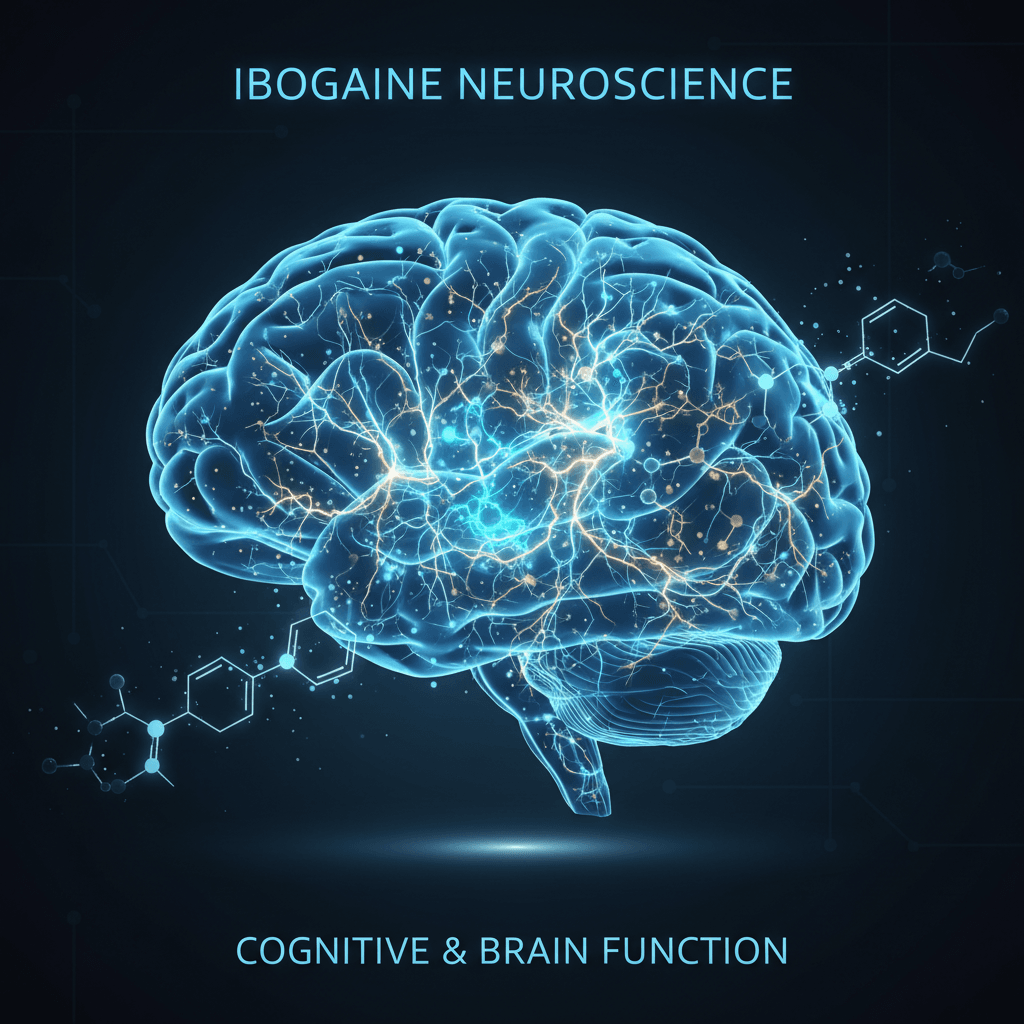
If you are interested in neuroplasticity, cognitive performance, or non‑ordinary states as tools for growth, ibogaine neuroscience research is worth your attention. Ibogaine is a psychoactive alkaloid from the African shrub Tabernanthe iboga that is being studied for its potential to interrupt addiction, support brain healing, and reshape neural circuits linked to mood and cognition.
You see a lot of claims online about ibogaine as a “brain reset” or “hard reboot.” The emerging science is more nuanced. Current ibogaine neuroscience research suggests that this compound interacts with multiple neurotransmitter systems, modulates neurotrophic factors that drive plasticity, and may influence large‑scale brain network dynamics. At the same time, it carries medical risks and is not yet an FDA‑approved treatment.
Understanding what is actually known today helps you separate signal from noise and evaluate ibogaine’s potential role within evidence‑based approaches such as ibogaine brain reset therapy, ibogaine neuroplasticity therapy, or broader ibogaine neurological treatment protocols.
Big picture: what current ibogaine neuroscience shows
Ibogaine neuroscience research spans several levels of analysis. Animal studies, human observational work, and early clinical data each contribute a piece of the puzzle.
In preclinical models, ibogaine and its metabolite noribogaine reduce self‑administration of opioids, stimulants, alcohol, and nicotine in rodents for several days after a single administration, suggesting durable changes in reward circuitry rather than short‑lived drug effects [1]. These behavioral effects track with measurable changes in dopamine, serotonin, and neurotrophic signaling in key brain regions.
On the human side, real‑world treatment data from a Mexican clinic reported that among 88 people with problematic opioid use, 80% felt ibogaine eliminated or drastically reduced withdrawal, 50% experienced lower craving, and about 30% achieved complete abstinence from opioids [2]. Many of those who responded to treatment also described meaningful psychological insight and spiritual experiences.
More recently, controlled neuroscience work with veterans who have traumatic brain injury and PTSD found very large symptom reductions and objective brain changes following a single ibogaine session with cardiac protection, pointing toward ibogaine as a potentially powerful tool for ibogaine for brain healing when used in a medical setting [3].
Across these lines of evidence you repeatedly see three themes:
- Disruption of entrenched addictive patterns.
- Modulation of mood, anxiety, and trauma‑related symptoms.
- Signals of enhanced neuroplasticity and reorganization in motivational and cognitive networks.
How ibogaine interacts with your brain chemistry
From a neuroscience perspective, ibogaine is pharmacologically “messy.” It does not act through a single receptor. Instead, it interacts with a network of targets that together reshape how key circuits operate.
Dopamine and reward signaling
Dopamine in the mesolimbic pathway, which includes the ventral tegmental area (VTA) and nucleus accumbens, is central to reinforcement and habit learning. Ibogaine does not behave like a typical stimulant or depressant in this system.
In rat brain preparations, ibogaine competitively blocks dopamine uptake, but with relatively low potency. The half‑maximal inhibitory concentration for dopamine transport is about 20 micromolar, which means relatively high concentrations are needed to significantly block the transporter [4]. Without strong depolarizing stimuli, ibogaine produces only a small release of dopamine and does not significantly affect potassium‑induced dopamine release. This suggests that its direct effect on dopamine transport is modest.
In live animals, the picture is more functionally relevant. Acute ibogaine and noribogaine reduce extracellular dopamine in the nucleus accumbens, and pretreatment with ibogaine blocks morphine‑ and nicotine‑induced dopamine release while enhancing dopamine release from stimulants like cocaine and amphetamine [1]. If you are focused on addiction circuitry, these patterns matter because they mean ibogaine can blunt the reinforcing dopamine surge from certain drugs while simultaneously altering how the system responds to stimulants.
Serotonin, mood, and affect regulation
Serotonin plays a major role in mood regulation, anxiety, and cognitive flexibility. In vitro work shows that ibogaine is more potent at the serotonin transporter than at the dopamine transporter, with an IC50 around 2.6 micromolar for inhibiting serotonin uptake [4]. At higher concentrations, ibogaine inhibits 40 to 60% of potassium‑evoked serotonin release but does not trigger serotonin release on its own.
This combination of moderately potent uptake inhibition and selective modulation of evoked release suggests that ibogaine can tune serotonergic tone without simply flooding the system. In animal models, serotonergic mechanisms are linked particularly to reductions in alcohol consumption, while nicotinic receptor antagonism appears more important for nicotine use patterns [1].
Multiple receptor systems and network level impact
Beyond monoamine transporters, ibogaine and noribogaine bind to several receptor classes:
- Kappa opioid receptors
- NMDA glutamate receptors
- Serotonin uptake sites
- Sigma‑2 receptors
- Nicotinic acetylcholine receptors
This polypharmacology is central to both the antiaddictive effects and the potential neurotoxicity of ibogaine [1]. If you think in terms of systems neuroscience, you can view ibogaine as a temporary “force multiplier” that perturbs multiple nodes in the network at once, often in ways that destabilize rigid patterns and open a window for new learning and emotional processing.
These mechanisms underpin the idea of an ibogaine brain reset therapy, not as a magical wipe of all habits, but as a time‑limited shift in the balance of excitation, inhibition, and reward signaling that makes behavior change more achievable.
Neuroplasticity: ibogaine and growth factors in your brain
The most striking ibogaine neuroscience research focuses on its impact on neurotrophic factors that drive synaptic plasticity. This is where the compound begins to look like a true neuroplasticity agent, rather than simply a psychoactive disruptor.
GDNF and dopaminergic circuit remodeling
Glial cell derived neurotrophic factor (GDNF) supports the survival and function of dopaminergic neurons, especially in the VTA and substantia nigra. In a controlled rat study, a single 40 mg/kg dose of ibogaine increased GDNF mRNA expression in the VTA by about 12‑fold and in the substantia nigra by about 6‑fold after 24 hours. The lower 20 mg/kg dose did not affect GDNF in these regions [5].
Importantly, the same dose that drove GDNF upregulation had previously been shown to reduce alcohol self‑administration in rodents, which supports the idea that GDNF induction in the VTA is mechanistically tied to ibogaine’s ability to attenuate drug‑seeking behavior [5]. Protein level measurements confirmed that mature GDNF increased in the VTA 24 hours after the 40 mg/kg dose.
If you are thinking about longer term ibogaine brain recovery treatment, GDNF upregulation is highly relevant. It suggests ibogaine does not only affect acute neurotransmitter levels, it may also support structural and functional changes in dopamine circuits that underlie motivation and reinforcement.
BDNF, NGF, and widespread plasticity signals
Brain derived neurotrophic factor (BDNF) and nerve growth factor (NGF) are central to synaptic remodeling, dendritic spine dynamics, and learning. The same rat study reported massive increases in BDNF mRNA 24 hours after ibogaine administration across several dopaminergic regions:
- Nucleus accumbens: 220‑fold (20 mg/kg) and 340‑fold (40 mg/kg)
- Prefrontal cortex: 55‑fold (20 mg/kg) and 107‑fold (40 mg/kg)
- VTA and substantia nigra: significant increases at 40 mg/kg
Despite these large changes at the mRNA level, mature BDNF protein did not significantly increase in the measured regions. Instead, the precursor form proBDNF increased in the nucleus accumbens for both doses, by roughly 2.7 to 2.8 times [5]. NGF mRNA also rose in a dose and region specific manner, with up to 4 to 15‑fold increases in prefrontal cortex, nucleus accumbens, VTA, and substantia nigra at 40 mg/kg, and more modest changes at 20 mg/kg.
These findings point toward a complex, time dependent regulation of neurotrophic systems. At the 3 hour mark, ibogaine and noribogaine were already present in the brain, but there were no significant changes in neurotrophic factor mRNA. By 24 hours, transcriptional effects were robust, even though the parent compound was no longer at peak levels [5]. For you, this means the window of plasticity after an ibogaine experience may extend well beyond the subjective psychedelic phase.
This is the mechanistic foundation that supports the idea of ibogaine neuroplasticity therapy or an ibogaine neuroplasticity treatment that explicitly pairs the acute session with structured integration practices, skill training, and behavioral change work during the days and weeks when growth factor signaling remains altered.
Ibogaine appears to act as both a disruptor of existing reward patterns and a delayed amplifier of neurotrophic processes in the networks that govern motivation, decision making, and emotional learning.
Cognitive and functional outcomes: what human data suggests
You probably care less about mRNA fold changes and more about whether ibogaine can actually improve cognition, clarity, and day‑to‑day function. Recent human data begins to answer that question, although it does not yet provide a definitive map.
TBI, PTSD, and executive function improvements
In a 2025 Stanford Medicine study, 30 military veterans with traumatic brain injury received ibogaine treatment at a specialized clinic with magnesium added to protect the heart. One month after treatment, the group showed:
- 88% average reduction in PTSD symptoms
- 87% reduction in depression symptoms
- 81% reduction in anxiety symptoms
- Functional improvement from a mild to moderate disability score of 30.2 down to 5.1, which corresponds to no disability, on the WHO Disability Assessment Scale 2.0 [3]
Electroencephalography and MRI data revealed that improvements in executive functioning correlated with increased theta band activity, while reductions in PTSD symptoms were associated with decreased complexity of cortical brain activity [3]. In practical terms, this suggests that ibogaine may help restore more efficient, coordinated patterns of brain activity that support self‑regulation, planning, and emotional processing.
For someone interested in ibogaine mental clarity treatment or ibogaine cognitive benefits, these findings are encouraging, especially given that changes were documented both subjectively and via objective neuroscience measures. However, the study was relatively small and not randomized, so you should view it as strong pilot data rather than conclusive proof.
Opioid use, withdrawal, and psychological insight
The observational study from Crossroads Treatment Center followed 88 individuals treated with ibogaine for opioid use. The outcomes provide a complementary perspective:
- 80% reported their withdrawal symptoms were eliminated or drastically reduced
- 50% reported reduced cravings
- 30% achieved complete opioid abstinence [2]
Among those who responded best to treatment, depressive and anxiety symptoms were significantly lower and subjective well‑being was higher compared to non‑responders. Long term follow up showed that among participants who became abstinent after treatment, 54% remained abstinent for at least one year and 31% for two or more years [2].
Beyond symptom scores, there is an important experiential layer. Many participants described vivid visions, geometric imagery, and “insightful knowledge about self.” Those who ultimately responded to treatment were more likely to attribute meaning to their experience and to report spiritual significance [2].
If you are exploring ibogaine as a way to reset entrenched behavior, this combination of rapid withdrawal relief, reduced craving, and psychologically meaningful content is particularly relevant. It suggests that the compound’s impact on cognition is not just about sharper attention or memory, but a deeper recontextualization of self, narrative, and motivation.
National trials and the path toward FDA recognition
As an early adopter or biohacker, you also need to know where ibogaine sits in the regulatory landscape and what large‑scale neuroscience work is on the horizon.
In December 2025, the Texas Health and Human Services Commission awarded $50 million to UTMB Health and UTHealth Houston to lead a two‑year, multicenter clinical trial on ibogaine for addiction, traumatic brain injury, and other behavioral health conditions [6]. This initiative, known as the IMPACT consortium, brings together multiple Texas institutions, including Texas Tech, several University of Texas campuses, Texas A&M, Baylor College of Medicine, and JPS Health Network.
Within this consortium, UT Austin and Baylor College of Medicine will focus specifically on ibogaine for traumatic brain injury, particularly in veterans [6]. The effort is explicitly aimed at generating the evidence needed for FDA approval of ibogaine treatments in the United States, potentially for addiction, PTSD, and cognitive trauma [6].
A separate line of research from Stanford, which identified ibogaine as a promising treatment for TBI, further supports this trajectory [6]. Taken together, these efforts suggest that over the next several years, you can expect a rapid expansion of high quality ibogaine neuroscience research with standardized protocols, cardiac safety measures, and sophisticated imaging and cognitive testing.
If ibogaine eventually receives FDA approval for specific indications, it is likely that structured, medically supervised approaches such as ibogaine neurological treatment or ibogaine brain recovery treatment will become more accessible inside regulated systems rather than remaining limited to international clinics.
How to interpret “brain reset” and cognitive optimization claims
As someone interested in performance and brain optimization, you will encounter marketing that frames ibogaine as an all‑purpose cognitive enhancer. The existing neuroscience does not support that broad claim. Instead, it points to a more specific and context dependent profile.
What ibogaine may realistically support
Based on current data, ibogaine is most plausibly useful for:
- Interrupting addiction cycles and reducing withdrawal and cravings, especially when paired with aftercare and integration
- Modulating PTSD, depression, and anxiety symptoms in people with significant baseline burden, particularly when trauma or TBI is involved
- Opening short to medium term windows of increased neuroplasticity in frontostriatal and mesolimbic circuits that can be leveraged for new learning and habit change
These are all highly significant if you are starting from a place of impairment, chronic stress, or entrenched maladaptive behaviors. They can indirectly enhance cognitive performance and quality of life. However, they are not the same as a simple “smart drug” effect you might expect from a mild stimulant or nootropic.
Where caution and skepticism are still required
There are also gaps and risks you should factor into any decision:
- Controlled, randomized trials are still limited. Much of the existing human data is observational.
- Cardiovascular risks are real. Ibogaine has been associated with arrhythmias and sudden cardiac events, which is why some protocols, such as the Stanford veteran study, pair it with magnesium and careful monitoring [3].
- The long term impact of repeated ibogaine exposure on neurotrophic systems is not well understood. Most research focuses on single or few doses.
- Individual variability is high. The same neuroplasticity window that enables profound change can also destabilize if the psychological and social context is not supportive.
If you are evaluating ibogaine as a tool for ibogaine mental clarity treatment or cognitive upgrading, the most prudent stance is to see it as a high leverage, high consequence intervention that belongs in medically supervised, integrated programs rather than casual self‑experimentation.
Using emerging science to guide your decisions
Ibogaine neuroscience research is moving rapidly from fringe curiosity to serious clinical investigation. For you, the most useful way to engage with this field is to anchor your decisions in the convergence of three layers of evidence:
- Mechanistic insights
You now know that ibogaine modulates dopamine and serotonin transporters, interacts with multiple receptor systems, and robustly upregulates neurotrophic factors like GDNF, BDNF mRNA, and NGF in key brain regions [7]. This supports its conceptual role as a neuroplasticity catalyst. - Clinical and functional outcomes
Studies in veterans with TBI and people with opioid use disorder show large reductions in symptoms and meaningful changes in brain activity and long term behavior [8]. These findings align with reports from structured ibogaine brain reset therapy and ibogaine for brain healing programs. - Systems and safety context
Large, well funded trials like the Texas IMPACT consortium are now in progress to refine protocols, define indications, and address safety questions at scale [6]. These will shape how ibogaine can be ethically and effectively integrated into mainstream care.
If you choose to explore ibogaine, the most strategic approach is to look for programs that explicitly incorporate these scientific insights into their protocols. That means medical screening and monitoring for cardiac risk, therapeutic structures that harness the post‑session plasticity window, and a focus on long term integration rather than the acute psychedelic event alone.
In that context, ibogaine is not a shortcut or a hack. It is a powerful catalyst that, when aligned with evidence based ibogaine neuroplasticity treatment and thoughtful behavior design, may help you unlock genuine and durable change in the way your brain functions.