Understanding ibogaine for brain healing
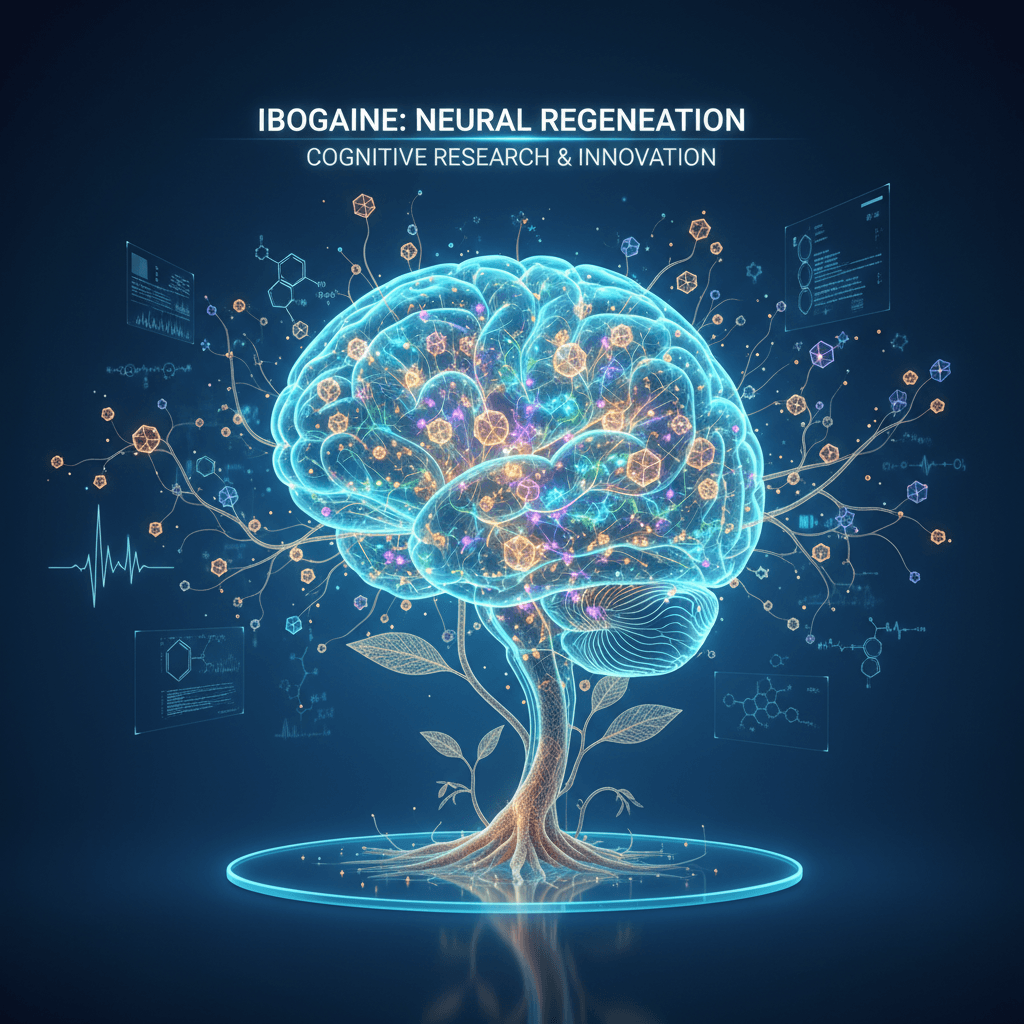
When you hear people talk about ibogaine for brain healing, they are usually referring to three related ideas. The first is symptom relief, especially for PTSD, depression, anxiety, and addiction. The second is neuroplasticity, your brain’s ability to rewire and form new connections. The third is the possibility of a deep psychological or spiritual reset that changes how you relate to old patterns and memories.
Ibogaine is a psychoactive compound derived from the African shrub Tabernanthe iboga. It has a long history of ceremonial use and is now being studied in modern settings for its effects on addiction and mental health. For someone like you who is interested in cognitive performance, resilience, and long term brain optimization, the key question is not just “does it feel intense” but “what does it do to your brain, and for how long.”
Current research suggests that ibogaine may influence neuroplasticity, neurotransmitter systems, and even brain derived growth factors. At the same time, the safety profile is complex and requires strict medical oversight. Understanding both sides helps you evaluate whether treatments like ibogaine brain reset therapy align with your goals and your risk tolerance.
How ibogaine affects the brain
To understand ibogaine for brain healing, you need a clear picture of what it is doing at the level of brain circuits rather than only at the level of subjective experience.
Multiple systems, one experience
Ibogaine is not a single target drug. It interacts with several systems that are central to mood, reward, and cognitive function, including:
- Serotonin receptors involved in mood and perception
- Dopamine pathways involved in motivation and reward
- NMDA receptors involved in learning, memory, and plasticity
- Opioid receptors involved in pain and withdrawal
By touching many of these systems at once, ibogaine can create a state where old patterns of thought, emotion, and behavior are destabilized. In the right setting, that destabilization can be paired with new insights and new behaviors, which is the essence of the “reset” idea behind ibogaine neurological treatment.
Brain activity during ibogaine
Recent work with military veterans gives you a more objective window into what is happening inside the brain. In a Stanford Medicine study of 30 veterans with traumatic brain injuries who received ibogaine with magnesium for cardiac protection, researchers used EEG and MRI scans to track changes in brain function. Veterans who showed better executive function after treatment had increased theta brain wave activity, which is often linked to neuroplasticity and cognitive flexibility, and reductions in cortical activity complexity correlated with lower PTSD symptoms [1].
In simple terms, your brain may enter a state that is both more plastic and more organized around what matters most, rather than stuck in chaotic threat responses. That is one possible mechanism behind ibogaine’s reported “reset” effects on cognition and emotion.
Evidence from human studies
You are likely interested not only in theories but in what has actually been observed in people. The emerging data is early but substantial enough to pay attention to, especially if you are considering ibogaine brain recovery treatment.
PTSD, mood, and cognitive function
In the Stanford study mentioned above, veterans with traumatic brain injuries and significant PTSD, anxiety, and depression symptoms received a single dose of ibogaine combined with magnesium, under medical monitoring. One month later, the changes were striking:
- PTSD symptoms decreased by an average of 88 percent
- Depression symptoms decreased by 87 percent
- Anxiety symptoms decreased by 81 percent
- Cognitive functions like concentration, memory, information processing, and impulsivity all improved significantly [1]
The average disability rating on the WHO Disability Assessment Scale dropped from 30.2, which indicates mild to moderate disability, to 5.1, which indicates no disability, in just one month [1]. No serious side effects or heart complications were reported when ibogaine was combined with magnesium and monitored medically. Veterans mainly experienced typical temporary symptoms such as headache and nausea [1].
For you, this points to a potential role for ibogaine in both emotional and cognitive recovery, not just in reducing distress but in restoring day to day functioning.
Opioid withdrawal and long term abstinence
If you are looking at ibogaine for addiction related brain healing, the most robust human data so far concerns opioid use disorder. A 2017 study followed 88 people who received ibogaine in Mexico between 2012 and 2015. The outcomes were notable:
- 80 percent reported that ibogaine eliminated or drastically reduced withdrawal symptoms
- 50 percent reported a reduction in opioid craving
- 25 percent said craving reduction lasted at least three months [2]
Longer term, 30 percent reported never using opioids again after treatment. Among those, 54 percent stayed abstinent for at least one year and 31 percent for two or more years [2]. Participants who did well had lower levels of depression and anxiety and higher subjective well being at follow up, suggesting that ibogaine’s impact extended beyond withdrawal into broader psychological functioning [2].
A particularly important insight for you if you care about the connection between mind and brain is that responders were more likely to describe their ibogaine experience as spiritually meaningful and to feel that they had gained insight into the roots of their addiction. This suggests that the effectiveness of ibogaine for brain healing may be mediated partly by the depth of psychological and spiritual processing that occurs during the session [2].
At the same time, the authors are clear that rigorous randomized controlled trials are still needed to firmly establish safety and efficacy and to figure out how to best integrate the psychological insights from ibogaine into ongoing treatment [2].
Preclinical insights into neuroplasticity
If you want to understand ibogaine as a neuroplasticity tool, you need to look at what it does to growth factors and gene expression in the brain. Animal studies give you that microscopic view.
Neurotrophic factors and reward circuits
In rodent models, a single intraperitoneal injection of ibogaine at 40 mg/kg has been shown to increase expression of Glial Cell Derived Neurotrophic Factor, or GDNF, specifically in the ventral tegmental area and substantia nigra 24 hours after treatment, while a 20 mg/kg dose had no such effect [3]. These regions are key nodes in the dopamine reward system that underlies motivation and addiction.
The same study found a dose dependent increase in Brain Derived Neurotrophic Factor, or BDNF, mRNA in brain regions such as the prefrontal cortex, nucleus accumbens, ventral tegmental area, and substantia nigra 24 hours after ibogaine administration. Mature BDNF protein did not rise significantly at that time point, but the proBDNF precursor protein did increase in the nucleus accumbens [3].
Ibogaine also upregulated Nerve Growth Factor, or NGF, mRNA across multiple regions including the prefrontal cortex, nucleus accumbens, ventral tegmental area, and substantia nigra at the higher dose. At the lower dose, NGF effects were more restricted to the prefrontal cortex and ventral tegmental area [3].
Taken together, these findings suggest that ibogaine can create a brief but powerful surge in neurotrophic signals in the same circuits that drive reward, motivation, and decision making. That is directly relevant to the goals of ibogaine neuroplasticity therapy and ibogaine neuroplasticity treatment, which aim to help you weaken maladaptive reward loops and strengthen healthier ones.
Behavioral correlates in animals
The same rodent study observed that 40 mg/kg ibogaine reduced novelty induced locomotion 24 hours after administration, without abnormal behaviors, which suggests a change in motor function linked to neurochemical shifts in basal ganglia circuits [3]. Researchers interpret these findings as supporting the idea that ibogaine’s long lasting reduction of drug seeking behavior in animals may be mediated by its selective induction of GDNF and related growth factor changes in reward related brain regions [3].
For you, this reinforces the view that ibogaine may not just suppress symptoms acutely. It may also change how your reward circuitry responds to cues over time, which is a key component of lasting behavior change.
In preclinical models, ibogaine appears to act as a transient but intense “plasticity trigger” in core reward and control circuits, which then needs to be paired with healthier behaviors and environments to consolidate new patterns.
Cognitive reset and mental clarity
When people describe ibogaine as a “reset,” they are talking about both subjective and objective shifts. As someone interested in performance and clarity, it is useful for you to separate what is known from what is assumed.
What a “reset” might mean
On the subjective side, many individuals report that ibogaine allows them to revisit life events, habits, and traumas with a new lens. The “oneirogenic” quality of the experience, essentially a state of wakeful dreaming and reliving memories, is also described in clinical studies. In an open label study of patients with opioid use disorder given 10 mg/kg ibogaine HCl, psychomimetic effects were generally mild and took the form of these dream like experiences, with no significant delirium detected on structured assessments over 24 hours [4].
On the objective side, the Stanford veterans study documented measurable improvements in executive function, information processing, and impulsivity one month after treatment [1]. For you, this is closer to what “mental clarity” means in a practical sense. These are the same domains you depend on for complex problem solving, long term planning, and stable focus.
When you connect these dots with the brain growth factor data, one plausible model is that ibogaine briefly increases the brain’s capacity to rewire, particularly in executive and reward networks, while also surfacing emotionally loaded material for reprocessing. If you pair that window with coaching, therapy, and better habits, you may be able to lock in a new cognitive baseline, which is precisely the aim of ibogaine mental clarity treatment and ibogaine cognitive benefits programs.
Safety considerations and medical risks
Any serious discussion of ibogaine for brain healing has to stay honest about risk. The same complexity that makes ibogaine powerful also makes it medically demanding.
Cardiac and neurological risks
One of the clearest warnings comes from a 2022 open label observational study in the Netherlands. Fourteen patients with opioid use disorder received a single 10 mg/kg dose of ibogaine HCl. The researchers found a clinically relevant but reversible prolongation of the QTc interval, a measure of cardiac repolarization. Half of the subjects reached QTc intervals over 500 ms, which is associated with significant risk for dangerous arrhythmias. All patients also experienced severe transient cerebellar ataxia, meaning they could not walk without support, which resolved within 24 to 48 hours [4].
In addition, ibogaine caused mild bradycardia, or slower heart rate, and decreased blood pressure in the first 12 hours after administration, which further complicates the cardiovascular picture [4]. Although psychomimetic effects were mild and generally tolerable, these cardiac and neurological findings led the authors to conclude that ibogaine’s serious side effects significantly limit its utility outside of highly controlled medical environments [4].
For you, the takeaway is clear. If you consider ibogaine, you need to think of it not as a casual biohacking tool, but as an intervention that belongs in a facility equipped to monitor ECG, manage blood pressure and heart rate, and respond rapidly to complications.
Different outcomes with protective protocols
The Stanford veterans protocol provides a useful contrast. In that study, ibogaine was paired with magnesium specifically to protect the heart, and treatments took place under rigorous medical monitoring. Under those conditions, no serious cardiac side effects or heart complications were reported. Participants experienced typical things like headaches and nausea, but nothing that required emergency intervention [1].
This suggests that the safety profile of ibogaine is not fixed. It depends heavily on dose, patient population, medication interactions, and protective measures. As someone screening options, you should scrutinize how any ibogaine neurological treatment you are considering handles cardiac risk, including baseline cardiology evaluation, electrolyte management, and continuous monitoring.
How to think strategically about ibogaine
If your goal is sustainable cognitive performance and brain health, you need a framework that places ibogaine in context rather than treating it as a magic solution.
Short term intervention, long term integration
The research so far points to ibogaine as a single or very infrequent intervention that can rapidly reshape symptoms, motivation, and in some cases cognition. The substance itself is active for hours or days, but the brain changes and behavioral shifts can last months or years, especially in addiction contexts [2].
For you, that creates an opportunity and a responsibility. The opportunity is that a carefully planned session could compress months of internal work into a shorter window. The responsibility is to build a container around that window. That might include:
- Pre work with a therapist or coach to clarify intentions and patterns
- Post treatment integration focused on new habits, relationships, and work structures
- Follow up cognitive training or mindfulness practices to stabilize attention and mood
Seen this way, ibogaine is one node in a wider network of interventions, not a stand alone cure. That approach is aligned with the intent of ibogaine neuroscience research, which increasingly focuses on how to integrate biological, psychological, and social components.
Matching ibogaine to your risk profile
As a biohacker or entrepreneur, you are probably used to balancing risk and reward. With ibogaine, that calculation is more serious than with most supplements or even most psychedelics. You have to consider:
- Your cardiac history and any existing structural or rhythm issues
- Current medications, especially those that affect the QT interval
- Neurological conditions, such as seizure disorders or severe TBI
- Mental health conditions that might destabilize under intense experiences
Given the evidence of serious cardiac risk without strong monitoring [4], you should be skeptical of any program that minimizes these concerns or downplays screening. If you decide that the potential benefits for PTSD, depression, addiction, or cognitive impairment are worth exploring, look for environments that treat ibogaine as a full medical procedure rather than a wellness retreat.
Where ibogaine research is heading
Finally, if you are trying to make an informed decision, it helps to know how the field is evolving. You are not just betting on what ibogaine is today, but on what it is likely to become.
Current directions in ibogaine neuroscience research include:
- Controlled clinical trials for PTSD, depression, and anxiety, building on the promising veteran data [1]
- Larger and more rigorous studies on opioid and other substance use disorders, to validate and refine the long term abstinence outcomes reported in earlier observational work [2]
- Mechanistic research into neurotrophic factor changes, with the aim of translating these insights into safer analogues or protocols that preserve neuroplasticity benefits while reducing cardiac risks [3]
- Optimizing protocols for cardiac protection, including the strategic use of magnesium and other supportive measures, to replicate the favorable safety profile seen in the Stanford veterans study across broader populations [1]
For you, this means two things. First, if you do not have an urgent clinical need, waiting for more data may significantly improve both the safety and precision of any ibogaine based intervention you might consider. Second, if you do decide to move forward sooner, you can use this research trajectory as a checklist to evaluate whether a provider is keeping up with the science.
Ibogaine for brain healing is not a simple story of risk or reward. It is a complex, emerging field where powerful neuroplastic and cognitive effects coexist with meaningful medical dangers. The more you understand the mechanisms, data, and protocols behind treatments such as ibogaine brain reset therapy, ibogaine brain recovery treatment, and ibogaine cognitive benefits, the better you can decide if and how this compound fits into your wider strategy for mind and brain optimization.