Ibogaine for Opiate Withdrawal: Ending the White-Knuckle Detox
You have sat with someone through opioid withdrawal before: the sweating, the bone pain, the sleepless nights that stretched into weeks, and now you are trying to figure out whether ibogaine can actually shorten that suffering or whether it just trades one dangerous unknown for another.
That is a fair question, and it deserves a straight answer instead of a sales pitch.
Ibogaine for opiate withdrawal is not a magic pill, and it is not a quick fix. It is a serious medical procedure that carries real risk, works only under strict conditions, and asks a great deal of preparation from you and the person you love before anything begins. What follows is how it actually works, who it may be appropriate for, and where the hard lines are that we will not cross.
What Ibogaine May Affect When Withdrawal Sets In
Ibogaine offers a different approach than conventional detox. Instead of tapering a person down over weeks or riding out days of acute withdrawal, the flood dose is administered during a single session. For someone who has struggled through cold-turkey detox before, that difference may be meaningful. Some people report that the intense physical discomfort that normally builds over 72 hours and lingers for weeks is reduced during and after the session itself. **
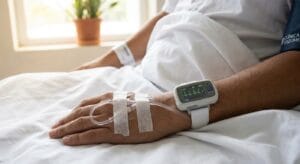
The flood dose lasts roughly 8 to 10 hours. During that window, the person stays on continuous cardiac telemetry the entire time, with ICU-trained nurses at the bedside and a physician checking in every 2 to 4 hours and immediately available if anything shifts. This is not a retreat setting with a guide and a mat. It is a monitored medical procedure with IV access already in place.
What ibogaine for opiate withdrawal may do, based on what we and the wider clinical literature observe, is interact with the receptor system that drives craving and withdrawal, so the acute phase that normally defines opioid detox may be affected. Some people do not experience the full withdrawal cascade in the usual way. This does not happen for everyone, and the degree of relief differs from person to person.
That said, we are honest about the limit here. Ibogaine may ease the acute phase for some people, but it does not erase the days that follow. The active metabolite keeps working, which is why monitoring continues well after the session ends. The medicine may open the door, but lasting recovery comes from the choices a person makes once they walk through it.
Who This May Be Appropriate For, and the Thresholds That Stop It Cold
Before we will consider dosing anyone, screening begins weeks ahead of arrival. That means a full medical history, a medication review, and labs including CBC, CMP, liver and kidney panels, and electrolytes. It also means a 12-lead ECG with a careful look at the QTc interval, because the heart is where ibogaine’s real danger lives.
Our cardiac targets are specific and non-negotiable. We look for a QTc below roughly 450 ms for men and 470 ms for women. A QTc above 460 ms after correction is the hard threshold where we do not proceed. We correct electrolytes to defined ranges first (potassium between 4.2 and 4.8 mmol/L and magnesium at least 2.0 mg/dL), and we give IV magnesium sulfate slowly to reach the upper-normal range. Then we run a second 12-lead ECG immediately before the flood dose. If the numbers are not right, the session does not happen.
We would rather lose a patient than compromise our standards, and that is not a slogan, it is a rule we enforce even when a family has already traveled and paid.
There is a second screening layer that has nothing to do with the heart. Long-acting opioids, including fentanyl, cannot go straight into a session. Someone on Suboxone moves to short-acting opioids roughly 8 days before dosing, and fentanyl timelines are individualized by dose, duration, and history rather than set by a fixed schedule. All of that stabilization is arranged ahead of time under medical management, not improvised on arrival.
The people who tend to come to us have already been through conventional rehab, often more than once. Around 60 to 70 percent of our clients have been in treatment multiple times before finding us. Ask yourself the same question we ask about every candidate: would we trust this with someone we love? If the screening says no, the answer is no.
Inside the 8 to 10 Hours: The Monitoring That Never Pauses
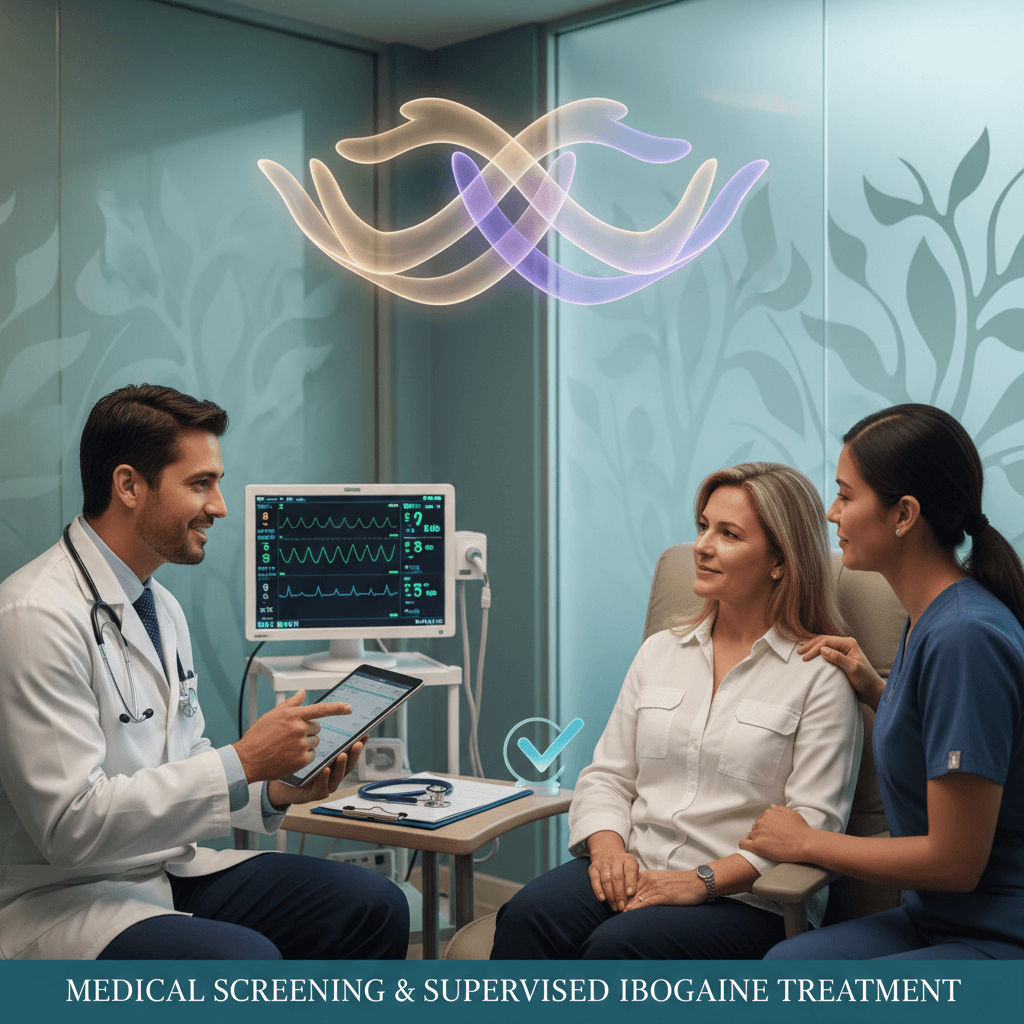
The session itself is built around the assumption that something could go wrong, so that if it does, the team is ready. Continuous real-time cardiac telemetry with automated QT analysis runs the entire time. ICU-trained nurses stay at the bedside, not down the hall. A physician checks in every 2 to 4 hours and is immediately available throughout. IV access is already established before the dose, so there is no scrambling if a medication needs to go in fast.
Emergency equipment is on hand and ready, not in a locked cabinet somewhere: medications, oxygen, airway management, and defibrillation. This is the infrastructure that separates a medically supervised protocol from an unmonitored session in a rented villa. In plain terms, automated QT analysis means a machine is watching the heart’s electrical timing second by second and flagging the exact change that signals danger, so a trained clinician can act before a problem becomes an emergency.
When the acute experience winds down, the monitoring does not stop. Post-acute observation continues for at least 24 to 72 hours. The reason is pharmacologic. Ibogaine breaks down into noribogaine, an active metabolite with a long half-life that keeps exerting effects for days. A person can feel largely through the worst of it and still need close watching, which is exactly why we hold that window rather than sending anyone off early. Safety will always come before filling a bed.
Why Fentanyl and Suboxone Cannot Go Straight Into a Session
Fentanyl is one of the most complex cases we handle. It is extremely potent and highly fat-soluble, which means it stores in fatty tissue and releases back into the bloodstream slowly. That makes both the timing and the intensity of withdrawal unpredictable, and it makes the washout longer and harder to pin down than with other opioids. Ibogaine is never dosed directly on top of fentanyl. The person must first transition to shorter-acting opioids under medical supervision, on a timeline built for them specifically.
Buprenorphine, the active drug in Suboxone, is a different problem with the same solution. It binds tightly to opioid receptors and has a long half-life, so it lingers and blocks the receptor sites ibogaine needs to reach. That is why someone on Suboxone moves to a short-acting opioid substitute for roughly 8 days before a session. It feels counterintuitive to families, moving away from a maintenance medication toward a shorter-acting one, but it is necessary for the ibogaine session to proceed safely.
This is where the pre-treatment coordination matters. A US-based physician runs telehealth consults before anyone travels, building the tapering schedule and prep plan around the individual’s history. None of this is a fixed program you slot into. It is weeks of careful medical management, and anyone promising to skip it is telling you something you should not want to hear.
What Happens After the Acute Phase
Interrupting physical withdrawal is the beginning, not the finish line. Once the acute phase passes and post-acute monitoring is complete, the work turns to why the person was using in the first place. Integration therapy, journaling support, and a personalized aftercare plan are built into the arc, because changes at the receptor level mean nothing if the person walks back into the same untreated trauma, depression, or pain that drove the use.
Our clients are overwhelmingly trauma-exposed and treatment-resistant, and that shapes everything after the session. The aftercare is structured around a weekly post-integration program through the first several months, and the people who stay engaged show different patterns than those who drop out. Engagement is the variable that matters most, which is why we press on it rather than treating the flood dose as the product.
Consider Zach, one of our clients. More than seven months after treatment, he is sober, back to full-time work as a cook, and rebuilding his relationships with his family. His experience is his own. We cannot predict whether another person will have a similar journey. We are looking to help someone build a life they no longer feel the need to escape from.
We also offer supports that standard detox settings do not, including hyperbaric oxygen therapy, breathwork, and guided meditation, alongside the daily therapeutic sessions. These are adjuncts, not the main event. The main event is a person deciding, with real support, to do the harder work that keeps the door open.
The Cardiac Risk No Honest Program Will Downplay
Here is the truth other pages skip. Ibogaine is a Schedule I controlled substance under US federal law, and it is not FDA-approved for any use. Peer-reviewed cardiology literature has documented QT-interval prolongation and life-threatening arrhythmias associated with ibogaine administration, which is precisely why the cardiac screening above is so strict (Journal of Cardiovascular Pharmacology). This risk is real. It is not marketing caution, it is the reason the entire protocol exists in the shape it does.
The protocol works only when two things stay non-negotiable: the medical infrastructure and the candidacy screening. Telemetry, physician oversight, and emergency capability on one side. Cardiac workup, electrolyte correction, and opioid-type transition on the other. Remove any one of those and the risk stops being managed. An ibogaine session without continuous monitoring and without a hard QTc cutoff is not a lighter version of the same treatment. It is a different, far more dangerous thing.
For families in Columbus, OH, this is where geography enters the picture. No FDA-approved ibogaine program exists in Ohio, or anywhere in the United States. Medically supervised treatment requires travel outside the country, arranged after weeks of pre-treatment telehealth coordination with a US-based physician. Anyone offering ibogaine inside the United States, or offering it without the cardiac and washout screening described here, is operating outside the standard that keeps a person alive.
We say all of this plainly because the person in front of us is always someone’s son, daughter, spouse, parent, sibling, or best friend. We’re not just building a treatment center. We are deciding, one candidate at a time, whether this is safe enough to do at all.
Frequently Asked Questions
Does ibogaine eliminate opioid withdrawal completely?
Ibogaine may interrupt the acute withdrawal cascade during the flood dose and reduce symptoms for some people, but it does not end the process instantly for everyone. ** Because noribogaine, the active metabolite, keeps working for days, post-acute monitoring for at least 24 to 72 hours and structured integration afterward are still required.
How long does someone need to be off Suboxone before ibogaine?
Roughly 8 days. During that time the person transitions from buprenorphine to a short-acting opioid under medical management. This clears Suboxone’s high receptor affinity and long half-life, which would otherwise block ibogaine from working safely.
What cardiac tests are required before ibogaine treatment?
A 12-lead ECG with QTc review, targeting below roughly 450 ms for men and 470 ms for women, plus electrolyte correction to set ranges (potassium 4.2 to 4.8 mmol/L, magnesium at least 2.0 mg/dL), IV magnesium given slowly, and a repeat ECG immediately before dosing. An echocardiogram or cardiology clearance may also be required.
Is ibogaine legal in Ohio or the United States?
No. Ibogaine is a Schedule I controlled substance under federal law and is not FDA-approved. Medically supervised treatment requires travel outside the United States, arranged in advance with pre-treatment coordination through a US-based physician.
What happens if someone’s QTc is too high for ibogaine?
If the QTc interval stays above 460 ms after electrolyte correction and magnesium supplementation, the session does not proceed. At that point the cardiac risk is unacceptable even with continuous telemetry and physician oversight, and no amount of preparation changes that answer.
How is ibogaine different from conventional detox or medication-assisted treatment?
Ibogaine for opiate withdrawal is administered in a single 8 to 10 hour session under continuous cardiac monitoring, offering a different timeline than multi-week tapers or acute withdrawal phases. Afterward it relies on structured integration and aftercare rather than long-term maintenance medication. **
Contact Iboga Wellness Institute to schedule a confidential pre-treatment consultation and cardiac screening evaluation, so a physician can determine whether ibogaine-facilitated detox may be medically appropriate for you or your family member before anyone travels or commits to anything.
Individual experiences with withdrawal relief vary. Individual responses vary. How people respond to this approach varies.