Kratom Detox: Why Interrupting Dependence at the Receptor Level Changes Everything
Seventy-two hours in, the worst of the physical part had eased. The sweating slowed, the muscle aches loosened, and you told yourself the hard part was behind you. Then came the flatness. Music sounded thin. Food tasted like cardboard. Getting out of bed felt like lifting wet concrete. That wall is where some people struggle, and it has nothing to do with weak character. A kratom detox can stall there because mitragynine has already changed the receptors that let your brain feel pleasure at all. No amount of gritting your teeth can override receptor physiology, and once you understand that, the whole conversation about how to stop shifts. The real target is not your resolve. It is the receptors themselves. That is the premise behind the ibogaine program at Iboga Wellness Institute, which coordinates screening and aftercare from its Columbus, Ohio office while delivering treatment at a licensed clinic in Cozumel, Mexico.
What Kratom Dependence Actually Does to Your Brain
Kratom can create physical dependence because its main active compound, mitragynine, binds to the same mu-opioid receptors as oxycodone, morphine, and heroin, all powerful opioids. That single fact explains much of why quitting can be difficult. Many people start kratom believing it is a mild herbal supplement, only to discover that daily use may produce tolerance, physical dependence, and a withdrawal that looks and feels like classic opioid detox, the hallmarks of a genuine use disorder.
When you take kratom every day, your brain may adjust to a constant flood of activity at those receptors. Over weeks and months, it can dial down its own natural opioid signaling to compensate. This is the same adaptation seen in some people who are dependent on prescription painkillers, and one study documented people using kratom specifically to self-manage opioid withdrawal, which underlines just how closely the two can overlap (Self-treatment of opioid withdrawal using kratom). The plant is not harmless, and the U.S. Food and Drug Administration, the federal government agency that oversees drug safety, has repeatedly warned that kratom carries real risks of dependence and abuse (FDA and Kratom).
So when you stop, the withdrawal signs are not vague or imagined. Restlessness, muscle aches, insomnia, dysphoria, and anhedonia can all arrive because your brain may have come to rely on an outside chemical to run a system it once ran on its own. For a person who has cycled through kratom dependence for a year or more, the withdrawal can be difficult. Understanding this is the first honest step, because it moves the problem out of the realm of morality and into the realm of medicine, where it belongs.
Why Some Kratom Detox Attempts Fail (and Why It May Not Be About Willpower)
Some kratom detox attempts fail because of receptor-level changes, not a lack of discipline. Chronic mitragynine exposure may downregulate your mu-opioid receptors and affect your natural opioid tone, which can leave your brain struggling to generate normal pleasure, motivation, or emotional stability once the alkaloid is gone. That state can last for weeks or months in some people, long after the acute symptoms fade.
This is the piece almost every home-detox guide skips. Cold-turkey advice tends to focus on the first five days: push fluids, take some vitamins, ride out the aches. That advice is not wrong, but it stops exactly where the hardest part can begin. The acute symptoms usually peak around day three to five and then start to lift. What may linger is protracted withdrawal, and the defining feature of protracted withdrawal is anhedonia, the inability to feel reward. Your brain may struggle to produce the dopamine and endorphin signals it used to, because the receptors those signals rely on may still be suppressed.
Picture someone who has quit three separate times. Each attempt, they white-knuckle through the first week feeling proud. Then week two arrives with crushing emptiness, no motivation, and broken sleep, and one dose of kratom instantly makes all of it disappear. That relief is not weakness. It is physiology rewarding a return to the drug, because the drug may be the only thing that currently makes the receptors work. This is why willpower alone may not be enough in a kratom detox, and why an intervention that actually addresses the receptors, rather than behavioral resolve alone, can change the entire equation.
How Ibogaine May Reset Opioid Receptors at the Molecular Level
Ibogaine may interrupt dependence at the receptor level, which is what sets it apart from a taper or a cold-turkey attempt. When your body processes ibogaine, it converts the compound into a metabolite called noribogaine. Noribogaine acts as a low-affinity mu-opioid agonist, meaning it settles onto the same receptors kratom occupied, but gently. That gentle occupancy may be enough to hold acute withdrawal at bay while the deeper reset happens.
The deeper reset is the part conventional detox cannot touch. Preclinical research and animal data on opioid dependence point to ibogaine modulating glial-cell-line-derived neurotrophic factor, or GDNF, a signaling protein tied to the health and function of neurons involved in reward and motivation. Alongside that, the drug appears to help restore mu-opioid receptor density toward a more normal state in some studies and case reports. In plain terms, instead of just replacing one opioid with another and tapering slowly, ibogaine may work on the underlying machinery that the anhedonia and cravings come from. This is why some people who complete treatment report that their acute withdrawal is eliminated or drastically reduced within hours rather than days, though individual responses vary.
That does not make ibogaine a magic switch, and outcomes are not guaranteed. It is important to be clear that ibogaine is not approved by the FDA and remains investigational. The medicine may open the door for some, but lasting recovery comes from the choices a person makes once they walk through it. What the receptor reset may do is remove the physiological trap that can keep pulling people back, potentially giving you a clear-headed starting point that a home kratom detox almost never provides. That opening, when it occurs and when free of grinding withdrawal, is where real recovery work can become possible.
Why Medical Screening and Cardiac Monitoring Are Non-Negotiable
Ibogaine is powerful medicine, and it can affect the heart, which is exactly why comprehensive medical screening and continuous cardiac monitoring are not optional add-ons but the foundation of safe treatment. Ibogaine can prolong the QT interval in a dose- and concentration-dependent way, and people with a kratom history often carry hidden risks: polysubstance use involving alcohol or other opioids, electrolyte imbalances from months of poor nutrition, or an undiagnosed cardiac issue. Outpatient taper programs never screen for any of that.
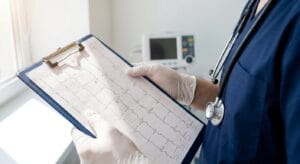
Every prospective patient completes a 12-lead ECG that evaluates cardiac rhythm and the QTc interval, along with an electrolyte panel, liver and kidney function tests, and a complete blood count. The program targets a QTc below roughly 450 ms in men and 470 ms in women, with a hard line at 460 ms, above which physicians will not proceed. It also targets potassium between 4.2 and 4.8 mmol/L and magnesium of at least 2.0 mg/dL, correcting these before treatment because stable electrolytes protect the heart during the flood dose. The care is physician-led, guided by an anesthesiologist serving as Chief Medical Director and a physician with more than two decades of experience in addiction medicine and psychiatry.
During treatment, ICU-trained nurses stay at the bedside with continuous cardiac telemetry, and magnesium co-administration protocols draw on recent ibogaine research and cardiac-safety data. This level of oversight is what allows the center to carefully treat people who might be turned away from lighter programs. It also means the answer is sometimes no. Would we trust this with someone we love? That is the standard every screening decision is held to, and safety will always come before filling a bed.
What Happens After the Receptor Reset: Integration and Aftercare
The receptor reset that ibogaine may produce can open the door, but integration therapy is what can help keep it open, because it addresses the reasons you reached for kratom in the first place. Interrupting physical dependence does nothing for untreated trauma, anxiety, co-occurring disorders, chronic pain you may have been self-medicating, or the behavioral habit of using a substance to avoid emotional discomfort. If those patterns stay untouched, the risk of return to use may stay high even when the withdrawal is gone.
Integration work begins during your stay, not after you get home. You meet daily with a psychotherapist during the residential program, and those sessions focus on making sense of the experience and connecting it to the changes you want in your life. The integration program is led by licensed mental health professionals, with some team members trained in psychedelic-assisted therapy through established, research-informed pathways. That specialized training matters, because supporting someone through the days and weeks after an ibogaine experience is different from ordinary counseling.
Support does not stop at discharge. A personalized aftercare plan carries the work forward, and it may include weekly remote integration sessions for months, along with connections to local resources where you live. This continuity is the point. Someone in early recovery from kratom needs a structure that follows them back into ordinary life, where the old cues and stressors still live. We are working to help build a life you no longer feel the need to escape from, and that is patient, ongoing work, not a single event.
Where Ibogaine Treatment Happens and How Columbus Fits Into the Process
Ibogaine is a Schedule I controlled substance in the United States and is not approved by the FDA, so no legitimate provider can offer it as a medical treatment on U.S. soil. All treatment happens at the licensed medical clinic in Cozumel, Mexico, where ibogaine is legal and regulated. Columbus, Ohio is the admissions, screening, and aftercare coordination office. It is never a treatment location, and any site suggesting otherwise should give you pause.
Here is how the geography works for you as a U.S. resident. Everything before travel is handled remotely from Columbus: your medical screening, the review of your ECG and lab results, your preparation sessions, and the conversations about your kratom history, current medications, and travel logistics. A U.S.-based clinical team walks you through the legal questions and the practical ones so nothing is a surprise. The Cozumel center operates within the Mexican healthcare system and maintains a relationship with COFEPRIS, the country’s government health regulatory authority.
Treatment itself is a seven-day, six-night residential program in Cozumel. It includes private accommodations, chef-prepared meals, airport transportation, and 24-hour medical supervision through the flood dose and recovery. After you return home, aftercare coordination picks back up from Columbus, so your integration support continues in the state where you actually live. This structure exists for one reason: to let you access ibogaine legally and safely while keeping continuity of care from screening through the months that follow. We are working to build a full path, and the honest version of that path names exactly where each step happens.
Frequently Asked Questions
Can I detox from kratom at home without medical help?
A home kratom detox may get you through the acute symptoms, but it does nothing for the receptor changes underneath. Downregulated mu-opioid receptors and disrupted opioid tone can leave your brain struggling to feel normal pleasure or motivation for weeks or months, and that anhedonia is what may drive some people back to use even after the aches and sweating pass. If you are struggling right now, the SAMHSA National Helpline, a free government-run service, is confidential, available 24 hours a day, and can connect you with treatment resources in your area.
How long does kratom withdrawal last without treatment?
Acute kratom withdrawal usually peaks around day three to five and then begins to ease. The harder problem may be protracted withdrawal, which can persist for weeks or months in some people. Anhedonia, low motivation, and insomnia may linger because your receptors have not yet returned to normal function, and that lingering discomfort is a common reason some people return to use well after the acute phase ends.
Is ibogaine legal in the United States for kratom detox?
No. Ibogaine is a Schedule I controlled substance in the United States and is not FDA-approved, so it cannot be legally administered here for kratom detox or anything else. All treatment happens at the licensed medical clinic in Cozumel, Mexico, where ibogaine is legal and regulated. Columbus, Ohio functions only as the admissions, screening, and aftercare coordination office.
What medical tests are required before ibogaine treatment?
Every applicant completes a 12-lead ECG, an electrolyte panel checking potassium and magnesium, liver and kidney function tests, a complete blood count, a toxicology screen, and a QTc measurement, along with a full psychiatric history. Cases with a QTc above 460 ms are declined. These tests exist to catch the cardiac and metabolic risks that an outpatient kratom detox never checks for.
Does ibogaine treatment include therapy after the flood dose?
Yes. Integration therapy begins during your residential stay with daily psychotherapist sessions and continues remotely for months through a personalized aftercare plan. This work addresses the trauma, anxiety, co-occurring disorders, pain self-medication, and avoidance patterns that may have driven kratom use, because interrupting physical dependence alone does not resolve the reasons a person started using.
What if I am not medically cleared for ibogaine?
The program declines applicants when cardiac, metabolic, or psychiatric risk outweighs the potential benefit, including QTc above 460 ms, uncontrolled arrhythmias, significant structural heart disease, active psychosis or mania, or unstable medical illness. Physicians make that call after reviewing your screening results. We would rather lose a patient than compromise our standards, and safety comes before revenue every time.
Contact the admissions department at Iboga Wellness Institute in Columbus to begin remote medical screening and talk through whether ibogaine treatment at the Cozumel clinic might be appropriate for your kratom dependence. Bring your current medication list and any recent ECG or lab work if you have them, because the sooner physicians can review your physiology, the sooner you will get an honest answer.
Important legal and safety information: Ibogaine is not approved by the FDA and is not available as a legal medical treatment in the United States. Iboga Wellness Institute provides ibogaine treatment exclusively at its licensed medical clinic in Cozumel, Mexico, under medical supervision. US locations handle admissions, screening, and aftercare coordination only.
Ready to Interrupt Kratom’s Hold at the Source
If you’ve tried tapering or cold turkey and found yourself back where you started, the challenge isn’t your willpower. Iboga Wellness Institute’s medically supervised ibogaine detox program in Cozumel addresses kratom dependence at the receptor level, offering a fundamentally different path than conventional approaches. A brief conversation with our admissions team can help you understand whether this treatment model fits your situation.
Individual responses to ibogaine treatment vary considerably. The experiences and outcomes described here reflect what some patients have reported and are not predictive of any individual’s result.