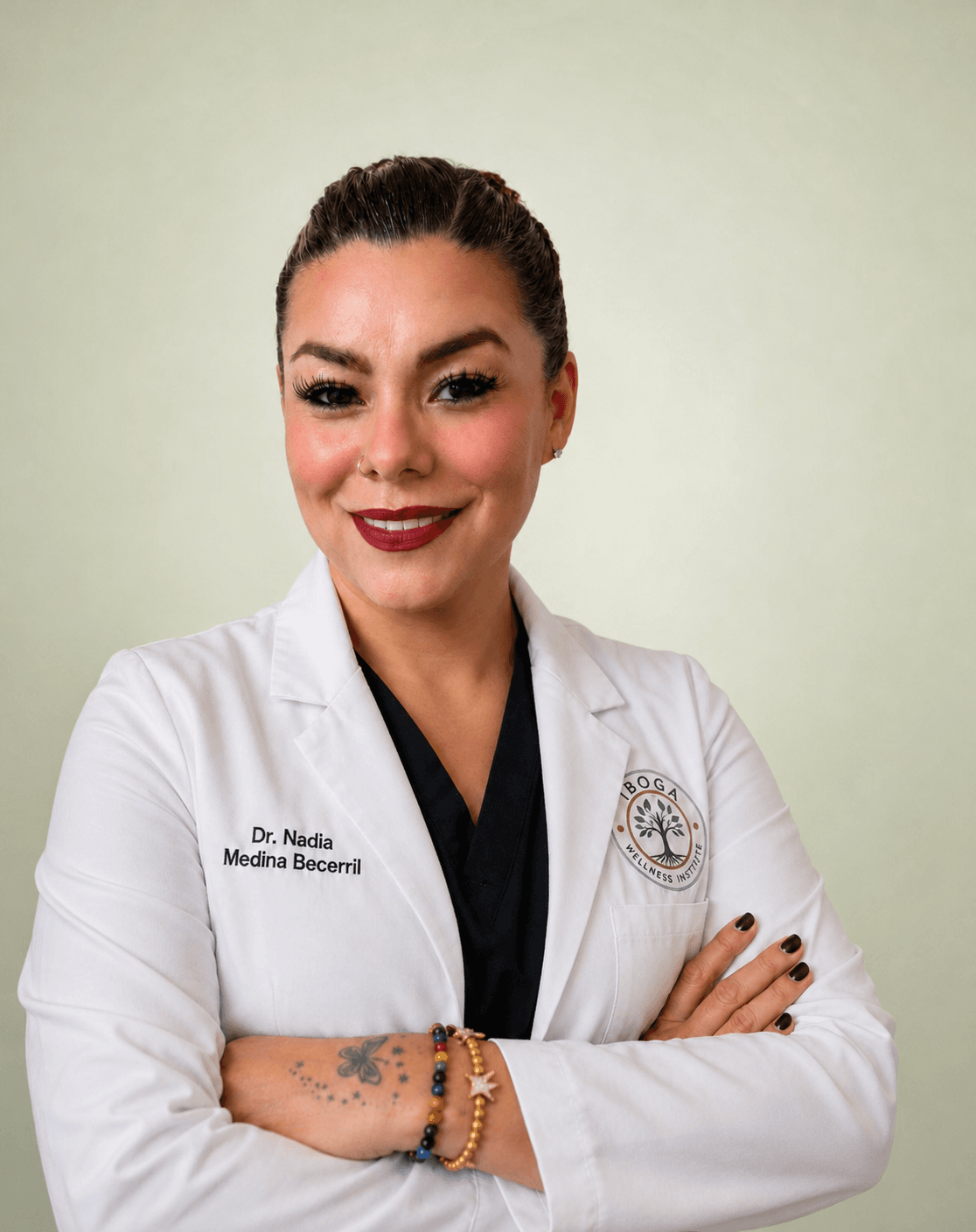

Expertise provided by James Collins, Owner
You’re looking at the Depression Treatment Program page at Iboga Wellness Institute trying to figure out whether this is something you can actually qualify for, whether your medications are a problem, and whether this facility will tell you the truth if ibogaine isn’t safe for your specific psychiatric history. The last thing you need is another treatment that promises hope and delivers risk. That question deserves an honest answer, so here it is: ibogaine treatment for depression is not something you sign up for, pay for, and receive. It is a medical and psychological qualification process first, and if we don’t believe it is safe or appropriate for you, we are going to tell you that, even if it means we don’t treat you.
We would rather lose a patient than compromise our standards.
That principle guides every decision we make.
What Ibogaine Treatment for Depression Actually Is, and What It Asks of You First
Ibogaine treatment for depression at Iboga Wellness Institute is a medically supervised, individually tailored program that begins with psychiatric differential diagnosis and medication review, not automatic enrollment. Before anyone talks about a flood dose, our team must rule out bipolar-spectrum and related mood disorders, a history of mania or hypomania, psychosis, schizophrenia, significant dissociation, active suicidal crisis, and medication interactions that could make an intense psychoactive experience unsafe.
When somebody comes to us specifically for treatment-resistant depression rather than addiction, we look at the case differently. There is usually no opioid or substance withdrawal to interrupt, so the question becomes almost entirely about psychiatric stability, medication history, medical safety, and whether this person is genuinely an appropriate candidate. The first thing we want to understand is what “treatment-resistant depression” actually means for you. How long have you struggled? What medications have you used, at what doses, and for how long? Have you tried psychotherapy, TMS, ketamine, or ECT? Were there periods when you improved? This is a program for treatment-resistant depression, not for mild or moderate symptoms that a first medication or round of therapy might still resolve.
We are not looking for a miracle, and we will not tell you that one dose resolves depression for everyone who receives it. The science is not there yet, and pretending otherwise would betray the person in front of us. This is someone’s son, daughter, spouse, parent, sibling, or best friend, and that deserves a tremendous amount of respect. So the program starts by asking a harder question than “how soon can we dose you.” It asks whether ibogaine is right for you at all.
Will Your Antidepressants Disqualify You, or Just Change the Plan?
Being on antidepressants does not automatically disqualify you, but the medical team at Iboga Wellness Institute has to review every medication individually before deciding whether treatment can proceed safely. We do not simply tell somebody to stop everything and come down for ibogaine. That approach is reckless, and it can be dangerous.
Each drug carries its own set of concerns: withdrawal from stopping too quickly, recurrence or worsening of psychiatric symptoms, QT prolongation, serotonergic effects, and metabolic interactions. SSRIs, SNRIs, atypical antidepressants, mood stabilizers, antipsychotics, sleep medications, benzodiazepines, and stimulants each require distinct planning rather than one blanket discontinuation rule. Benzodiazepine withdrawal matters especially, because severe withdrawal can involve seizures and delirium and can be medically dangerous. That is why medication changes, when they are necessary, are planned and medically supervised, and sometimes the right decision is to postpone treatment so you can taper or transition safely.
Preparation itself becomes another layer of screening before dosing is ever considered. During those days we are not just asking whether you feel okay. We are watching the whole clinical picture: sleep, energy, thought process, speech, anxiety, agitation, and emotional regulation. If someone who arrived with depression suddenly needs little sleep, speaks rapidly, and becomes impulsive, we do not celebrate that the depression is lifting. Those can be early signs of hypomania, and they are a reason to stop and reassess, not to push forward. Sometimes a change is telling us that a person should not receive ibogaine yet.
Safety will always come before filling a bed.
Why Won’t the Team Dose Until Your Heart Clears?
No one receives a flood dose until their cardiac status and electrolytes are exactly where they need to be, because ibogaine carries real cardiac risk, including QT prolongation and rare Torsades de Pointes. This step is non-negotiable, and it applies to a depression candidate just as strictly as it does to anyone else.
Before treatment at Iboga Wellness Institute, we run a 12-lead ECG with QTc analysis. A QTc over 460 ms is a hard line where we will not proceed, read with sex adjustment and rechecked on a repeat ECG right before dosing. We run a full electrolyte panel and correct it before dosing, targeting potassium between 4.2 and 4.8 mmol/L and magnesium of at least 2.0 mg/dL, with IV magnesium given before the dose. We also run comprehensive bloodwork, including CBC, CMP, and liver and kidney function, and we repeat screening on-site rather than trusting outside records. A person can be physically healthy, have no history of addiction whatsoever, and still not be an appropriate candidate because of their cardiac profile.
Our medical oversight at Iboga Wellness Institute is physician-directed. Dr. Eduardo Rubio, an anesthesiologist, serves as Chief Medical Director, and Dr. Lori Nation brings more than two decades of experience in addiction medicine and psychiatry. The team decides dose and approach individually, generally in milligrams per kilogram, following your physiology rather than a calendar. If something does not look right, the answer is never “let’s take the chance.” It is to correct what can safely be corrected, investigate further, postpone, or decide that ibogaine is not appropriate.
Would we trust this with someone we love? That is the only test that matters.
Who Guides the Work After the Medicine Wears Off
The integration program at Iboga Wellness Institute is led by licensed mental health professionals, and it is the part of the process most clinics quietly skip. Our team includes licensed clinical psychologists, LMFTs, LCSWs, and certified addiction professionals, some with psychedelic-assisted therapy training through CIIS and MAPS-informed pathways.
Lindsey White, author of The Crown and the Root, a book focused on ibogaine and 5-MeO-DMT integration, leads that program at Iboga Wellness Institute. During your treatment stay you receive daily one-hour psychotherapy sessions, and after treatment you move into a structured weekly integration program built to support work on what emerges. For depression specifically, this matters even more than it does for addiction. With addiction there is a tangible immediate objective: interrupt the substance-use cycle. With treatment-resistant depression, the deeper work is understanding what patterns kept you stuck, what trauma may be involved, what support you are returning to, how you rebuild a functional daily life, and what your plan is once you go home.
The medicine may open the door, but what happens afterward depends on the choices a person makes once they walk through it. We do not position ibogaine as “take this and your depression is gone.” We build the structure around it so that a profound experience becomes a foundation you can actually stand on. The goal is a life you no longer feel the need to escape from, and that is not the work of a single day.
Does the Research Prove Ibogaine Treats Depression?
No. Ibogaine is not proven to resolve depression, and outcomes vary widely from person to person, though early research shows encouraging signals. We think it is important to be transparent about exactly where the science stands rather than sell you certainty we do not have.
A 2024 study published in Nature Medicine followed 30 male Special Operations Forces veterans, most with mild traumatic brain injury, and 15 of them met criteria for major depressive disorder. Following magnesium-ibogaine treatment paired with complementary therapies, researchers reported that one month later, some participants showed improvements in depression, PTSD, anxiety, and functioning. The authors of that article themselves concluded that controlled clinical trials are still needed to establish safety and efficacy. Another prospective study of 86 trauma-exposed veterans receiving ibogaine followed by 5-MeO-DMT reported that some participants showed improvements across several measures during follow-up. Neither of these articles described a randomized controlled trial proving ibogaine treats depression.
Interest is growing at the government level. States have begun funding formal research, including a law signed in Texas creating an ibogaine treatment research program. That momentum is real, and so is our obligation to keep our language honest. Encouraging early signals are not the same as proof, and we will not blur that line for you.
Where Does Treatment Happen, and Why Not in the United States?
All ibogaine treatment happens at our licensed medical clinic in Cozumel, Mexico, because ibogaine is a Schedule I drug in the United States and is not FDA-approved. The Iboga Wellness Institute office in Columbus, Ohio handles admissions, screening, medical record review, and aftercare coordination only. No ibogaine treatment takes place in Ohio or anywhere else in the country.
The Iboga Wellness Institute Cozumel clinic operates within the Mexican healthcare system, with a relationship with COFEPRIS, Mexico’s federal health-risk regulatory authority. Practically, that means the depression treatment program requires travel. You will need a valid passport, and you must complete medical clearance before departure. The Columbus team walks you through the medical history intake, coordinates the ECG and lab work, reviews the medications you have used, and sets up the physician consultation that determines whether ibogaine should even be considered for you.
Paying for treatment or booking a flight does not guarantee you a flood dose. The physician still has to clear you, and the clinical picture can change right up until the moment of treatment. One person came to us with long-standing treatment-resistant depression, placed enormous hope in ibogaine, and wanted to move fast. As we went deeper into preparation, the total picture made us uncomfortable, so we slowed everything down, added one-on-one support, focused on stability rather than intensity, and kept reassessing. The question was never “how do we get this person ready to dose.” It was “what does this person need right now, and is ibogaine actually appropriate?” We’re not just building a treatment center. We are trying to safely take care of the person who came to us, and those are two very different things.
Common Questions About the Depression Treatment Program
Can I receive ibogaine treatment for depression if I’m currently taking antidepressants?
Possibly, but each medication requires individual medical review before treatment can proceed. The team evaluates withdrawal risk, psychiatric stability, cardiac interactions such as QT prolongation, and a safe tapering timeline for every drug you are taking. Some people qualify with a supervised medication transition. For others, the safest decision is to postpone until the taper is complete.
Does ibogaine resolve treatment-resistant depression?
No, not for everyone. Ibogaine is not proven to resolve depression, and outcomes vary widely. Early research, including the 2024 Nature Medicine veterans study, shows that some participants reported improvements, but the authors of that article emphasized that controlled clinical trials are still needed to establish safety and efficacy for depression specifically. We will not promise you a result the science cannot support.
What psychiatric conditions disqualify someone from ibogaine treatment for depression?
Bipolar-spectrum disorder, a history of mania or hypomania, psychosis, schizophrenia, significant dissociation, and active suicidal crisis are all screening concerns that may postpone or disqualify candidacy. These disorders require careful evaluation because ibogaine is never an emergency intervention for an acute psychiatric crisis. When someone needs stabilization or a higher level of psychiatric care first, that is the direction we recommend.
Where does the depression treatment happen, and why not in the United States?
All ibogaine treatment happens at the licensed Iboga Wellness Institute clinic in Cozumel, Mexico, because ibogaine is a Schedule I drug in the United States and is not FDA-approved. The Columbus office handles intake, screening, and aftercare coordination only.
How long does the program take from initial contact to treatment?
The timeline varies based on your psychiatric assessment, medication tapering needs, medical clearance, and what we observe during preparation. We prioritize safety over scheduled treatment dates and will postpone when the clinical picture changes. We treat according to physiology, not a calendar.
What happens after the ibogaine flood dose?
Licensed clinicians at Iboga Wellness Institute provide daily one-hour psychotherapy sessions during your treatment stay, followed by a structured weekly integration program after you return home. That ongoing support is built to help you work through challenges as they surface and rebuild a functional daily life, because what you do afterward matters as much as the experience itself.
If you are considering ibogaine treatment for depression, the honest first step is not a flight. Contact the admissions team in Columbus to complete your medical history and begin the psychiatric screening and medical qualification process for the depression treatment program in Cozumel. From there, the team can review your diagnosis, previous treatments, current medications, and cardiac risk factors, and tell you plainly whether ibogaine should even be considered for you.
FDA Off-Label Use Disclosure: Spravato (esketamine) is FDA-approved for treatment-resistant depression. Ketamine for other uses is prescribed off-label (outside its original FDA approval) based on clinical judgment. Talk with your medical team to understand whether this treatment is right for you.
Important legal and safety information: Ibogaine is not approved by the FDA and is not available as a legal medical treatment in the United States. Iboga Wellness Institute provides ibogaine treatment exclusively at its licensed medical clinic in Cozumel, Mexico, under medical supervision. US locations handle admissions, screening, and aftercare coordination only.
Ready to Explore Whether Ibogaine Could Help?
If conventional depression treatments haven’t brought the relief you’ve been seeking, it may be time to learn whether our medical approach in Cozumel is right for your situation. Our admissions team can walk you through how the treatment works, what to expect during your stay, and answer questions about your specific circumstances. A brief conversation can help you understand your options without any pressure or commitment.
Research findings and any individual experience described here reflect specific cases and do not indicate typical results; individual outcomes vary widely, and ibogaine remains investigational and not FDA-approved.