
Understanding ibogaine detox program length
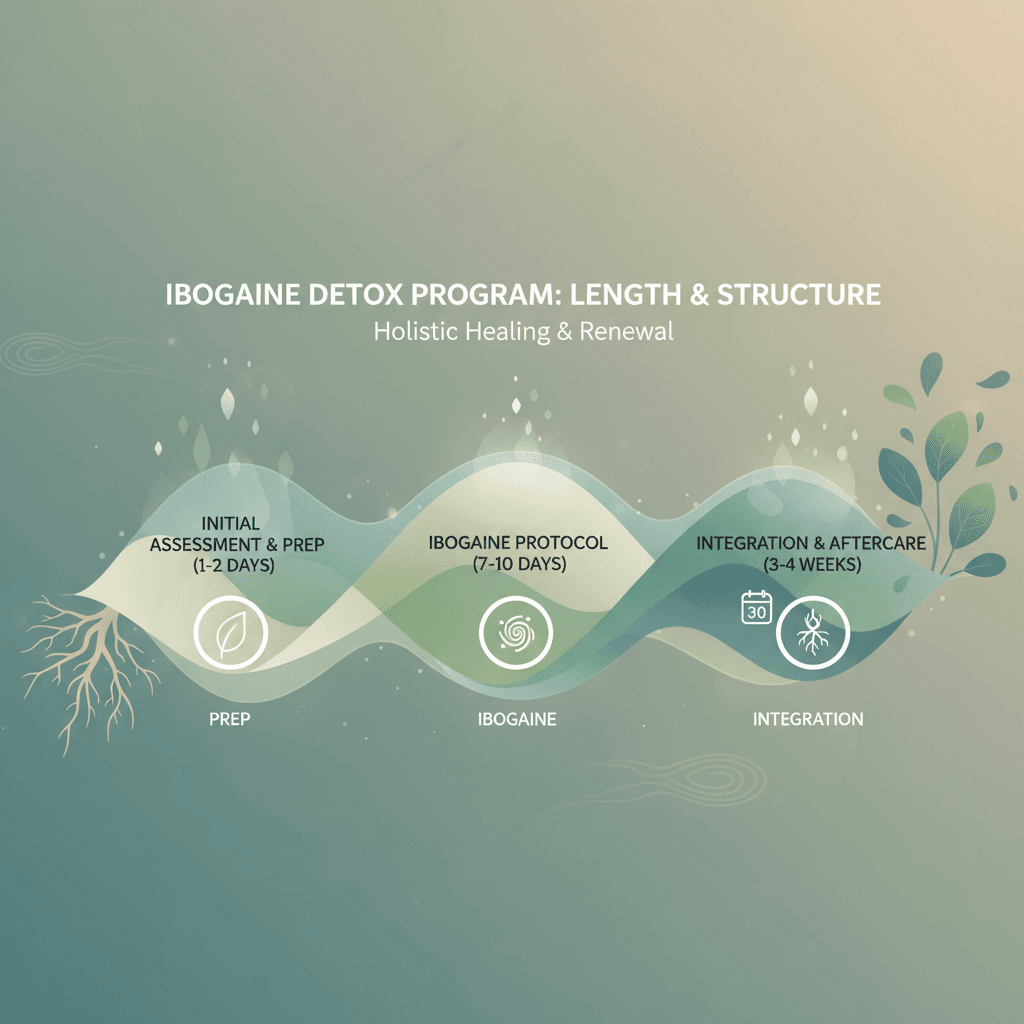
When you start looking into ibogaine, one of the first practical questions you are likely to ask is how long the whole process actually takes. Ibogaine detox program length is not just about the single night of treatment. It includes preparation, medical screening, the intensive dosing session, several days of medical observation, and a much longer period of integration and aftercare.
Clinical reports and case studies show that a typical medically supervised ibogaine detox program in a residential setting usually lasts about one week from admission to discharge, with the heaviest effects concentrated in the first 24 to 36 hours [1]. After that first week, your real recovery timeline continues to unfold over months and years, supported by ongoing care.
As you explore the length of ibogaine detox program, it helps to think in terms of phases rather than a single date on the calendar.
Key factors that affect program length
Even though many ibogaine programs follow a similar basic timeline, your specific ibogaine detox program length may vary. Several factors influence how long you stay in structured care and how much time you will likely need for recovery afterward.
Type and severity of substance use
If you have a long history of high dose opioid use, alcohol dependence, or multiple substances, you usually need more preparation and closer monitoring. Clinical data from a residential ibogaine program in Mexico used mainly with opioid dependent patients shows that treatment was delivered in a one week residential stay, with intensive monitoring around the dosing period [2].
If your use is less severe or involves substances with milder withdrawal patterns, your stay may still be similar in length but your medical and comfort needs during detox can be different.
Medical and psychiatric history
Ibogaine has significant cardiovascular effects. Programs that follow best practices require careful screening, such as ECG or EKG, lab work, and medical clearance before proceeding. In a MAPS sponsored case, the patient underwent thorough medical screening and ongoing monitoring by nursing staff during detox to help manage safety concerns and withdrawal symptoms [3].
If your initial screening identifies heart issues, electrolyte imbalances, or certain psychiatric conditions, your program may need extra preparation days or may recommend alternative options.
Dosing strategy and clinical protocol
Most structured programs use what is called a flood dose of ibogaine hydrochloride, often around 15 mg/kg plus or minus 5 mg/kg, taken one time at the beginning of the session. This protocol usually produces a 12 to 36 hour session that includes acute, evaluative, and residual phases [2].
The dosing strategy affects how long you will require continuous observation. A full flood dose generally calls for at least several days of onsite monitoring after the main session, which is part of your overall ibogaine detox program length.
Aftercare and support plans
The formal residential portion of treatment is only one piece of your recovery timeline. In a MAPS case example, the participant completed a brief inpatient ibogaine stay, then transitioned to a halfway house, a treatment court program, 12 step meetings, and regular drug testing for about a year, and reported remaining abstinent from drugs and alcohol for more than four years [3].
If you build a strong aftercare plan, including counseling, support groups, and possibly sober living, you give yourself more time and structure to stabilize the changes started in the ibogaine session.
Typical one week ibogaine program timeline
Evidence from real world treatment centers offers a clear picture of the ibogaine detox program length you can expect in a residential setting. At one well documented program in Mexico, ibogaine detoxification was provided in a residential environment over approximately one week [2].
Here is how that kind of schedule generally breaks down.
Day 1: Admission and medical screening
On your first day, the primary focus is safety and information gathering. You usually complete:
- Comprehensive medical intake and physical exam
- Cardiac screening, such as ECG or EKG
- Lab testing, including basic blood panels and electrolytes
- Review of your substance use history and current medications
- Planning for your detox strategy and ibogaine dosing
Rigorous screening and live cardiac monitoring are central features in documented programs. The Mexican residential program used ECG, ongoing cardiac monitoring, and intravenous saline and electrolytes as needed to help protect patient safety [2].
For you, this means your first day in the facility is typically focused on assessments, stabilization, and preparation rather than immediate dosing.
Day 2: Preparation and stabilization
The next phase often centers on preparing you physically and mentally for the flood dose. During this time you may:
- Begin tapering or transition medications where clinically appropriate
- Receive fluids and electrolytes if there are signs of dehydration or imbalance
- Meet with clinicians or therapists to set intentions and understand what to expect
- Rest and adjust to the environment
This preparatory day is important because it reduces your risk during the actual ibogaine session and gives you space to ask questions about how the ibogaine treatment duration will unfold for you.
Day 3: Ibogaine flood dose night
The core of your ibogaine detox usually takes place in a single night. In the MAPS case, the flood dose was administered in the evening, and the most intense phase of the experience continued through the night until the next morning [3].
During this 12 to 36 hour window:
- You receive your flood dose based on your weight and medical plan
- You experience the acute phase of ibogaine, often with vivid visions and strong physical sensations
- Clinical staff monitor your vital signs continuously, often with live cardiac monitoring
- Nursing and medical staff remain present to respond to nausea, anxiety, or other issues
Programs documented in the research emphasize careful medical supervision during this period, including live monitoring and IV saline and electrolytes when needed, because ibogaine can place stress on the heart and body [2].
Even though this single night is the most intense part of your ibogaine therapy program timeline, it is only part of your full ibogaine detox program length.
Days 4 to 6: Recovery, monitoring, and early integration
After the peak of the experience ends, you enter a residual phase. In the MAPS case, the participant spent five more days at the clinic to rest, reflect, and recover before discharge [3].
During these recovery days you can expect:
- Continued medical monitoring as your vital signs and sleep patterns normalize
- Support for residual withdrawal symptoms, if you were detoxing from opioids or another substance
- Nutritional support, hydration, and rest
- Gentle integration work, such as processing insights, journaling, or low intensity therapy sessions
Research from the Mexican program indicates that this one week residential structure, anchored by medical and psychological support during and after the dosing, was associated with meaningful outcomes. Among 88 participants, 30 percent reported never returning to opioid use after treatment, and 41 percent reported at least six months of opioid abstinence at the time of survey [2].
You can think of these post dosing days as a bridge between the acute ibogaine session and the early stages of life after detox.
Day 7: Discharge planning and transition
By the end of a standard week long program, you and your treatment team usually decide whether you are ready for discharge or whether you need additional days onsite. If you are preparing to leave, you will normally:
- Review your medical status and progress
- Discuss any medications or supplements you will continue to take
- Finalize your aftercare plan, which might include therapy, 12 step meetings, or a sober living home
- Identify supports, such as family, peers, or mentors, who will help you stay engaged with recovery
This discharge planning is where your short ibogaine detox program length connects with your longer term recovery timeline.
Phases of ibogaine detox and recovery
Understanding the phases you are likely to move through can help you decide if this approach matches your needs and expectations for how many days ibogaine treatment takes.
Acute, evaluative, and residual phases
Clinical descriptions of ibogaine sessions often divide the experience into three stages:
-
Acute phase
This begins within hours of dosing and can last many hours through the night. It is marked by intense visionary experiences, changes in perception, and strong physical sensations such as nausea or ataxia. Close monitoring and support are essential in this stage [2]. -
Evaluative phase
As the intensity decreases, you may begin to reflect on your life, relationships, and substance use. Many people describe this as a period of insight or emotional processing. You remain under observation, but you may feel more able to communicate and reflect. -
Residual phase
Over the next 24 hours or more, the acute effects taper, but you might still feel physically drained or emotionally sensitive. Supportive care, rest, and gentle integration work are important during this time.
All three phases typically occur within the 12 to 36 hour session window created by the flood dose protocol described in the research [2].
Extended medical observation
Your ibogaine detox program length includes a period of extended observation that goes beyond the acute session. Research from both MAPS and the Mexican residential program underscores the importance of:
- Rigorous screening before dosing
- Live cardiac monitoring during and after dosing
- Availability of intravenous saline and electrolytes
- Several days of onsite observation before discharge [1]
For you, this means the first week is not simply about getting through the night. It is about giving your body time to stabilize under medical supervision before you take on the demands of everyday life again.
Integration and aftercare
The question is not only how long ibogaine treatment lasts inside a clinic but also how long you give yourself to integrate the experience. In the MAPS case, aftercare included:
- A halfway house stay
- Participation in a treatment court program
- Regular 12 step meetings
- Ongoing urine and hair testing for up to one year [3]
With this structure, the participant maintained abstinence from drugs and alcohol for more than four years. Your own path might look different, but these details highlight how essential it is to treat ibogaine as the beginning of a process, not a one night cure.
If you are planning ahead, it can help to read more about how long recovery takes after ibogaine so you can align your expectations with what the research suggests.
Ibogaine may interrupt withdrawal and reduce cravings, but sustained change depends heavily on what you do in the weeks, months, and years that follow.
Why program length matters for safety and outcomes
The specific ibogaine therapy length of stay you choose is not just a scheduling decision. It has real implications for your safety and the likelihood of successful outcomes.
Safety through structured monitoring
Ibogaine can affect heart rhythm and blood pressure, especially in people with underlying cardiovascular issues or electrolyte imbalances. In the Mexican program, clinicians combined:
- Rigorous pre treatment screening
- Continuous cardiac monitoring during dosing
- Intravenous fluids and electrolytes
- Ongoing medical supervision over a one week stay [2]
Similarly, in the MAPS case, thorough medical screening and close nursing supervision were integral to the detox process [3].
If a program advertises an extremely short stay or minimal post dosing observation, you may want to ask detailed questions about how they handle safety and how their ibogaine program schedule compares to the research.
Effectiveness and abstinence rates
Outcomes from the one week residential program in Mexico suggest that ibogaine assisted detox can support meaningful changes, especially when combined with structured follow up. Among 88 participants:
- 30 percent reported never returning to opioid use
- Of those who abstained completely, 54 percent reported at least one year of abstinence and 31 percent at least two years
- Approximately 41 percent of all participants reported more than six months of opioid abstinence at the time they were surveyed [2]
These numbers do not guarantee results for you, but they show that a one week ibogaine detox program length, combined with monitoring and psychological support, can contribute to durable change for a significant number of people.
Emotional processing and stability
A longer inpatient stay, even if it is just one week instead of two or three days, gives you more time to:
- Regain physical strength after the intense session
- Begin processing any challenging memories or emotions that surfaced
- Stabilize sleep and appetite
- Prepare mentally for returning to your life
Rushing this process can leave you feeling overwhelmed or disoriented once you leave the program, especially if your everyday environment includes triggers or people who still use substances.
Comparing program options and timelines
As you compare ibogaine therapy options, you will see differences in how providers define the duration of ibogaine therapy program. Paying attention to these details can help you choose a setting that aligns with both research and your personal needs.
Questions to ask about length of stay
When you speak to a provider, you might ask:
- How many days is the standard residential stay from admission to discharge
- How much time is allocated to medical screening before dosing
- How long you will remain under direct medical observation after the flood dose
- What kind of monitoring equipment is used during the session
- How integration and aftercare planning are built into the schedule
Their answers will give you a clearer picture of how long ibogaine treatment lasts in their specific program.
Aligning your life with the program
You also have to consider your own responsibilities and constraints. A one week stay plus travel and recovery time may require:
- Arranging time off work or school
- Coordinating childcare or family support
- Planning for a safe environment after you return home
Looking honestly at what you can commit to will help you set realistic expectations for your ibogaine detox program length and your recovery journey as a whole.
Putting it together: Your ibogaine detox timeline
If you put all of these pieces together, a typical ibogaine detox journey looks like this:
- About one week of residential care that includes screening, dosing, and recovery
- A single night or 12 to 36 hour period of intense ibogaine effects under close medical supervision
- Several days of observation and early integration before discharge
- Weeks and months of continued therapy, support groups, and lifestyle changes
- The possibility, supported by some research, of multi year abstinence when ibogaine is combined with structured aftercare [1]
As you continue your research into the ibogaine therapy length of stay that feels right for you, it can help to think not only about days in a clinic but about how you will support yourself for the long term. Ibogaine can provide a powerful reset, but the way you fill the days, weeks, and years that follow is what ultimately shapes your recovery.