
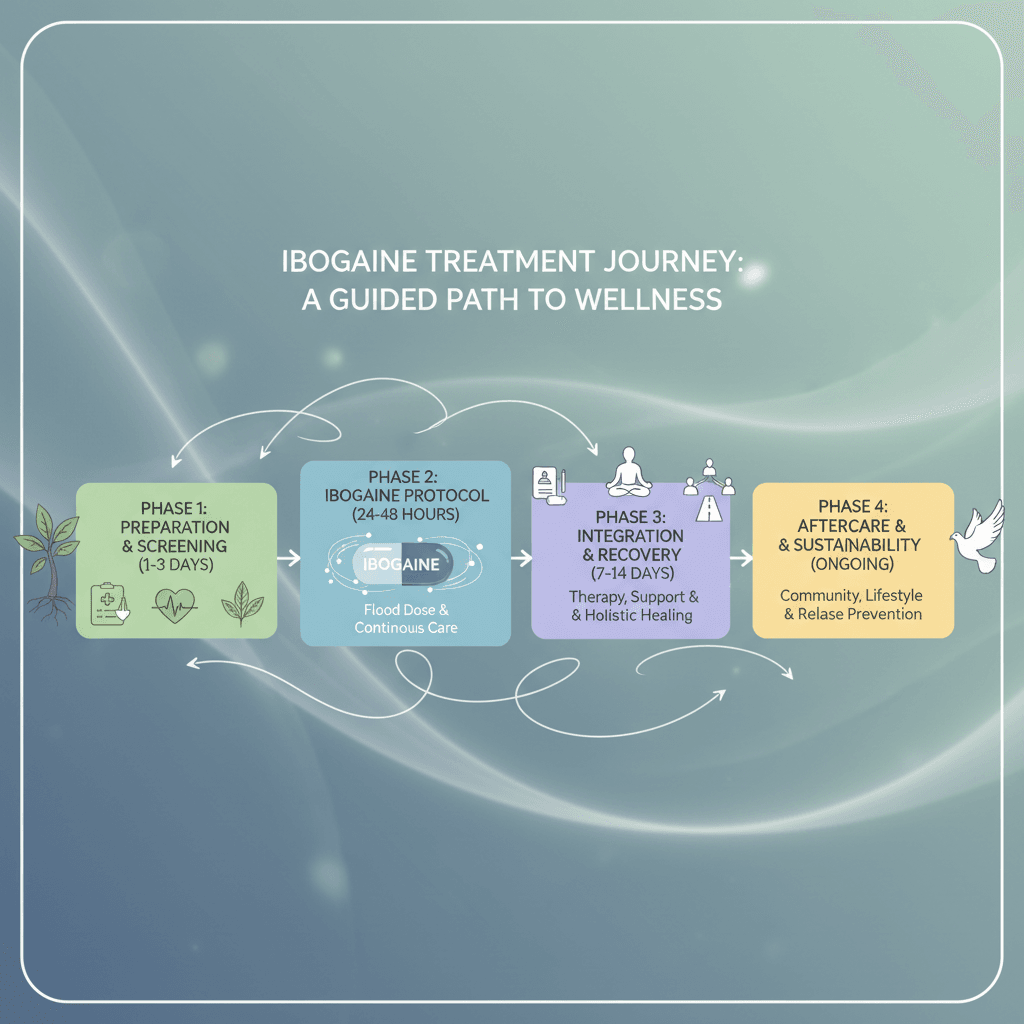
Ibogaine treatment can look mysterious from the outside. You may hear stories of a powerful “one night” experience, but when you begin researching real programs, you quickly see that a safe ibogaine program schedule is much more structured and extended than a single session. Understanding how an ibogaine program is organized, how long each phase usually lasts, and why careful observation and integration are essential can help you decide whether this level of care is right for you.
This ibogaine program schedule explained guide walks you through typical phases of care, from preparation and detox to the medicine session, recovery days, and long term integration.
Understanding the structure of an ibogaine program
Although each clinic has its own approach, most medically supervised ibogaine treatment programs follow a similar overall structure. Instead of thinking of ibogaine as a one time event, it helps to view it as a multi week process.
You will usually move through:
- Screening and medical clearance
- Preparation and pre treatment counseling
- Detox and stabilization
- Ibogaine dosing and acute experience
- Immediate post treatment monitoring
- Early recovery and rest days
- Integration and continuing care
You can explore more about how long each phase can take in resources like ibogaine treatment duration, ibogaine therapy program timeline, and duration of ibogaine therapy program. Here, the focus is on the day to day schedule inside a complete program.
Phase 1: Screening and medical clearance
Before you travel or commit to a date, a reputable ibogaine program begins with a detailed screening process. This is where safety is either established or a decision is made not to proceed.
Medical and psychological assessments
You can expect:
- A full medical history, including heart disease, seizures, liver issues, and current medications
- Lab work, often including liver function and electrolytes
- An electrocardiogram (ECG) to evaluate your heart rhythm
- A mental health assessment to review conditions like PTSD, depression, or anxiety
In a 2024 study led by Stanford Medicine, special operations veterans with traumatic brain injury received structured pre treatment clinical and neurobiological assessments before receiving ibogaine with magnesium in Mexico, followed by post treatment evaluation at Stanford. This design allowed a clear before and after comparison of symptoms and cognitive functioning [1]. Responsible programs follow a similar logic, with careful medical assessment before you ever receive a dose.
If you are on methadone, buprenorphine, benzodiazepines, or other medications that interact with ibogaine, the team will usually help you plan a taper or transition, often weeks in advance.
Phase 2: Preparation and pre treatment counseling
Once you are medically cleared and a tentative date is set, you enter the preparation phase. This is where you and the team begin to shape your goals, clarify your intentions, and get your body and mind ready.
Psychological preparation and expectations
A good ibogaine program schedule includes time for:
- One on one sessions to discuss your history with substances or trauma
- Education on what ibogaine is likely to feel like physically and emotionally
- Discussion of fears, expectations, and realistic outcomes
- Planning for what you will do with insights that may arise
The 2024 Stanford Medicine study found that a single supervised oral dose of ibogaine with magnesium produced significant reductions in PTSD, depression, and anxiety symptoms and major improvements in disability ratings at one month follow up [1]. Those results did not come out of nowhere. They were built on structured assessment and follow up, which underscores how important preparation and later integration really are.
Lifestyle adjustments before arrival
Ahead of arrival, you may be asked to:
- Avoid alcohol and certain substances
- Stabilize sleep and nutrition as much as possible
- Begin journaling or writing about your intentions
- Coordinate time off work and arrange home support for aftercare
This groundwork is part of what makes a complete ibogaine therapy program timeline more effective than a simple “detox and dose” model.
Phase 3: Detox, stabilization, and daily rhythm
For many people, the first days on site focus on detox and stabilization. The length of ibogaine detox program and ibogaine detox program length can vary based on the substances you use, dose, and how long you have been using.
Short stay versus extended detox
If you use short acting opioids or stimulants, detox might be stabilized in a few days. If you are on methadone, buprenorphine, or other long acting substances, you may need a longer taper or bridging medications before ibogaine is considered safe.
During this detox phase, your daily schedule usually includes:
- Regular vital sign checks
- Medical supervision and symptom management
- Light, digestible meals and hydration
- Gentle movement, breathing exercises, and rest
- Therapy sessions that support emotional stabilization
Some centers, such as Experience Ibogaine Treatment Center, offer multiple detox tracks tailored to different substances, including fentanyl, short acting opiates, and long acting medications like Suboxone and methadone. These programs use continuous medical supervision and individualized care to manage the physical, psychological, and spiritual aspects of withdrawal [2].
Phase 4: The ibogaine dosing day
The ibogaine dosing day is usually the central point in the schedule, but it is carefully framed by the days before and after. When your team determines that your detox is stable and medical parameters are clear, they will plan the dosing session.
What typically happens on dosing day
You can expect a highly structured day that may include:
- Final medical checks and review of your current condition
- A pre session meeting to revisit your intentions and coping tools
- Administration of a test dose or full dose of ibogaine, often in capsule form
- Continuous monitoring by medical staff throughout the acute experience
In the Stanford Medicine veteran study, participants received a single oral ibogaine dose with magnesium under medical monitoring at a clinic in Mexico to reduce cardiac risk, then later returned for follow up at Stanford [1]. This illustrates the importance of structured dosing and observation inside a broad program schedule.
Phase 5: The ibogaine experience itself
The ibogaine experience tends to unfold in distinct phases over about 24 to 36 hours, even though your total treatment stay is longer.
According to Practical Recovery, people often first notice auditory sensations like buzzing, similar to bees or a distant motorcycle, along with physical effects such as dizziness, nausea, lack of coordination, and sometimes vomiting. Most of this time is spent lying down with eyes closed while you move into dream like, internally focused visionary states [3].
Visionary and reflective phases
During the peak, you may experience:
- Cyclical, sometimes intense visions
- Encounters with past traumas, fears, or unresolved memories
- A progression, for many people, toward more peaceful or transcendent imagery
- A strong sense of self review or life review
Practical Recovery notes that this journey can contribute to increased self acceptance and confidence as you move through difficult material toward calmer states [3].
The peak visionary phase is often around 12 hours, followed by a long period of exhaustion and processing. The total acute experience is typically about three days, with two additional days often affected by physical fatigue and limited sleep [3].
Phase 6: Immediate post treatment monitoring
Right after the peak ibogaine effects recede, you enter a delicate recovery window. You may feel clearer mentally, but your body is usually tired. A sound ibogaine program schedule builds in at least a couple of days of close medical observation after dosing.
Medical and emotional care in early recovery
You can expect:
- Regular monitoring of heart rate, blood pressure, and overall stability
- Light support with walking, showering, and basic self care if you feel weak
- Simple, gentle meals and ongoing hydration
- Quiet time to rest, reflect, and begin integrating insights
Some programs add a carefully timed capstone experience toward the end of the schedule. For example, Experience Ibogaine Treatment Center incorporates a 5 MeO DMT session after detox and ibogaine treatment to deepen insight and strengthen commitment to recovery, within a framework of preparation and post session support [2]. If a center offers additional medicines, you can ask exactly how they are scheduled and how safety is handled.
You can find more detail on what happens in the days following dosing in guides like how many days ibogaine treatment takes and ibogaine therapy length of stay.
Phase 7: Early rest, reflection, and integration
Even after your vital signs have stabilized and you are cleared medically, you will likely still feel physically taxed and mentally active. You might be awake much of the night replaying visions or insights. Practical Recovery points out that physical exhaustion often lasts about two days after the peak, while mental activity can continue to disrupt sleep [3].
Practices that support integration
This part of the ibogaine program schedule often revolves around:
- Gentle, non demanding conversation with therapists or guides
- Journaling or recording voice notes about what you experienced
- Light group meetings or check ins, if you feel ready
- Simple walks or quiet time outdoors
Because recalling the full experience can be difficult once you return home, journaling or recording details of your visions as soon as you are able is strongly recommended. This helps you integrate and make sense of the journey later on [3].
Some programs maintain structured daily routines at this stage that include:
- Morning check ins and vitals
- A mid day group or therapeutic activity
- Afternoon rest and journaling
- Evening reflection or planning for aftercare
How long does a full ibogaine program last
There is no single schedule that fits everyone. However, you can think of time in several layers:
- Time in detox and stabilization
- Time in acute ibogaine experience and immediate monitoring
- Time in structured early integration at the clinic
- Time in longer term integration at home
Resources such as how long ibogaine treatment lasts and how long recovery takes after ibogaine can help you compare different program lengths.
Comparing program timelines
Below is a simplified way to think about typical timelines in an ibogaine therapy program.
| Program component | Shorter schedule | Extended schedule | What changes |
|---|---|---|---|
| Detox and stabilization | 2 to 4 days | 7 to 14 days or more | Longer if you use long acting substances or have complex health needs |
| Ibogaine dosing and peak | 1 day peak within 3 day acute window | Similar, but with more pre and post care | Dose timing is similar, support around it is longer |
| Post treatment monitoring | 2 to 3 days | 5 to 7 days or more | Extended observation, more time to regain strength |
| On site integration | 1 to 3 days | 7 to 14 days | More therapy, planning, and daily structure |
| Total on site stay | About 7 to 10 days | 2 to 4 weeks or longer | More time for body, mind, and life structure to adjust |
Shorter stays may be appropriate if you are medically stable, on short acting substances, and have strong support waiting at home. Extended stays can be helpful if you have multiple medical or psychiatric conditions, long term opioid use, or limited support in your daily life.
Why extended observation and integration matter
You might wonder why you should consider a longer ibogaine therapy program timeline if the main medicine experience happens in one night. The research and clinical experience available today suggest several reasons to value a broader, more gradual schedule.
Stability and safety
Ibogaine affects your heart rhythm and autonomic nervous system. Extended observation allows medical staff to:
- Catch and treat late appearing side effects
- Adjust medications or supportive care as your body recovers
- Ensure your nutrition and hydration are back on track before you travel
In the Stanford Medicine study, the treatment plan involved pre treatment assessments, a single oral ibogaine dose with magnesium in a medically monitored setting, and follow up evaluation back in the United States. Participants showed large improvements in functioning and symptom reduction, with disability scores dropping from mild or moderate disability to none at one month follow up [1]. That kind of outcome hinges on more than the dose alone. It reflects careful screening, monitoring, and structured follow up.
Making use of the “window” after ibogaine
Clinically, many people experience a period after ibogaine in which cravings are significantly reduced. Practical Recovery notes that for opioid addiction, withdrawal symptoms and cravings often resolve quickly and may not return for weeks or months in some cases [3].
A strong program schedule treats this period as a window of opportunity. With lower cravings and increased clarity, you are often more able to:
- Engage in therapy and address core issues
- Restructure your daily habits and environment
- Commit to support groups, outpatient care, or other services
- Strengthen relationships that support your recovery
The more structured support you have in this window, whether at the clinic or immediately after returning home, the more likely you are to turn short term change into long term stability.
What to look for in an ibogaine program schedule
When you compare programs, it helps to look beyond marketing language and ask detailed questions about the actual schedule. You can use what you have learned in this ibogaine program schedule explained guide to shape the questions you ask.
Consider asking:
- How many days of on site care are included, from arrival to departure
- How the team handles detox and what they do if you are on long acting medications
- How long they monitor you after the ibogaine dose
- What daily structure exists for integration and aftercare planning
- Whether they provide or recommend follow up therapy or support back home
You might also ask how they help you prepare for life after discharge and what kind of communication they maintain with you in the weeks that follow. Understanding how long ibogaine treatment lasts in your specific situation is less about an exact number and more about seeing how each phase of care is supported.
Bringing it all together for your decision
Ibogaine is not a quick fix, even though the core medicine session is brief. A well designed ibogaine program schedule surrounds that session with careful preparation, medically supported detox, close observation, early recovery time, and thoughtful integration.
By focusing on the full length and structure of ibogaine treatment rather than the dose alone, you give yourself the best chance to turn an intense experience into sustainable change. As you consider your options, you can use resources like ibogaine treatment duration and how long recovery takes after ibogaine to clarify what you need.
You deserve a program that respects both the power of ibogaine and the complexity of your life. Understanding the schedule, phase by phase, is a solid place to start.