
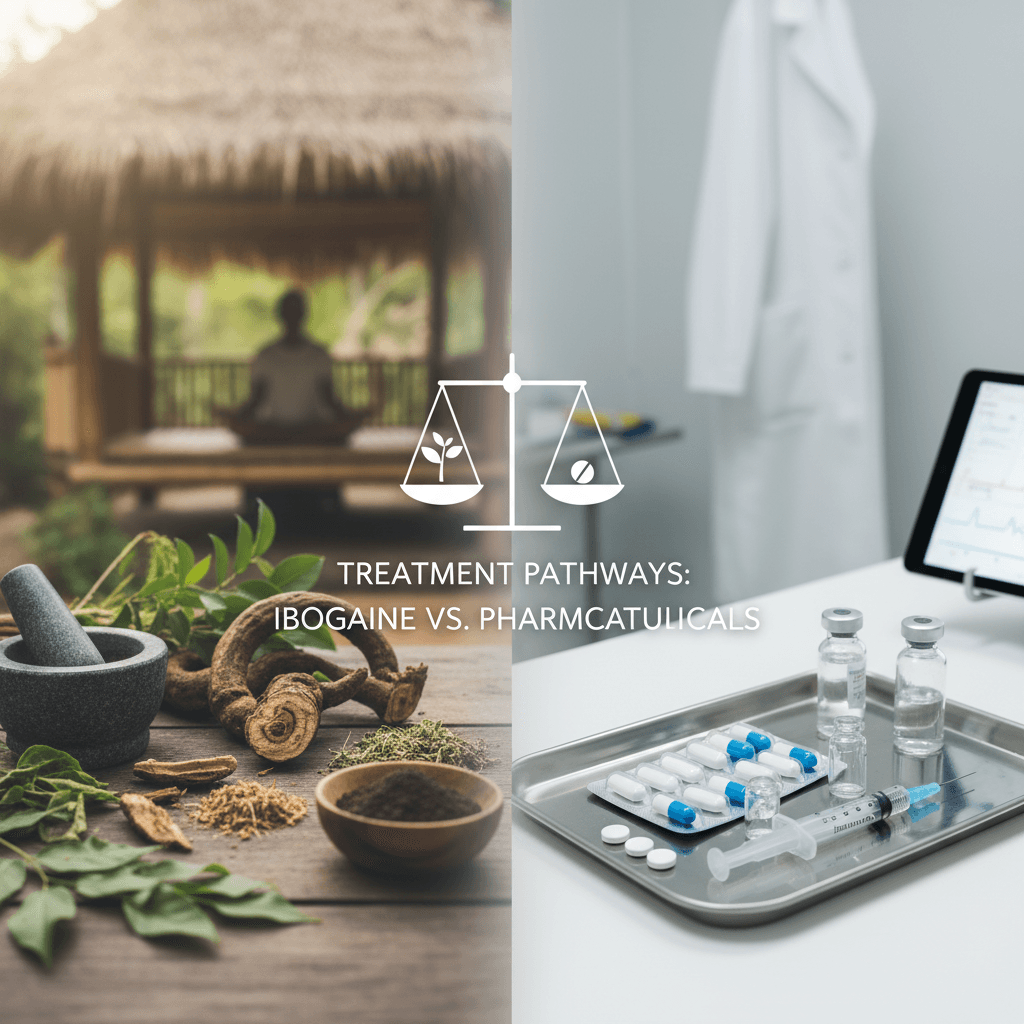
Understanding ibogaine vs detox medication treatment
If you are comparing ibogaine vs detox medication treatment, you are likely trying to make sense of very different paths to the same goal. You want to get off substances safely, reduce cravings, and give yourself a real chance at long‑term recovery. To do that, you need to understand not just what each option promises, but how they work, what they feel like, and what risks they carry.
Ibogaine is a plant‑derived psychedelic with powerful effects on the brain that some people describe as a single‑session “reset.” Traditional detox medications, such as methadone or buprenorphine, work very differently. They are taken regularly, often for months or years, and are designed to stabilize you and reduce withdrawal without producing a high [1].
Both approaches can play a role in addiction treatment. Your task is to decide which one, or which combination, fits best with your body, your history, and your goals.
What ibogaine is and how it works
Ibogaine is a psychoactive substance derived from plants like Tabernanthe iboga. It affects several neurotransmitter systems at once, including serotonin transporters and various brain receptors involved in mood, reward, and learning [2]. Researchers believe this broad activity is what may help reduce withdrawal symptoms and cravings in people with substance use disorders.
When you take ibogaine in a clinical setting, you usually receive a single, weight‑based dose. The experience often unfolds in three overlapping phases that can last up to 24 hours or longer:
- An initial intense psychedelic phase with vivid imagery and emotional material
- A reflective or “processing” phase
- A residual phase where you may still feel altered, tired, and physically unsteady [2]
Ibogaine is metabolized into noribogaine, a compound that remains in your body for days or weeks. Noribogaine is thought to continue moderating mood and cravings during that period, which is why some people describe a weeks‑long “window” where recovery work feels more possible [1].
Potential benefits of ibogaine
Early studies and observational reports suggest several possible benefits:
- Rapid reduction or near‑elimination of acute opioid withdrawal in many people
- Short‑term reduction in cravings
- Subjective psychological insights into trauma, relationships, and the roots of addiction
- A sense of “reset” or emotional relief in responders
In one study of 88 people treated with ibogaine in Mexico for opioid addiction, about 80% said their withdrawal symptoms were eliminated or drastically reduced, and 50% reported reduced cravings lasting at least a week. Thirty percent said they never used opioids again after treatment, and just over half of those abstainers stayed off opioids for at least a year [3].
Those who responded best to ibogaine also reported lower depression and anxiety and higher subjective well‑being. Participants who described the session as spiritually meaningful or insight‑producing were more likely to be long‑term responders [3].
A 2024 study at Stanford Medicine looked at a different group, special operations veterans with traumatic brain injury. After ibogaine with magnesium in a Mexican clinic, they showed large reductions in PTSD, depression, and anxiety symptoms, as well as improvements in cognition, with effects lasting at least one month [4]. Although this study focused on brain injury and trauma rather than addiction alone, it suggests ibogaine may support neuroplasticity and stress reduction in a way that could aid broader recovery efforts.
Serious safety concerns and legal limits
Ibogaine is not a harmless or risk‑free shortcut. It is currently a Schedule I substance in the United States, which means you cannot legally receive ibogaine treatment in a medical setting in the US. People who choose ibogaine often travel to Mexico, Canada, or other countries where regulated clinics operate [2].
The biggest concern is cardiac risk. Ibogaine can prolong the QT interval on an ECG and trigger arrhythmias like Torsade de pointes, which can be fatal [2]. In a 2022 open‑label study in the Netherlands, half of the 14 participants who took ibogaine HCl had a QTc interval above 500 ms within 24 hours, a range that is considered high risk. All of them also developed severe but temporary ataxia, meaning they could not walk without help for 24 to 48 hours [5].
Because of these risks, ibogaine must only be used under strict medical supervision, with cardiac monitoring and pre‑screening to exclude anyone with heart disease, electrolyte disturbances, or medications that also prolong the QT interval. Even with precautions, serious complications and deaths have been reported, especially where screening and monitoring were inadequate [6].
What traditional detox medication treatment involves
When you hear “detox medication treatment,” you are usually looking at established medical approaches like:
- Medication assisted treatment (MAT) with methadone or buprenorphine
- Short‑term use of other medications to manage withdrawal symptoms
- Longer term maintenance to stabilize brain function and reduce relapse risk
These medications work within a more conventional medical model. Instead of inducing a psychedelic state, they target specific receptors and symptoms with known dosing schedules and well‑characterized safety profiles.
How MAT and detox meds work
Medications like methadone and buprenorphine occupy opioid receptors in your brain. They reduce withdrawal and cravings without producing the intense high of short‑acting opioids when used as prescribed. Over time, they allow your brain to gradually “rewire” and stabilize, often over months or years [1].
Other supportive medications might be used during detox to manage:
- Anxiety and insomnia
- Gastrointestinal distress
- Muscle aches and flu‑like symptoms
- High blood pressure or rapid heart rate
These approaches do not claim to reset your brain in a single session. Instead, they aim to relieve immediate suffering and create a steady platform from which you can participate in therapy and rebuild your life.
Effectiveness and relapse rates
Medication assisted treatment has been studied for decades. Relapse rates with traditional approaches vary by population and setting, but estimates often fall between 40 and 60 percent. Methadone retention at 24 weeks is around 74 percent, while buprenorphine retention is roughly 46 to 48 percent [1].
Ibogaine studies are smaller and less rigorous, but some results are promising. In the Mexico cohort mentioned earlier, about half of participants reported no opioid use at 30 days, about one third maintained that at three months, and roughly 30 percent never used opioids again after treatment. Of those abstinent participants, 54 percent maintained abstinence for at least a year [3].
It is important to remember that these ibogaine numbers come from observational data, not randomized controlled trials. Researchers emphasize that more robust studies are needed before ibogaine can be considered equivalent or superior to standard treatments [7].
Risks and limitations of standard detox medications
Traditional detox and MAT are not risk‑free. Some of the main concerns include:
- Overdose risk after relapse, particularly if you stop methadone or buprenorphine and then return to your previous dose of illicit opioids
- Side effects like constipation, sweating, sexual dysfunction, or sedation
- Stigma around “still being on a drug”
- The need for long‑term adherence and frequent clinic visits in some programs
However, compared to ibogaine, standard detox medications rarely carry the same level of acute cardiac risk. Their side effects and safety profiles are better understood, and serious complications are less common when they are prescribed and monitored correctly [8].
Mechanism and experience: ibogaine vs detox medication treatment
When you compare ibogaine vs detox medication treatment, you are really comparing two different philosophies of how healing happens.
Ibogaine targets multiple systems at once, and its core promise is a rapid “reset” of brain circuits that drive addiction. The experience is psychedelic, introspective, and physically demanding. Standard detox medications aim for steady stabilization over time, without altered states of consciousness. The goal is to make your day‑to‑day life manageable while you do the deeper work in therapy and recovery communities.
Mechanisms at a glance
| Aspect | Ibogaine | Detox / MAT medications |
|---|---|---|
| Primary action | Broad activity at NMDA, serotonin, dopamine, and opioid receptors [1] | Targeted action at opioid receptors (methadone, buprenorphine) or symptom‑specific pathways |
| Course | Single high‑dose session with long metabolite tail (noribogaine) | Ongoing daily or scheduled dosing |
| Experience | Intense psychedelic state 24 to 36 hours, introspection, visions, ataxia | Non‑psychedelic, focus on relief of withdrawal and cravings |
| Brain effects | Promotes neuroplasticity and possible “reset” of reward circuits [9] | Gradual normalization of brain function over months or years [1] |
Detox duration and recovery timeline
You might also be weighing how long each path will keep you in “detox mode,” and how quickly you can return to daily life.
With traditional detox and MAT, withdrawal management usually unfolds over days to weeks, and maintenance can continue as long as you and your provider feel it is needed. Addiction is treated as a chronic condition, and long‑term medication use is sometimes recommended to reduce relapse and overdose risk.
Ibogaine compresses much of the acute withdrawal experience into a single treatment window. In the Mexico study, most participants said ibogaine eliminated or drastically reduced withdrawal, and many did not return to substitution medications afterward [10]. However, the first 24 to 48 hours after dosing are physically intense, with possible nausea, ataxia, and exhaustion, and you still need weeks of integration and aftercare to stabilize your life.
One way to think about it is:
- MAT and standard detox stretch withdrawal and adjustment out more gently, often with less dramatic peaks and valleys.
- Ibogaine condenses the process into one major event with a demanding physical and psychological arc, then offers a potential period of enhanced neuroplasticity afterward [9].
Cost, access, and practical considerations
Cost, travel, and logistics can be just as important as biology when you are deciding between ibogaine and detox medication treatment.
Ibogaine treatments typically occur in specialized clinics outside the United States. A single 7 to 10 day program often ranges from 10,000 to 15,000 dollars or more, plus travel and any aftercare. Insurance rarely covers these services [1].
Traditional inpatient rehab and medical detox can cost between 25,000 and 50,000 dollars for a 30 day stay, not including follow up care. Medication assisted treatment on an outpatient basis is usually less expensive per month and is often partially or fully covered by insurance [1].
The reality for many people is that multiple treatment attempts are needed. That makes cost effectiveness a very individual calculation. A high upfront cost for ibogaine might feel worth it if you are a good candidate and respond well, but the lack of insurance coverage and legal access can be major barriers.
If you want to look more deeply at how ibogaine compares to specific options, you can also explore comparisons like ibogaine vs methadone detox, ibogaine vs Suboxone treatment, or ibogaine vs detox centers.
How ibogaine compares to traditional rehab and psychedelic therapies
You may not be choosing just between ibogaine and detox medication. Many people are also considering traditional rehab programs, ketamine therapy, or ayahuasca retreats.
Traditional residential rehab focuses on:
- Medical detox with standard medications
- Group and individual therapy
- Peer support and structured daily routines
These programs are effective for many, but they often struggle with severe withdrawal and persistent cravings, which can make it harder to engage fully in therapy. They also usually do not directly address neurological damage from long‑term substance use [9].
Ibogaine clinics often emphasize that their approach:
- Rapidly eases acute withdrawal for many people
- Normalizes neurotransmitter levels more quickly
- Opens a window of increased neuroplasticity and insight that can accelerate therapeutic work [9]
However, just like traditional rehab, ibogaine still requires long‑term support. Integration coaching, therapy, and community are essential if you want the acute benefits to translate into sustained recovery [9].
If you are also weighing other psychedelic‑assisted options, you might find it helpful to compare ibogaine vs ketamine therapy, ibogaine vs ayahuasca for addiction, or broader ibogaine vs psychedelic therapy for addiction.
Who might consider ibogaine vs detox medication treatment
There is no single “right” choice, but you can start to narrow the options by looking at your health, your history, and your goals.
You might lean toward traditional detox medication or medication assisted treatment if:
- You have known heart disease, arrhythmias, or other conditions that make ibogaine unsafe
- You prefer a gradual, non‑psychedelic, highly studied approach
- You need or want to stay close to home and under the care of a local medical team
- Insurance coverage and affordability are critical factors
You might consider ibogaine, provided you can access a medically supervised, legally operating clinic and pass careful screening, if:
- You have tried traditional detox or MAT multiple times without sustained success
- You are open to an intense psychedelic process and feel psychologically prepared
- You are medically eligible with normal cardiac function and no contraindicated medications
- You are willing to invest in robust aftercare, including therapy and integration coaching
For many people, a blended path also makes sense. You might use traditional detox medications for initial stabilization, then explore ibogaine in the future as part of a broader strategy, or you might complete ibogaine and then transition into a structured rehab or outpatient program. Resources like ibogaine vs traditional rehab, ibogaine vs rehab programs, and ibogaine vs medication assisted treatment can help you think through those combinations.
Making a safe and informed decision
When you step back from the details, a few core truths emerge about ibogaine vs detox medication treatment:
- Ibogaine shows real anti‑addictive promise in early studies, with some people achieving long periods of abstinence and deep psychological change.
- The evidence is still preliminary, studies are small, and serious cardiac and neurological risks remain a concern. Strict screening and monitoring are essential [11].
- Traditional detox medications and MAT have more extensive safety and efficacy data, lower acute medical risk, and wider access. They are not a quick reset, but they can be life‑saving, especially when combined with therapy and social support.
- Any path you choose will require long‑term follow up, lifestyle changes, and support. There is no medication, psychedelic or otherwise, that can replace the ongoing work of recovery.
As you compare your options, consider speaking with medical professionals who are familiar with both conventional and emerging treatments. Ask direct questions about safety, evidence, and aftercare. If you are drawn to ibogaine, be especially cautious about clinics that downplay risks or promise guaranteed cures.
Ultimately, your best detox journey is one that protects your life, respects your body, and gives you a realistic foundation for long‑term healing.