
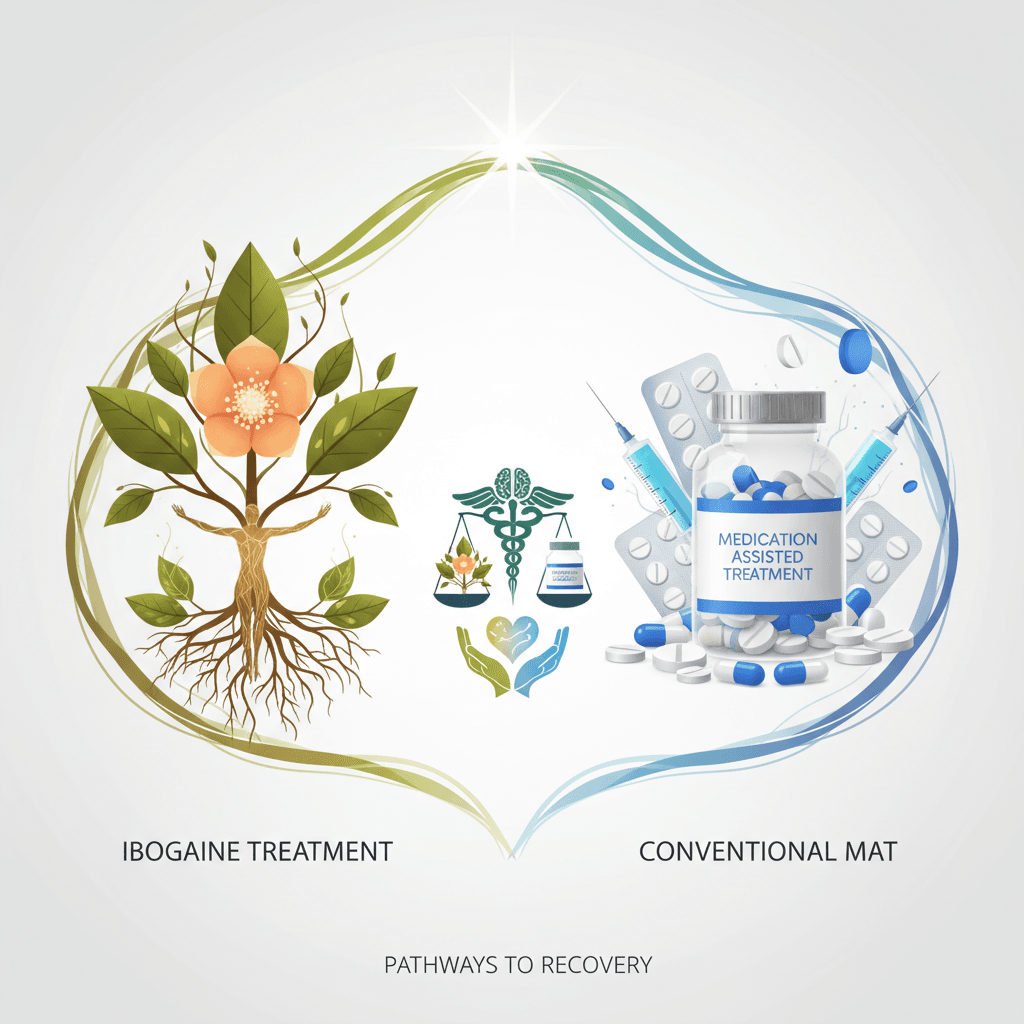
Understanding ibogaine vs medication assisted treatment
If you are comparing ibogaine vs medication assisted treatment for addiction, you are probably weighing two very different approaches to the same problem. On one side, you have long‑term, medically supervised use of methadone, buprenorphine, or Suboxone. On the other, you have a powerful psychedelic medicine like ibogaine, often offered as a single, intensive experience with the goal of “resetting” your system.
Both approaches can reduce withdrawal and cravings, and both carry real risks. The key is understanding how they work, what the evidence actually shows, and what they realistically can and cannot do for your recovery.
How ibogaine works in addiction treatment
Ibogaine is a psychoactive alkaloid derived from the African shrub Tabernanthe iboga. It affects many brain systems at once, including NMDA, serotonin, dopamine, and opioid receptors. This broad activity is part of why it is so different from standard medication assisted treatment.
You typically take ibogaine as a single high dose in a controlled setting. The acute psychedelic experience often lasts 24 to 36 hours, with intense inner imagery, “wakeful dreaming,” and deep psychological material surfacing. Its metabolite, noribogaine, remains active for days to weeks and may help stabilize mood and reduce cravings over time [1].
Instead of maintaining your opioid receptors with a substitute medication, ibogaine attempts to “reset” multiple neurotransmitter systems at once. Many people describe the experience as compressing months of therapy into a day or two, with insights about trauma, relationships, and the role substances have played in their lives.
How medication assisted treatment works
Medication assisted treatment (MAT) uses medications such as methadone or buprenorphine (Suboxone and similar formulations) to stabilize brain chemistry over time. These medications occupy your opioid receptors so that you:
- Do not go into withdrawal
- Have fewer cravings
- Do not get the same high if you use on top
According to summary data cited by Avante Ibogaine, methadone maintenance can retain about 74 percent of patients at 24 weeks when doses are at least 60 mg daily, while buprenorphine programs often retain around 46 to 48 percent over similar time frames [1].
MAT is usually part of a larger treatment plan that can include counseling, peer support, and sometimes residential or outpatient rehab. You stay on medication for months or years, and some people remain on it indefinitely. The goal is to give your brain time to heal slowly and to help you rebuild your life without the constant roller coaster of withdrawal and relapse.
Comparing mechanisms: Reset vs maintenance
At the heart of the ibogaine vs medication assisted treatment debate is a question of mechanism and timeline.
Ibogaine floods your system once, radically alters your perception, and tries to push your brain into a new equilibrium quickly. It is intense, front‑loaded, and deeply experiential. The psychedelic process itself is often part of the therapeutic effect, especially when you use ibogaine to explore trauma or the roots of your addiction [2].
MAT, in contrast, is not psychedelic and does not try to transform your mindset overnight. It stabilizes your brain chemistry gradually by occupying opioid receptors in a controlled way. You do not get the same kind of insight experience, but you gain predictability and lower day‑to‑day risk of overdose, withdrawal, and destabilization.
In practice, many people find that ibogaine feels like a radical interruption of their addiction pattern, while MAT feels like a safer, slower way to build a new pattern over time.
What the evidence says about ibogaine
Ibogaine has generated a lot of interest because of reports that it can dramatically reduce opioid withdrawal and cravings with a single dose. Observational research supports some of these claims, although rigorous randomized controlled trials are still lacking.
A 2017 observational study of 88 people treated with ibogaine in Mexico found that:
- 80 percent said ibogaine eliminated or drastically reduced opioid withdrawal symptoms
- 50 percent reported reduced cravings for at least one week
- 25 percent reported reduced cravings for three months or more
- 30 percent reported never using opioids again after treatment
- Among those who stayed abstinent, 54 percent maintained abstinence for at least one year and 31 percent for two or more years [2]
Treatment responders in that study also had lower depressive and anxiety symptoms and higher well‑being compared to non‑responders. Spiritual or insightful experiences during ibogaine sessions were linked to better outcomes, suggesting that the psychological and even spiritual aspects of the journey may be part of its therapeutic effect [2].
At the same time, researchers stress that these are observational results. No large randomized controlled trials have been completed to directly compare ibogaine to MAT or other standard treatments, so the evidence base is promising but incomplete [2].
What the evidence says about MAT
For MAT, the evidence base is broader and more established, especially for opioid use disorder. According to data summarized by Avante Ibogaine and drawn from sources like the National Institute on Drug Abuse, relapse rates for substance use disorders in general are around 40 to 60 percent. Within that, methadone and buprenorphine programs show:
- Methadone: retention rates around 74 percent at 24 weeks at adequate doses
- Buprenorphine: retention rates around 46 to 48 percent in many studies
- Ibogaine: in contrast, about 50 percent reporting no opioid use at 30 days, dropping to about 33 percent at 3 months in some observational work [1]
MAT does not usually produce dramatic overnight transformation. Instead, it consistently lowers overdose risk, reduces illicit opioid use, and improves functioning over time for many people who stay in care. It is also widely available, regulated, and integrated into mainstream medical systems.
Safety risks: Ibogaine vs MAT
Safety is one of the major dividing lines when you look closely at ibogaine vs medication assisted treatment.
Ibogaine carries known cardiac risks. A 2022 open‑label study in the Netherlands followed 14 patients with opioid use disorder who took a single 10 mg/kg oral dose of ibogaine hydrochloride. On average, their QTc interval, a measure of the heart’s electrical cycle, lengthened by about 95 milliseconds. Half of the participants had QTc values over 500 ms, which is associated with a higher risk of dangerous arrhythmias, although no torsades de pointes events occurred during 24 hours of monitoring [3].
In that same study, everyone experienced severe but temporary cerebellar ataxia, meaning serious problems with balance and walking that resolved within 24 to 48 hours. Psychomimetic effects such as wakeful dreaming, visual changes, and spatial disorientation lasted 3 to 7 hours but did not lead to full delirium [3].
Because of these cardiac and neurological effects, the researchers recommended that ibogaine use be limited to tightly controlled medical environments with strict cardiac monitoring and CYP2D6 genotyping, rather than informal or underground settings [3].
Broader reviews cited by Avante Ibogaine note documented fatalities, including 19 deaths associated with ibogaine from 1990 to 2008, often linked to inadequate screening or monitoring and underlying heart or health issues. The risk of QT prolongation and arrhythmia is central to any serious safety discussion [1].
MAT medications have their own risks, but they are better characterized and more consistently managed within medical systems. Methadone and buprenorphine can cause dependence, side effects, and overdose if misused. A major risk is overdose after relapse if you stop medication and then return to prior opioid doses with reduced tolerance [1]. However, when properly prescribed and supervised, MAT has a well‑established safety profile and is recognized as a standard of care.
Ibogaine’s emerging role in PTSD and trauma
Beyond addiction, ibogaine is being explored for trauma‑related conditions. A 2024 study from Stanford Medicine followed 30 US special operations veterans with traumatic brain injuries, severe PTSD, depression, and anxiety who traveled to a legal clinic in Mexico for ibogaine plus magnesium treatment. One month after treatment, their average disability score on the WHO Disability Assessment Scale dropped from 30.2, which indicates mild to moderate disability, to 5.1, which indicates no disability. PTSD symptoms dropped by 88 percent, depression by 87 percent, and anxiety by 81 percent [4].
Researchers reported no serious adverse events in this group under medical supervision and suggested that ibogaine may act through increasing theta brainwave activity to promote neuroplasticity and reducing complexity in cortical activity to dampen stress responses. This dual impact on functional ability and neuropsychiatric symptoms appears different from how most current medication assisted treatments for PTSD and TBI work [4].
These findings have helped drive a 50 million dollar initiative in Texas to fund ibogaine clinical trials for PTSD, depression, anxiety, and possibly other neuropsychiatric conditions that are not well served by existing medications [4].
It is important to note that in the United States, ibogaine remains a Schedule I substance, so patients in the Stanford study had to travel to Mexico for legal treatment. Access, legal status, and safety oversight remain major practical considerations [4].
Ibogaine vs MAT for opioid withdrawal and cravings
If your main concern is getting through withdrawal and controlling cravings, both ibogaine and MAT offer potential benefits, but they approach the problem differently.
In the 2017 Mexico study, 80 percent of participants felt that ibogaine eliminated or drastically reduced withdrawal, and half reported markedly reduced cravings for at least a week, with a quarter experiencing reduced cravings for three months or longer [2]. Another observational dataset cited by Avante Ibogaine suggests that around 50 percent of people who undergo ibogaine treatment report no opioid use at 30 days, which drops to around 33 percent at three months [1].
MAT, by contrast, prevents withdrawal by design as long as you continue your medication. Cravings are often greatly reduced but may not disappear completely. Instead of a single detox event, you enter a steady state where your medication covers you day after day. For many, this makes it easier to work, care for family, and engage in therapy without the fear of sudden detox.
If you want to focus more deeply on how ibogaine compares with models like methadone detox or buprenorphine tapering, you can explore resources such as ibogaine vs methadone detox and ibogaine vs detox medication treatment.
Cost comparison and access issues
Cost is another dimension where ibogaine vs medication assisted treatment can look very different over time.
According to Avante Ibogaine:
- Ibogaine treatment typically costs around 10,000 to 15,000 dollars for a 7 to 10 day stay, plus travel and aftercare costs.
- Traditional inpatient rehab often costs 25,000 to 50,000 dollars for 30 days.
- MAT itself may have low upfront costs, especially if covered by insurance, but ongoing medication and clinical visits can run 500 to 1,500 dollars per month. Over years, that adds up, especially if you have multiple treatment episodes [1].
If ibogaine worked perfectly in a single attempt, it could be cost effective relative to repeated rehab or years of MAT. However, not everyone responds fully to ibogaine, and many people benefit from additional therapy, support, or even repeat treatments. Your legal and geographic situation also matters, since ibogaine is not available in many countries, including the US, except in research settings.
MAT programs, in contrast, are available in most regions, often have insurance coverage, and are integrated with other health services. They may be more accessible even if long‑term costs are higher.
Where ibogaine fits among other psychedelic options
If you are also looking at ketamine clinics or ayahuasca retreats, you are not alone. Many people who consider ibogaine are comparing it to other psychedelic‑assisted therapies as well as to traditional rehab.
Ketamine, which is legal in medical settings in the US, is short‑acting and usually given in repeated sessions over weeks. It can rapidly reduce depressive symptoms and may help with cravings for some people, but it does not typically produce the 24 to 36 hour immersive journey associated with ibogaine. If you want a deeper comparison of these two, you might find ibogaine vs ketamine therapy helpful.
Ayahuasca, like ibogaine, is a plant‑based psychedelic traditionally used in ritual contexts. People sometimes seek out ayahuasca ceremonies for addiction, but the available data for addiction treatment is even more limited than for ibogaine. The page on ibogaine vs ayahuasca for addiction can provide a focused look at how these two experiences differ.
Compared with this broader field, ibogaine stands out for its specific track record in rapidly interrupting opioid use and its distinctive, long‑lasting metabolite effects. Other psychedelics may be safer from a cardiac standpoint and have more established clinical frameworks, but they do not always target withdrawal and cravings as directly.
You can also explore a broader comparison in ibogaine vs psychedelic therapy for addiction if you are trying to understand where ibogaine fits within this emerging category of care.
Summary: Ibogaine tries to compress deep psychospiritual work and neurochemical reset into a single event. Medication assisted treatment and most other psychedelic therapies spread therapeutic change out over weeks, months, or years.
Ibogaine vs MAT vs rehab and detox programs
When you compare ibogaine vs medication assisted treatment, you are also indirectly comparing both of these against more traditional interventions such as standard detox centers and rehab programs.
Short‑term detox facilities focus mainly on getting you through acute withdrawal, often with comfort medications. They typically do not provide long‑term medications like methadone or buprenorphine on an ongoing basis. You can learn more about how ibogaine relates to this approach in ibogaine vs detox centers.
Residential rehab programs give you a structured environment for several weeks, emphasizing therapy, group work, and lifestyle change. Some incorporate MAT, while others prefer abstinence‑based models. Because ibogaine combines aspects of detox, psychotherapy, and a profound altered state in a compressed timeframe, it raises real questions about how it compares to standard rehab. The resources ibogaine vs traditional rehab and ibogaine vs rehab programs explore these differences in more detail.
If you want to look at specific medication comparisons, there are also focused guides such as:
These can help you see how ibogaine stacks up against particular MAT paths, rather than thinking about MAT as a single, uniform option.
How to decide what fits you
Choosing between ibogaine vs medication assisted treatment is ultimately about matching the approach to your needs, risks, and values.
You may lean toward ibogaine if you:
- Are medically cleared for it and can access a highly supervised, reputable clinic
- Want a single, intensive experience rather than a long‑term medication plan
- Feel drawn to deep psychological or spiritual exploration of your addiction
- Have tried traditional rehab or MAT without feeling they addressed the core of your pattern
You may lean toward MAT if you:
- Want a well‑studied, regulated treatment with broad medical support
- Prefer gradual change with daily stability rather than a single high‑dose psychedelic event
- Have cardiac or medical risk factors that make ibogaine unsafe
- Need a treatment path available locally, ideally supported by insurance
In many cases, you do not have to see this as an either‑or decision. Some people pursue MAT and later explore psychedelic‑assisted therapies in research or legal settings. Others use ibogaine as a powerful interruption, then transition into more conventional support to stabilize gains.
As you compare your options, it can help to speak honestly with clinicians who understand both traditional medication assisted treatment and emerging psychedelic approaches, to review your medical history carefully, and to clarify what you most need: safety, speed, depth of insight, or stability over time.
You are not choosing a “magic bullet,” you are choosing a framework for your own healing. The more clearly you understand what ibogaine and MAT can offer, and where their limits and risks lie, the better positioned you are to take the next step in your recovery with open eyes.