
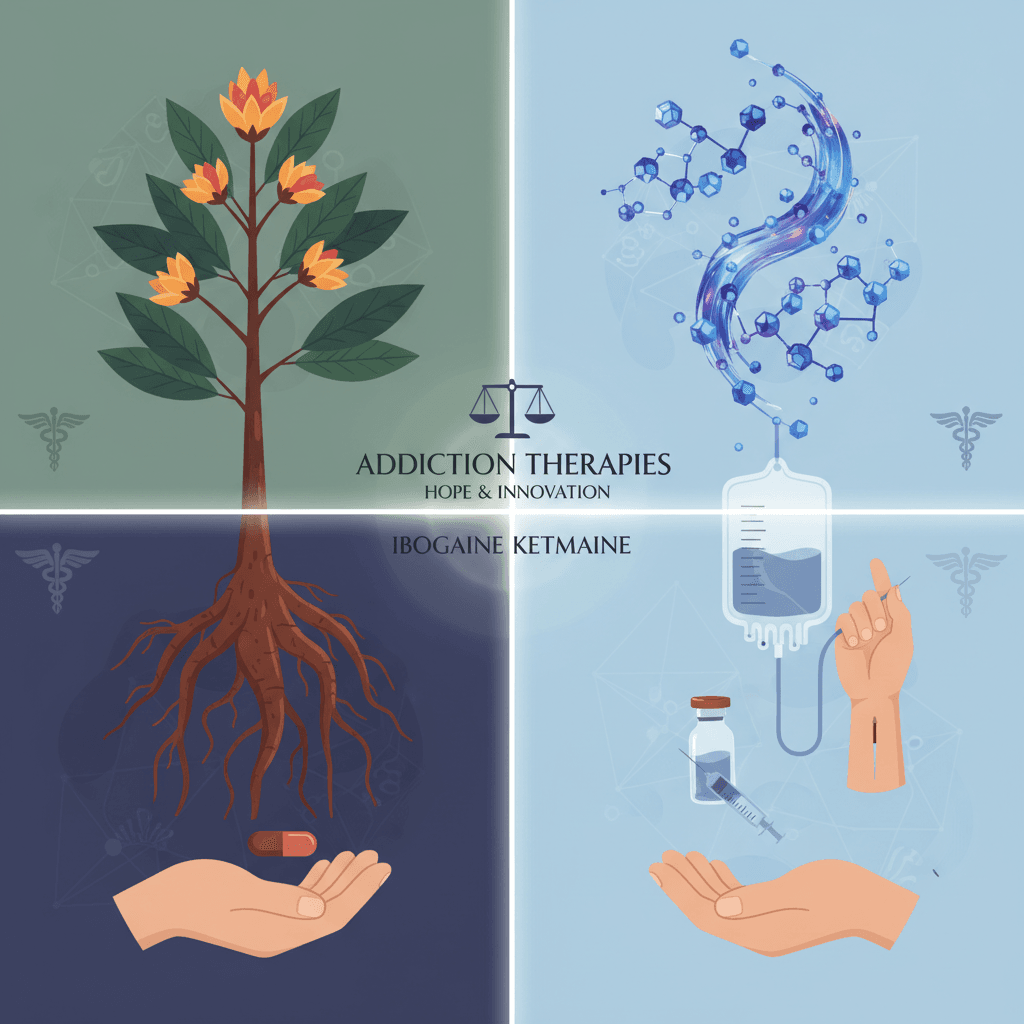
Ibogaine vs ketamine therapy sits at the center of a growing conversation around psychedelic-assisted addiction treatment. If you are comparing these options with methadone, Suboxone, ayahuasca, or traditional rehab, you are likely asking the same core questions: How effective is each approach, what does the detox and treatment experience feel like, and what does long-term recovery actually look like?
This guide walks you through how ibogaine and ketamine work, what you can realistically expect from each, and how they compare to more familiar options like medication assisted treatment and residential rehab. The goal is not to sell you on one path, but to help you make a more informed decision for your own recovery.
Understanding ibogaine therapy
Ibogaine is a psychoactive compound found in the root bark of the African iboga plant. For addiction, it is usually given as a single high “flood” dose, sometimes with smaller follow-up doses.
What ibogaine does in your brain and body
Ibogaine acts on multiple neurotransmitter systems at once. It interacts with serotonin (including the 5-HT2A receptor), dopamine, and opioid receptors, and can temporarily interrupt the brain patterns that drive craving and compulsive use. It also produces a prolonged psychedelic experience that can last 12 to 24 hours, often with vivid visions and intense psychological material coming to the surface [1].
For opioid and other substance use disorders, ibogaine is notable because many people experience a rapid reduction in withdrawal symptoms and cravings within 24 to 48 hours after a flood dose [1]. This is one of the main reasons people consider it when they feel stuck in cycles of methadone, Suboxone, or repeated detox.
What recent research suggests
You now have more data than in the past to consider. A study of special operations veterans with traumatic brain injury, PTSD, anxiety, and depression found that a single ibogaine treatment, combined with magnesium for heart protection, led to:
- About 88% average reduction in PTSD symptoms
- About 87% reduction in depression
- About 81% reduction in anxiety
- Marked improvements in concentration, memory, and impulsivity one month after treatment
Functional disability scores in this group dropped from an average of 30.2, which reflects mild to moderate disability, to 5.1, which indicates no disability, one month after treatment [2].
The same study found unique brain changes after ibogaine, including increased theta brain wave activity linked to cognitive flexibility, and reduced complexity of cortical activity associated with lower stress responses in PTSD [2]. These findings suggest that ibogaine may help the brain shift out of rigid, trauma-driven patterns.
Safety, legality, and setting
Ibogaine is not legal for medical use in the United States. It is typically offered in clinics in countries like Mexico, South Africa, or New Zealand. Many of these settings are not tightly regulated, which increases risk if medical screening and monitoring are not rigorous [3].
One of the most serious risks is cardiac. Ibogaine can prolong the QT interval on an ECG and may cause dangerous arrhythmias, which can be fatal. Careful screening with ECG and liver function tests is considered essential, as well as continuous monitoring during treatment [1].
The Stanford study that used ibogaine with magnesium reported no serious adverse events or heart complications in its veteran cohort, which is encouraging, but this was under strict medical protocols and with carefully selected participants [2].
If you want to see how ibogaine compares to non-psychedelic approaches for addiction, you can explore:
- Ibogaine vs methadone detox
- Ibogaine vs methadone treatment
- Ibogaine vs buprenorphine treatment
- Ibogaine vs suboxone treatment
Understanding ketamine therapy
Ketamine is a dissociative anesthetic that has been used safely in operating rooms for decades. In mental health and addiction contexts, lower doses are used to reduce depression, suicidality, PTSD symptoms, and sometimes cravings.
How ketamine works in your brain
Ketamine primarily blocks NMDA receptors, which affects the glutamate system. This leads to a temporary disruption of your usual patterns of thinking and feeling, while also stimulating new synaptic connections in the brain. In practice, you may experience a sense of detachment from your body or thoughts, changes in perception, and shifts in how you relate to long-held beliefs or traumatic memories.
Unlike ibogaine, ketamine is not a classic psychedelic. Its main action is dissociative rather than strongly visionary, although some people do experience vivid imagery.
Evidence for depression and related conditions
Clinical research on ketamine is relatively extensive. Over 100 clinical trials support its use in conditions such as treatment-resistant depression, PTSD, and chronic pain [3].
At one major UK center, about 50% of patients receiving ketamine infusions report enough benefit that they choose to continue treatment. Clinical trials there show that:
- Around 70% of patients get rapid antidepressant effects that last at least one day
- Around 30% maintain benefits for about three days
- Most patients relapse within two weeks after a single or short series of infusions [4]
Esketamine, a related compound administered as a nasal spray, has also been studied over longer periods. In large trials, about 43% of people with treatment-resistant depression who used esketamine plus a new antidepressant were in remission after 12 months, compared with about 5% remission in a similar group who tried a third antidepressant alone [4].
These numbers focus on depression, but they are relevant if your addiction is closely tied to severe mood symptoms or suicidality.
Safety, side effects, and access
Ketamine is a Schedule III drug in the United States, which means it has accepted medical uses and relatively low potential for dependence when used appropriately. It is fully legal for anesthesia and is widely used off-label for depression, PTSD, and chronic pain in supervised clinic settings as of 2024 [3].
Typical side effects in a clinical setting include:
- Dissociation and feeling detached
- Dizziness or lightheadedness
- Nausea
- Anxiety or unease
- Visual or auditory changes
- Rare liver issues
At the Oxford center, about 10% of patients experience very challenging acute side effects during infusion, usually resolving within 15 minutes after the infusion ends. In some cases, depressive symptoms and suicidality can temporarily worsen for up to two weeks after treatment [4].
While high-dose recreational use of ketamine has been linked to bladder damage and cognitive problems, these issues have not been reported in patients receiving medical doses for depression in that program, and there is no evidence of personality change with medical treatment [4].
Dependence in medical settings is usually described as psychological reliance rather than classic addiction, and addiction has not been seen under the controlled protocols at Oxford. Addiction problems have been documented mainly in people using large, frequent, non-medical doses [4].
Ketamine sessions are usually brief. Infusions typically last around 45 minutes, and the main effects fade within 2 to 3 hours, which often allows you to return to ordinary activities later that day, as long as you have safe transportation and follow clinic guidelines [3].
Ibogaine vs ketamine therapy: key differences
When you look at ibogaine vs ketamine therapy side by side, several practical differences stand out: how each works, what the sessions feel like, how long effects last, safety, and logistics.
Mechanisms and therapeutic style
Ibogaine:
- Classic psychedelic profile, with strong serotonin 5-HT2A involvement
- Long, intense, often visionary experience
- Flood-dose model that targets withdrawal, cravings, and psychological patterns together
- Prominent use in addiction treatment, especially opioids, with rapid relief of withdrawal and cravings reported within 24 to 48 hours [1]
Ketamine:
- NMDA receptor antagonist, primarily dissociative
- Shorter, 45- to 60-minute experiences
- Often delivered as a series of sessions with integration therapy in between
- Strong evidence for depression and PTSD, emerging but less definitive data for addiction and craving reduction [3]
Session length, intensity, and recovery
Ibogaine treatment is usually a full 24-hour commitment that includes intense mental and physical effects. Many people experience:
- Long periods in bed or on a recliner
- Nausea and vomiting
- Strong introspective or visionary states
- Exhaustion for 1 to 3 days afterward
By contrast, ketamine sessions are far shorter. You typically spend a few hours in the clinic and then go home with a support person. Physical side effects like nausea and dizziness are common but usually brief.
Safety and medical risk
Ibogaine carries a higher baseline medical risk because of cardiac effects. If you have heart problems, certain medications, or liver issues, it may not be safe for you. Even in healthy individuals, medical screening and continuous monitoring are critical to reduce the chance of serious arrhythmias [1].
Ketamine also requires careful monitoring, especially if you have cardiovascular disease, uncontrolled high blood pressure, or a history of psychosis. However, in medically supervised doses, it does not usually present the same level of cardiac risk as ibogaine, and many centers view it as a manageable and repeatable procedure.
Legal status and access
A practical factor in your decision is how accessible each treatment is:
- Ketamine is widely available in U.S. clinics and hospitals. It is legal when prescribed and administered by licensed providers.
- Ibogaine is mostly illegal in the U.S. and must be accessed abroad. You may need to travel to Mexico or other countries where clinics vary widely in standards and oversight [3].
Cost also differs. In the U.S., ketamine sessions typically range from about 400 to 800 dollars per treatment and may be partly covered by insurance for certain conditions. Ibogaine treatment programs often cost between 3,000 and 5,000 dollars for a full course, and are generally not covered by insurance [3].
Comparing outcomes and expectations
It is important to see both ibogaine and ketamine as powerful tools that still sit within a larger recovery process, not as stand-alone cures.
Short-term benefits
Ibogaine often provides:
- Rapid relief of opioid and other substance withdrawal
- Strong reduction in cravings shortly after treatment
- Intense psychological insights related to trauma, relationships, and self-perception
Many people describe the ibogaine experience as life-changing. At the same time, without post-treatment support, relapse is still possible, especially if you return to the same environment and stressors.
Ketamine often provides:
- Fast reductions in depression and suicidal thinking, sometimes within hours
- Short-term improvements in mood and motivation that can make it easier to engage in therapy
- For some people, shifts in how they relate to traumatic memories or self-criticism
However, the antidepressant effect of a single ketamine infusion often fades within days or weeks [4]. Most protocols involve a series of sessions, followed by maintenance infusions or other treatments.
Long-term recovery patterns
Long-term outcome data are more robust for ketamine than for ibogaine, but even for ketamine you still see a pattern of relapse without ongoing support or additional treatments.
For ibogaine, much of the existing evidence comes from observational reports and small studies. The promising TBI and PTSD data from the Stanford group are encouraging, but they do not answer all questions about relapse rates or outcomes in broader addiction populations [2].
In practice, your long-term success with either therapy will depend heavily on what you put in place around it, such as:
- Therapy or counseling
- Peer support groups
- Lifestyle and environment shifts
- Medical and psychiatric follow-up
If you are comparing psychedelic-based approaches more broadly, you can read further on ibogaine vs ayahuasca for addiction and ibogaine vs psychedelic therapy for addiction.
Ibogaine vs ketamine vs traditional treatments
You might not be choosing only between ibogaine and ketamine. In real life, you are often deciding between these and more familiar paths such as methadone, Suboxone, buprenorphine, inpatient rehab, or standard detox.
How they compare to medication assisted treatment (MAT)
Medication assisted treatment with methadone, buprenorphine, or Suboxone focuses on stabilizing opioid receptors in your brain to reduce withdrawal and cravings over the long term. This can be a lifesaving strategy with strong evidence for reducing overdose and improving functioning.
In contrast:
- Ibogaine is usually a one-time or short-series intervention that attempts to reset your system rather than maintain it.
- Ketamine is mostly used to treat depression, PTSD, and sometimes cravings, but it is not a standard first-line MAT for addiction.
If you want to see detailed comparisons between ibogaine and standard MAT options, you can visit:
How they compare to detox and rehab programs
Traditional detox centers and residential rehab programs typically provide:
- Medically supervised withdrawal management
- Structured daily schedules
- Therapy, groups, and education
- Aftercare planning and community support
Ibogaine and ketamine can fit into this picture in different ways:
- Ibogaine may function as an intensive detox or reset that you then follow with therapy or rehab. If you are considering this route, it helps to look at ibogaine vs detox centers and ibogaine vs traditional rehab.
- Ketamine can be integrated into outpatient or partial hospital programs, where it supports mood stabilization so you can actually use what therapy offers.
For broader context on structured care, you can also explore ibogaine vs rehab programs.
When you compare ibogaine vs ketamine therapy, it may help to think less in terms of “which one is best” and more in terms of “which combination of tools and supports fits you, your medical profile, and your goals.”
Questions to ask before you choose
No matter which path you lean toward, it helps to ask yourself and potential providers a few key questions.
-
What is my primary goal?
Is your priority to get off opioids quickly, to stabilize severe depression, to break a pattern of relapse, or to work through trauma that fuels your use? -
What are my medical risks?
You will want honest conversations about your heart health, liver function, psychiatric history, and current medications. This is particularly critical with ibogaine, but also relevant with ketamine. -
What support will I have after treatment?
A powerful single experience can open a door, but your daily life after that experience is what will shape your recovery. -
What is realistic for me financially and logistically?
Travel abroad for ibogaine, two weeks of residential rehab, or multiple ketamine sessions at 400 to 800 dollars each all have different financial and time burdens [3]. -
How comfortable am I with risk and uncertainty?
Ibogaine has more serious medical risks and less comprehensive research but can offer dramatic shifts. Ketamine has stronger evidence in depression, more established safety protocols, and legal access, yet typically involves repeated treatments.
Putting it all together
You are not choosing in a vacuum. Your history, your health, your loved ones, and your resources all shape which option, or combination of options, makes sense.
Ibogaine may appeal to you if:
- You are seeking a one-time, intensive interruption of addiction patterns
- You are facing severe opioid dependence or entrenched trauma-related symptoms
- You are prepared to travel and undergo thorough medical screening
Ketamine may fit you better if:
- You need rapid relief from severe depression or suicidality
- You want a legal, clinic-based treatment closer to home
- You are open to a series of shorter sessions with ongoing therapy
Traditional MAT and rehab may remain the safest and most accessible approach if:
- You need long-term stabilization with strong evidence and lower medical risk
- You prefer structured support, peer connection, and gradual change
Wherever you are in this process, it is reasonable to take your time, ask detailed questions, and consider combining elements from different approaches. Ibogaine vs ketamine therapy is not just an abstract comparison. It is about finding a path that respects both the urgency of your situation and the complexity of your life.