
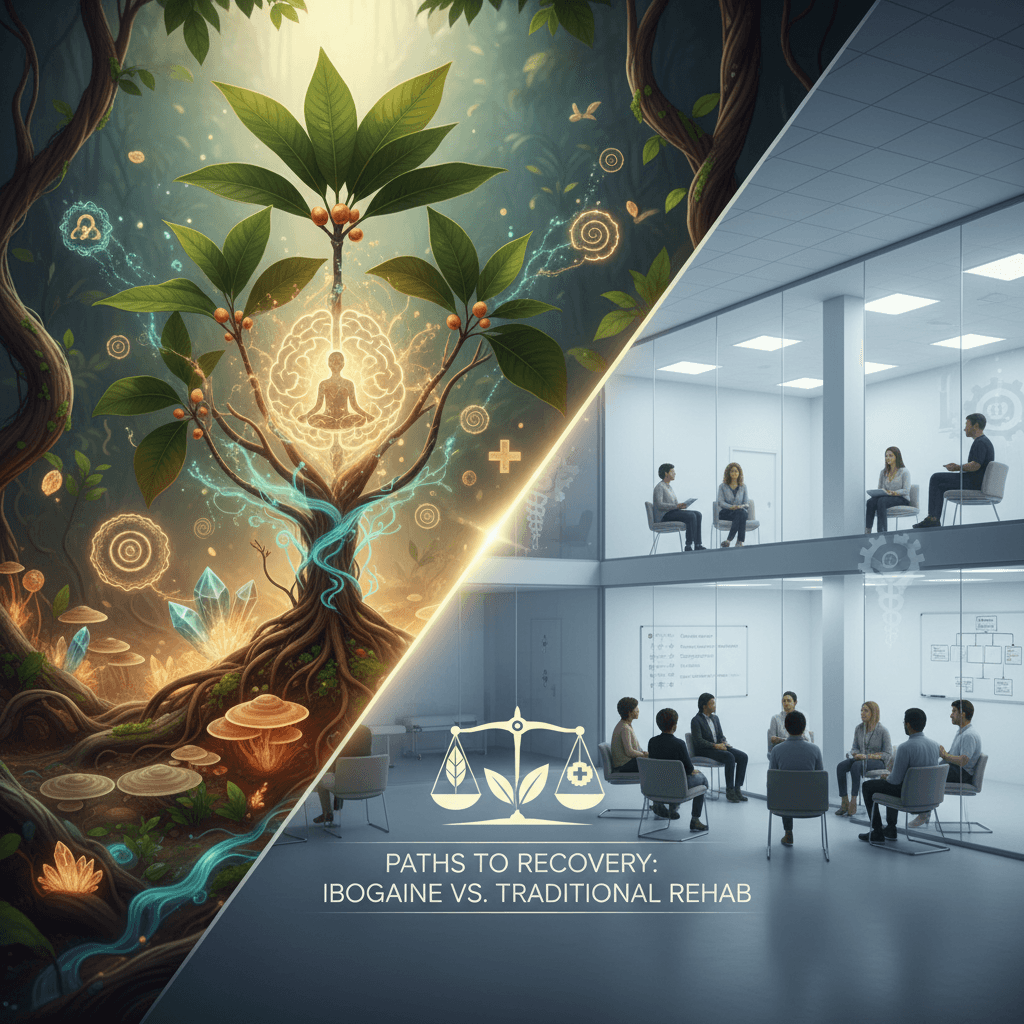
What “ibogaine vs traditional rehab” really means
When you look at ibogaine vs traditional rehab, you are really comparing two completely different philosophies of addiction treatment.
Traditional rehab usually means a structured program that combines supervised detox, therapy, and ongoing support over weeks or months. Ibogaine treatment is typically a single high dose of a psychedelic compound, usually delivered over 24 to 36 hours in a medical setting, followed by a brief period of rest and integration. It aims to rapidly reduce withdrawal and cravings, and to create a deep psychological reset.
Understanding how each option works, their risks, and what to expect before and after treatment can help you decide what fits your situation, your health, and your goals for long term recovery.
How traditional rehab approaches addiction
Traditional rehab is usually built around a phased, structured process. While each program is different, the basic building blocks are similar.
Core elements of traditional rehab
Most residential or intensive outpatient programs focus on:
- Detoxification with medical supervision
- Individual and group behavioral therapies
- Education about addiction and relapse prevention
- Treatment of co occurring mental health issues
- Aftercare and support groups
Residential rehab typically starts with detox, then moves into several weeks of group and individual therapy sessions aimed at understanding triggers, changing behaviors, and building coping skills. This structured, phased approach is designed to interrupt addictive behaviors and give you time away from your usual environment so you can stabilize and learn new skills [1].
Traditional programs can also include medication assisted treatment (MAT) like methadone or buprenorphine, which occupy opioid receptors to prevent withdrawal and reduce cravings without creating a high. Over time, these medications can help gradually rewire your brain’s dopamine reward system [2].
If you want to explore specific medication options, you can compare ibogaine vs methadone treatment, ibogaine vs buprenorphine treatment, or ibogaine vs suboxone treatment in more depth.
Strengths and limitations of traditional rehab
Traditional rehab gives you a contained, predictable environment. You typically get:
- Daily structure and routine
- Ongoing professional support
- Peer communities and group work
- Gradual behavior change and skill building
However, there are important limitations to understand. Many programs do not directly repair the chemical brain damage caused by long term substance use. That can leave you with prolonged withdrawal symptoms, anhedonia, and depression, which contribute to high relapse rates [1]. Studies suggest relapse rates for traditional addiction recovery often fall between 40 percent and 70 percent, even though many people still benefit significantly from these programs [3].
Traditional rehab can also be time intensive. Stays of 30 to 90 days can disrupt work and family life, and the one size fits all model sometimes does not fit everyone’s needs or timelines [3].
What ibogaine therapy tries to do differently
Ibogaine is a psychoactive compound derived from the Tabernanthe iboga plant. In addiction treatment, it is usually offered as a one time, high dose session under medical supervision.
Mechanism and intended effects
Ibogaine interacts with multiple neurotransmitter systems at once. Clinics and researchers describe its main goals as:
- Rapidly reducing or eliminating acute opioid withdrawal symptoms
- Normalizing or “resetting” neurotransmitter levels
- Healing damaged dopamine receptors and restoring the brain’s reward system
- Opening a window of enhanced neuroplasticity that can last for weeks
- Providing a vivid, introspective, often spiritual experience that can bring insight into the roots of addiction
In contrast to traditional detox, which mostly manages symptoms, ibogaine is described as initiating active neurological repair and a “neurochemical reset” [1]. Patients and experts report that it can significantly reduce cravings and withdrawal by optimizing neurotransmitter levels [3].
You can explore how this compares to other psychedelic or alternative approaches in more detail in guides like ibogaine vs ketamine therapy, ibogaine vs ayahuasca for addiction, and ibogaine vs psychedelic therapy for addiction.
Clinical findings and patient reports
Evidence for ibogaine is still limited but growing. Some key findings:
- A survey of 88 opioid users treated with ibogaine in Mexico found that 80 percent reported withdrawal was eliminated or drastically reduced, 50 percent reported reduced cravings, and 30 percent never used opioids again after treatment. Of those who stayed abstinent, 54 percent remained abstinent for at least 1 year and 31 percent for at least 2 years [4].
- Forty one percent of all participants reported more than 6 months of opioid abstinence, and another 11 percent who relapsed later achieved abstinence. Responders tended to report lower depression and anxiety, higher well being, and more spiritually meaningful experiences during the session [4].
These results suggest that ibogaine can sometimes lead to better medium term outcomes than standard treatments for some people. However, researchers emphasize that controlled clinical trials are still needed, and that ibogaine should not be viewed as a guaranteed cure [4].
Neuroplasticity and the “window of change”
One of the key differences in ibogaine vs traditional rehab is timing. Ibogaine is believed to open a neuroplasticity window that lasts for weeks, during which your brain is more adaptable to change. This can support rapid development of new habits and make integration work especially powerful [1].
In practical terms, you may feel more open to therapy, more able to break old patterns, and more motivated to commit to a new way of living immediately after treatment. But you still need structure, support, and aftercare to turn that window into lasting change.
If you want to look specifically at detox and withdrawal, you can review ibogaine vs methadone detox, ibogaine vs detox centers, or ibogaine vs detox medication treatment.
Safety and medical risks you need to weigh
Safety is where ibogaine vs traditional rehab diverges sharply. Traditional rehab has its own risks, but ibogaine carries specific and serious medical concerns that you should understand clearly.
Ibogaine’s cardiac and neurological risks
Ibogaine is not approved by the FDA for any medical use in the United States. One of the main reasons is its risk profile, especially related to the heart.
A 2022 observational study of 14 patients with opioid use disorder who had failed standard care found that a single oral dose of ibogaine hydrochloride caused clinically significant but reversible cardiac effects. The average QTc interval was prolonged by 95 ms, and half of the patients had QTc intervals above 500 ms, a level associated with a higher risk of dangerous arrhythmias. No torsades de pointes were observed in that study, but the risk was clearly present [5].
The same study reported:
- Severe but transient cerebellar ataxia, which significantly affected balance and walking and typically resolved within 24 to 48 hours
- Mild psychomimetic effects like wakeful dreaming and closed eye visuals, which were generally manageable
- Low withdrawal severity in most subjects over the first 24 hours. Only 3 of 14 returned to morphine substitution within 24 hours, suggesting some short term relief compared to typical substitution therapies [5]
However, because of the cardiac risks, the authors concluded that presumed benefits may not outweigh the risks, and that ibogaine should only be used in tightly controlled medical settings with strict cardiac monitoring. They recommended avoiding ibogaine outside medical supervision [5].
Other reviews underscore that ibogaine can block certain heart potassium channels, which can trigger potentially fatal arrhythmias. Rigorous screening and continuous monitoring are considered essential, especially for people with existing heart conditions [6].
Traditional rehab and MAT safety considerations
Traditional detox and rehab programs have their own medical risks, especially during withdrawal and in the period after discharge. For opioid addiction, medication assisted treatment with methadone or buprenorphine is considered a standard of care, but relapse after stopping or leaving treatment can lead to overdose due to reduced tolerance [2].
Compared to ibogaine, the safety profile of traditional rehab and MAT is generally better understood and more standardized. Programs are regulated, staff follow established protocols, and medications are FDA approved. That said, the process can be long, and not everyone responds well to maintenance medications or extended residential care.
Safety is a core part of comparing ibogaine vs medication assisted treatment and ibogaine vs rehab programs, so those resources can give you more focused detail.
Speed of relief and duration of treatment
When you consider ibogaine vs traditional rehab, you might be weighing how fast you want or need relief versus how long you can realistically commit to a structured program.
How quickly ibogaine can act
Ibogaine treatment is often described as a “one session” or “single dose” approach. It is typically administered over 24 to 36 hours, followed by a short recovery period of a day or two [2]. Many patients and clinicians report immediate reductions in withdrawal symptoms and cravings.
Survey data from Mexico indicates that 80 percent of opioid users experienced eliminated or drastically reduced withdrawal, and 50 percent experienced reduced cravings, with some benefits lasting for months [4].
This rapid effect is appealing, especially if you have struggled with repeated detox attempts or cannot commit to months of treatment. However, it does not remove the need for aftercare, lifestyle changes, and long term support.
Time frame of traditional rehab
Traditional rehab usually unfolds over weeks or months:
- Medically supervised detox: several days to a couple of weeks
- Residential or intensive outpatient program: 30 to 90 days or more
- Ongoing outpatient therapy and support groups: months or years
This longer time frame is partly why traditional rehab can feel burdensome. It can disrupt your job, family responsibilities, and finances. At the same time, the gradual pace, routine, and repeated exposure to skills and support can be stabilizing and necessary, especially if you need help with co occurring mental health issues or complicated social situations.
Some analyses stress that traditional rehab’s long duration and one size fits all structure contribute to relapse and dropout rates, yet it still provides a comprehensive framework and is often covered by insurance, which improves access and safety [7].
Comparing outcomes and relapse risk
No approach can guarantee lifelong abstinence. When you compare ibogaine vs traditional rehab, it helps to look at the limited outcome data that does exist, while keeping its limitations in mind.
Ibogaine outcome data
Based on available studies and surveys:
- Around 50 percent of people treated with ibogaine for opioid addiction may be abstinent at 30 days.
- That figure appears to drop to around 33 percent at 3 months, and about 30 percent may maintain abstinence for a year, depending on the study and follow up methods [2].
- In the Mexico survey, 41 percent reported more than 6 months of abstinence and 30 percent never used opioids again after treatment [4].
These numbers suggest that ibogaine can be effective for a subset of people, particularly when followed by supportive aftercare and personal commitment. However, relapse still happens, and long term data remains limited.
Researchers emphasize the need for controlled trials to confirm both safety and effectiveness, and to clarify which patients are most likely to benefit [4].
Traditional rehab and MAT outcomes
For traditional treatment:
- General relapse rates for substance use disorders are often reported between 40 percent and 60 percent [2], and some reports for traditional residential recovery cite 65 percent to 70 percent [3].
- Retention rates in MAT programs are relatively high. One report cites methadone retention at about 74 percent at 24 weeks, and buprenorphine at 46 to 48 percent over the same period [2].
These numbers highlight both the challenges of long term recovery and the value of ongoing, structured support. While relapse is common, many people eventually achieve stable recovery through repeated attempts, continuing care, and personal growth.
You can look more closely at how ibogaine compares specifically with medications in ibogaine vs methadone treatment and ibogaine vs medication assisted treatment.
PTSD, TBI, and mental health considerations
If you are dealing with trauma, PTSD, or traumatic brain injury in addition to addiction, the ibogaine vs traditional rehab question becomes more complex.
A 2024 Stanford Medicine study followed 30 special operations veterans with traumatic brain injury who received ibogaine plus magnesium at a clinic in Mexico. One month after treatment, they showed:
- 88 percent reduction in PTSD symptoms
- 87 percent reduction in depression symptoms
- 81 percent reduction in anxiety symptoms
Their functional disability scores improved from 30.2, which indicates mild to moderate disability, to 5.1, which indicates no disability. These improvements were sustained at least one month after treatment. Importantly, no serious side effects or heart issues were reported in this specific cohort, likely due to careful medical screening and magnesium co administration to manage cardiac risks [8].
Researchers believe ibogaine’s effects on brain rhythms and cortical activity may help promote neuroplasticity and cognitive flexibility, potentially providing benefits beyond what traditional rehab offers for TBI related neuropsychiatric symptoms [8].
Traditional rehab and trauma informed therapies can also help significantly, but some people do not get enough relief from standard treatments alone. If PTSD or TBI is central to your situation, it is especially important to seek specialized medical advice before considering ibogaine or any psychedelic therapy.
Cost, access, and practical trade offs
Practical issues also matter. Cost, location, and legal status often shape what is possible for you.
A 2025 cost comparison reported that:
- Ibogaine treatment typically costs around 10,000 to 15,000 dollars for 7 to 10 days, including aftercare.
- Traditional inpatient rehab often costs 25,000 to 50,000 dollars for 30 days, plus the cost of ongoing support. Multiple treatment attempts can push this total higher [2].
On the other hand, traditional rehab and MAT are often covered partly or fully by insurance, and programs are widely available and regulated. Ibogaine is usually not covered, and because it is not FDA approved, many people travel abroad, where standards and protocols can vary and safety may be inconsistent [7].
Traditional programs usually provide comprehensive, longer term support, which contributes to better safety and sustained recovery in many cases, even if relapse is common [6].
If you are evaluating multiple paths, it may help to review comparisons like ibogaine vs detox centers and ibogaine vs rehab programs to see how different models line up with your financial and practical realities.
Summary comparison
Ibogaine: rapid, single session, high risk but potentially powerful reset, limited evidence, non FDA approved.
Traditional rehab: slower, structured, safer and regulated, more evidence based, often covered by insurance, but with high relapse rates and significant time demands.
How to decide what fits you
Choosing between ibogaine vs traditional rehab is not about picking the “best” treatment in the abstract. It is about what aligns with your medical profile, your history with treatment, your support system, and your willingness to commit to ongoing work.
You may be more suited to traditional rehab if you:
- Need a highly structured and supervised environment
- Have complex mental health or medical conditions that require ongoing management
- Prefer step by step change rather than an intense single session experience
- Rely on insurance coverage and local, regulated care
You might consider exploring ibogaine, with medical guidance, if you:
- Have not found relief or stability in repeated traditional treatments
- Are medically eligible and can access a reputable, medically supervised clinic
- Are prepared to engage seriously in integration and aftercare during the neuroplasticity window
- Understand and accept the cardiac and other medical risks involved
For many people, the most realistic path is not “ibogaine vs traditional rehab” but “how can I combine the right tools for me.” That might mean using ibogaine as a reset followed by structured therapy, or committing to MAT while exploring non psychedelic therapies for trauma, or choosing a traditional program that already integrates newer approaches.
Whichever direction you lean, it helps to:
- Get a thorough medical evaluation, including cardiac assessment if you are considering ibogaine
- Talk honestly with providers about your history, goals, and fears
- Plan your aftercare in advance, not as an afterthought
- Involve trusted family or friends when possible, so you are not doing this alone
Recovery is rarely linear. The key is to choose the safest, most evidence informed option that you can commit to, then build the support and structure around it that you need to give yourself a real chance at long term change.
References
- (Basse Ibogaine)
- (Avante Ibogaine)
- (AZ Big Media)
- (PMC)
- (Addiction)
- (PlacidWay)
- (AZ Big Media, PlacidWay)
- (Stanford Medicine)