
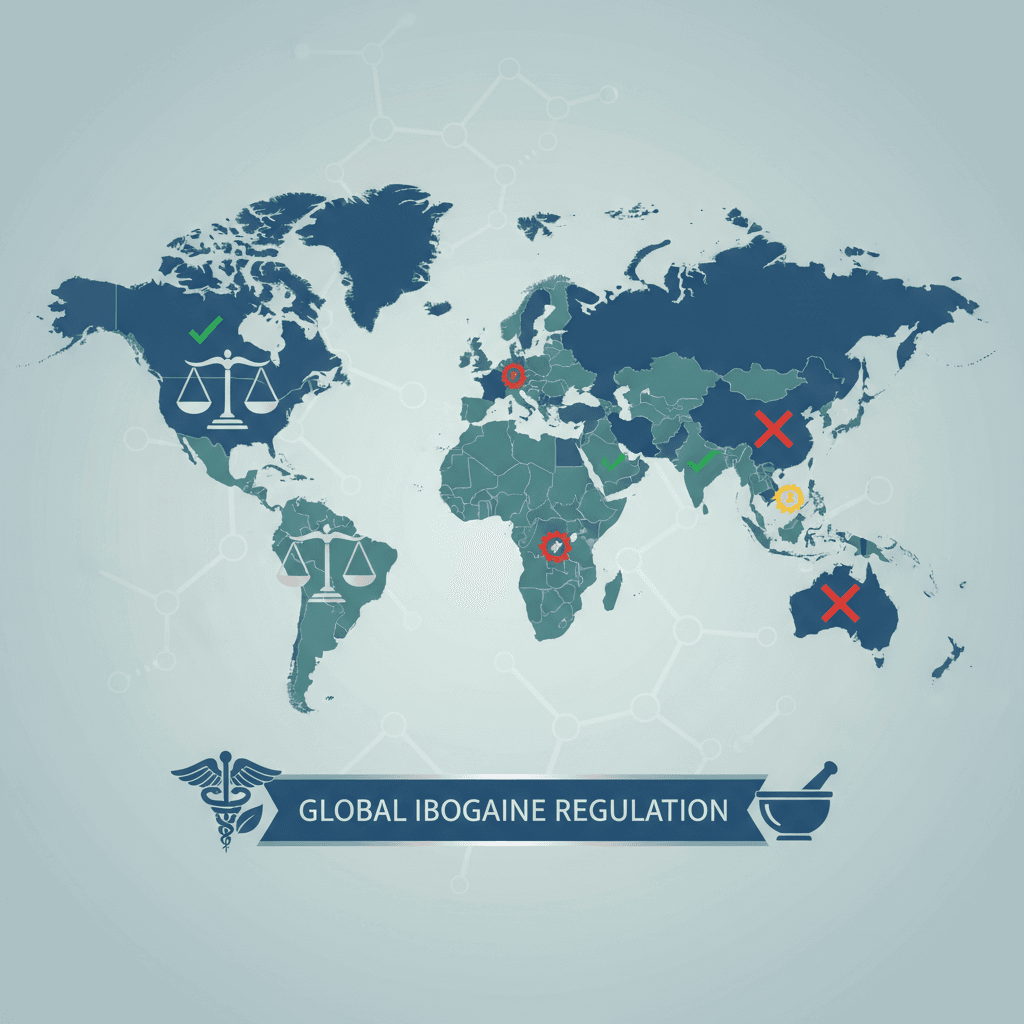
Understanding ibogaine regulation worldwide
If you are exploring ibogaine as a possible treatment option, ibogaine regulation worldwide can feel confusing. Laws vary significantly from country to country, and the rules that apply to you at home may be very different from those in the place where you would receive treatment.
You are not alone in asking where ibogaine is legal, how tightly it is regulated, and what that means for your safety and your legal risk. By understanding the global picture, you can make more informed choices about whether ibogaine is appropriate for you and where you might safely and legally access treatment. For a broader overview of specific countries, you can also review guides such as where is ibogaine legal and ibogaine legal status worldwide.
What ibogaine is and why it is regulated
Ibogaine is a psychoactive alkaloid derived from the African shrub Tabernanthe iboga. It has been used traditionally in certain West Central African spiritual practices. In modern contexts, ibogaine is most often discussed as a potential treatment for addiction and, increasingly, for trauma related conditions.
Regulators around the world focus on ibogaine for a few key reasons. It is mind altering. It has real medical risks, including potential cardiac complications. It also carries possible therapeutic benefits that are still being investigated. This combination of possible benefit and real risk has led some countries to restrict ibogaine completely, others to allow only clinical or prescription use, and a few to leave it largely unregulated.
Notably, ibogaine is not currently listed on the United Nations International Narcotics Control Board’s Green List or on the List of Psychoactive Substances under International Control, which means there is no single global treaty that directly controls ibogaine itself [1]. Each country, and sometimes each state or province, sets its own policy.
Global categories of ibogaine regulation
When you look at ibogaine regulation worldwide, you can group countries into several broad categories. The details differ from place to place, but understanding these categories can help you quickly assess what may be possible in a given location.
Countries that fully prohibit ibogaine
In some countries ibogaine is treated as a prohibited substance, often in the same broad category as other controlled drugs. In these places you cannot legally possess, distribute, or use ibogaine, even in a medical setting.
The United States is a primary example. Federally, ibogaine is classified as a Schedule I controlled substance, which means it is considered to have no currently accepted medical use and a high potential for abuse. Possession and use are illegal at the federal level, and the substance is not approved for prescription [2]. Although some advocates and researchers question whether ibogaine truly fits Schedule I criteria, that is the current legal status.
This strict classification has important practical consequences for you. It limits access to treatment programs inside the country, restricts clinical use, and creates significant barriers for research. As a result, patients in the United States often look abroad for legal ibogaine treatment, a topic that is explored in more detail in resources such as can americans get ibogaine treatment abroad and why ibogaine treatment is not legal in the us.
Countries with tightly controlled medical or research access
Some countries treat ibogaine as a medicine that can be used only within limited, highly regulated frameworks. In these locations you usually cannot access ibogaine casually or through general clinics, but you may see it in formal clinical trials or select hospital based programs.
Canada offers an example of this model. Ibogaine is listed on the federal Prescription Drug List, and it is only accessible through Health Canada’s Special Access Program. In practice, approvals through this program are rare, so access remains very limited [2].
Brazil has taken a different but related path. There, ibogaine has been legalized for prescription use in hospital settings, starting in São Paulo in 2016. Regulatory approval has been gradually expanding to other regions, and Brazilian medical authorities have expressed support for its clinical use in addiction treatment, provided it occurs within proper medical oversight [2].
In these countries you may find ibogaine treatment, but it will usually be delivered through a medical or academic institution rather than a standalone private clinic. It is important to understand that access is often limited to residents or to patients who are formally enrolled in research.
Countries with prescription access but fewer restrictions
A smaller number of countries recognize ibogaine as a medicine that can be prescribed by qualified professionals without treating it as a controlled narcotic. This does not mean that ibogaine is unregulated, only that it is handled more like a specialized pharmaceutical.
New Zealand is one of the clearest examples. There, ibogaine is not classified as a controlled substance, and it can be prescribed at the discretion of medical professionals. This regulatory framework has allowed clinics to offer ibogaine assisted therapy more openly and has encouraged some level of clinical oversight, including patient screening and monitoring [2].
If you consider treatment in a country like New Zealand, you should still expect medical screening, detailed consent, and monitoring during and after administration. The prescription model is designed to balance access with safety, not to turn ibogaine into an over the counter option.
Countries where ibogaine is unregulated
In another group of countries, ibogaine is not specifically scheduled or regulated. In these places ibogaine is neither an approved medicine nor a prohibited narcotic. Clinics may operate in a legal gray area, subject mostly to general health care, business, and consumer safety laws.
Mexico is a well known example. There are currently no specific regulations on ibogaine at the federal level, which has allowed clinics to provide ibogaine treatment without direct drug control restrictions. This relative openness has made Mexico a prominent hub for ibogaine therapy that is marketed to international patients [2]. If you are asking, is ibogaine treatment legal in mexico, the answer is that there is no explicit prohibition under federal drug law, but you still need to evaluate how a specific clinic manages medical risk.
In unregulated settings the quality and safety practices of clinics can vary widely. Screening procedures, cardiac monitoring, emergency preparedness, and aftercare planning are not standardized by the government. This places more responsibility on you to investigate each provider and to understand both your legal and medical risk before traveling.
Why ibogaine remains controversial
Understanding why ibogaine occupies such a complex regulatory space can help you make sense of the differences you see from one country to another. Several factors drive this controversy.
First, ibogaine affects the cardiovascular system and can prolong the QT interval on an electrocardiogram, which increases the risk of serious arrhythmias. Data from 2024 studies at Stanford University and clinical treatments abroad, such as programs in Mexico, indicate that ibogaine can reduce symptoms of substance use withdrawal and PTSD. However, the same reports point to potential heart problems, which means that pre treatment screening and continuous medical monitoring are essential [3].
Second, while many patients and clinicians describe strong therapeutic effects, large scale randomized controlled trials are still limited. This lack of definitive phase III data makes some regulators reluctant to approve ibogaine as a standard treatment.
Third, ibogaine has also been viewed through a non medical lens. Since 1989, the International Olympic Committee and the International Union of Cyclists have treated ibogaine as a banned doping substance because of its stimulant properties [1]. This association with performance enhancement adds an additional layer to how sports and anti doping bodies view the drug, separate from addiction treatment.
Finally, political and cultural attitudes toward psychedelics more broadly influence how quickly ibogaine policies evolve. In some places, shifting views on psychedelic assisted therapy are opening space for new research and limited clinical use. In others, longstanding concerns about drug abuse slow down any change.
The United States: prohibition with emerging research
If you live in the United States, understanding the specific ibogaine laws that apply to you is essential. Federally, ibogaine is a Schedule I substance. This classification makes it illegal to manufacture, possess, or distribute ibogaine outside of narrowly approved research, and it signals that the drug is not recognized for medical use in standard practice [4].
At the same time, several states are beginning to support ibogaine research. These efforts do not change the basic federal classification, but they may eventually influence how ibogaine is treated in the future.
Recent examples include:
- Arizona, which allocated 5 million dollars through a Request for Proposal process to fund phase I clinical trials investigating ibogaine. This represents a meaningful public investment in early stage research [4].
- Texas, where Senate Bill 2308, signed in June 2025, authorized 50 million dollars in grants to support FDA supervised ibogaine clinical trials, positioning the state as a leader in ibogaine research [4].
- Mississippi, where HB 314 advanced out of the Senate Public Health Committee to allow clinical trials of ibogaine for neurological conditions, opioid use disorders, and PTSD. The proposal limits access to FDA regulated research and anticipates coordination with other states to support eventual FDA approval, not general use [3].
- Colorado, where voters approved Proposition 122 in 2022, which decriminalized possession, cultivation, and sharing of certain natural medicines, including ibogaine, for adults over 21. The state is considering how, or if, ibogaine might be included in a regulated natural medicine program for therapeutic use [4].
For a focused view of how these developments affect you as a resident or visitor in the United States, you can consult resources such as ibogaine legality in the united states and ibogaine treatment laws. These developments may eventually expand clinical access, but for now, ibogaine remains illegal in standard medical practice and is available to United States residents primarily through international travel.
Key international examples and what they mean for you
When you evaluate ibogaine regulation worldwide, certain countries are mentioned frequently because they are either research leaders or main destinations for treatment. Understanding how each of these jurisdictions treats ibogaine can help you compare your options.
Mexico: a major hub with minimal direct regulation
Mexico’s lack of specific ibogaine scheduling has allowed numerous clinics to open, many of which serve international patients. Without explicit federal drug control laws targeting ibogaine, clinics can legally provide treatment, subject mainly to general health regulations and business law [2].
If you are considering travel to Mexico for ibogaine treatment, it is crucial to look beyond legality and evaluate safety. You can start by confirming:
- Whether the clinic conducts comprehensive medical screening, including cardiac evaluation
- How experienced the medical staff are with ibogaine specifically
- What emergency equipment and protocols are in place on site
- What type of aftercare and follow up support are offered
For more detailed guidance on this destination in particular, you may want to review is ibogaine treatment legal in mexico and ibogaine legal treatment clinics.
Brazil: hospital based prescription model
In Brazil, ibogaine’s status as a hospital based prescription treatment means that care is usually delivered in a more structured medical framework. Physicians prescribe ibogaine, and treatment often occurs in or alongside hospital facilities. Medical authorities have signaled support for this controlled clinical use for addiction treatment, while still emphasizing safety [2].
This regulatory model may appeal to you if you are more comfortable in hospital environments or if you seek assurance that treatment is embedded in the mainstream health care system rather than in a standalone retreat setting.
New Zealand: prescription access, clinical responsibility
New Zealand’s decision not to classify ibogaine as a controlled substance, while still allowing it to be prescribed by clinicians, places significant responsibility on individual providers. They must assess whether ibogaine is appropriate for you, provide informed consent, and manage medical risk.
For some patients this model offers a balance of access and oversight. You have a chance to work directly with prescribing clinicians, but you still need to ask detailed questions about their protocols, experience, and safety track record.
Canada: limited access through special programs
If you live in Canada, or are considering travel there, you will find that ibogaine is not widely available. Its status on the Prescription Drug List and the requirement for Special Access Program approval make routine clinical treatment difficult. In practice, approvals are rare and are generally reserved for situations where other therapies have failed and there is a reasonable expectation of benefit [2].
You may see references to research projects or small pilot programs, but broad public access remains limited. Understanding this distinction can prevent confusion if you encounter references to ibogaine in Canadian medical literature or advocacy campaigns.
Traveling for ibogaine treatment: legal and practical considerations
Because of restrictive laws in the United States and other countries, many patients explore ibogaine treatment abroad. If you are considering this path, there are several layers of legal and practical issues to think through.
From a legal standpoint, you should consider:
- The laws of your home country regarding ibogaine possession and use
- The laws of the country where treatment will occur
- Any transit countries you may pass through
In many cases you are not carrying ibogaine yourself. Instead, you are receiving it from a clinic once you arrive at your destination. This typically reduces your legal exposure, but it does not eliminate it entirely. For residents of the United States, it is especially important to understand how federal laws treat substance use that occurs outside the country and how that might affect you if you are on probation, parole, or in certain professional roles. Guides such as can americans get ibogaine treatment abroad can help you explore these questions in more depth.
Practically, you should also take into account:
- Cost: Some clinical ibogaine treatments, particularly research based programs, can cost around 50,000 dollars per patient and span 48 hours or longer including screening and observation [3].
- Medical fitness: Because of ibogaine’s cardiac and neurological risks, pre treatment evaluation is essential. This usually includes an ECG and laboratory tests.
- Integration and aftercare: The period following ibogaine treatment is critical. You will need a plan for ongoing therapy, support, and possibly medication management when you return home.
If you decide to move forward, resources such as ibogaine treatment legality explained and is ibogaine legal can help you clarify how different rules intersect with your situation.
How evolving research is shaping future regulation
While current ibogaine regulation worldwide is fragmented, ongoing research is beginning to influence policy discussions. Legislators and health authorities in multiple countries are watching clinical data closely as they reconsider old classifications.
In the United States, for example, state funded trials in Arizona and Texas, as well as the streamlined research approval process in California through AB 1103, are designed to accelerate FDA supervised studies of Schedule I and Schedule II substances, including ibogaine, for conditions such as PTSD and substance use disorders [4]. Similarly, the Mississippi proposal explicitly envisions coordination with research efforts in other states to build a stronger case for FDA approval over time [3].
Internationally, results from clinical programs in Brazil, New Zealand, and certain Mexican clinics continue to inform regulators. Advocates often argue that ibogaine does not fit the profile of a highly addictive substance with no medical value and therefore should not be treated like other Schedule I drugs [3].
It is too early to know exactly how quickly regulations might change. However, as evidence accumulates and safety protocols improve, you can expect ongoing debate and, in some regions, gradual shifts from outright prohibition toward carefully controlled clinical access.
At this stage, ibogaine’s legal status depends less on a single global rule and more on a patchwork of national and local decisions that continue to evolve.
Using this information to make your own decision
Navigating ibogaine regulation worldwide can feel complex, especially when you are already managing the stress that comes with addiction or other serious conditions. Understanding the main regulatory models, and how they operate in practice, can help you take your next steps more confidently.
If you are thinking about treatment, you may find it helpful to:
- Clarify your home country’s laws to understand what applies to you now and after treatment.
- Identify a short list of countries that align with your comfort level regarding regulation and oversight. Resources such as countries where ibogaine treatment is legal can be a starting point.
- Research specific clinics or programs in those countries, focusing on medical protocols, experience, and post treatment support.
- Discuss your plans with a trusted health professional, if possible, to evaluate whether ibogaine is medically appropriate for you.
As you do this, keep in mind that legality is only one piece of the picture. Clinical standards, medical safety, and your long term recovery plan are just as important. By combining a clear understanding of ibogaine’s legal status with careful evaluation of treatment providers, you can make decisions that are both legally informed and aligned with your health needs.