What Should I Look For When Choosing an Ibogaine Detox Center Near Me?
You are reading admission pages from ibogaine centers in Mexico and the Caribbean, including Iboga Wellness Institute, and every site lists “24/7 medical supervision” in the same reassuring font. What none of them show is whether that supervision means a physician in scrubs at bedside during the flood dose or a nurse checking vitals every four hours while the doctor sleeps off-site. The difference determines whether a dangerous arrhythmia gets caught in real time or becomes a coroner’s report, and most families do not know which questions convert marketing language into actual safety protocol.
So when you ask, “What should I look for when choosing an ibogaine detox center near me?” understand first that the honest answer is not about which clinic is closest to you. We are Iboga Wellness Institute, with an admissions office in Columbus, Ohio, and we hear that question every week.
Ibogaine is a Schedule I substance in the United States and is not FDA-approved, so it cannot be administered legally in Ohio or anywhere else in the country. That is why all of Iboga Wellness Institute’s ibogaine treatment happens at our licensed medical clinic in Cozumel, Mexico, while our Columbus, Ohio office handles admissions, pre-treatment screening, and aftercare coordination only. The real question is which team coordinates your loved one’s care and enforces the safety standards that separate genuine medicine from a nice website.
We at Iboga Wellness Institute wrote this from the operator’s chair, because we have paused treatments when the medicine was not safe to give. What follows is the checklist we would use if the person walking through the door were someone we love.
Why the Screening Has to Be Repeated On-Site the Morning of Treatment
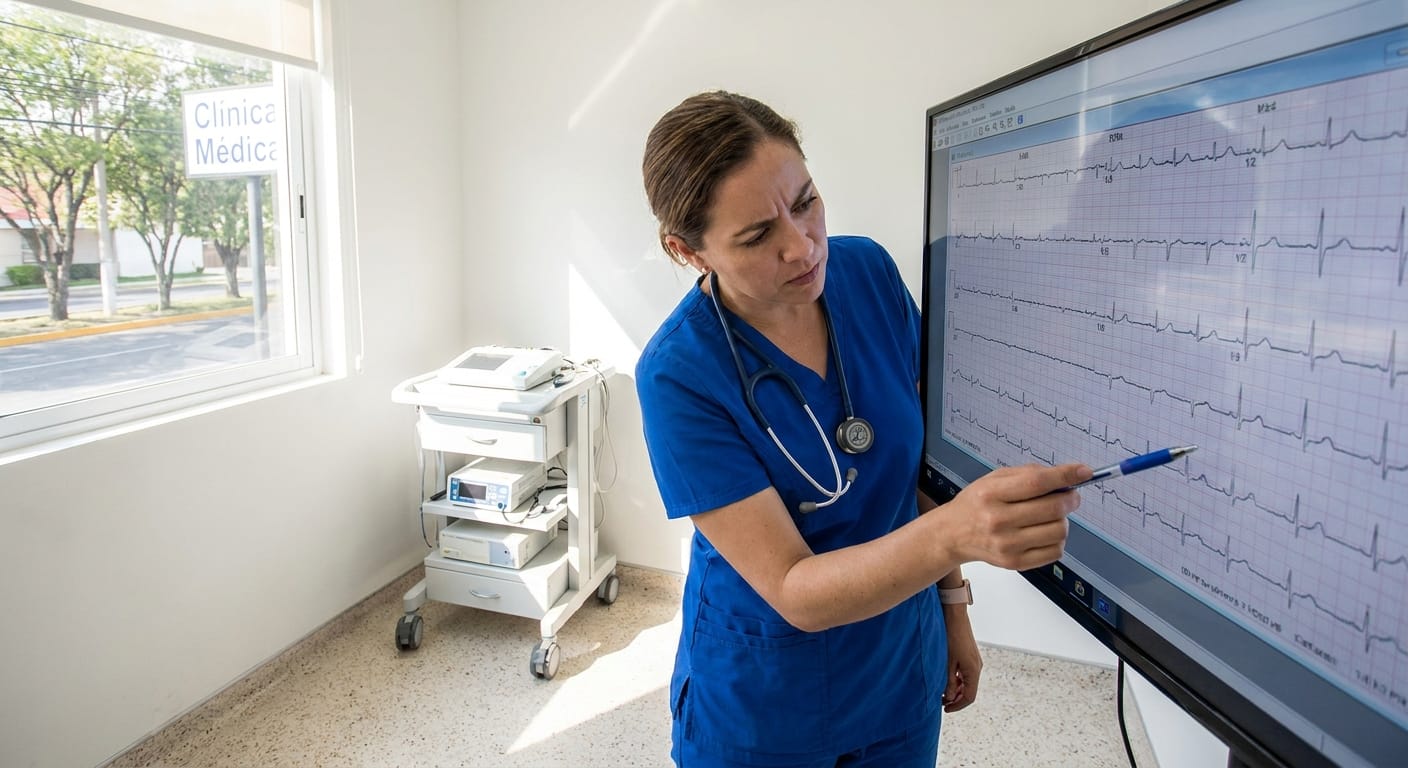
A responsible center repeats the full medical evaluation on-site, including a fresh 12-lead ECG, immediately before the flood dose, no matter how recent your outside testing is. A pre-travel record tells you what someone’s heart looked like weeks ago. It does not tell you what their heart is doing today.
This is not a formality for us at Iboga Wellness Institute. Ibogaine can affect the heart’s electrical recovery, and a person’s cardiac status, electrolytes, and toxicology can shift between the day they were cleared at home and the morning they are scheduled to dose. Someone can look like an appropriate candidate three weeks out and not be one on treatment day. That is why we reassess right up to the point of dosing, and why we run a second drug screen before proceeding. People can relapse while traveling. They can take a medication they did not think mattered. Sometimes what someone believed they were using is not everything that was actually in it. We need to know, not assume.
Here is why this matters in real life. One patient arrived with pre-arrival records and an ECG that made him appear to be a clear candidate. Our standard at Iboga Wellness Institute is to repeat the 12-lead ECG the morning of treatment regardless of prior testing. On the morning of his scheduled flood dose, the repeat tracing showed a new-onset arrhythmia that was not there before. Our physician paused treatment on the spot and referred him for further evaluation instead of proceeding on the strength of testing done days earlier.
If a center you are considering relies only on the labs you mailed in, ask what happens when the picture changes after you land. The medicine described in detox guidance from federal sources like SAMHSA’s TIP 45 on detoxification is built on continuous medical assessment, not a single clearance signed off in advance.
Can the Physician Actually Say No After You Have Already Arrived?
Yes, and at a safe center the answer has to be an unqualified yes. If the treatment date, the money already paid, or the revenue model can overrule clinical judgment, then the medical supervision is performative rather than protective. Ask this out loud before you send anyone a deposit.
Our doctors at Iboga Wellness Institute can postpone treatment, require more testing, correct something correctable, change the protocol, or decline ibogaine entirely on arrival. Nobody is entitled to a flood dose simply because they applied, paid, and flew to Mexico. The treatment date does not dictate the medicine. The patient’s condition dictates the medicine. If someone is scheduled for Wednesday and our physicians do not believe they are ready when Wednesday comes, they do not receive it because of what is written on the calendar. That authority belongs to the medical team, not to admissions and not to ownership.
We have had one person arrive fully committed, mentally prepared, family expecting the treatment, and the repeat cardiac evaluation raised a concern our physicians would not ignore. There was no conversation about lowering the dose to do it anyway, no “they traveled all this way, let’s make an exception.” We stopped. Then we did not send them home with a shrug. We continued medical observation and stabilization, addressed correctable issues, helped facilitate a cardiology evaluation, and kept our integration team working with them through the disappointment. Sometimes “no” means “not yet,” and sometimes it means never. Both answers are medicine.
The guiding question behind every acceptance decision is simple: “Would we trust this with someone we love?” We would rather lose a patient than compromise our standards. So when you interview a center, ask them to tell you about someone they did not treat. If they cannot name a single person their medical team turned down or delayed, ask why. Safety will always come before filling a bed.
What Electrolyte Levels Should a Safe Ibogaine Center Correct Before Dosing?
A safe center gates the flood dose behind specific electrolyte thresholds, not vague “normal range” language, because potassium and magnesium directly affect cardiac stability during ibogaine. Ask what those numbers are. If the answer is fuzzy, that tells you something.
We at Iboga Wellness Institute will not proceed with potassium outside 4.2 to 4.8 mmol/L or magnesium below 2.0 mg/dL, and we correct those values with IV protocols before dosing rather than waving them through. Before the flood dose we also run a magnesium cardioprotective protocol, bringing magnesium to the upper-normal range with IV magnesium sulfate. On the ECG, we hold treatment when the QTc (the measure of the heart’s electrical recovery time between beats) exceeds 460 ms with sex adjustment, because prolongation above that raises the risk of a life-threatening arrhythmia. These are gates, not suggestions.
Consider one patient whose QTc began lengthening during pre-dose monitoring. Rather than push forward, our team corrected it with IV magnesium and reassessed before making any decision about proceeding. That is what a threshold is for. It removes the temptation to read a borderline number in the direction the schedule wants. A center that “monitors labs” without telling you where its cut points sit is describing an intention, not a protocol. The number is the safeguard.
Why Real Detox Preparation Starts Weeks Before You Board a Plane
Genuine detox preparation for a complex case can begin weeks before travel, following the person’s pharmacology and withdrawal status rather than a fixed intake schedule. One of the biggest misconceptions about ibogaine detox is that someone shows up actively using, receives a flood dose, and that is the detox. That is not how it works, and a center that treats it that way is skipping the part that keeps people safe.
When someone calls on fentanyl, methadone, buprenorphine, kratom, or several prescriptions layered on top of a substance use disorder, our first question is not “when can we give you ibogaine?” It is “how do we safely get this person from where they are today to a point where our medical team can even consider it?” Those are different questions. You cannot treat every opioid as though it shares the same pharmacology. Fentanyl has a shorter half-life and often needs a bridge to a longer-acting opioid before ibogaine. Methadone is not buprenorphine. Kratom is not fentanyl. Poly-substance histories create an entirely different picture again, which is exactly why medication transition planning under physician supervision, described in Australia’s national guidelines for medication-assisted treatment of opioid dependence, is a weeks-long process rather than a same-day event.
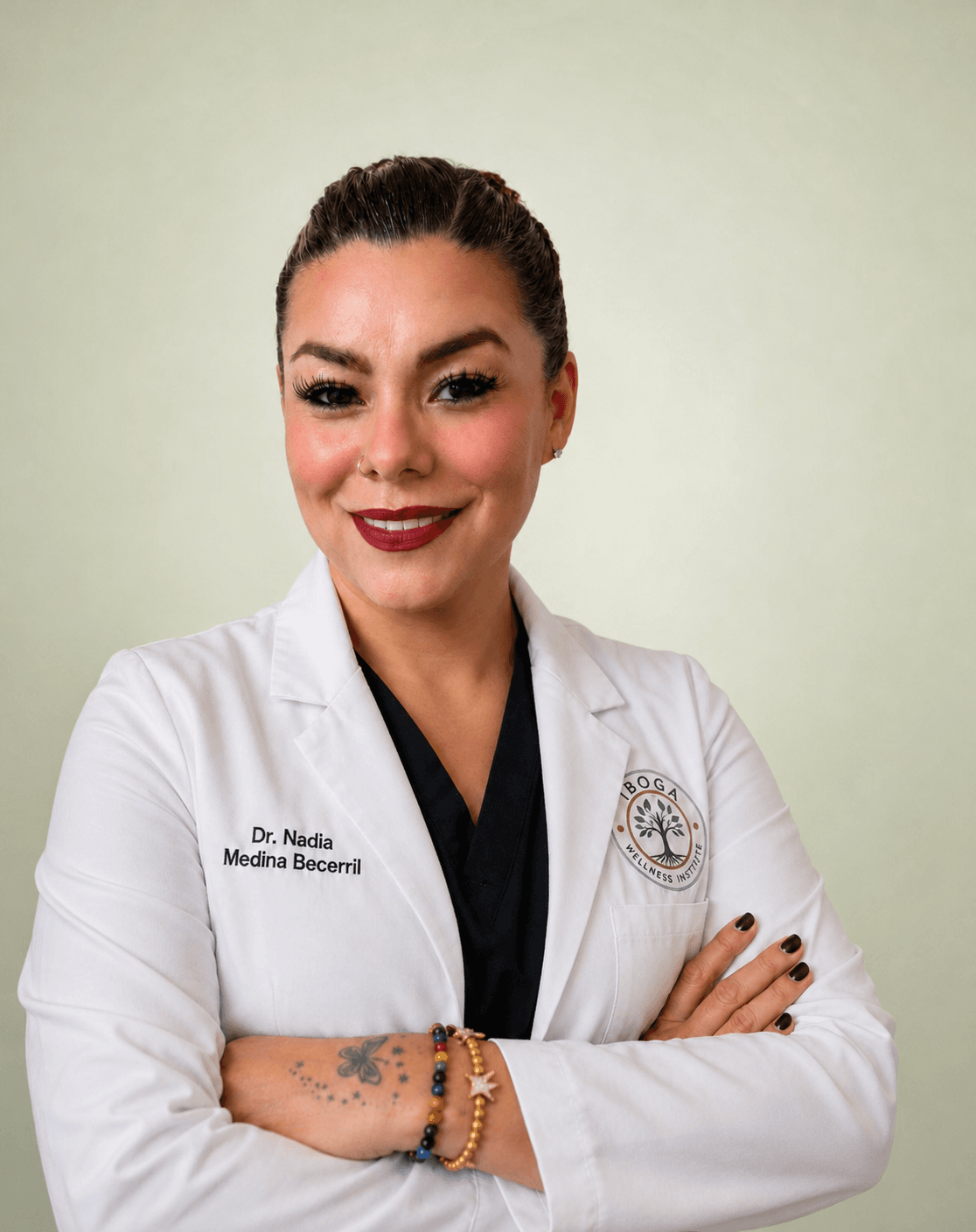
We brought Dr. Lori Nation into this part of Iboga Wellness Institute’s program for exactly this reason. She has more than two decades in addiction medicine and psychiatry, much of it spent with the opioid epidemic and complicated substance-use patients, and her role is to build individualized titration, detoxification, and stabilization protocols before anyone travels. Some people need a short runway. Some need a much longer one. And for some, the safest decision is that they are not an appropriate ibogaine candidate at all. The medicine may open the door, but lasting recovery comes from the choices a person makes once they walk through it, and none of that begins if the preparation is rushed.
What Should I Look For When Choosing an Ibogaine Detox Center Near Me? Start With the Monitoring in the Room
Start by asking exactly what monitoring runs during the flood dose, who reads rhythm changes in real time, and what happens when an arrhythmia appears. Continuous cardiac telemetry is not the same as someone checking a blood pressure cuff every so often, and the difference is the whole safety question.
Throughout the flood dose we at Iboga Wellness Institute use continuous cardiac monitoring under physician oversight, with ICU-trained nurses providing 24/7 care. We do not treat the flood dose as a ceremony where the medical team leaves and someone looks in periodically. Oxygen and emergency equipment are on-site, the people in the room are trained to recognize an arrhythmia, and there is a written escalation plan for when something goes wrong. When you interview a center, get concrete: Is a physician involved in the dosing decision? Are nurses present the entire time? Is the patient on actual telemetry? Who is responsible if a cardiac problem develops at two in the morning?
Monitoring also does not end when the visible part of the experience does. Noribogaine, the primary metabolite of ibogaine, has a long half-life, which means cardiac effects can be delayed well beyond the immediate flood-dose window. That is why we extend monitoring for 24 to 72 hours afterward. A center that discharges someone from observation the same evening has misunderstood the pharmacology. We are not looking for a miracle. We are building layers of safety around a powerful medicine, because no legitimate medical treatment is without risk, and the honest response to “how do you make ibogaine safe?” is that you surround it with real medicine and people willing to say no.
So when you keep asking yourself, “What should I look for when choosing an ibogaine detox center near me?” let the monitoring in the room carry real weight. The safest programs treat continuous cardiac oversight, from the flood dose through the days after, as medicine rather than ceremony.
What Integration Should Look Like for Months After You Leave
Effective integration can continue for months and may be tracked with named clinical instruments, not just friendly follow-up calls. Integration is part of the medical continuum, not an add-on service you can skip. If a center’s aftercare is a phone call two weeks later, the recovery infrastructure ends where the risk does not.
Our integration at Iboga Wellness Institute is led by licensed clinical psychologists, LMFTs, LCSWs, and certified addiction professionals, some with psychedelic-assisted therapy training. During treatment, clients meet with a psychotherapist for about an hour each day. Everyone leaves with a personalized aftercare plan and a weekly post-integration program, and we measure what happens over months using standardized tools that put change on paper instead of relying only on impressions. Some of the people we treat complete the post-integration program, and among those who choose to stay engaged, we have observed varying experiences with long-term recovery. We track those numbers because we want to know what happens after discharge, not just during the flood dose.
We are not just building a treatment center. Our purpose at Iboga Wellness Institute is to help someone become their son, daughter, spouse, parent, sibling, or best friend again, and get to a life they no longer feel the need to escape from. That work does not finish when the plane lands back in Ohio. It is the reason our Columbus office coordinates aftercare long after the medical part in Cozumel is done.
Frequently Asked Questions
Can I receive ibogaine treatment in the United States?
No. Ibogaine is a Schedule I substance in the United States and cannot legally be administered in Ohio or any other state. All of our ibogaine treatment at Iboga Wellness Institute happens at our licensed medical clinic in Cozumel, Mexico. Our Columbus office handles admissions, pre-treatment screening, and post-treatment aftercare coordination only.
What happens if the on-site screening reveals a cardiac risk after I have already traveled?
A responsible provider postpones or declines treatment when clinical findings warrant it, regardless of travel or payment already completed. The patient’s condition dictates the medicine, not the calendar. We continue medical observation, address correctable issues, help facilitate specialist evaluation, and keep our integration team supporting the person through the disappointment.
How long does ibogaine stay in my system after the flood dose?
Noribogaine, the primary metabolite, has a long half-life, which is why extended post-treatment monitoring for 24 to 72 hours is necessary. Cardiac effects can be delayed beyond the immediate flood-dose window, so observation has to outlast the visible part of the experience.
What is a QTc threshold and why does it matter for ibogaine treatment?
QTc measures the heart’s electrical recovery time between beats, and ibogaine can prolong it. We at Iboga Wellness Institute use a threshold of 460 ms with sex adjustment to gate treatment, because exceeding it increases the risk of life-threatening arrhythmias. A center that cannot tell you its QTc cutoff is describing an intention, not a protocol.
How is ibogaine detox preparation different for fentanyl compared to heroin or prescription opioids?
Fentanyl has a shorter half-life and often requires a bridge to a longer-acting opioid before ibogaine. The titration timeline can begin weeks before arrival under physician supervision to stabilize withdrawal and reduce cardiac stress. You cannot treat every opioid as though it shares the same pharmacology.
What does integration look like after I leave the ibogaine clinic?
Integration includes a personalized aftercare plan, weekly post-integration sessions led by licensed therapists, and outcome tracking with clinical instruments to measure depression, anxiety, and well-being over months. It is part of the medical continuum, not a courtesy call after you get home.
Your Next Step
Before you commit to any center, put these questions to them directly, then put them to us. Contact Iboga Wellness Institute’s Columbus admissions office to begin pre-treatment screening, verify the on-site medical protocols described here, and ask the safety questions that matter: what monitoring runs in the room, where the QTc and electrolyte gates sit, and whether the physician can say no after you arrive. The strongest sign of a responsible program is not how many people it treats. It is how willing its medical team is to stop when the risk is not acceptable.
Important legal and safety information: Ibogaine is not approved by the FDA and is not available as a legal medical treatment in the United States. Iboga Wellness Institute provides ibogaine treatment exclusively at its licensed medical clinic in Cozumel, Mexico, under medical supervision. US locations handle admissions, screening, and aftercare coordination only.
Start Your Healing Journey with Expert Ibogaine Care
Choosing the right ibogaine detox center means finding a team that understands both the medical complexity and the personal courage your decision requires. Iboga Wellness Institute offers medically supervised ibogaine treatment at our licensed clinic in Cozumel, Mexico, with admissions support from our Columbus office to guide you through every step. If you’re ready to explore whether ibogaine therapy is right for your situation, our team is here to answer your questions and help you make an informed choice.
Individual experiences with ibogaine treatment vary widely. The patient outcomes and stories described in this article reflect individual experiences and should not be understood as typical, expected, or guaranteed results. Many factors influence recovery outcomes, including individual physiology, substance use history, mental health conditions, treatment compliance, and post-treatment support.