
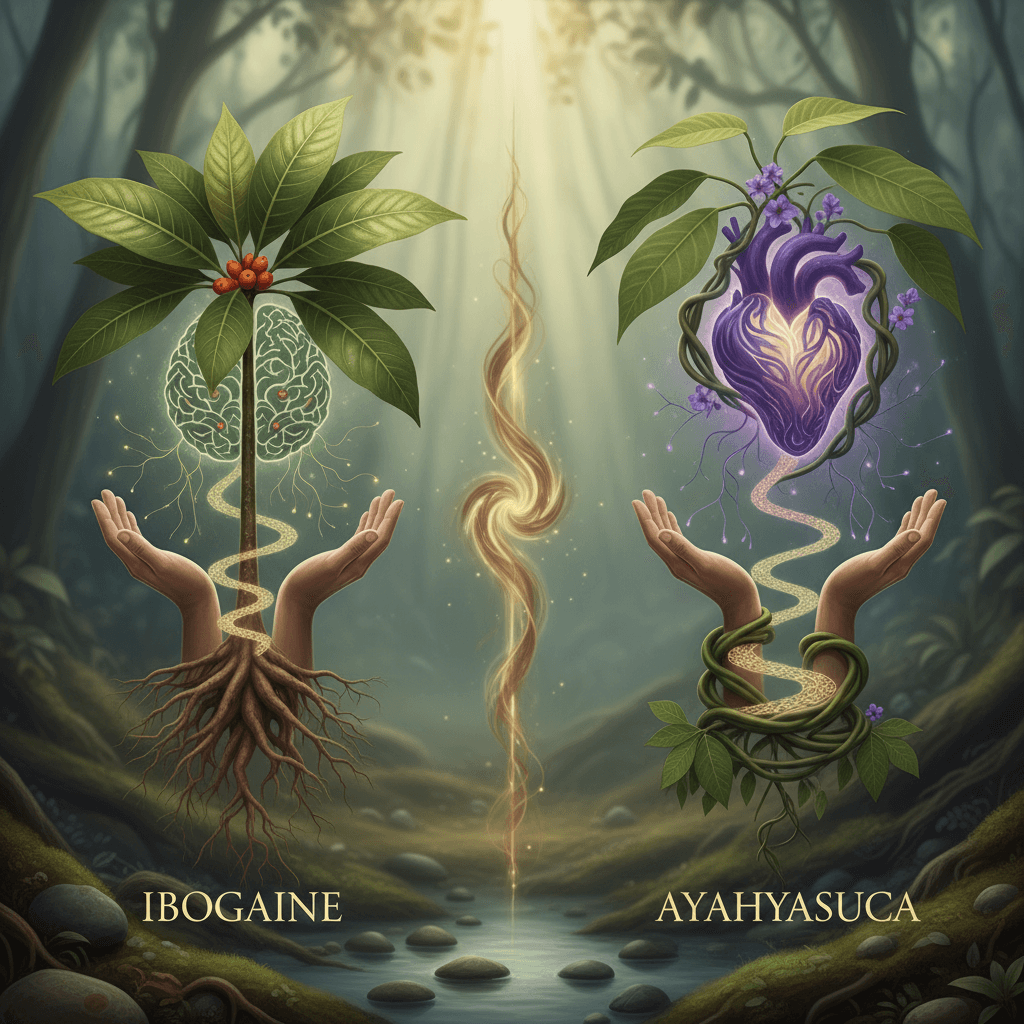
Understanding ibogaine vs ayahuasca for addiction
When you look at ibogaine vs ayahuasca for addiction, you are really comparing two very different approaches to psychedelic-assisted treatment. Both are powerful plant-based medicines that can influence how your brain works and how you relate to your addiction. They are not the same in terms of medical risk, intensity, or how they fit into a long-term recovery plan.
Ibogaine is typically used as a short, intensive medical intervention that targets withdrawal and craving, especially for opioids and stimulants. Ayahuasca is a sacred Amazonian brew used in ceremonial settings that focuses more on gradual emotional and spiritual processing over multiple sessions. Understanding these differences can help you decide what role, if any, either option might play in your recovery journey.
What ibogaine is and how it works
Ibogaine is a psychoactive substance derived from the Tabernanthe iboga shrub, which is native to Central Africa. It has a long history of traditional use in spiritual and initiation ceremonies. In the context of addiction, it is used as a powerful medical reset for the brain.
Clinics that use ibogaine for addiction typically focus on interrupting active use and easing withdrawal symptoms. Ibogaine interacts with multiple neurotransmitter systems, including opioid and dopamine receptors. This complex action appears to dampen withdrawal and help disrupt entrenched addictive patterns, particularly with opioids and stimulants [1].
In a 2012 to 2015 observational study of 88 people with opioid use disorder treated in Mexico, about 80% reported that ibogaine eliminated or drastically reduced withdrawal symptoms. Half reported a reduction in cravings, and roughly a quarter maintained that reduction for at least 3 months [2]. Around 30% reported never using opioids again after treatment, and more than half of that group stayed abstinent for at least a year, with about one third abstinent for 2 or more years [2].
These findings suggest that ibogaine can be a strong catalyst, but it is not a guaranteed cure. You still need structure, support, and follow-up care if you want to protect your gains over the long term.
What ayahuasca is and how it works
Ayahuasca is a potent psychedelic brew made from Banisteriopsis caapi vine and Psychotria viridis leaves, native to the Amazon rainforest. It has been used for centuries in countries like Peru and Brazil for spiritual and physical healing in traditional ceremonies [3].
In ceremony, you typically drink the brew under the guidance of a shaman or facilitator. Within a short time, strong auditory and visual hallucinations may begin, often accompanied by purging through vomiting or diarrhea. Traditional cultures view this purging as part of a cleansing process [3].
From an addiction perspective, ayahuasca is less about immediately stopping withdrawal and more about gradual emotional and spiritual healing. Ceremonies usually last 4 to 8 hours and are often repeated. Many participants describe confronting past trauma, releasing suppressed emotions, and gaining spiritual insight. This process can help you shift your relationship with substances, particularly for alcohol, cannabis, or behavioral addictions [1].
Ayahuasca is powerful and unpredictable. Although some people report life changing benefits, it is not clinically recommended as a standard addiction treatment. The effects can be destabilizing, especially if you have existing mental health vulnerabilities, and there is a risk of lasting psychological harm in some cases [3].
Comparing mechanisms and effects on the brain
Both ibogaine and ayahuasca influence neuroplasticity, which is your brain’s ability to form new pathways. That is an important factor in recovery because changing deeply ingrained patterns is part of leaving addiction behind [1]. However, they do so in quite different ways.
Ibogaine broadly interacts with opioid receptors, dopamine systems, and several other targets. This broad action helps ease acute withdrawal and craving, particularly in opioid use disorders. Many people report that their physical and obsessive drive to use is sharply reduced after a single session. In the observational study, those who responded well to ibogaine also reported substantially lower depression and anxiety, and higher well-being after treatment compared with non-responders [2].
Ayahuasca’s main psychoactive component is DMT, combined with MAO inhibitors in the brew that allow DMT to be orally active. This combination produces intense visionary states and heightened emotional processing. The therapeutic potential is less about direct anti-withdrawal effects, and more about insight, reprocessing trauma, and restructuring your sense of self and meaning.
Importantly, treatment responders with ibogaine tended to report spiritually meaningful, insightful experiences during their session, and these mystical type experiences correlated with better opioid use outcomes [2]. Ayahuasca also often produces deep spiritual experiences. In both cases, meaning and insight appear to be part of how change happens.
Detox experience and short-term outcomes
If you are deciding between ibogaine vs ayahuasca for addiction, you need to look closely at the detox and early recovery phase. These two experiences feel very different and serve different roles.
Ibogaine treatment is usually structured as a single or very limited number of high dose sessions under medical supervision. Before treatment, you go through detailed screening, including ECGs, given that ibogaine can stress the heart and carries a risk of cardiac complications. During dosing, you are typically monitored 24/7 due to the medical risks, especially if you have any heart or health issues [1].
When it works as intended, ibogaine substantially reduces withdrawal and craving and can compress weeks of detox into a shorter, more manageable period. In practical terms, it can give you a head start into abstinence that would otherwise be very difficult, particularly if you have tried to detox multiple times already or have struggled with conventional medical detox. You can explore how ibogaine compares directly to other options in resources such as ibogaine vs methadone detox and ibogaine vs detox medication treatment.
Ayahuasca does not function as a medical detox in the same way. You are generally expected to be abstinent or at least medically stable before attending ceremony. The brew may trigger intense emotional and physical purging, but it is not designed to manage life threatening withdrawal. For opioids, benzodiazepines, or severe alcohol dependence, relying on ayahuasca instead of proper detox can be dangerous.
In the short term, ayahuasca can produce powerful shifts in perspective. You might feel a strong desire to change your life, repair relationships, or stop using substances. However, these shifts do not automatically translate into stable sobriety unless they are supported by ongoing work, safe integration, and sometimes more structured treatment.
Safety, risks, and medical oversight
Both ibogaine and ayahuasca carry real risks. Neither should be treated casually, and neither is appropriate for everyone.
Ibogaine has more clearly documented cardiac risks. It can affect heart rhythm, so people with underlying heart disease or certain medications in their system face higher danger. That is why proper ibogaine treatment requires comprehensive medical screening, including heart tests, lab work, and review of all current medicines. During dosing, you should have continuous monitoring and immediate access to emergency care if needed [1].
Ayahuasca tends to have fewer direct physical risks compared to ibogaine, but that does not mean it is automatically safe. The brew can interact dangerously with certain psychiatric medications, particularly antidepressants that affect serotonin. It can also overwhelm people with fragile mental health, triggering or worsening psychosis, mania, or severe anxiety. Choosing an experienced facilitator, a responsible setting, and appropriate preparation and screening is essential [1].
Medical organizations do not endorse ayahuasca as a recommended addiction treatment. Addiction is recognized as a chronic, relapsing brain disease with no known cure. Although stories of ayahuasca helping people heal trauma or change their mindset can be compelling, the brew itself is unpredictable and can sometimes cause lasting mental health damage [3].
By contrast, some ibogaine programs are moving toward more medicalized, protocol-driven approaches. Even so, ibogaine is not approved as a standard addiction medicine in many countries. It sits in a gray area, and responsible clinics stress that it is one element of care rather than a stand-alone cure.
Long-term recovery impact
When you compare ibogaine vs ayahuasca for addiction, one of the most important questions is how each affects your long-term recovery, not just your initial breakthrough.
Ibogaine appears to provide a strong short term reset for some people. In the study of opioid users, not only did a subset achieve long term abstinence, but those with positive outcomes reported lower depression and anxiety, and higher well-being over time [2]. The correlation between spiritually meaningful experiences and better outcomes suggests that ibogaine may work best when both the biological and psychological aspects are addressed.
However, ibogaine is not a maintenance therapy and is not designed to manage your recovery month after month in the way methadone or buprenorphine do. It is a single or limited intervention that can open a window in which change is easier. To make that window count, you typically need some combination of therapy, peer support, lifestyle changes, and sometimes additional structured care. You can see how ibogaine stacks up against ongoing medications in resources like ibogaine vs methadone treatment, ibogaine vs buprenorphine treatment, and ibogaine vs suboxone treatment.
Ayahuasca can support long term recovery by helping you process trauma, explore your inner world, and reconnect with meaning or spirituality. Many people find that these experiences shift their relationship with substances and with themselves over time. Repeated ceremonies, integration circles, and lifestyle changes can reinforce these shifts. The brew also appears to support neuroplasticity, which may make it easier to adopt new, healthier patterns [1].
Yet, as with ibogaine, there is no guarantee. Ceremonial work does not replace evidence based treatments like psychotherapy, medication when appropriate, or structured rehab. For some people, intense psychedelic experiences can even destabilize recovery if there is not enough support or if preexisting conditions are not recognized.
Both ibogaine and ayahuasca can be catalysts, but your long-term recovery usually depends more on what you do before and after the experience than on the ceremony or session itself.
Combining ibogaine and ayahuasca in a care plan
Some providers and individuals consider using both ibogaine and ayahuasca in a staged way. In this model, ibogaine is used first to interrupt active addiction and relieve withdrawal, and ayahuasca comes later to help with emotional healing and integration.
When this works, ibogaine can serve as a medical and neurochemical reset. After detox, once you are more stable and not in acute withdrawal, carefully planned ayahuasca work can support processing of trauma, rebuilding self worth, and deepening your commitment to a substance free life [1].
However, combining the two is not simple. They should never be taken at the same time due to safety concerns, and the timing between them must be carefully managed. Any plan that involves both needs professional oversight, careful screening, and a clear recovery framework that includes therapy, support networks, and relapse prevention strategies.
You might think of ibogaine as a potential starting point in a broader strategy. From there, you can evaluate whether additional modalities, including ayahuasca, psychotherapy, or more conventional options like ibogaine vs traditional rehab or ibogaine vs rehab programs, make sense for your specific situation.
How these compare to MAT, ketamine, and traditional rehab
If you are weighing ibogaine vs ayahuasca for addiction, you are probably also comparing them with more established treatments like medication assisted treatment, ketamine therapy, and structured rehab or detox programs.
Medication assisted treatment uses medications like methadone, buprenorphine, or naltrexone to reduce cravings and stabilize your life over the long term. Unlike ibogaine or ayahuasca, MAT focuses on ongoing support rather than a single major experience. It has a strong evidence base for reducing overdose risk and improving functioning. You can explore detailed comparisons in guides such as ibogaine vs medication assisted treatment.
Ketamine therapy is another emerging option within psychedelic associated care. It is usually delivered in controlled medical settings through infusions or lozenges and has a shorter duration of action than ibogaine or ayahuasca. Some programs use it to treat depression and to support addiction recovery by rapidly lifting mood and enabling deeper therapy. For a direct comparison, you can review ibogaine vs ketamine therapy.
Traditional rehab and detox centers remain core parts of many recovery plans. They provide medically supervised withdrawal management, structured therapy, and peer support. While they may not offer the dramatic single event change that some people seek from psychedelics, they are built on evidence based, regulated approaches. You can see how ibogaine compares in options like ibogaine vs detox centers and ibogaine vs psychedelic therapy for addiction.
Compared to these approaches, ayahuasca retreats tend to be less medical and more spiritual or experiential. They may be helpful as an adjunct for some people, but they do not replace the medical and therapeutic support that is typically recommended for a chronic relapsing condition like addiction [3].
Choosing the right path for you
Choosing between ibogaine vs ayahuasca for addiction is not just a question of which one is stronger or more mystical. You are choosing between different roles in your recovery.
Ibogaine is closer to a medical intervention that aims to reset your brain and interrupt active use, especially for opioids and stimulants. It requires serious medical screening and monitoring, and it works best when you treat it as the beginning of a longer process that includes therapy, support, and lifestyle change.
Ayahuasca is a ceremonial medicine that can support emotional and spiritual healing over time. It may help you explore trauma, reconnect with purpose, and shift your relationship with substances. It is not a substitute for medical detox, and it carries psychological risks that should not be underestimated.
Addiction has no single cure. Even promising approaches like ibogaine are best viewed as powerful tools within a wider recovery plan, not magic solutions. Many people find that the most effective path combines different elements, such as medical care, therapy, peer support, and, if appropriate and safe, carefully chosen psychedelic work.
If you are considering any of these options, it is important to consult medical professionals, review your health history, and think carefully about what kind of support you will have before and after treatment. Your long-term recovery depends not only on the intervention you choose, but also on the structure you build around it to help you maintain change.