
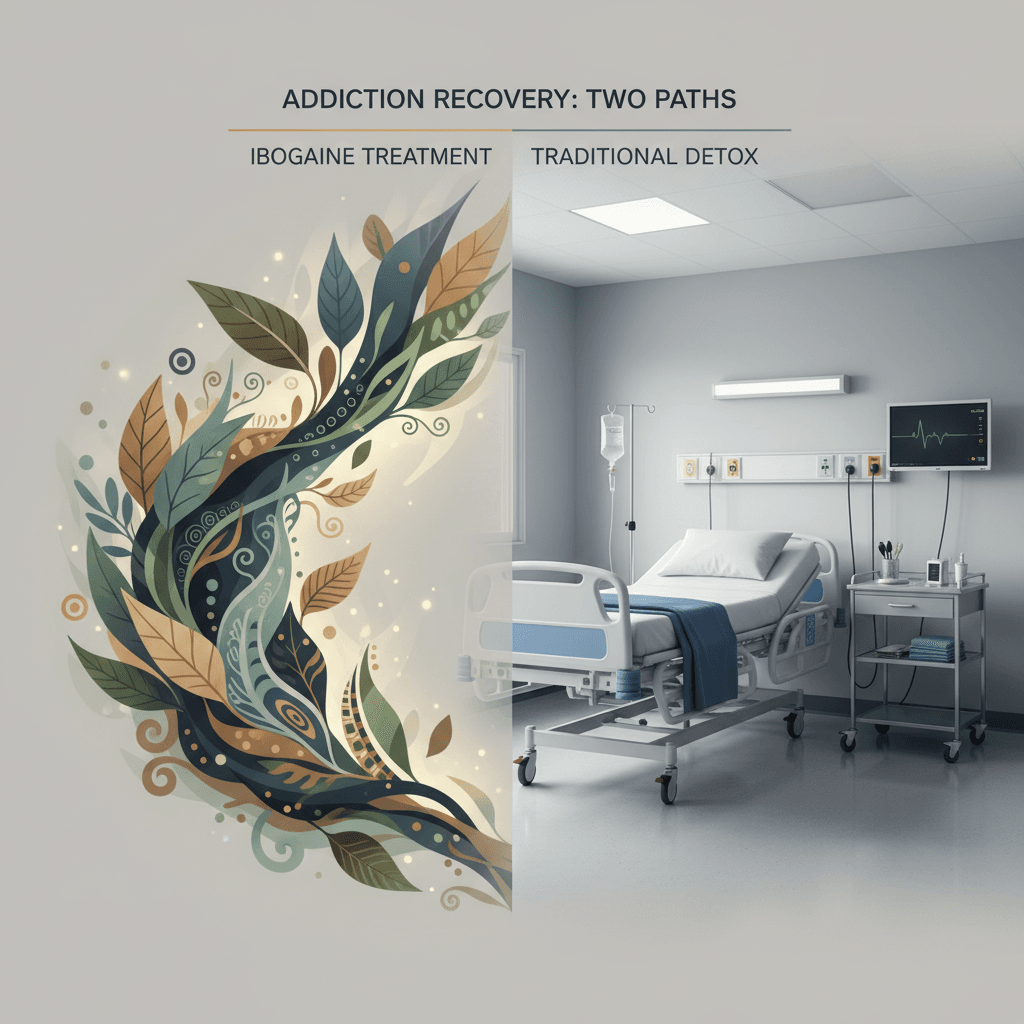
Understanding ibogaine vs detox centers
When you compare ibogaine vs detox centers, you are really comparing two very different philosophies of addiction treatment. Traditional detox centers focus on medically managed withdrawal and stabilization so you can safely stop using substances. Ibogaine treatment, often provided in specialized clinics outside the United States, focuses on a rapid neurochemical reset that can significantly reduce withdrawal and craving while inducing an intense psychedelic experience.
Professional detox programs are built around medically supervised withdrawal using standard medications and therapies in a structured setting, not alternative treatments like ibogaine [1]. Ibogaine, by contrast, is still experimental, illegal in the US, and carries unique medical risks, especially for the heart, but research suggests it can create powerful changes in addiction and mental health.
Understanding how each approach works, what the risks are, and what you can realistically expect from outcomes can help you decide what makes sense for your situation.
How traditional detox centers work
Medically managed withdrawal and stabilization
In most countries, including the US, detox centers are the standard first step in treatment for alcohol, opioids, benzodiazepines, and other substances. These programs provide medically managed withdrawal, sometimes called medical detox or medically managed withdrawal, in a supervised inpatient setting.
In a typical detox program, you receive:
- Medical assessment and monitoring
- Medications to manage withdrawal symptoms and reduce complications
- Supportive care such as fluids, nutrition, and rest
- A plan for transition into ongoing treatment or rehab
Professional detox is very different from trying to detox at home. Detoxing on your own can be dangerous, especially with substances like alcohol or benzodiazepines, because severe withdrawal can cause seizures, delirium tremens, stroke, or even death. Medical detox centers are specifically designed to reduce those risks [1].
Tapering and withdrawal management
Detox centers often use tapering strategies or substitution medications to stabilize you while your body clears the substance. For example, with opioids you might receive buprenorphine or methadone, and with benzodiazepines you might be switched to a long-acting benzo that is slowly tapered.
This approach:
- Minimizes the intensity of acute withdrawal
- Gives you medical supervision during the riskiest period
- Reduces the likelihood of immediate relapse caused by unbearable symptoms [1]
The limitation is that traditional detox alone does not repair brain chemistry or address the deeper psychological and behavioral aspects of addiction. After detox, you are usually referred to residential rehab, outpatient treatment, or ongoing medication assisted treatment (MAT) for long-term recovery [1].
Role in ongoing recovery
Detox centers are best understood as a starting point. Their primary goals are:
- Keep you medically safe while you stop using
- Reduce acute withdrawal symptoms
- Prepare you for rehabilitation and therapy
If you choose a traditional pathway, you may go from a detox unit into a residential program, an outpatient program, or MAT such as methadone, buprenorphine, or naltrexone. You can learn more about this broader comparison in resources like ibogaine vs traditional rehab and ibogaine vs medication assisted treatment.
How ibogaine treatment works
Mechanism and psychedelic experience
Ibogaine is a psychoactive alkaloid derived from the root bark of the African shrub Tabernanthe iboga. At high doses, ibogaine induces a prolonged psychedelic state that can last 12 to 24 hours or longer. During this period, many people experience vivid visions, life reviews, and intense introspection.
On a biological level, ibogaine appears to:
- Interact with multiple neurotransmitter systems
- Help normalize disrupted dopamine and serotonin pathways
- Significantly reduce or eliminate acute opioid withdrawal symptoms for many people
- Decrease craving and compulsive use by resetting aspects of the brain reward system [2]
Some clinics and researchers describe ibogaine as a rapid neurochemical reset rather than a gradual stabilization. This is one of the main differences when you weigh ibogaine vs detox centers.
Neuroplasticity and psychological window
Beyond the acute psychedelic phase, ibogaine may create a period of enhanced neuroplasticity. For several weeks after a treatment, your brain can be more flexible and more receptive to new patterns, insights, and behaviors [2].
This neuroplasticity window may:
- Make it easier for you to change entrenched habits
- Support deeper work in therapy or integration groups
- Accelerate progress that might otherwise take months or years in traditional rehab [2]
Some accounts and early studies suggest that ibogaine does more than mask withdrawal. It may initiate actual neurological repair by helping to restore function in damaged dopamine receptors and rebalancing the brain reward system [2].
What the research shows on addiction
A 2017 observational study followed 88 people who received ibogaine for opioid addiction at clinics in Mexico between 2012 and 2015 [3]. In this group:
- About 80 percent said ibogaine eliminated or drastically reduced opioid withdrawal
- About 50 percent reported reduced craving
- Around 25 percent experienced craving reduction that lasted at least 3 months
In terms of abstinence:
- 30 percent reported complete abstinence after treatment
- Of those, 54 percent stayed abstinent at least 1 year
- 31 percent remained abstinent for 2 years or more [3]
Even among the 70 percent who relapsed at some point, nearly half said their opioid use was lower than before, and another 11 percent eventually achieved abstinence [3]. Compared with long-term maintenance therapies that can involve years on medications and frequent relapse, ibogaine offers a single or short series of doses that may rapidly reduce withdrawal and craving while creating a meaningful psychological or spiritual experience [3].
Responders in this study also reported lower depression and anxiety and higher well-being than non-responders, and they rated their ibogaine experiences as more spiritually significant, which may play a role in the therapeutic effect [3].
Safety risks and medical concerns with ibogaine
When you compare ibogaine vs detox centers, safety is a critical difference. While detox centers are designed to reduce medical risk, ibogaine carries specific and sometimes serious potential side effects, especially for the heart and nervous system.
Cardiac risks and monitoring
An open-label safety study in the Netherlands gave ibogaine hydrochloride (10 mg/kg) to 14 people with opioid use disorder who were on opioid maintenance but wanted to detox [4]. The findings showed:
- Clinically significant but reversible QTc prolongation, a measure of heart rhythm risk
- Half of the participants had QTc values above 500 ms, which is considered high risk
- There was an average QTc increase of 95 ms, with a range of 29 to 146 ms
- Participants experienced bradycardia and decreased blood pressure during the first 12 hours
No torsades de pointes, a dangerous type of arrhythmia, occurred in this small sample, but the degree of QTc prolongation suggests that ibogaine should only be used with strict cardiac monitoring in a controlled medical setting [4].
Traditional detox centers use medications that have been studied extensively in large populations. They still require monitoring, but the cardiac risk profile is generally better understood and more manageable in standard clinical environments.
Neurological and balance effects
In the same Dutch study, every ibogaine-treated participant developed transient cerebellar ataxia, which means severe problems with balance and coordination. Many needed help walking for the first 24 hours after dosing. This ataxia resolved in 24 to 48 hours, but it is not something typically seen in standard detox settings [4].
These neurological effects highlight why medical supervision during ibogaine treatment is essential. Unregulated or informal settings without proper staff, emergency equipment, or cardiac monitoring significantly increase the danger.
Legal and regulatory context
Ibogaine is illegal in the United States and many other countries. Most ibogaine treatment currently occurs in Mexico, parts of Canada, and some other jurisdictions where regulations are looser or evolving. Because there is no unified regulatory framework, the quality and safety standards of ibogaine clinics vary widely.
Traditional detox centers, in contrast, operate within regulated healthcare systems, are typically licensed, and follow standard medical protocols. If you pursue ibogaine, you are stepping into a more experimental area with less oversight and a higher burden on you to vet providers carefully.
Comparing treatment experience and process
What you go through physically
With traditional detox centers, your experience usually includes:
- Gradual or managed withdrawal with medications
- A predictable progression of symptoms monitored by medical staff
- Some discomfort, but with interventions to make it as tolerable and safe as possible
Cold-turkey withdrawal at home is considered unsafe, especially for alcohol or benzodiazepines, but detox centers offer a safer and more controlled withdrawal environment [1].
With ibogaine, the experience is different:
- Dosing is typically a single large dose or a carefully structured series in a short period
- Many people report that acute opioid withdrawal is dramatically reduced or almost absent
- You enter an intense multi-hour psychedelic state with visions, emotional catharsis, and physical instability
Although objective measures like the Clinical Opioid Withdrawal Scale (COWS) remained mild in the Dutch safety study, three out of fourteen subjects went back to morphine within 24 hours, which suggests that reducing withdrawal does not automatically guarantee successful detoxification [4].
Psychological and spiritual dimensions
Ibogaine tends to concentrate a huge amount of psychological material into a single extended session. Many people describe:
- Revisiting past traumatic events
- Seeing the consequences of their addiction vividly
- Feeling a sense of spiritual insight, forgiveness, or new purpose
These psychological and spiritual aspects may be part of why treatment responders often show lower depression and anxiety and greater well-being afterward [3].
Detox centers, on the other hand, typically provide supportive counseling and basic therapy during withdrawal, but the deeper psychological work often begins later in rehab or outpatient therapy once you are medically stable.
If you want to explore how ibogaine compares to other psychedelic or plant-based therapies, it may help to look at ibogaine vs ketamine therapy, ibogaine vs ayahuasca for addiction, and ibogaine vs psychedelic therapy for addiction.
Duration and intensity of treatment
Most detox center stays last from a few days to about 10 days, depending on the substance and severity of use. The experience is intense in the beginning, then gradually stabilizes. After that, you transition into ongoing treatment.
Ibogaine compresses much of the initial change into a single treatment episode that can last 24 to 48 hours, with lingering physical fatigue and integration needs in the days following. Instead of several days of increasing and then decreasing withdrawal, you may experience one very intense psychedelic event and then a rapid shift in symptoms.
Considering long term outcomes and relapse
Detox centers and relapse risk
Detox alone often has high relapse rates. The primary reason is that detox addresses physical dependence but not the full scope of addiction. After detox, if you return to the same environment and stressors without ongoing support, relapse is common.
Long term success with traditional detox tends to depend on:
- Rapid connection to rehab, therapy, or support groups
- Use of maintenance medications such as methadone or buprenorphine when appropriate
- Ongoing work on trauma, mental health, and lifestyle changes
To understand where detox sits in the broader system, it can be helpful to review comparisons such as ibogaine vs methadone detox, ibogaine vs methadone treatment, ibogaine vs buprenorphine treatment, and ibogaine vs suboxone treatment.
Ibogaine’s impact on relapse and use
In the Mexican ibogaine study, 30 percent of people achieved complete abstinence, and more than half of those remained abstinent for at least 1 year [3]. Those are encouraging numbers, especially for people who have not responded to standard treatments.
At the same time:
- 70 percent did relapse at some point
- Many of those who relapsed still reported lower levels of use
- Ibogaine did not eliminate the need for ongoing support and behavioral change [3]
This suggests that ibogaine is best thought of as a powerful catalyst rather than a stand‑alone cure. You still need integration, therapy, community, and practical changes to maintain the shift.
Evidence from mental health and brain injury
A 2024 Stanford Medicine study looked at veterans with traumatic brain injury and severe PTSD, depression, and anxiety who received ibogaine combined with magnesium at a clinic in Mexico [5]. One month after treatment, researchers found:
- WHO Disability Assessment scores improved from an average of 30.2, which indicates mild to moderate disability, to 5.1, which indicates no disability
- PTSD symptoms reduced by 88 percent
- Depression decreased by 87 percent
- Anxiety decreased by 81 percent [5]
The treatment was medically monitored and included magnesium to reduce heart complications. No serious side effects occurred, only mild issues such as headache and nausea [5]. Although this study did not focus on detox centers, it highlights ibogaine’s potential to drive large improvements in complex neuropsychiatric conditions and supports the idea that its therapeutic action involves changes in brain rhythms, stress response, and neuroplasticity [5].
These findings have helped drive initiatives like Texas’s major funding effort to study ibogaine for possible FDA approval in the future [5].
Comparing ibogaine vs detox medication treatment
When you think specifically about ibogaine vs detox medication treatment like methadone or buprenorphine protocols, you are making a choice between two very different timelines and risk profiles.
Detox medication approaches:
- Use well studied medications at standard dosages
- Are usually delivered in licensed facilities or under physician supervision
- Emphasize gradual stabilization and tapering
- Have extensive safety data and clear guidelines
You can explore this comparison further through resources like ibogaine vs detox medication treatment and ibogaine vs rehab programs.
Ibogaine treatment:
- Uses a single high dose or a short series of doses
- Currently occurs mostly outside US regulation
- Can drastically reduce withdrawal and craving in a short time for many people
- Carries significant cardiac and neurological risks that require specialized monitoring
Your decision may come down to your current medical status, prior treatment history, tolerance for risk, and your values about psychedelic or spiritual experiences in healing.
How to decide what is right for you
Choosing between ibogaine vs detox centers is not about finding a universally superior option. It is about matching the right tool to your specific situation, history, and goals.
You might lean toward a traditional detox center if you:
- Have serious medical conditions or are at high risk from withdrawal
- Prefer evidence based, regulated treatments with established safety profiles
- Want a gradual and supervised transition into rehab or MAT
- Are not comfortable with intense psychedelic experiences
You might consider ibogaine, with careful medical screening, if you:
- Have tried standard detox or MAT repeatedly without lasting success
- Are prepared for an intense psychological and spiritual experience
- Can access a clinic that offers real cardiac monitoring and medical oversight
- Understand that ibogaine is experimental and still requires long term follow up and integration
In either case, detox or ibogaine is only one piece of recovery. Long term outcomes depend on what you do afterward: therapy, community, lifestyle changes, and ongoing support. If you continue exploring your options, it can help to review targeted comparisons like ibogaine vs methadone detox and ibogaine vs medication assisted treatment so you can see how each path fits into your larger recovery plan.
Whichever direction you choose, approaching the decision with clear information, medical guidance, and a realistic understanding of risks and benefits can help you move forward with more confidence and a stronger foundation for lasting change.