
Understanding ibogaine and why legality matters
If you are looking into psychedelic-assisted treatment for addiction, you have probably come across ibogaine. Before you consider traveling for care, it is important to understand not only how ibogaine is used, but also where it is legal and how clinics are regulated.
Ibogaine is a psychoactive alkaloid derived from the African shrub Tabernanthe iboga. Some clinics use it as part of experimental treatment for opioid dependence, other substance use disorders, and in some cases trauma, depression, and anxiety. In the United States, ibogaine is a Schedule I substance, which means it is illegal to prescribe or administer in clinical settings. This legal status has led many people to ask a specific question: is ibogaine treatment legal, and if so, what does that actually mean for you?
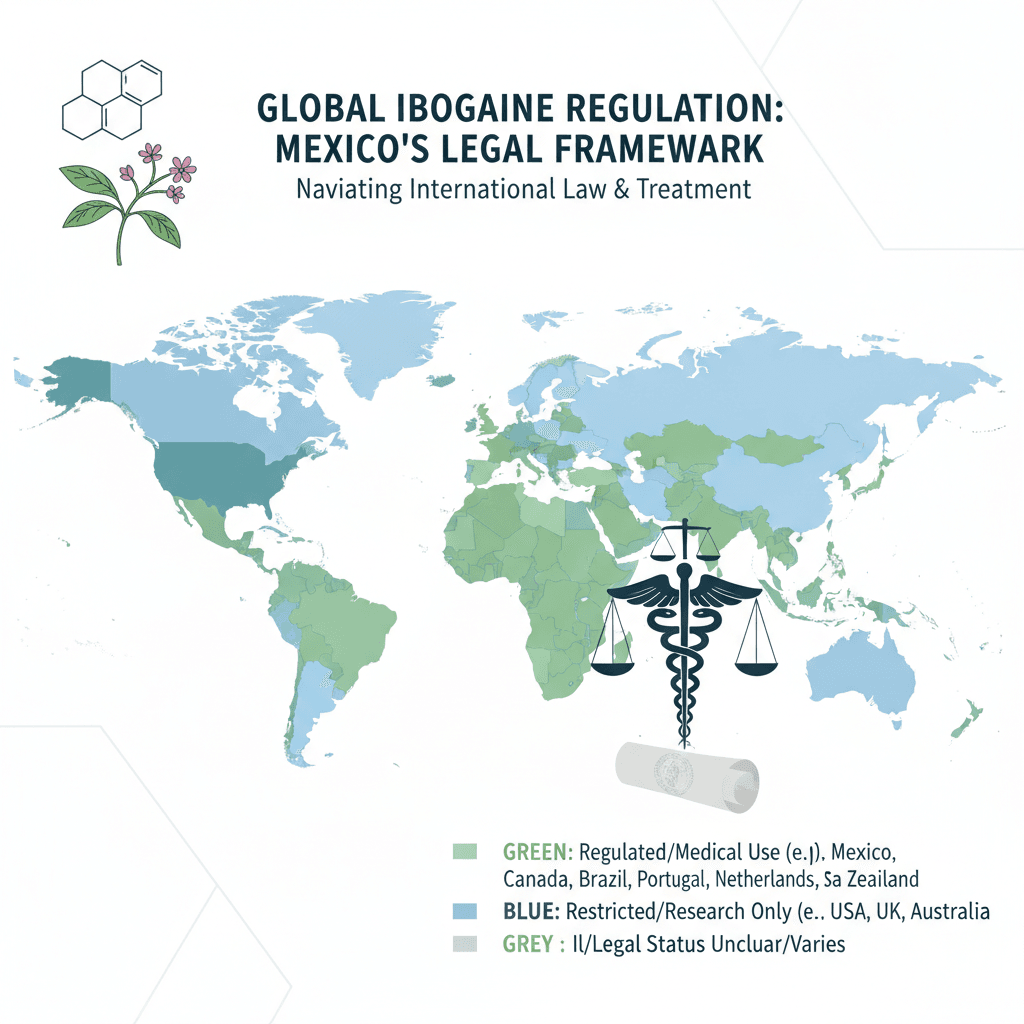
To answer that clearly, it helps to first look at how ibogaine is treated in Mexican law, then compare that with other countries so you can see the bigger picture. If you want to explore the broader landscape, you can read more about where is ibogaine legal and the ibogaine legal status worldwide.
Is ibogaine treatment legal?
In ibogaine is not listed as a controlled or scheduled substance under the General Health Law or in the official drug schedules. Because ibogaine is not classified as a controlled drug, authorized medical facilities can legally offer ibogaine treatment within the framework of medical tourism and experimental addiction recovery as of recent reports [1].
This situation is sometimes described as ibogaine being “unregulated”. In practice, this means:
- There is no specific federal prohibition against ibogaine
- Ibogaine is not scheduled as a narcotic or psychotropic substance in national drug policy
- Clinics can administer ibogaine as part of private, licensed medical or wellness services, as long as they comply with health and safety regulations
Several sources note that ibogaine is treated similarly to natural or over the counter remedies in regulatory terms, which makes it accessible for treatment under medical supervision [2]. At the same time, this does not mean a clinic can ignore health laws. It must still operate as a legitimate healthcare or wellness provider.
Because regulations differ significantly by country, it is useful to put in context with other jurisdictions by reviewing ibogaine treatment laws and ibogaine regulation worldwide.
How regulation of ibogaine clinics works
Although ibogaine itself is not scheduled, clinics that provide ibogaine treatment are expected to follow the same health regulations that apply to other private medical or wellness centers.
Role of COFEPRIS and health authorities
Legal ibogaine centers typically operate under the oversight of COFEPRIS, which is equivalent of the US Food and Drug Administration. For a clinic to be lawful and above board, it should:
- Hold valid operating permits from local and national health authorities
- Meet sanitary and facility standards for medical or wellness centers
- Maintain emergency protocols and equipment on site
- Employ properly trained medical staff to monitor treatment
Licensed ibogaine clinics in must comply with COFEPRIS regulations that cover sanitary conditions, staffing, and safety procedures. Sources emphasize that this framework is what separates regulated facilities from illegal or underground providers [1].
Because the substance itself is not controlled, much of the practical safety depends on how well a clinic follows broader medical regulations. When you evaluate potential providers, it is important to ask specific questions about licensing, medical oversight, and emergency capabilities.
What reputable clinics typically offer
Well established ibogaine treatment centers in tend to share several features. Reports describe reputable clinics as facilities that:
- Operate with valid medical licenses
- Follow written protocols for dosing, monitoring, and emergency response
- Provide continuous cardiac and vital sign monitoring during treatment
- Conduct thorough pre treatment evaluations including cardiac screening
- Offer aftercare planning and follow up resources
Multiple sources underscore that credible clinics in provide comprehensive medical assessments and ongoing supervision during ibogaine sessions to support patient safety [3].
Because quality can vary, you are encouraged to conduct detailed research, verify credentials, and consult medical professionals before choosing a center [2]. If you want general guidance on how to assess clinics in different countries, see ibogaine legal treatment clinics.
Why became a hub for ibogaine therapy
Developed a reputation as one of the primary international destinations for ibogaine treatment. There are several reasons for this.
Legal environment compared with other countries
In many countries, ibogaine is strictly regulated or banned. For example, in the United States it is classified as a Schedule I substance, which means it is considered to have no accepted medical use and a high potential for abuse. This status prohibits legal medical use and research outside narrow federal approvals. You can read more about why ibogaine treatment is not legal in the US and ibogaine legality in the united states.
By contrast, legal approach is more permissive. Ibogaine is not scheduled and is not specifically addressed in drug control laws. This unregulated status creates space for licensed private clinics to develop ibogaine programs aimed at addiction recovery, trauma, and other conditions. Several sources highlight that legal environment has facilitated the growth of ibogaine therapy centers that serve both local and international clients [4].
Mexican authorities have also recognized potential therapeutic benefits, allowing ibogaine to be used in supervised medical settings when clinics comply with applicable health regulations. Reports note that studies conducted in controlled environments suggest that with careful screening and monitoring, risks can be minimized [2].
Focus on international patients and medical tourism
Llocation, infrastructure, and visa policies make it accessible to people from the United States, Canada, and other countries where ibogaine is restricted. Many ibogaine treatment centers are set up specifically to support international medical tourists. Common features include:
- Assistance with travel logistics and airport transfers
- Multilingual staff who can communicate in English and Spanish
- Short term residential programs tailored to one to three week stays
- Aftercare planning that anticipates return to home country supports
Reports note that is widely recognized as a hub for ibogaine therapy in part because of this medical tourism orientation and its adherence to international standards at reputable clinics [5].
If you want to compare with other jurisdictions that allow treatment, you can review countries where ibogaine treatment is legal.
Can you legally travel for ibogaine treatment?
If you live in a country where ibogaine is prohibited, you might wonder how it is legal for you to travel abroad and receive treatment elsewhere. In general, countries regulate what happens within their borders, not what citizens do in another sovereign country that permits a given treatment.
Entry requirements and tourist permits
For many international patients, including people from the United States, entry for short term treatment typically occurs under a standard FMM tourist permit. This document usually allows stays of up to 180 days, depending on your circumstances. In most cases, you do not need a special medical visa for a one or two week ibogaine program [1].
Clinics that regularly work with foreign patients often help you understand entry requirements, travel timing, and what documents to bring. You are responsible for complying with your own country’s laws on importing medications, so you should not attempt to bring ibogaine back home with you. Treatment should occur entirely within a licensed facility.
If you are specifically interested in how Americans pursue ibogaine treatment abroad and what legal issues they consider, you can read more in can americans get ibogaine treatment abroad.
Legal considerations when you return home
Most jurisdictions focus on possession, importation, and distribution of controlled substances within their borders. If you receive ibogaine, where treatment is legal, and you do not transport the substance back home, you are generally not prosecutable simply for having undergone treatment abroad.
However, laws can change, and individual circumstances differ. It is advisable to:
- Avoid carrying ibogaine or related products across borders
- Disclose your treatment only to health providers you trust and who need to know your history
- Consult legal counsel if you have specific concerns about your situation
For a broader explanation of how ibogaine is treated across jurisdictions, you might find ibogaine treatment legality explained and is ibogaine legal useful.
What treatment in Mexican ibogaine clinics typically involves
Understanding what actually happens in a legal ibogaine program can help you decide whether this option aligns with your needs and risk tolerance.
Screening, evaluation, and eligibility
Reports emphasize that credible ibogaine clinics perform detailed medical and psychological assessments before accepting you for treatment. This screening process usually includes:
- Comprehensive medical history, including heart, liver, and psychiatric conditions
- Physical examination and basic laboratory tests
- Cardiac evaluations, often including ECG, to identify risk factors for arrhythmia
- Medication review to identify potential interactions
- Assessment of substance use patterns and withdrawal risk
Patients whose health status presents excessive risk, for example serious heart disease or certain psychiatric disorders, may be declined or asked to stabilize underlying conditions first. Thorough screening is one of the main safety protections at reputable centers [5].
Supervised dosing and monitoring
Once you are cleared, treatment generally includes:
- Medically supervised detoxification or tapering from your main substance of use
- Administration of a calculated ibogaine dose, often divided between a test dose and a main dose
- Continuous monitoring of heart rhythm, blood pressure, respiratory status, and level of consciousness
- Availability of emergency equipment and trained staff to respond to complications
Sources describe Mexican clinics that staff physicians, nurses, and paramedics, and that maintain continuous surveillance during the acute ibogaine experience [6]. Some programs operate within a 21 day residential structure that combines ibogaine with supportive therapies such as counseling and integration work to reinforce recovery efforts [6].
Aftercare and long term support
Ibogaine is often viewed by practitioners as a catalyst that can interrupt withdrawal and reduce cravings, rather than a stand alone cure. Effective programs tend to integrate:
- Preparation counseling before dosing
- Integration sessions to help you process insights from the experience
- Referrals to outpatient therapy, support groups, or medication assisted treatment in your home community
- Education on relapse prevention, lifestyle changes, and mental health support
One report on patients treated with ibogaine between 2012 and 2015 noted that outcomes included lower relapse rates compared with national averages, although results can vary significantly from person to person [6]. Continued care after you return home is critical for long term stability.
Safety considerations and risks you should weigh
While ibogaine is legal to administer, legal status by itself does not guarantee safety. Ibogaine can have serious cardiovascular effects and has been associated with medical complications and fatalities when used without adequate screening or monitoring.
Importance of medical oversight
Because ibogaine can prolong the QT interval and affect heart rhythm, it is essential that treatment occur in a facility that can:
- Perform pre treatment cardiac screening
- Monitor your heart function and vital signs continuously
- Respond rapidly to arrhythmias or other emergencies
- Adjust or withhold dosing if new risks appear
Licensed clinics that adhere to COFEPRIS regulations are required to maintain these kinds of medical capabilities. In contrast, underground or unlicensed providers may operate without proper monitoring, which significantly increases risk [1].
Evaluating clinics and avoiding underground providers
Given the unregulated status of ibogaine itself, some individuals may attempt to offer treatment outside licensed clinical environments. You should be cautious of:
- Facilities that cannot or will not show current permits or medical licenses
- Providers who discourage cardiac testing or minimize medical screening
- Locations that lack clear emergency protocols or visible equipment
- Arrangements that occur in private homes, hotels, or remote properties without medical staff
Experts consistently advise you to verify clinic credentials, confirm regulatory compliance, and seek independent medical advice before deciding on a program or any other country [7]. If you want a structured way to compare your options globally, you can refer back to ibogaine regulation worldwide and ibogaine legal status worldwide.
Ibogaine’s legal status creates access, but your safety depends on the specific clinic you choose, the quality of its medical oversight, and your own health profile.
How compares to other ibogaine legal destinations
When you evaluate whether to pursue ibogaine treatment in you might want to consider how it compares with other countries that allow treatment. While detailed country by country analysis is beyond this article, you can get an overview in countries where ibogaine treatment is legal.
Stands out in several ways:
- Ibogaine is unregulated at the federal level, which permits licensed clinics to provide treatment
- Medical tourism infrastructure is well developed, and travel from the US and Canada is relatively simple
- Many centers have significant experience with opioid dependence and other substance use disorders
- Regulatory oversight focuses on the clinic as a medical or wellness facility rather than on ibogaine as a scheduled drug
By comparison, some countries classify ibogaine as a prescription medication within controlled frameworks, and others ban it completely. This variation is one reason many treatment providers operate internationally and why you see so many ibogaine centers based in jurisdictions like. For a clearer explanation of how these international differences developed, see ibogaine treatment legality explained.
Deciding whether ibogaine treatment is right for you
If you are considering ibogaine therapy, understanding the legal status is only one part of your decision. You also need to consider your medical history, your support system, and the alternatives available where you live.
Here are some practical steps you can take:
- Learn about ibogaine’s legal status in your own country and globally, using resources like ibogaine legal status worldwide and ibogaine treatment laws.
- Speak with a healthcare professional about your substance use, medical history, and whether ibogaine’s known risks may apply to you.
- Research multiple Mexican clinics, checking for licensing, medical staffing, and transparent safety protocols.
- Ask about pre treatment screening, cardiac evaluations, emergency equipment, and staff training.
- Clarify what aftercare and follow up support will be available to you after you return home.
If you are specifically in the United States, you may find it helpful to understand why ibogaine treatment is not legal in the US and how other people navigate these restrictions by seeking ibogaine care abroad.
By combining an accurate understanding of the law with careful evaluation of potential clinics and honest assessment of your own health, you can make a more informed decision about whether this path fits into your recovery journey.