
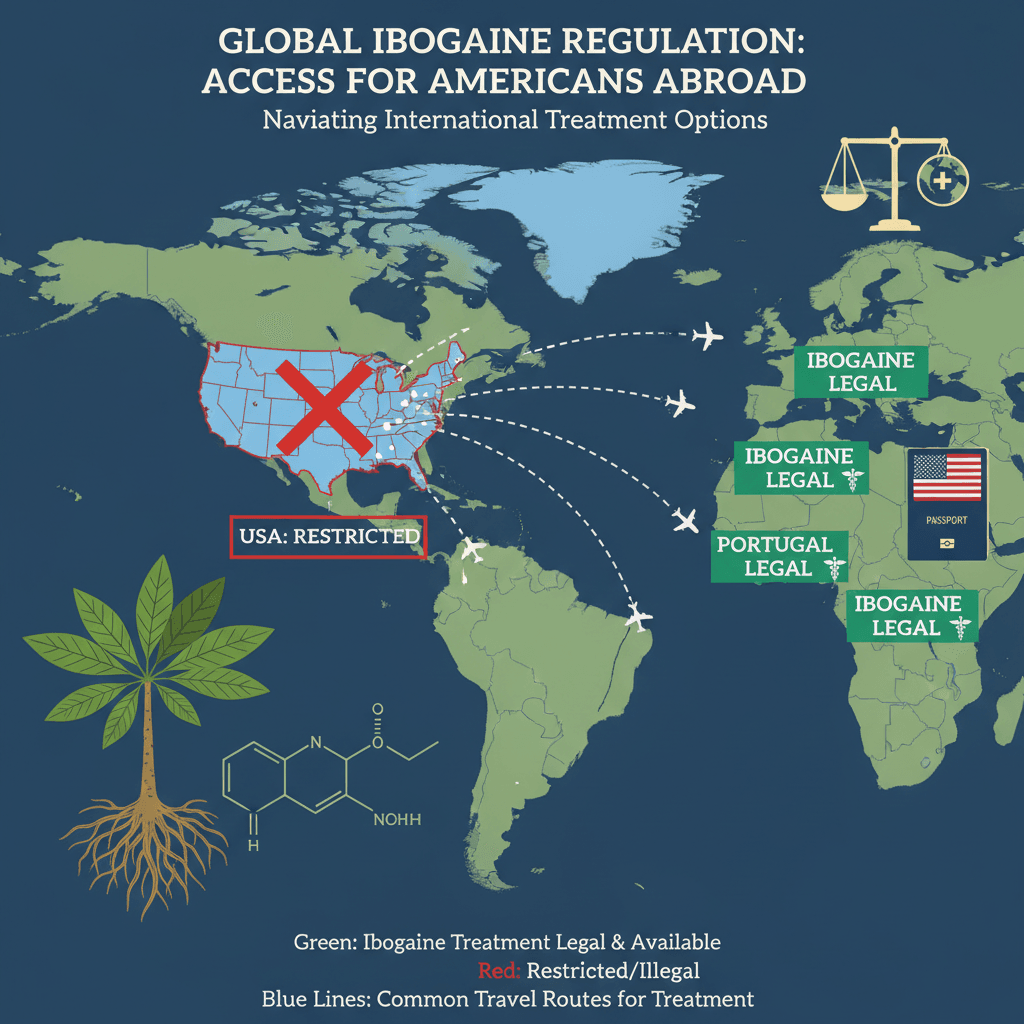
Understanding why Americans look abroad for ibogaine
If you are exploring ibogaine as a potential treatment for addiction or mental health issues, you quickly encounter a major barrier: ibogaine is not available through legal clinical channels in the United States. Ibogaine is classified as a Schedule I substance at the federal level, so it is illegal to possess, prescribe, or use for treatment anywhere in the country as of 2026 [1]. This is why you might find yourself asking, can Americans get ibogaine treatment abroad, and if so, where and how does it work in practice?
Because of this legal status, American patients who pursue ibogaine typically travel to countries where ibogaine is legal, unregulated, or available under specific medical frameworks [2]. Understanding how ibogaine is regulated globally can help you make informed decisions and avoid unsafe or illegal options. For a broader background, you can also review resources on ibogaine treatment laws, ibogaine regulation worldwide, and ibogaine legal status worldwide.
Legal status of ibogaine in the United States
Before you look at options abroad, it helps to be clear about what is and is not allowed at home. Ibogaine is federally prohibited as a Schedule I substance, which means it is considered to have a high potential for abuse and no accepted medical use under current federal law. This classification makes clinical research, prescription, and medical treatment with ibogaine illegal in the United States as of 2026 [1].
You cannot receive ibogaine legally in licensed medical facilities inside the US, and you cannot import ibogaine for personal use through normal channels. These restrictions are one of the primary reasons that many treatment centers operate internationally rather than within American borders. If you want additional context on domestic rules, you can explore ibogaine legality in the United States and why ibogaine treatment is not legal in the US.
How Americans legally travel for ibogaine treatment
Despite US restrictions, you can usually travel abroad to a country where ibogaine treatment is allowed, receive care under that country’s laws, and then return home. In most cases, American patients follow a pattern similar to other forms of medical tourism.
Typically, you will:
- Research countries where ibogaine treatment is legal or unregulated, starting with high-level resources such as where is ibogaine legal and countries where ibogaine treatment is legal.
- Identify and screen specific clinics or retreats that accept international clients and provide medical supervision.
- Travel to the destination country as a visitor or medical tourist.
- Receive ibogaine treatment on-site in accordance with local regulations.
- Return to the United States without transporting ibogaine or related substances across the border.
You are responsible for complying with US law, which includes not carrying ibogaine into or out of the country and not attempting to receive treatment in unregulated underground environments inside the United States. Clinics abroad that routinely work with American clients are usually familiar with travel logistics, pre‑screening, and follow‑up planning once you return home.
Key regions where Americans seek ibogaine treatment
Many Americans who ask if they can get ibogaine treatment abroad eventually focus on a handful of regions with established centers. These areas vary significantly in how ibogaine is regulated, how clinics are supervised, and what you can expect in terms of cost and quality.
Nearby options: Bahamas, Mexico, and Costa Rica
For Americans, especially those on the East Coast or in the southern states, nearby countries in the Americas often provide the most practical options for ibogaine treatment.
Bahamas
The Bahamas is considered one of the preferred destinations for Americans from the eastern United States. Ibogaine treatment is legal there, and clinics often advertise:
- English‑speaking medical staff
- Clinical protocols that align closely with US standards
- Short travel times, often under one hour from Florida by air [3]
If you live in the eastern or southeastern US, this proximity can make planning less complicated and can reduce travel fatigue before and after an intensive treatment process.
Mexico
Mexico is one of the best‑known destinations for American patients seeking ibogaine treatment. Ibogaine is unregulated at the federal level, which means it is neither explicitly legal nor clearly prohibited. This regulatory gap allows clinics to operate and administer ibogaine therapy under medical supervision without the restrictions present in the US [1].
Clinics are concentrated in regions such as the Baja Peninsula and Quintana Roo, including facilities that serve mainly American and Canadian clients [3]. Experience Ibogaine Treatment Center, for example, operates legally in Tijuana, Mexico, and provides medically supervised ibogaine therapy for patients traveling from the United States and other countries [1].
Because ibogaine is unregulated rather than fully licensed, quality and safety standards can vary between providers. You are encouraged to verify credentials, inquire about medical protocols, and ensure that emergency support is available on-site. Both Avante Ibogaine and Experience Ibogaine emphasize that safety depends heavily on the specific clinic, not only the country’s legal status [2]. For more detail about this specific destination, you can read is ibogaine treatment legal in Mexico.
Costa Rica
Costa Rica permits ibogaine treatment openly, with no specific legal restrictions on clinical use. Clinics are primarily located in Guanacaste, Puntarenas, and San José, where they serve international patients in a context known for:
- Relative political and healthcare system stability
- Established medical tourism infrastructure
- Widespread English language support in medical settings [3]
For some Americans, Costa Rica provides a balance between accessibility, natural surroundings, and comfort with language and medical culture.
Europe and other international destinations
If you are open to longer travel, you can access a broader set of treatment models and price points outside the Americas. Many of these centers specifically mention experience with American clients and highlight protocols intended to meet international expectations for safety.
European centers
Recovery.com lists ibogaine‑assisted treatment centers across Europe, including Spain, Portugal, and Iceland, among other countries [4]. These facilities typically operate in jurisdictions where ibogaine is tolerated, permitted within medical settings, or not specifically regulated. One example is Madera Sagrada in Spain, which lists an approximate cash pay rate of about 6,000 US dollars for treatment [4].
At the higher end of the spectrum, luxury centers such as New Life Marbella in Spain can cost around 250,000 euros per week, often including extensive amenities and individualized support [4]. These wide pricing differences underscore how important it is to look carefully at what is included in a given program.
Tabula Rasa Retreat is another European provider that openly works with international clients, including Americans. The center follows safety protocols based on Global Ibogaine Therapy Alliance guidelines and screens candidates using inclusion and exclusion criteria, for example voluntary consent and the absence of severe heart or psychiatric conditions [5]. They also emphasize informed consent processes and offer short consultation calls to prospective clients from the United States and other countries.
Other global options
Recovery.com reports that Americans and other international patients can access medically supervised ibogaine‑assisted therapy at dozens of centers worldwide, including locations in Bali, Thailand, Switzerland, South Africa, and Mexico [6]. Several clinics outside the US, such as Ibogaine Clinic and Viraha Wellness Center in Mexico, provide detox programs that integrate ibogaine with broader treatment for addiction, trauma, and mental health issues [6].
Root Healing Iboga Retreats, which operates in the United States, Portugal, and Thailand, offers all‑inclusive programs that draw on Missoko Bwiti traditions to support addiction and mental health recovery [4]. If you explore this type of retreat, you will want to understand both the legal framework in the host country and how traditional practices interface with clinical safeguards.
Typical costs and what affects pricing
When you explore whether you can get ibogaine treatment abroad as an American, cost is usually a central part of your decision. According to Recovery.com, ibogaine programs outside the US generally range from about 3,000 US dollars to more than 15,000 dollars, depending on location, length of stay, and level of service [6].
Several variables tend to influence price:
- Country and region
- Standard of clinical facilities and medical oversight
- Accommodation type, for example shared rooms versus private suites
- Program length and inclusion of aftercare planning
- Extra amenities such as spa services, excursions, or integration coaching
Some examples show how wide this range can be. Madera Sagrada in Spain estimates a rate around 6,000 US dollars, while ultra‑luxury programs such as New Life Marbella may reach approximately 250,000 euros per week for a highly individualized, resort‑level experience [4]. Facilities that focus more narrowly on medical detox and standard residential care tend to fall closer to the lower or middle part of this spectrum.
Most programs are not covered by US health insurance, so you should plan for out‑of‑pocket payment. In addition to the program fee, you will need to budget for flight costs, possible additional lodging before or after treatment, and time away from work or family responsibilities.
Ibogaine treatment pricing abroad varies widely, so it is useful to compare multiple clinics not only on cost but also on safety measures, medical staffing, and post‑treatment support.
Safety, medical supervision, and screening
Safety is a primary concern in any discussion about ibogaine. The substance can have serious cardiovascular and neurological effects, particularly in people with underlying heart disease, certain psychiatric conditions, or concurrent medication use. Because of this, experts consistently recommend that ibogaine be taken only in medically supervised settings.
Recovery.com stresses that ibogaine treatment abroad should be conducted in medical environments with trained staff to reduce the risk of dangerous or potentially fatal complications [7]. Well‑run centers typically include:
- Pre‑treatment screening, including cardiac evaluation and review of your medication list
- On‑site monitoring by physicians or nurses during dosing
- Emergency equipment and access to hospital transport if needed
- Clear protocols for managing complications
Tabula Rasa Retreat illustrates how structured screening can work in practice. Prospective clients from the US and other countries must meet inclusion criteria such as voluntary participation and readiness to engage in therapy, and are assessed for exclusion criteria like heart, respiratory, or severe gastrointestinal diseases or serious psychiatric conditions [5]. This type of approach is designed to keep higher‑risk individuals out of ibogaine programs where the potential harms might outweigh the benefits.
When you compare clinics, pay close attention to how they describe their medical team, what kind of pre‑treatment testing they require, and how they handle emergencies. Travel convenience or cost should not replace basic safety requirements.
Choosing a reputable ibogaine clinic abroad
With dozens of centers operating in different legal environments, choosing where to go can feel difficult. Platforms like Recovery.com provide curated lists of verified ibogaine treatment centers so that international patients, including Americans, can see essential information about locations, services, and oversight in one place [7]. These directories aim to bring some transparency to a landscape that can otherwise feel opaque.
When you evaluate individual clinics, you might look for:
- Clear explanation of local legal status and regulatory oversight
- Transparent medical protocols and emergency procedures
- Evidence of trained and licensed medical staff
- Detailed inclusion and exclusion criteria
- Independent reviews or references from past clients
- Structured post‑treatment planning or integration support
US citizens considering treatment abroad are also encouraged to verify clinic credentials and confirm that the program aligns with local health guidelines [1]. Asking direct questions before committing financially can help you determine whether a center meets your expectations for safety and professionalism.
If you want a broader comparative picture of legal regions and clinic types, resources such as ibogaine treatment legality explained, ibogaine legal treatment clinics, and ibogaine regulation worldwide can provide additional background.
Practical planning for Americans considering ibogaine abroad
Once you understand that Americans can, in fact, get ibogaine treatment abroad and you identify potential countries and clinics, the next step is practical planning. This often includes:
- Coordinating with the clinic’s intake team to complete medical questionnaires and submit records.
- Scheduling travel so that you arrive with enough time to rest before treatment.
- Arranging support at home for the time you are away, including work leaves and family care.
- Planning post‑treatment integration, whether with therapists, peer groups, or other recovery supports.
Some international retreats, like Tabula Rasa Retreat, offer brief consultation calls for American clients, usually within 24 to 48 hours of inquiry, to discuss eligibility and logistics [5]. Others provide detailed orientation sessions once you arrive on site, including explicit informed consent processes that outline potential risks and expected outcomes.
For many people, ibogaine is only one part of a longer recovery trajectory. Integrating what you learn during treatment into daily life back in the United States often requires ongoing support. Clarifying how a clinic will help you prepare for that transition is an important part of deciding where to go.
If you would like to deepen your understanding of how different national policies shape your options, you can review is ibogaine legal and ibogaine legal status worldwide. This broader context can help you weigh the benefits, risks, and responsibilities that come with seeking ibogaine treatment as an American abroad.